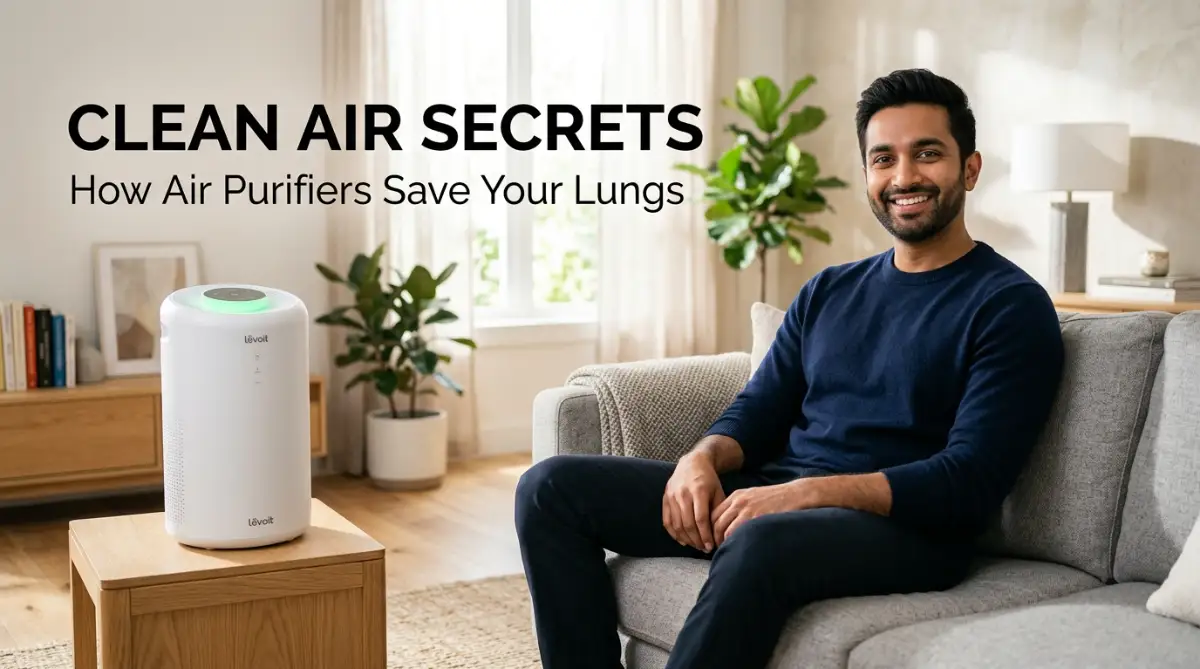
Meet the Author:
Hello there! I'm Kamal Uddin, an environmental health enthusiast and home wellness advocate. Over the years, I have helped families transform their living spaces into healthy, breathable sanctuaries. My goal is simple: to break down complex science into easy, practical tips that you can use to protect the ones you love.
If you live in highly populated urban areasβsuch as Dhaka or other bustling cities across South Asiaβyou already know how brutal dust and PM2.5 pollution can be. We often think closing our doors keeps us safe, but the truth is, that dirty outside air easily creeps in and stays trapped inside our rooms. Let me walk you through how you can take back control of your home's air today.
The Hidden Struggle in the Air We Breathe
Have you ever woken up in the middle of the night gasping for breath or rubbing itchy, dry eyes? You look around your bedroom, and everything seems clean, yet you cannot stop sneezing.
This is the quiet struggle that millions of people face every single day in their own homes. We like to think that our thick walls and closed windows protect us from the dirty outside world.
But the scary truth is that indoor air is often much more polluted than the air outside on a busy city street.
Many people find themselves trapped in a cycle of irritation and confusion, unable to find a lasting solution. Here is why finding clean air at home feels so difficult for the average person:
- Falling for flashy marketing: Many buyers spend hard-earned money on cheap machines that only blow dust around instead of trapping it.
- The silent ionizer trap: People accidentally buy machines that produce harmful ozone gas, making their breathing issues even worse.
- Ignoring room size scales: It is common to put a tiny desk filter in a large living room and wonder why the air still feels heavy.
- The hidden cost of filters: Many do not realize that replacement filters can cost a fortune, leading them to use dirty, clogged filters for months.
- Trusting fake online reviews: The internet is flooded with sponsored praise for bad products, leaving honest buyers empty-handed.
This constant battle does more than just make you sneeze; it quietly steals your peace of mind and confidence. Consider how dirty indoor air secretly impacts your daily mental state:
- Worrying about your loved ones: Watching your kids cough through the night makes you feel helpless and constantly stressed.
- The embarrassment of bad smells: You worry that guests will smell stale pet odors or cooking grease the moment they open your front door.
- Wasted energy and daily fog: Breathing bad air during your sleep ruins your rest, leaving you tired and unfocused the next morning.
- The endless cycle of cleaning: You dust your tables, only to see a fresh layer of grey particles settle an hour later, making you feel defeated.
How Air Purifiers Clean Your Air: The Science Made Simple
To solve this problem, we must first understand how a quality air purifier actually operates. Think of your home as a large fish tank.
If you do not clean the water filter, the fish will eventually get sick from their own waste. An air purifier does the exact same job for your lungs by acting as a high-powered filter for the invisible sea of air around you.
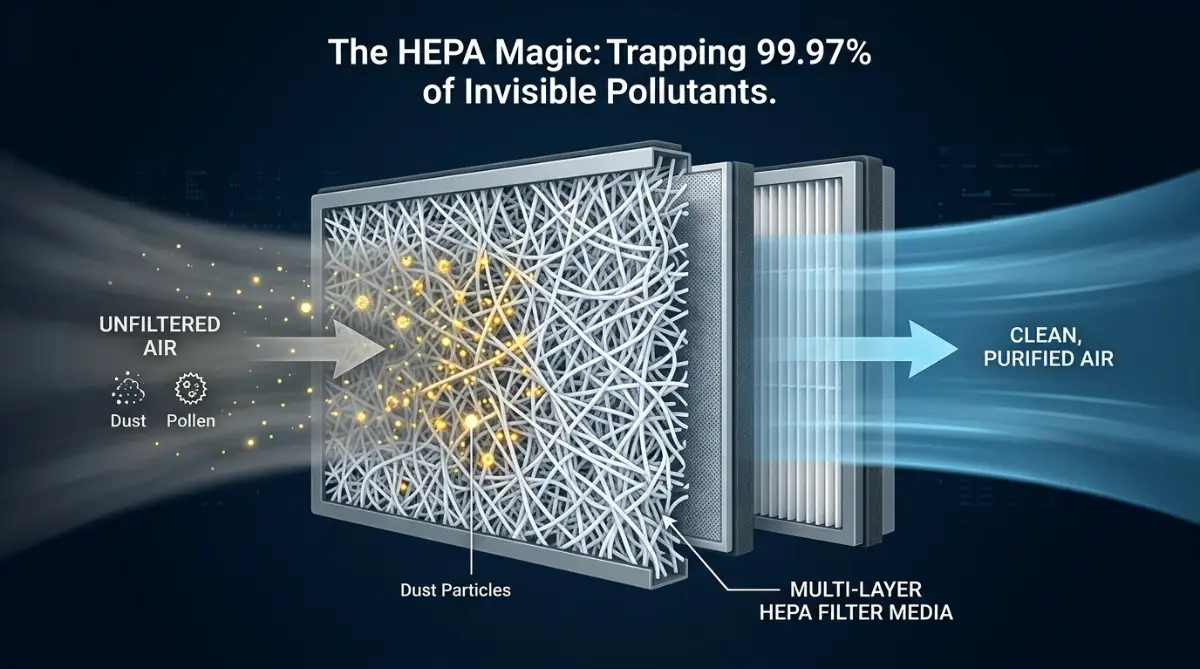
The process is actually quite straightforward. The machine uses a quiet internal fan to pull dirty air from your room into its intake vents.
Once inside, the air is forced through a series of dense physical filters that trap different sizes of pollutants.
Finally, the clean, purified air is pushed back out into your room. This cycle repeats multiple times every single hour, slowly but surely cleaning the environment.
To help you visualize this, I want you to think of your air purifier as a highly trained three-stage defense system protecting your room. Here is exactly what happens to the air inside this machine:
- Stage 1: The Pre-Filter (The Shield): This is the outer layer that catches everything you can actually see with your naked eyesβlike floating pet hair, human hair, and large dust bunnies. It saves the inner filters from wearing out too quickly.
- Stage 2: The True HEPA Filter (The Trap): This is where the real magic happens. It acts as an incredibly tight web that traps 99.97% of microscopic allergens, pollen, and invisible mold spores.
- Stage 3: The Activated Carbon Filter (The Sponge): Finally, the air passes through a bed of treated charcoal that literally sucks up bad kitchen smells, pet odors, and toxic gases.
Once the air passes through all three guards, it is pushed back into your room, completely fresh and safe to breathe!
Breaking Down the Multi-Layer Filtration Stack
Not all air purifiers are built the same way. The best machines use a combination of different filters to tackle different types of dirt.
Let us look at the three most common and important layers you will find in a top-tier machine.
1. The Pre-Filter: Your First Line of Defense
The pre-filter is like the goalkeeper of the system. It is usually a washable mesh screen made of plastic or fabric.
Its primary job is to catch the biggest particles in your air, such as human hair, pet fur, and large dust clumps.
By stopping these giant pieces of dirt early, the pre-filter prevents the more expensive inner filters from getting clogged up too quickly.
2. The True HEPA Filter: The Ultimate Particle Trap
HEPA stands for High-Efficiency Particulate Air. This filter is the absolute heart of any serious air purifier.
A True HEPA filter is made from a dense web of tiny glass fibers bent in thousands of directions.
It is designed to trap 99.97% of particles that are as small as 0.3 microns in size. To put that in perspective, a single strand of human hair is about 70 microns wide.
That means a HEPA filter is catching particles that are hundreds of times smaller than what your eyes can see, including pollen, mold spores, and dust mites.
3. The Activated Carbon Filter: The Smell Destroyer
While a HEPA filter is amazing at catching solid particles, it cannot stop gases, chemical fumes, or bad smells.
That is where activated carbon comes in. This filter is filled with tiny pieces of charcoal that have been treated with oxygen to open up millions of microscopic pores.
These pores act like tiny traps for gas molecules. When kitchen smoke, paint fumes, or pet odors pass through, they stick to the carbon and get locked away.
Myth vs. Reality: What Air Purifiers Can and Cannot Do
When you start researching air purifiers, you will hear a lot of wild claims. Some companies make it sound like their machines will cure every illness and clean your house for you.
Let us separate the facts from the fiction so you can make an smart choice.
Five Key Steps to Getting the Best Results from Your Purifier
Buying an air purifier is only half the battle. If you do not set it up correctly, you might as well turn it off. Here are five practical steps to make sure your machine actually does its job.
Step 1: Place the Unit in an Open Airflow Zone
Many people try to hide their air purifier behind a couch or in a dark corner because they do not like how it looks. This is a major mistake. Air purifiers need room to breathe.
If you block the intake vents with furniture or curtains, the machine will only clean the tiny pocket of air right around itself.
Keep your purifier at least three feet away from walls and furniture to allow full 360-degree air circulation.
Let me make this placement rule incredibly simple for you:
- The Wrong Way: Tucking your purifier away behind your sofa, hiding it in a tight corner, or blocking it with heavy curtains. If you do this, your machine will only clean the same tiny pocket of air around itself.
- The Right Way: Keeping your purifier out in the open, at least 3 feet away from any walls or furniture. This gives the unit 360-degree freedom to pull in dirty air from across the entire room.
Step 2: Keep Your Windows and Doors Closed
Running an air purifier with the windows wide open is like running your air conditioner with the back door open. You are trying to clean the air of the entire neighborhood.
While fresh outside air is great on clean days, you should keep your room sealed when your purifier is active. This allows the machine to clean the same air over and over until it is completely safe.
Step 3: Match the CADR Rating to Your Room Size
Before you buy, you must look at the CADR (Clean Air Delivery Rate) rating on the box. CADR measures how fast the machine can clean specific particles like smoke, dust, and pollen in a given room size.
If you put a machine designed for a small bedroom into a large kitchen, it will never catch up with the dirty air. Always read the box to see the recommended square footage.
Step 4: Run the Machine 24/7 on Low Speed
Many users turn their air purifiers on high speed for thirty minutes and then shut them off. This does not work because air pollution is a constant process.
Skin cells flake off, pets shed, and dust enters from outside every minute. It is much more effective to run your purifier on its lowest, quietest setting all day and night.
This keeps a steady flow of clean air without raising your electricity bill too much.
Step 5: Clean and Replace Filters on Schedule
An air purifier with a clogged filter is just a noisy fan. Over time, the trapped dust blocks the tiny holes in the HEPA sheet. This forces the motor to work harder, which can ruin the machine.
Make a habit of checking your pre-filter every month and washing off any large dust layers. Mark your calendar to replace the inner HEPA
and carbon filters every six to twelve months, depending on how dusty your home gets.
Let me give you a quick, hyper-local tip if you are living in an incredibly dusty city like Dhaka. During our dry winter months, the sheer volume of construction dust and road soot in the air is off the charts.
While standard manuals tell you to clean your pre-filter once a month, I highly recommend checking it every two weeks during these dry seasons.
You will be shocked by how much thick, grey lint accumulates in just fourteen days, and keeping it clear will save your expensive True HEPA filter from choking.
The Real-World Impact: How Clean Air Changes Your Daily Life
To really understand why these machines matter, we should look at how they change the lives of real families. It is not just about moving air; it is about changing your daily experience inside your home.
The Allergy Sufferer's Savior
Imagine waking up during springtime without a stuffed nose. For people who suffer from seasonal allergies, pollen is a constant threat.
When you sleep, your body should be resting, not fighting off plant particles. A True HEPA filter traps these pollen grains before they ever touch your face, allowing you to wake up feeling fresh and ready for the day.
The Pet Owner's Best Friend
We love our pets, but we do not love their dander and floating fur. Pet dander is made of tiny flakes of dead skin that animals shed constantly.
These flakes float in the air and trigger asthma attacks in sensitive guests. An air purifier sweeps these skin flakes out of the air, keeping your home smelling clean and safe for everyone who visits.
If you have a furry friend at home, you know the struggle is real. Here is exactly how a quality purifier changes the game for pet parents like us:
- Morning Light without Floating Fur: You will no longer see those endless streams of pet hair floating in the morning sunlight.
- Fewer Sneezing Fits: It rapidly captures microscopic pet dander (dead skin flakes) before it can irritate your nose and throat.
- Goodbye, Stale Odors: It actively neutralizes that heavy "dog smell" or wet fur odor, keeping your home smelling fresh for guests.
- Cleaner Floors and Tables: Because the purifier catches dust and fur while it is still floating, you will notice much less grime settling on your furniture.
The Kitchen Odor Neutralizer
Have you ever fried fish or cooked with heavy spices, only to smell it in your bedroom three days later? Cooking oils can vaporize and settle on your walls and fabrics.
An air purifier with a thick activated carbon filter acts like a sponge for these smelly oil molecules. It cleans the air while you cook, so your home smells like a home, not a restaurant.
Smart Questions to Ask Before Choosing a Purifier
When you go shopping for an air purifier, do not let the salesperson confuse you with fancy terms. Keep your focus on these basic questions:
- Does it use a True HEPA filter? Avoid anything labeled "HEPA-like" or "HEPA-style."
- What is the CADR rating? Make sure the number is high enough for the specific room you want to clean.
- How much do replacement filters cost? Calculate the yearly cost of new filters before you buy the machine.
- How loud is it on low speed? If you plan to put it in your bedroom, you want a machine that runs below 30 decibels on sleep mode.
- Does it have an ozone-free certificate? Make sure the machine does not use electronic ionizers that release lung-irritating ozone.
Taking Control of Your Home Environment
At the end of the day, your home should be your safe space. It is the one place where you have complete control over what you put into your body, including the air you breathe.
Investing in a quality air purifier is not about buying a fancy gadget. It is about making a simple, logical choice to protect your lungs, improve your sleep, and keep your family healthy.
By understanding how these machines work and following the simple steps to run them correctly, you can turn your home into a clean air sanctuary.
You will notice the difference in the lack of dust on your tables, the clean smell in your rooms, and the deep, peaceful sleep you enjoy every single night.
Unlocking Peak Performance: Advanced Strategies for Pristine Air
Once you have your air purifier running, you might think your job is done. However, getting the absolute best out of your device requires a few expert-level strategies that most average users simply do not know.
If you want to breathe the cleanest air possible, you must look beyond basic placement and dive into advanced environmental control.
Let us examine three pro-level secrets that will help you transform your home into a true breathing sanctuary.
To take your air cleaning to the absolute peak, I have put together a quick, advanced three-step routine that I personally use in my own home:
- Step 1 (Airflow Control): Position your purifier near warm appliances or radiators. The natural rising warm air currents will carry floating dust directly toward your machine.
- Step 2 (Humidity Control): Keep your indoor relative humidity strictly between 30% and 50% to prevent your expensive HEPA filter from getting damp.
- Step 3 (Sensor Care): Gently clean your machine's built-in laser sensor lens with a dry cotton swab every 3 months so it can read your room's air accurately.
Pro Tip 1: The Airflow Sandbox and Thermal Currents
Your home does not have static air; instead, it is filled with moving thermal currents. Heat from your television, refrigerator, and even your own body creates invisible plumes of rising warm air.
To maximize the cleaning power of your machine, you need to understand where these currents meet.
Placing your purifier near a warm appliance or a radiator can help it catch particles as they rise naturally.
This creates an efficient cycle where the air is filtered right at the point where it begins to circulate through the room.
If you are wondering how crucial active airflow actually is, I highly recommend looking over the CDC's Ventilation Mitigation Strategies[1],
which explains how proper air circulation acts as our primary defense in lowering the concentration of harmful indoor particles.
Pro Tip 2: Managing Relative Humidity for HEPA Longevity
Did you know that water vapor in the air can actually destroy your high-end HEPA filter? When indoor relative humidity climbs above 60%, the microscopic glass fibers in your filter begin to absorb moisture.
This dampness makes the filter fibers swell, which drastically reduces the space available for clean air to pass through.
Even worse, a damp filter becomes a breeding ground for mold spores, which can release musty odors back into your living room.
I always tell my readers to keep their homes within this dry range. This practical step is also strongly backed by the American Lung Association's clean air guidelines[2],
as maintaining optimal indoor moisture is critical to preventing mold spores and dust mite infestations from taking over your personal space.
Pro Tip 3: Master the "Purge and Purify" Airflow Cycle
Many people make the mistake of keeping their windows closed forever to protect their air purifier. However,
our bodies need fresh oxygen, and carbon dioxide can build up to unhealthy levels in closed rooms.
The advanced solution to this problem is a routine called the "purge and purify" cycle. Start by opening all your windows wide for exactly ten minutes to flush out stale carbon dioxide and bring in fresh outdoor oxygen.
After ten minutes, close all windows tightly and turn your air purifier on its highest speed setting for twenty minutes.
This quick blast of clean air will rapidly trap any outdoor dust or pollen that entered during the purge, leaving your room both fresh and completely clean.
Your Long-Term Maintenance Blueprint: Keeping the System Alive
An air purifier is a long-term investment, and it requires consistent care to maintain its efficiency over the years. To help you stay on track, we have created an expert maintenance checklist that you can easily follow.
My Recommended Monthly Maintenance Checklist:
- Vacuum the Pre-filter: Gently run your vacuum hose over the outer pre-filter to remove large dust build-ups.
- Clean the Sensor: Open the small side door of your purifier and gently wipe the sensor lens with a dry cotton swab.
- Wipe the Outer Body: Use a slightly damp micro-fiber cloth to clean the dust off the intake vents.
- Check the Filters: Inspect the color of your HEPA filter to see if it is turning dark grey (a sign it is time for a replacement).
The most overlooked part of any modern air purifier is the built-in air quality sensor. These sensors use a tiny laser to count dust particles as they pass through a small dark chamber inside the machine.
If this sensor gets coated in a layer of fine dust, it will misread the room's air quality and cause the machine to run on the wrong speed.
Every three months, find the small sensor door on the side of your unit, open it, and gently clean the glass lens with a dry cotton swab.
By keeping this sensor clean, you ensure the machine always knows the exact state of your room's air.
For a deeper, step-by-step look at keeping your home systems running smoothly, feel free to check out our complete filter maintenance guide to easily extend the life of your equipment.
Additionally, pay close attention to the structural seals inside the filter housing. Over time, the rubber gaskets that hold your HEPA filter in place can dry out and crack.
If these seals fail, dirty air will bypass the filter entirely and escape back into your room. When you change your filter, inspect the rubber borders and replace them if you notice any visible gaps.
If you want to dive deeper into taking control of your home's ecosystem, I highly suggest taking a look at the official EPA Guide to Indoor Air Quality[3].
It is an incredible, user-friendly resource packed with practical tips on managing pollutant sources directly at their roots.

Critical Missteps: The Hidden Traps That Ruin Air Filtration
Even with the best intentions, it is incredibly easy to make simple mistakes that completely ruin the performance of your machine.
In this section, we will point out the most common errors made by homeowners and how you can avoid them.
Keep this warning in mind: Placing your air purifier directly on a thick carpet or a fuzzy rug blocks the bottom vents entirely.
It starves the fan of airflow, causes the motor to run dangerously hot, and quickly clogs your expensive filters with loose carpet fibers. Always place your unit on a hard, flat surface!
Mistake 1: Blindly Trusting the Machine's "Auto Mode"
Almost every modern air purifier comes with a convenient "Auto Mode" button on the control panel. When pressed, the machine relies on its internal sensor to decide how fast the fan should spin.
The problem is that these built-in sensors are often cheap and only read the air in their immediate vicinity.
If the air purifier is ten feet away from your bed, your mattress might be shedding dust mites while the purifier thinks the room is perfectly clean.
Do not let your machine stay on Auto Mode all day long; instead, manually set it to medium or high speed when you are sleeping or cleaning.
Taking manual control of your indoor climate is one of the most effective ways to experience the real benefits of clean breathing spaces inside your home.
Mistake 2: Buying Dangerous Ozone-Producing Ionizers
In your search for a clean home, you will likely encounter advertisements for "ionic" air cleaners or "ozone generators."
These machines claim to clean the air by releasing negatively charged ions into the room, causing dust particles to stick to walls and floors.
However, this process creates ozone gas as a byproduct, which is a highly reactive chemical that can cause severe chest pain and coughing.
Breathing even small amounts of ozone can inflame your lung tissues and worsen chronic conditions like asthma.
We often underestimate the chemical vapors around us. In fact, the World Health Organization's household air pollution guidelines[4]
warn us that long-term exposure to toxic indoor gases and fine particles remains a leading cause of preventable respiratory illnesses worldwide.
Mistake 3: Leaving the Protective Plastic Wrap on the Filter
It sounds like a joke, but millions of people run their air purifiers for months without actually filtering any air because they forgot to unpack the filter.
When you buy a new machine, the HEPA filter is sealed inside a tight plastic bag to keep it fresh during shipping.
If you do not open the bottom of the machine and remove this plastic, the fan will spin and make noise, but no air will actually pass through the filter.
This mistake puts massive strain on the motor and can cause the entire machine to overheat and burn out within a few weeks.
Always read your instruction booklet carefully and double-check your filter compartment before plugging in your new device for the first time.
Mistake 4: Relying on Houseplants as a Substitute for Technology
We all love the natural look of green houseplants in our bedrooms and living rooms. Many online articles claim that a few potted plants can clean your home's air just as well as a mechanical air purifier.
This myth comes from an old NASA study that was conducted in tiny, airtight plastic chambers, which do not reflect how real homes work.
In a normal house, you would need to fill every square inch of your floor with hundreds of plants to achieve the cleaning power of a single HEPA filter.
While plants are wonderful for decoration and mental health, they simply cannot trap fine dust, pet dander, or microscopic pollen.
To help you navigate what mechanical filtration can realistically do for your health compared to other natural methods,
I suggest reading through Healthline's detailed evaluation on how air purifiers work[5]. It will really help you set the right expectations before you buy.
Mistake 5: Placing the Device on Thick carpets or Rugs
Air purifiers are designed to pull air in from their bottom vents and push clean air out of the top. When you place a purifier directly on a thick carpet or a fuzzy rug, the soft fibers block the bottom intake vents.
This restriction starves the fan of air, causing the motor to run much hotter than it should. Additionally,
the strong suction of the fan will pull loose carpet fibers directly into your filter, clogging it up with synthetic thread in just a few days.
Always place your machine on a hard, flat surface like a wooden floor, a sturdy shelf, or a dedicated plastic stand to keep the intake vents completely clear.
Action Plan for Tomorrow: Building Your Clean Air Sanctuary
We want you to take control of your home environment starting right now. Instead of feeling overwhelmed by all this technical information, follow this simple, step-by-step action plan to start breathing easier tomorrow morning.
Your 5-Minute Action Plan for Tomorrow:
- Step 1: Double-check your purifier right now to ensure you didn't accidentally leave the protective plastic wrap on the filter!
- Step 2: Pull your machine out of the corner and place it at least 3 feet away from any walls.
- Step 3: Keep your bedroom windows and doors closed while running the unit to let it clean your air efficiently.
- Step 4: Set a recurring reminder on your phone to vacuum your pre-filter on the first weekend of every month.
First, check your current air purifier to ensure the filter packaging has been completely removed. Next,
move the unit out of the corner and place it in an open area where air can circulate freely around all four sides.
If you want to understand exactly why your immune system goes into overdrive when you breathe in these microscopic particles, take a moment to read the Mayo Clinic's guide to allergy symptoms and causes[6].
Knowing your triggers and understanding how they affect your body is always the first step to beating seasonal allergies.
Once your machine is correctly placed, get into the habit of running it on low speed twenty-four hours a day.
Think of your air purifier as a quiet, loyal guard dog that never stops protecting your lungs from invisible dangers.
Over the next few weeks, you will likely notice that you are waking up with a clearer head, fewer sneezing fits, and a much cleaner home.
If you want to make a smart, budget-friendly purchase for a new machine, refer to our essential air purifier buying guide to easily compare the best available models on the market.
For those of you who want to geek out over clean air standards, I recommend studying the EPA's official Guide to Air Cleaners in the Home[7].
It is an incredible, comprehensive resource for comparing CADR ratings and filtration technologies side-by-side.
To round out your home health knowledge, my final recommendation is to read through Harvard Health's practical tips for improving indoor air quality[8].
It provides simple, everyday habits that you can easily start using today to keep your home's air incredibly fresh and safe.
A Word from the Expert: Your Path to Healthy Living
Breathing is the most natural thing we do, yet we rarely stop to think about the quality of the air entering our lungs.
Taking steps to clean your indoor air is not a luxury; it is a fundamental part of maintaining your long-term health and wellness.
We encourage you to use this guide as a starting point to improve your home environment. Small, consistent changes in
how you manage your indoor air can lead to massive improvements in your energy levels, sleep quality, and overall happiness.
Start today by making one small adjustment to your home setup, and let the clean air transform your life.
You deserve a home that feels fresh, smells amazing, and supports your health with every single breath you take.
Disclaimer:
The information provided in this article is for educational and informational purposes only and should not be taken as professional medical advice. If you suffer from severe respiratory illnesses, asthma, or chronic lung conditions, always consult with a qualified medical doctor or healthcare professional before making changes to your home health routine. The author of this post does not endorse any specific brand or commercial product, and all advice is based on general scientific principles of air filtration.