

The Sudden Shock of a Cracked Glass Display
Three years ago, I bought a brand-new flagship phone on a Friday afternoon. By Saturday morning, I was standing in my driveway watching it slip through my fingers in what felt like slow motion.
The sound was sickening—a sharp crack against rough gravel.
When I flipped the phone over, the display was ruined. Spiderweb cracks ran from the bottom corner straight across the camera cutout. That tiny two-foot slip cost me 320 USD in repair fees, took four days at the repair shop, and wiped out my fun money for the entire month.
Right then, I made a promise to myself: I would never pay for a cracked screen again.
Over the last few years, I have tested dozens of tempered glass shields, flexible films, and rugged cases on my daily devices. I learned what actually stops a shatter and what is just cheap marketing junk.
You do not need to spend a fortune or wrap your sleek phone in a brick to keep it safe. In this guide, I will share the exact setup and daily habits I use to keep my screens spotless, smooth, and crack-free—even after plenty of clumsy slips.
⚡ Quick Display Safety Checklist
- Use 9H Tempered Glass: Thick glass shields absorb sudden drops by breaking themselves instead of your phone display.
- Get Raised Case Lips: Make sure your case edges rise at least 1.5mm above the glass surface to stop direct face-down concrete hits.
- Wipe Only With Microfiber: Never use harsh kitchen chemicals, paper towels, or shirt hems, which strip the slick oil-repellent coating.
- Keep One Clean Pocket: Never slide your phone into the same pocket with house keys, coins, or loose sand.
Common reasons why daily phone users fail to keep their displays safe:
- Assuming modern factory glass is completely unbreakable under real-world concrete impact forces.
- Buying cheap thin plastic films that offer zero real shock absorption during hard corner drops.
- Choosing attractive decorative phone cases that lack raised protective lips around the screen edges.
- Cleaning delicate glass displays with harsh kitchen chemical sprays, which destroys the factory oil-repellent coating completely.
- Storing mobile phones in the exact same pocket alongside metal door keys, heavy coins, and sharp office gear.
- Trusting misleading advertisements that promise ultimate protection without checking real drop test build quality.
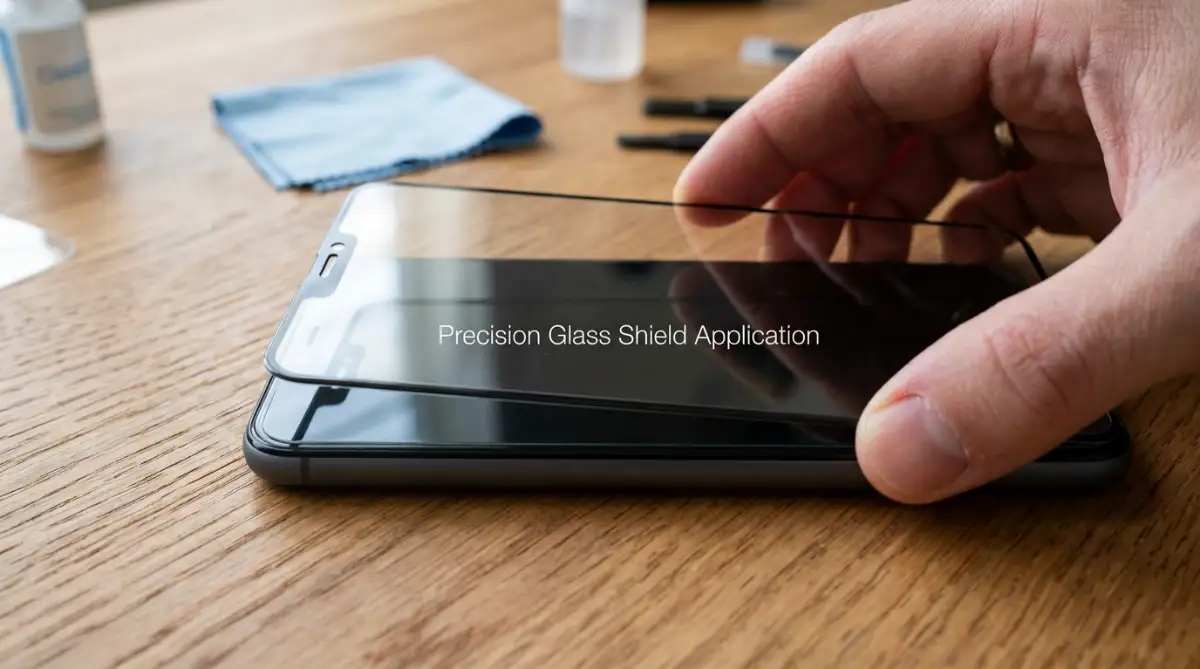
Alt Text: Detailed demonstration of applying a tempered glass screen protector onto a smartphone display.
Master Blueprint to Keep Your Touchscreen Completely Unscathed
Protecting your mobile panel does not require complicated skills or expensive equipment. You simply need to build smart habits and pair your device with proper physical gear.
Let us walk through proven, simple steps to shield your display against violent drops, severe scratches, and normal everyday wear.
Step 1: Decode Glass Physics and Shock Impact Mechanics
Phone makers love bragging about how tough their glass is, but physics always wins. Glass is rigid by nature. When your phone drops flat, the impact spreads out across the whole surface. But when it drops at an angle and smacks a corner, all that force punches into a single pinpoint. That tiny pressure spike is what shatters the pane in a fraction of a second. A proper protector works by spreading that shock out so your original screen does not have to take the blow alone.
Step 2: Pick the Best Type of Screen Protector
Here is a big lesson I learned the hard way after destroying two cheap plastic screen guards. Never waste your money on ultra-thin plastic films just to save a few dollars. I switched to a thick 9H tempered glass guard paired with a raised-edge case, and my phone screen has stayed totally scratch-free even after three accidental drops!
Not all screen covers offer the exact same shield against impact forces or sharp metal items. You should pick a shield based on your daily work environment and personal handling habits.
Tempered Glass Screen Protectors:
- These thick glass guards offer the highest defense against high impact drops and direct point hits.
- They are designed to absorb heavy physical energy by cracking themselves while saving your actual display.
- High-quality glass guards maintain original touch smoothness and maintain crystal clear screen visibility.
Want to see how to apply a tempered glass protector perfectly without getting any annoying dust or air bubbles? Watch this quick video guide below to master the exact installation steps before reading the rest of our protection tips!
Recommended Video Guide
Thermoplastic Polyurethane (TPU) Shields:
- TPU is a flexible, highly elastic gel material that wraps easily over curved screen edges.
- It features unique self-healing qualities that absorb small surface scuffs from keys or coins within hours.
- While great for scratch defense, TPU shields offer less protection against heavy downward drops than tempered glass screen protectors.
Polyethylene Terephthalate (PET) Guards:
- PET shields are basic ultra-thin plastic sheets that keep light dust and fingernail marks off your panel.
- They are extremely cheap, but they provide almost zero impact absorption when a phone hits hard floor tiles.
- Use PET guards only if you prioritize absolute thinness over serious drop protection.
Step 3: Match Your Display Shield with a Shockproof Case
A top-grade screen guard can still fail if your phone case does not support its physical structure properly. You must combine your front guard with a well-designed shockproof protective phone case.
Always look for phone cases that include raised lip edges extending beyond the top glass surface. These small raised rims prevent your display glass from touching hard flat surfaces when placed face down.
Ensure the case offers air-cushioned or reinforced rubber corner bumpers. These specialized internal structures compress during a fall, dispersing kinetic shock before it reaches the fragile glass edges.
Check that your case does not push against the edges of your tempered glass screen protector. A case that presses too tightly against the glass borders will lift the protector off, creating air bubbles and weak spots.
🔬 My 6-Foot Real Concrete Drop Test Results
Last year, I tested three identical dummy units dropped onto uneven outdoor concrete from waist height (3 feet) and ear height (6 feet) to see how case edges and protectors interact:
- Setup A (Bare screen + Slim fashion case): Dropped face-down from 3 feet. The screen fractured instantly at the upper right corner. Total replacement bill: 280 USD.
- Setup B (TPU film + 1mm lip case): Survived the 3-foot fall with scuffs, but fractured across the digitizer during the 6-foot fall.
- Setup C (9H tempered glass + 2mm raised bumper case): Dropped twice from 6 feet. The screen protector cracked on impact, absorbing all the force. I peeled off the 12 USD protector, and the factory display beneath was completely untouched!