
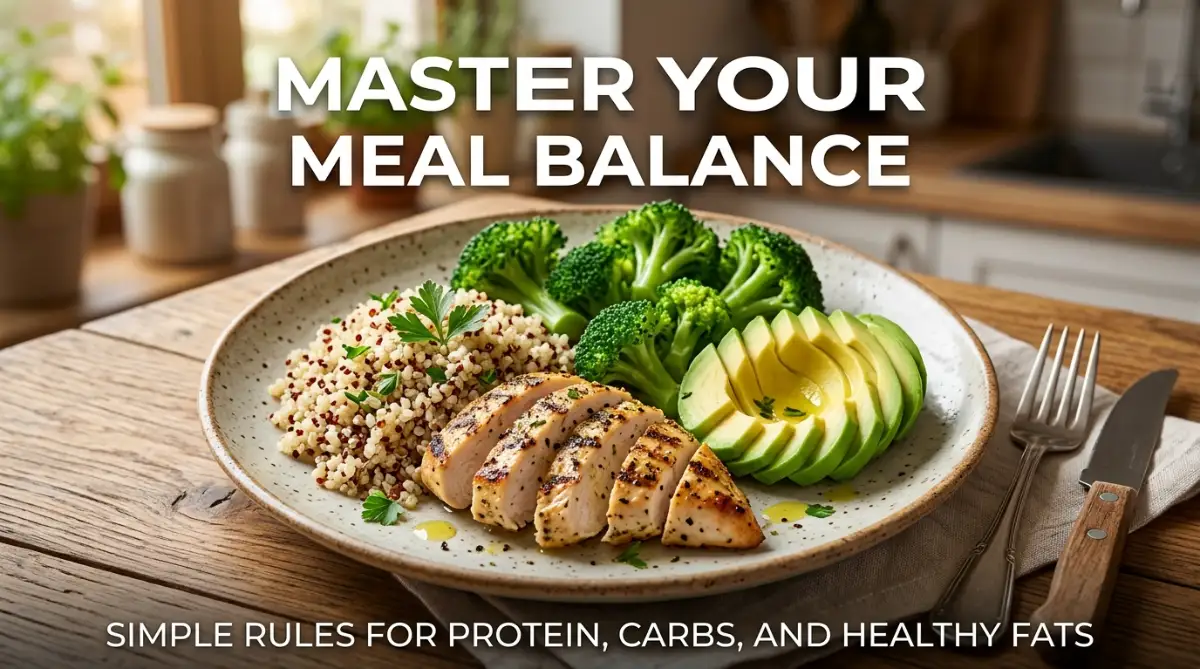
The Mealtime Confusion That Left Me Tired, Hungry, and Frustrated
I used to sit down at my kitchen table every single afternoon feeling totally defeated by my food. I was eating what I thought was clean food, yet my head was pounding by three in the afternoon.
My energy would plummet like a stone, and my stomach would start growling just an hour after finishing lunch. I spent months trying every random eating strategy I read about online, switching from zero-carb meals to low-fat bowls.
Nothing seemed to work, and I constantly felt sluggish, cranky, and endlessly hungry. It felt like I needed a advanced science degree just to build a simple plate of food that actually kept me awake through my workday.
Finally, I sat down, tossed out all the complicated diet books, and focused on learning how real food actually works inside the human body.
This endless cycle of guessing at mealtimes is something so many of us quietly deal with every week. You wake up with good intentions, grab a quick breakfast, and hope it keeps you fueled until noon.
Instead, you find yourself staring blankly at your computer screen at ten in the morning with a foggy brain and an empty stomach. You grab another coffee, grab a quick muffin, andpromise yourself you will do better at dinner.
By the time evening arrives, you are so starved and exhausted that you end up eating whatever is easiest and fastest. That habit brings on a heavy wave of guilt, followed by uncomfortable bloating and poor sleep.
It ruins your peace of mind because you feel like you are constantly failing at basic self-care. Food is supposed to give us steady strength, but instead, it ends up creating daily anxiety, self-doubt, and physical discomfort.
THE MEAL BALANCE FRAMEWORK:
PROTEIN:
(The Anchor)
Rebuilds muscle tissue
Keeps you full longer
Slows stomach emptying
CARBS:
(The Engine)
Provides sustained power
Essential brain nutrition
Fills glycogen stores
FATS:
(The Shield)
Slows overall digestion
Supports hormone balance
Protects cellular health
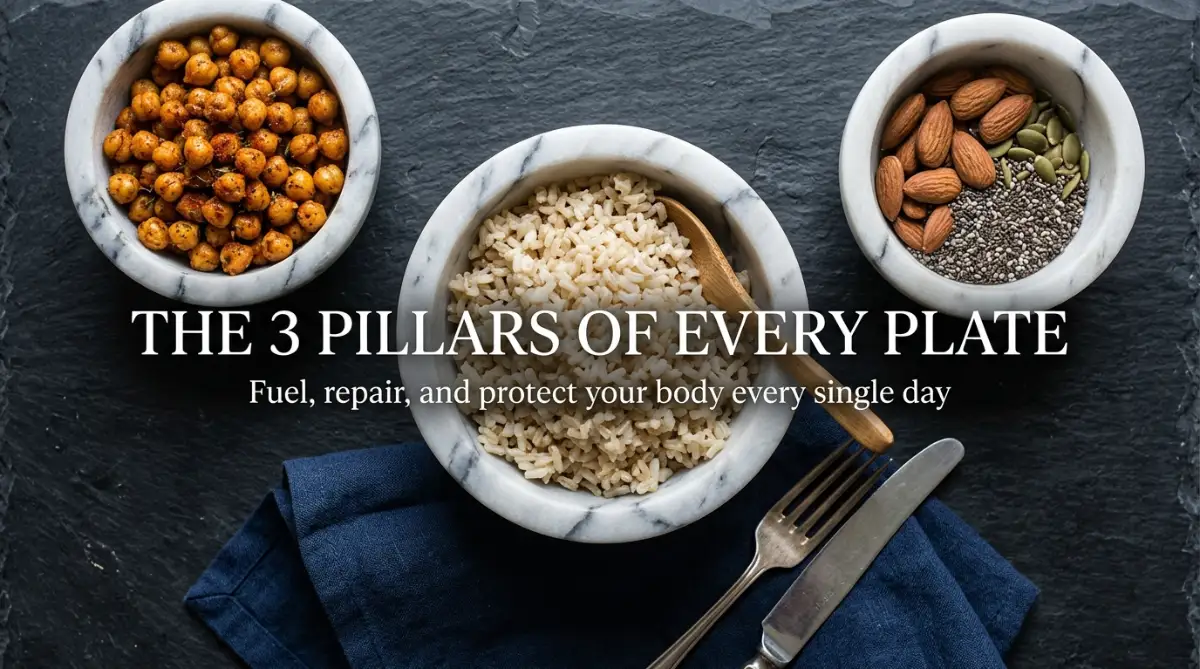
Why Your Body Needs All Three Macronutrients at the Same Time
When you eat a meal made of only one food group, your body struggles to maintain steady fuel levels.
Eating a massive bowl of plain pasta gives you a quick spike in energy, followed by a sudden crash. Eating a plain chicken breast without anything else leaves your stomach feeling empty again very quickly.
Your body is designed to process food best when protein, carbohydrates, and healthy fats work together as a team.
Protein acts as your anchor by slowing down how fast your stomach empties its contents into your intestines.
Carbohydrates supply the actual electrical spark and glucose your brain and muscles need to function clearly.
Healthy fats act like a protective shield, slowing down digestion even further while helping your body absorb key vitamins.
When all three components hit your digestive tract together, your body releases energy slowly and steadily into your bloodstream.
This balance keeps your blood sugar flat instead of sending it on a wild roller coaster ride throughout the day.
You avoid the intense cravings, sudden mood swings, and shaky feelings that usually happen when blood sugar drops too fast.
How to Choose the Right Foods for Each Category
Smart Protein Options for Daily Meals
Protein should be the starting point whenever you plan what to eat for your morning, noon, or evening meal.
You do not need fancy powders or expensive supplements to get enough quality protein into your system daily.
- Lean Meats: Chicken breast, turkey, skinless chicken thighs, and lean ground beef.
- Seafood: Salmon, tuna, cod, shrimp, and tilapia.
- Plant-Based: Eggs, Greek yogurt, cottage cheese, lentils, black beans, chickpeas, and tofu.
Try to pick simple protein sources that are cooked with minimal heavy processing or deep frying.
Keeping your options simple makes it far easier to shop, cook, and track your daily habits over time.
Quality Carbohydrates That Give Lasting Energy
Carbohydrates are not the enemy, despite what popular diet trends might claim online today.
The real secret is choosing complex carbohydrates that contain natural dietary fiber rather than refined starches.
- Whole Grains: Brown rice, quinoa, oats, barley, and whole grain bread.
- Starchy Vegetables: Sweet potatoes, butternut squash, green peas, and corn.
- Fibrous Vegetables: Broccoli, spinach, kale, bell peppers, cucumbers, and zucchini.
Fiber acts like a natural brake inside your digestive system to keep energy moving steadily.
When you pick fiber-rich carbohydrates, your energy stays steady for several hours after you finish your meal.
Healthy Fats That Keep Cravings Away
Many people are still afraid of adding fats to their plate because of old nutrition advice from past decades.
However, natural fats are essential for hormone balance, brain performance, and staying full between your meals.
- Plant Oils: Extra virgin olive oil, avocado oil, and sesame oil.
- Nuts and Seeds: Almonds, walnuts, chia seeds, flaxseeds, and pumpkin seeds.
- Whole Foods: Avocados, olives, whole eggs, and fatty fish like salmon or sardines.
A tiny amount of healthy fat goes a long way toward making your meals taste rich and deeply satisfying.
Without healthy fats, meals often taste dry and leave you looking for snacks half an hour later.
The Visual Hand Method: Portion Control Without Food Scales
Measuring every single bite of food on a electronic digital scale gets exhausting very fast for most people.
You do not need to carry a scale to restaurants or measure your food forever just to stay healthy.
You can use your own hand as an easy, portable measuring tool that stays with you everywhere you go.