

The Silent Trap of Starting a Business Without a Clear Map
Three years ago, I burned through USD 7,400 in personal savings within five short months. I had an exciting product idea, fresh merchandise boxes piled in my living room, and a shiny logo. What I did not have was an actual, working business roadmap. Every morning felt like stepping onto a battlefield without a compass. I poured money into online ads that brought zero paying buyers, chased vague targets, and stayed awake until 3:00 AM wondering if I had ruined my family's financial security.
That painful failure forced me to face a hard truth: passion is wonderful, but it cannot pay your supplier invoices or cover monthly web hosting. Without a simple, realistic roadmap, running a startup turns into an exhausting guessing game. You end up reacting to daily cash emergencies instead of actually growing your revenue.
Writing a business plan sounds dry, corporate, and intimidating, but it does not have to be a 50-page academic thesis. In this guide, I will walk you step-by-step through building a lean, practical roadmap that protects your wallet, clarifies your daily targets, and sets you up for long-term profit.
Quick Blueprint: What You Will Learn in This Guide
- Cut Down Document Size: Why modern investors and banks prefer a concise 10–15 page plan over outdated 50-page documents.
- Mastering Working Capital: How to build conservative cash flow forecasts so you never run out of money during slow months.
- Finding Your Unfair Edge: How to validate real customer demand using free tools before spending money on inventory or development.
- Weekly Execution System: A simple 7-day milestone framework to take your startup from a basic sketch to your first 10 paying customers.

The Ultimate Roadmap: Crafting a Plan That Works
To escape this cycle of worry, you need a structured, realistic startup planning guide. A great plan is not a dusty document you write once and never look at again.
Instead, it is a living, breathing guide that helps you make smart decisions every single day. Let us walk through the process of building one, step by step.
Before we dive into the specific steps, I want to make this process as easy as possible for you. Staring at a blank screen wondering what to write first can be incredibly overwhelming.
To save you some serious time and mental energy, you do not have to start from scratch with a blank page. I highly recommend checking out the official SBA Business Plan Guide or downloading this practical, editable HubSpot Business Plan Template.
Having one of these proven frameworks open as you read through this guide will make your planning process feel significantly more structured, calm, and manageable.
If you prefer a visual walkthrough before diving into the written steps, I strongly suggest watching this comprehensive step-by-step masterclass:
📺 Recommended Video Masterclass:
The Ultimate Guide to Writing a Business Plan (Step-by-Step) (by LivePlan)
Step 1: Writing an Executive Summary That Grabs Attention
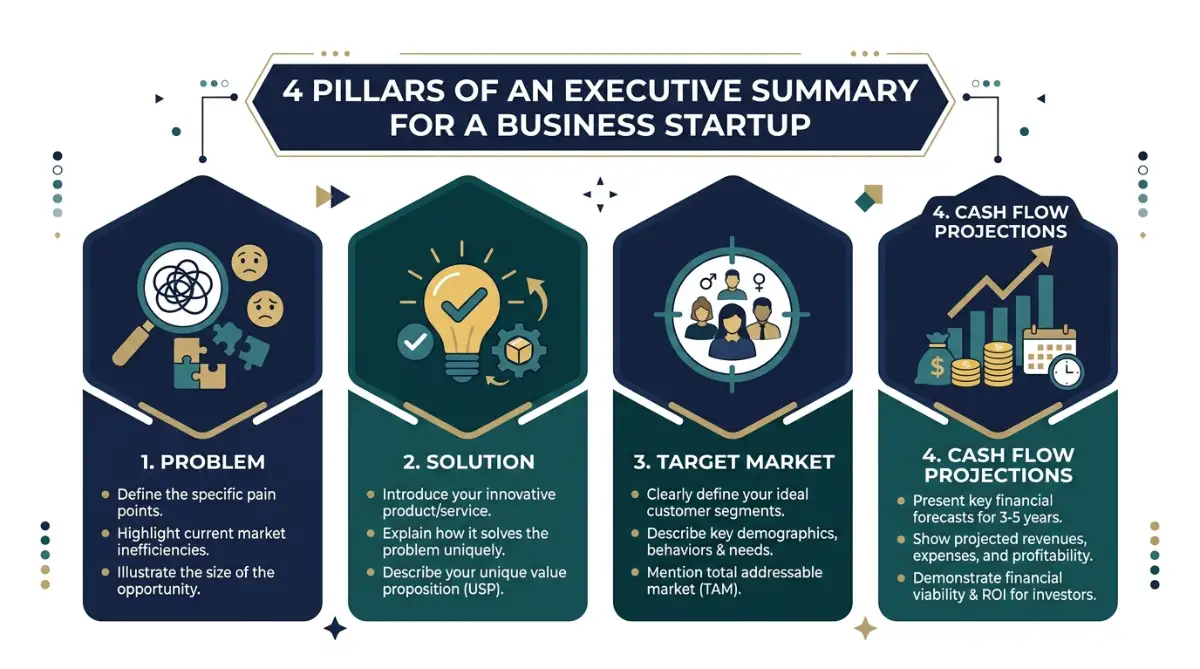
Think of your executive summary as the 60-second elevator pitch you give to an investor who is walking out the door. It always sits at the very beginning of your document, but you should always write it last. If you cannot hook your reader in the first two minutes, they will never flip the page to look at your financial charts.
Keep your sentences short, punchy, and completely free of confusing corporate jargon. You want to clearly answer four simple questions:
- What exact problem are you solving for your customer?
- How does your product or service fix that pain better than anyone else?
- What early traction do you have (such as waitlist sign-ups, pre-orders, or beta feedback)?
- How much capital do you need, and exactly how will it generate profit?
If you are opening an office lunch delivery business, do not just write that you sell sandwiches. State clearly that you give busy corporate workers 45 minutes of their day back with healthy, on-demand meals delivered straight to their desks.
Step 2: Defining Your Company and Value Proposition
Now, you need to paint a clear picture of what your business actually is. This section introduces your company structure, your goals, and your unique edge.
You must explain your legal setup, whether you are a sole owner, an LLC, or a corporation. This might sound dry, but it is highly important for taxes and legal safety.
Next, you must define your value proposition. This is the exact reason why a customer will choose you over a competitor who has been around for years.
Do not just list the features of your product. Instead, focus entirely on the emotional and physical benefits your customers receive.
* Feature: A water bottle with a double-wall vacuum seal.
* Benefit: Your water stays ice-cold during a hot five-hour hike.
When you focus on benefits, your marketing becomes much more natural. You stop begging for sales and start offering genuine help to your audience.
This clear focus also helps your internal team stay on the same page. Everyone will know exactly what promise they need to deliver to the customer.
To show you what I mean, let’s look at how one of the world's most famous startups handled this.
When the founders of Airbnb were first launching, they didn't confuse investors with heavy corporate speak or complicated feature lists.
Instead, as you can see in Slidebean’s Airbnb Pitch Deck Guide, they summarized their value proposition in one short, undeniable sentence: "Book rooms with locals, rather than hotels." This simple phrase explained the exact emotional and financial benefit to the traveler immediately. When you draft your own plan, keep your core message just as simple and accessible.