
The Invisible Trap of Commercial AI Art
When I launched my first online shop last year, I relied heavily on AI images for all my branding and ad graphics. Everything looked amazing until I received a scary legal email claiming my main website banner contained a protected trademark design. That moment made my stomach drop, and I realized I had to completely rethink how I used AI tools for my business.
You spend weeks preparing the launch of your brand-new e-commerce store, feeling a deep sense of pride and excitement. You use stunning, highly detailed AI-generated images to create your website banners, product packaging, and social media ad designs.
The launch is a massive success, and orders start rolling in, but your joy is suddenly shattered by a formal legal letter in your mailbox. A large, expensive law firm has sent you a cease-and-desist notice, demanding thousands of dollars because your automated marketing graphic contains a hidden trademarked design.
The sudden, cold shock of realizing your entire business capital and reputation are in danger turns your dream into a living nightmare. You feel completely helpless, staring at your expensive inventory while trying to understand how a simple design tool could cause such a massive disaster.
Why Traditional Advice Fails to Protect Your Business
When business owners look for ways to use generative software safely, they often rely on incorrect assumptions that put them in direct legal danger. Rushing to use automated graphics without understanding current copyright policies can lead to severe financial damage.
Here is why common commercial AI art beliefs usually fail:
- Assuming a paid platform subscription protects you completely: Most platforms include fine-print clauses that shift all legal blame and financial liability onto you, the user.
- Believing that purely AI-generated art can be copyrighted: Current legal standards confirm that works created exclusively by machines cannot receive copyright protection.
- Using prompts that name-drop real people or brands: Typing the names of famous actors or trademarked products into your generator creates huge right-of-publicity risks.
- Failing to check the background of your images for "hallucinations": AI models frequently draw modified, blurry versions of famous corporate logos without your knowledge.
- Relying on cheap, sketchy apps with unknown training data: Shady software companies often train their neural networks on unlicensed, copyrighted art, creating a major liability for users.
How Legal Fear and Confusion Hurt Your Brand
Living with the constant threat of copyright claims and legal issues takes a heavy toll on your daily business confidence.
- Continuous anxiety before every marketing campaign: You hesitate to launch new ads or post on social media because you worry about hidden trademark violations.
- The embarrassment of having to pull your products down: Being forced to delete your website graphics or discard printed packaging makes your brand look highly unprofessional.
- Deep guilt over disrupting your business growth: Feeling like you have made a rookie mistake that threatens your company's future drains your daily motivation.
- The financial burden of emergency rebranding: Watching your savings disappear on legal fees and quick redesign projects adds to your weekly stress.
Fortunately, you do not need a degree in intellectual property law to protect your brand from these dangers. By understanding how modern copyright systems work and using smart protective steps, you can safely incorporate artificial intelligence into your marketing.
The Practical DIY Roadmap to Safe AI Art Socialization
To use generative AI for your business graphics successfully, you must realize that these systems do not operate under standard human laws. The computer is simply a pattern-matching engine that does not know the difference between public domain shapes and protected brand designs.
Think of your multi-pet home or your creative workspace like a highly delicate business negotiation.
You must act as the patient, protective translator, ensuring that every image you post is legally safe, unique, and free from glitched details.
We will show you the first three essential steps to master this safe design workflow and protect your business.
Step 1: Shifting from Simple Output to Custom Scent Swapping (Scent Chemistry)
The first step to safe AI art is understanding that direct, raw generations are highly risky to use for commercial packaging or advertisements. Before you put an image on your website, you must ensure it does not contain hidden traces of copyrighted designs.
The Chemistry of Training Data Scents
When an AI model is trained, it studies millions of image-text pairs from across the internet, learning the visual coordinates of different styles.
The system does not save the actual image files on its hard drive, but it stores the mathematical "scent" of those styles
If your prompt is too close to a specific artist's signature look, your output might mimic their protected work too closely, creating a legal risk.
Implementing the Custom Style Blend
To protect your brand, never use the name of a living artist inside your text prompt box to get a specific style.
Instead, describe the basic elements of the style using generic terms, such as "flat vector illustration," "pastel color tones," or "minimalist design."
Once the image is generated, perform a visual check to make sure it looks unique and does not mimic any recognizable art.
If the image looks too familiar, use manual digital editing tools to change the color tones and brushstrokes before publishing.
This simple step ensures that your finished marketing graphics are completely unique to your business, lowering your risk of style claims.
Step 2: Understanding the "No Human Author, No Copyright" Rule
Want to know exactly how copyright laws handle AI-generated content? Watch this quick video breakdown before reading the rest of the guide below!
Here is a quick tip I learned the hard way: never use a raw AI image straight out of the generator for your main products. I always bring my raw graphics into editing software to add my own custom text, layers, and personal brand touches so my work stays completely unique and legally safe.
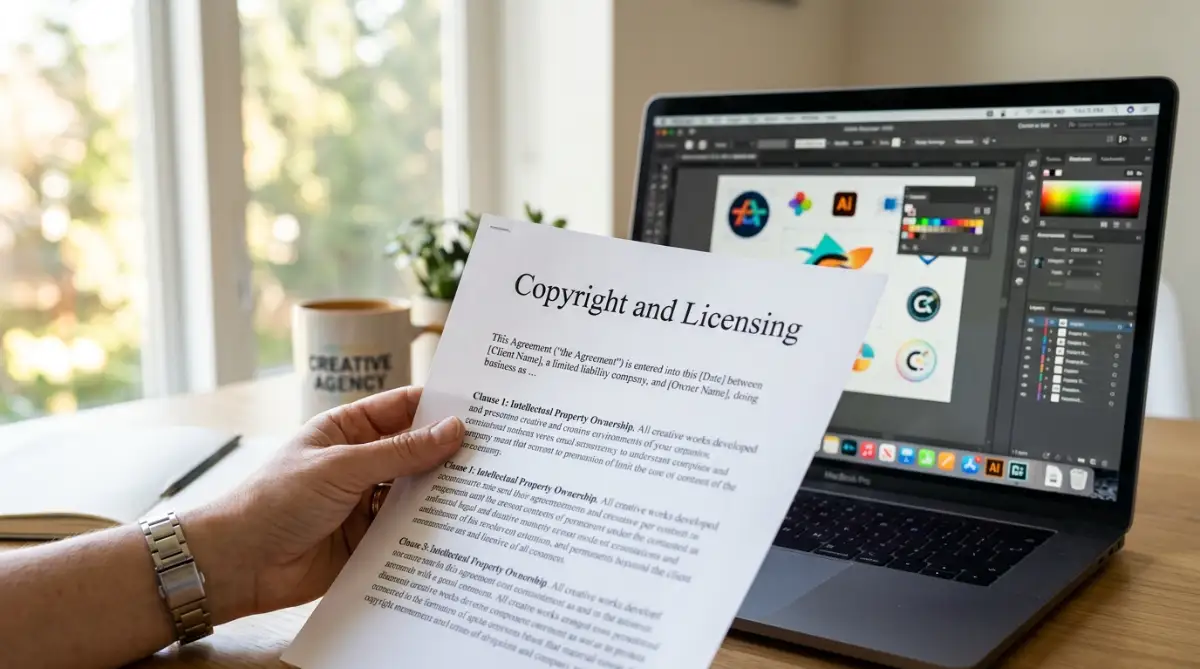
One of the biggest mistakes business owners make is assuming they own the exclusive rights to their generated AI graphics. Recent Supreme Court decisions have confirmed that works created exclusively by machines without human authorship cannot receive copyright protection.
The Danger of public Domain Ownership
Think of raw, unedited AI generations like building a retail shop on public land without any fence.
Because the law does not recognize the computer as an author, anyone can legally copy, reuse, or sell your exact graphics.
Your competitors can download your website banners and use them for their own ads, and you will have zero legal way to stop them.
How to Add Significant Human Creative Input
To secure your business assets, you must add a meaningful layer of human creative input to every AI generation you use.
Take your raw AI image and open it inside editing software like Photoshop, Illustrator, or Canva.
By combining your AI assets with original text, hand-drawn elements, and custom brand logos, you create a complex graphic design.
This hybrid design is fully eligible for copyright protection, ensuring your valuable business assets remain secure.
Step 3: Auditing Outputs for Trademark Hallucinations and Watermarks
Another common error is failing to inspect your generated images for subtle trademark violations.
During the training process, the neural network learns from billions of internet photos, many of which contain protected corporate logos.
The Risk of Visual Hallucinations
When generating a scene like a busy street or a modern kitchen, the AI may draw modified versions of famous logos without your knowledge.
For example, a cup on a counter might feature a green circular shape that looks remarkably like the Starbucks logo.
If you use this image in a paid ad campaign, you can be held directly liable for trademark infringement.
Implementing the Visual Audit Checklist
Always open your generated graphics in a full-screen view and zoom in on all the background details.
Inspect every coffee cup, t-shirt chest area, car grille, and storefront for any shapes that resemble real-world brands.
If you find a suspicious shape or a blurred, messy watermark that looks like stock photography, erase it immediately.
Use the clone stamp or healing brush in Photoshop to replace the glitched area with a clean, solid color.
This simple visual audit protects your business from accidental trademark disputes, keeping your marketing campaigns safe.
By implementing these three initial training steps, you are successfully setting up a safe, professional-grade design system for your business. Your social media graphics and product packaging will look clean, unique, and legally secure, helping you grow your brand without fear of unexpected lawsuits.
Step 4: Avoiding Likeness, Digital Replicas, and Celebrity Rights
When generating characters or models for your product photography, you must avoid using the likeness of real people.
Recent federal proposals, such as the bipartisan NO FAKES Act, are moving forward to create strict intellectual property rights around a person's voice and visual likeness.
This means that if you generate an image that looks remarkably like a famous celebrity, actor, or even a private citizen without their consent, you can face severe legal liabilities.
How to Generate Safe, Unique Faces
Never use the name of a specific living person inside your text prompt box to generate a character face.
Instead, describe the face using generic, non-specific terms, such as "a model with green eyes, dark brown hair, and soft lighting."
You can also use tools that allow you to control the exact facial structure of your model, ensuring they do not mimic any real person.
This simple safety habit keeps your product photography completely free from right-of-publicity claims.
Step 5: Utilizing Platforms That Offer Copyright Indemnity
When choosing which AI generation tools to use for your business, always read the platform's paid terms of service carefully.
Some premium platforms offer copyright indemnification clauses for their paid business subscribers.
This means that if your generated image is sued for copyright infringement, the platform's pare