

The Hidden Stress of Owning an EV: The Silent Fear in Your Garage
Three years ago, I drove my shiny new electric car home from the dealership feeling on top of the world. But that excitement quickly evaporated the very next week. Every single morning, my eyes were glued to the battery gauge on the dashboard. I felt a knot in my stomach every time the percentage dropped below 60%. I caught myself turning off the cabin heater in freezing weather just to save an extra three miles.
I was terrified of getting stranded on a dark country road or finding a dead public charging stall. Worse, my head was spinning with nightmare thoughts of paying 15,000 USD to swap out the whole battery pack once the factory warranty expired.
If you find yourself sweating over battery numbers like I did, take a deep breath. You are not alone. After driving over 45,000 miles and talking directly with battery engineers, I realized that modern packs are tough, smart, and ridiculously easy to maintain. In this practical guide, I will share the exact daily habits that cured my driving stress and will keep your pack running like new for hundreds of thousands of miles.
⚡ Quick Cheat-Sheet for Busy Drivers
- Stick to the 80/20 Rule: Keep your daily charge between 20% and 80% for standard NMC packs (charge to 100% weekly only if you own an LFP battery).
- Charge Slow at Home: Rely on overnight Level 2 home charging for your regular routine, and save high-speed DC fast chargers for highway trips.
- Tame the Thermostat: Plug in on freezing winter nights and blazing hot summer afternoons so your car conditions its battery using wall power instead of pack energy.
- Drive Smoothly: Turn on one-pedal driving and keep your tires inflated to factory specifications to easily gain up to 10% more highway range.
The Science of Power: How Your Electric Car Battery Actually Works
To keep your battery healthy, you do not need a degree in chemistry. You just need to understand one simple component: the lithium-ion cell.
Think of your battery as a tiny, two-sided sponge. When you charge the car, lithium ions flow to one side.
When you drive, those same ions flow back to the other side to create electricity. If you push too many ions to one side and hold them there, the sponge starts to wear out.
This wear is what scientists call EV battery degradation. It happens naturally over time, but your daily habits decide how fast it happens.
By changing a few small things in your daily routine, you can keep the sponge healthy for hundreds of thousands of miles. Let us look at the practical, science-backed steps you can take starting today.
Step 1: Live in the Sweet Spot (The 80/20 Charging Rule)
The easiest way to protect your electric vehicle battery life is to avoid the extremes. Batteries do not like to be completely full, and they hate to be completely empty.
Imagine eating a massive holiday dinner. You are so full that your stomach hurts, and you just want to lie down on the couch.
That is exactly how your battery feels when it is charged to one hundred percent. The internal chemical pressure inside the battery cells is at its absolute highest peak.

If you leave your car sitting at a full charge in a hot driveway, the battery degrades much faster. The same thing happens when you let the battery drop below ten percent.
To keep things safe, try to keep your daily charge level between twenty percent and eighty percent.
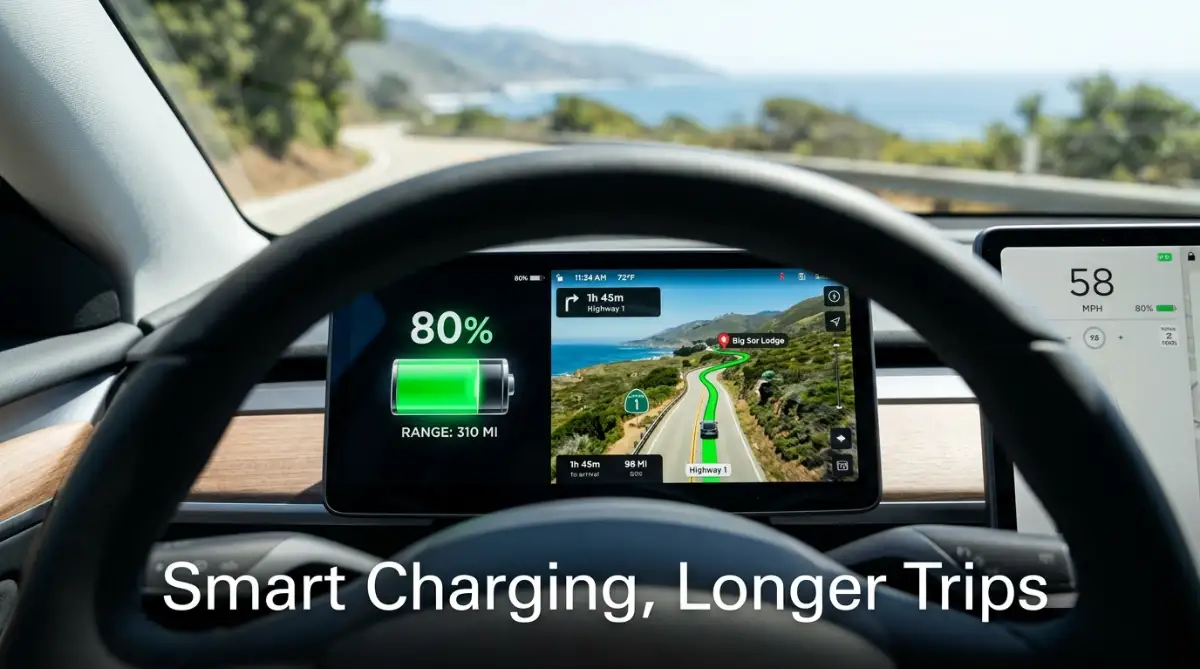
Most modern electric vehicles let you set a maximum charge limit in the settings menu. Set this limit to eighty percent for your normal daily driving.
During my first month with an EV, I plugged in every single evening and topped off to 100%. I thought I was being prepared, but I was actually cooking my battery with unnecessary chemical tension. Pull out your smartphone right now, open your vehicle's app, and drag that charge slider down to 80%. It takes ten seconds, saves your battery from high-voltage stress, and spares you thousands of USD in long-term wear.
Only charge to one hundred percent when you are about to start a long highway road trip. This small change alone can add years of life to your car.
But wait, I need to share an important exception with you! If your car uses a Lithium Iron