

The Hidden Risks in Daily Items and My Wake-Up Call
Three years ago, my kitchen almost burned down while I made my morning coffee. I had bought a shiny silver electric kettle on sale, thinking any appliance sold at a department store was completely safe.
When I pushed the switch down, a loud pop rang out, and black smoke poured from the base directly onto my countertop. I yanked the plug with shaking hands. That single moment ruined my blind trust in retail goods.
Like most folks, I used to grab phone chargers, plastic toys for my niece, and home gadgets without a second thought. I assumed big brands and retail chains ran rigorous lab tests on everything before stocking their shelves. But the truth is much messier. Many products slip past real scrutiny, while others pass brutal stress tests behind heavy steel doors.
That scary kettle experience pushed me to tour certified safety labs, talk directly with test engineers, and study the exact steps that keep dangerous goods away from your living room. Here is what actually happens inside real safety labs, and how you can spot unsafe junk before spending your hard-earned money.
Quick Safety Takeaways: What You Need to Know in 30 Seconds
- Drop & Flex Testing: Legitimate products survive thousands of robotic drops and heavy cable twists before ever reaching store shelves.
- Chemical Checks Matter: Toxic elements like lead and cheap plasticizers carry zero odor; certified labs use molecular scans to catch them.
- Fake Logos Are Everywhere: Never trust a flat, peelable safety sticker. Look for molded logos with traceable registration numbers.
- Five-Second Store Test: Always flex the rubber base where a power cord meets its plug. If the plastic creases stiffly, walk away.
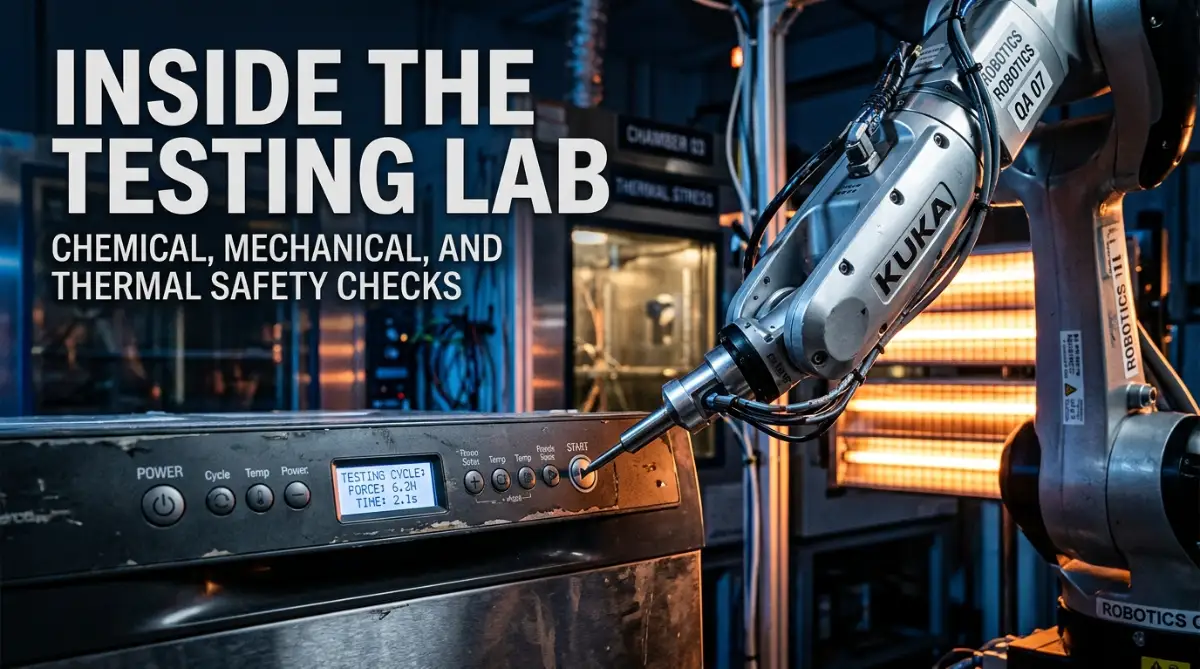
The Complete Inside Look at How Experts Test Consumer Product Safety
Phase 1: Mechanical Stress and Physical Durability Testing
Professional product evaluation always starts with physical abuse tests that simulate years of harsh daily use. Engineers know that consumers drop items, spill liquids on them, and push buttons far too hard.
In a modern testing laboratory, machines do not treat products gently at all. They pull, twist, drop, and strike items thousands of times to find weak spots before customers do.
Here are the main mechanical checks every durable product must survive:
- Drop and Impact Testing: Items are loaded into mechanical arms and dropped onto hard concrete or steel plates from multiple heights and angles.
- Tensile and Pull Testing: Seams on clothing, straps on backpacks, and small parts on toys are pulled with calibrated force machines to prevent choking hazards.
- Vibration and Transit Simulation: Products inside their retail boxes are placed on shaking platforms to ensure they survive rough shipping trucks and cargo flights.
- Repetitive Fatigue Testing: Automated pneumatic arms push buttons, open hinges, and twist dials over fifty thousand times non-stop.
During one of my laboratory visits, I watched a mechanical arm slam a microwave door shut ten thousand times in a single day. The engineer explained that if the door latch loosens even half a millimeter, dangerous microwave radiation could leak out.
That level of extreme physical testing ensures that ordinary household wear and tear will never turn a normal device into a household danger.