
What to Expect During Your First Year of Online College: A Real Survival Guide

When I first started my online degree, I honestly thought it would be a breeze. I imagined working in my pajamas and taking easy quizzes, but within two weeks, my kitchen table was covered in messy sticky notes and I was missing deadlines. It took me a few painful months to realize that studying from home requires a real plan, not just wishful thinking.

You probably signed up for your online degree with a beautiful dream in mind. You imagined waking up late, sipping hot coffee in your favorite pajamas, and breezing through your assignments from the comfort of your bed.

The idea of total freedom and zero commute sounds like the ultimate academic paradise. You think to yourself that this will be much simpler than waking up early and rushing to a physical campus every day.

But then, the actual classes begin, and reality hits you like a cold wave. The screen stares back at you with a mountain of text, confusing dashboards, and endless deadlines.

Suddenly, that beautiful dream of flexibility starts to feel like a stressful trap. You realize that no one is watching over your shoulder to make sure you actually do the work.

The Hidden Storm of Virtual Learning

When you first transition to online learning, you quickly find yourself facing a unique kind of isolation. It is not just about doing homework at home; it is about managing your entire life without a physical guide.

* You sit at your desk for hours, wondering if other students are struggling as much as you are.

* The separation between your personal space and your classroom space starts to blur, making it hard to relax.

* You realize that staying self-motivated every single day is much harder than you ever imagined.


Many students fall into deep worry because they do not know how to handle this shift. They search online for help, only to find generic tips that do not solve their real, daily problems.

* Most online advice tells you to "just stay organized" without showing you the exact steps to do it.

* You receive conflicting information about how many hours you actually need to study each week.

* Traditional advice ignores the heavy screen fatigue and eye strain that come with online learning.


This lack of practical guidance leaves you feeling lost in a sea of digital folders and discussion boards. You begin to doubt your own abilities, wondering if you are cut out for college at all.

How Digital Isolation Quietly Steals Your Confidence

The lack of a physical campus can take a quiet toll on your mental well-being. When you do not see your peers face-to-face, you easily fall into the trap of thinking you are the only one who does not understand the lessons.

* You start to feel disconnected from the academic community, which drains your daily enthusiasm.

* Your self-confidence drops when you struggle to balance your personal chores with school deadlines.

* The constant pressure to check your portal for updates creates a state of low-level, continuous anxiety.


If you feel this way, please know that you are not alone, and you are not failing. You are simply experiencing the natural adjustment phase of your very first term.

With the right system, you can turn this overwhelming experience into a smooth, rewarding journey. Let us look at the practical, real-world steps to help you master your first year of online college.

The True Blueprint for Online College Success

Success in a virtual classroom does not depend on luck or natural genius. It depends on building simple, repeatable habits that protect your time and energy.

To help you navigate this transition, we have broken down the journey into clear, actionable areas. These are steps you can start practicing today to regain control of your education.

Phase 1: Rebuilding Your Physical and Digital Space

Your environment directly dictates how your brain processes information. If you try to study in a chaotic space, your mind will feel equally chaotic.
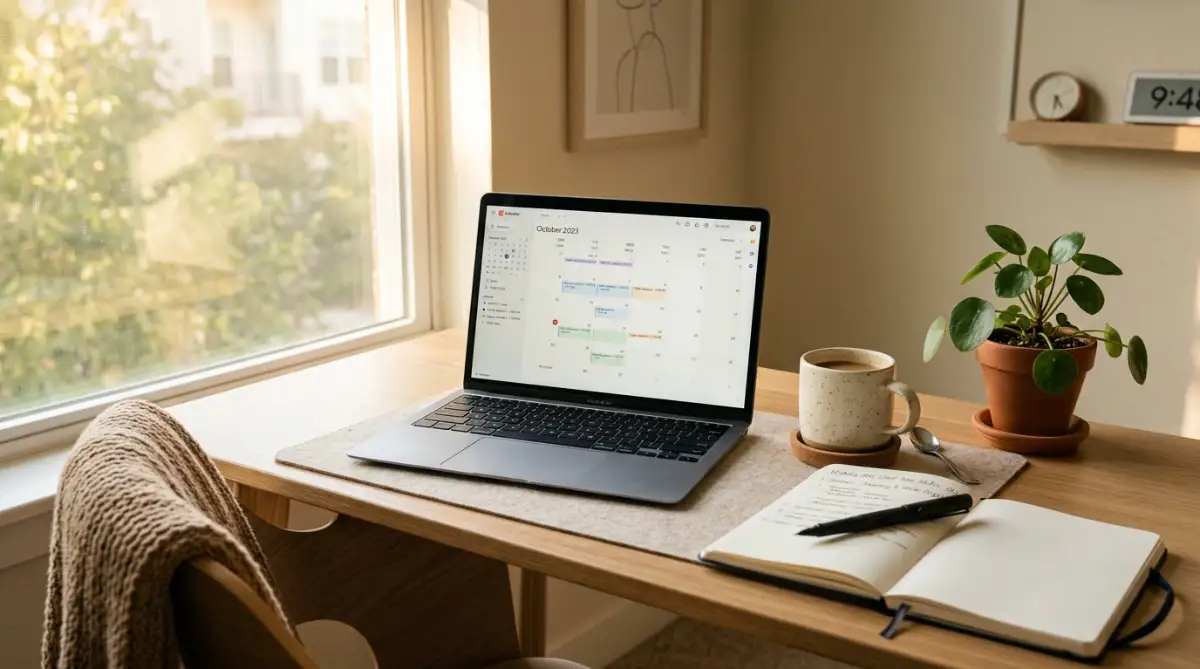
1. Establish a Non-Negotiable Study Zone

Your bed is meant for rest, sleep, and recovery. When you study in bed, you confuse your brain, making it hard to focus during study time and hard to sleep at night.

Find a quiet corner in your home and set up a dedicated desk and chair. This physical separation acts as a mental trigger that tells your brain it is time to work.

Keep this space clean and free of non-academic distractions. When you sit in this chair, your mind will automatically transition into a productive state.

2. Declutter Your Digital Desktop

In online college, your computer is your actual campus. If your desktop is covered in random files and unnamed documents, you will waste precious time looking for your homework.

Create a master folder for the current semester on your computer. Inside that master folder, create separate folders for each class you are taking.

Save every syllabus, reading assignment, and submitted essay into these organized folders immediately. This small habit prevents the panic of lost homework right before a deadline.

Phase 2: Mastering the Art of the Virtual Schedule

Here is a big mistake I made during my first term: I used to write my daily assignment list on random scraps of paper that kept disappearing. Once I started putting every single due date into one digital calendar on my phone, my stress levels dropped almost overnight.

The biggest benefit of online college is flexibility, but it is also the biggest trap. Without a set schedule, your days will slip away, leaving you with a pile of late assignments.

Traditional College RoutineOnline College RealityThe Ideal Hybrid Solution
Set class times in a physical roomStudy whenever you want, no set timesCreate a fixed, self-imposed daily calendar
Professors remind you face-to-faceAnnouncements are purely digitalCheck your student portal twice every day
Built-in breaks walking between classesHigh risk of sitting for hours straightUse the Pomodoro technique with active breaks


1. Treat Online Classes Like On-Campus Classes

If you want to see how top students manage their daily virtual schedule, watch this practical video guide! It shares simple routines to help you stay focused and master your online classes before you read the rest of our tips below.

Do not wait for free time to appear in your schedule, because it never will. Instead, block out specific hours of your day for each course.

If you have a history class, decide that you will study history every Tuesday and Thursday from 9:00 AM to 11:00 AM. Write this down in your planner as if it were a physical class you must attend.

Tell your family or roommates about these dedicated study blocks. This helps them respect your study hours and reduces home interruptions.

2. The Danger of the "Sunday Night Crunch"

Many online courses have assignments due every Sunday night at midnight. It is incredibly tempting to wait until Sunday afternoon to start all of your weekly tasks.

This habit leads to low-quality work, extreme stress, and painful sleep deprivation. You also run the risk of losing points if your internet connection fails at the last second.

Instead, spread your tasks throughout the week by setting personal deadlines. Aim to finish your weekly readings by Wednesday and your first draft of assignments by Friday.

Phase 3: Navigating the Digital Classroom and Tech Tools

To thrive online, you need to feel comfortable with the software and tools your school uses. You do not need to be a computer genius, but you do need to be prepared.

1. Explore Your Learning Management System (LMS)

Before your classes officially start, spend a few hours exploring your schoolโ€™s student portal. Click on every tab, read the help guides, and locate the gradebook.

Understand where to submit your assignments and how to view your professors' feedback. Knowing how to navigate this platform early saves you from stressful technical errors later.

If your school offers a free introduction course for the portal, take it. It is a small investment of time that pays off all semester long.

2. Build a Quick Tech Backup Plan

Technology will eventually fail you at the most inconvenient moment possible. Your home internet might go down, or your laptop battery might die right before an exam.

Identify a nearby backup study spot, such as a local library, a quiet coffee shop, or a relativeโ€™s house. Make sure they have reliable internet access that you can use in an emergency.

Always save your academic work to a cloud storage system like Google Drive or OneDrive. If your computer crashes, you can easily access your files from any other device.

PRO TIP FROM THE EXPERTS:

Never write your discussion board posts directly inside the student portal browser window. If your browser refreshes or the website times out, you will lose all your written work. Always draft your posts in a separate document editor first, save it, and then paste it into the portal.

Phase 4: Active Communication in a Virtual World

In a physical classroom, you can easily ask a question after the lecture ends. In an online setting, you must be intentional about making contact with others.

1. Write Professional, Clear Emails

Your emails are the only way your instructors can get to know you. Always treat your digital messages with the same respect as a formal business letter.

Include your full name, your student ID, and the specific course section in the subject line of every email. This helps busy professors identify who you are immediately.

State your question clearly and politely, using complete sentences and proper grammar. A polite email shows that you respect your instructor's time and take your education seriously.

2. Attend Virtual Office Hours

Many online professors host weekly video meetings where students can drop in to ask questions. These sessions are usually quiet, with very few students attending.

Take advantage of this time to introduce yourself to your instructor. Ask questions about the reading materials, seek feedback on paper outlines, or discuss career paths.

Building a positive relationship with your professors can lead to letters of recommendation later. It also helps them see you as a dedicated student, not just a name on a computer screen.

Phase 5: Beating the Isolation of the Screen

The lack of physical classmates can make your academic journey feel incredibly lonely. However, you can still build a strong support system from behind your screen.

1. Use Discussion Boards as Social Tools

Many students view discussion boards as a boring, mandatory chore. If you change your approach, these boards can become a great place to connect with peers.

Do not just write the minimum required response to get points. Read what your classmates write and ask thoughtful questions to spark real conversations.

You will soon notice the same students replying to your posts. These connections can easily grow into study partnerships and friendly support networks.

2. Join or Create a Virtual Study Group

If your course does not have an official study group, take the initiative to start one. Post a friendly message on the course board inviting others to join a group chat.

You can use free tools like Discord, Slack, or Zoom to meet weekly. Use these sessions to quiz each other before exams or share notes on difficult readings.

Having a group of peers who understand your specific struggles keeps you accountable. It makes the entire online college experience feel much more human and manageable.

Myth vs. Reality in Online College

Let us clear up some of the most common misunderstandings that trip up new online students. Knowing the truth will help you set realistic expectations for your first year.

  • Myth: Online college takes much less time than traditional college.
  • Reality: Online courses require the exact same amount of study timeโ€”and often more readingโ€”as physical classes. You must dedicate at least 9 to 12 hours per week for each class you take.
  • Myth: You can easily cheat your way through online exams.
  • Reality: Most online schools use advanced proctoring software and plagiarism checkers. Trying to take shortcuts will only lead to academic probation or getting kicked out of your program.
  • Myth: Online degrees are not respected by employers in the real world.
  • Reality: Employers care about your skills, dedication, and the accreditation of your school. Successfully completing an online degree actually proves to employers that you have outstanding self-discipline and time management skills.

Phase 6: Protecting Your Physical Well-Being

Sitting in front of a computer for long stretches can cause physical fatigue and mental burnout. To stay productive, you must actively care for your body.

1. The 20-20-20 Rule for Eye Strain

Staring at a bright screen for hours causes eye fatigue, headaches, and blurred vision. To keep your eyes safe,

I always recommend following the 20-20-20 rule for digital eye strain, a simple but highly effective practice endorsed by the American Optometric Association to prevent physical fatigue.

Every 20 minutes, I want you to look away from your computer screen and focus on an object that is at least 20 feet away.

Hold your gaze there for at least 20 seconds. Believe me, this quick habit relaxes your eye muscles and completely changes how long you can study comfortably.

2. Move Your Body Frequently

It is easy to lose track of time and sit in the same chair for four or five hours straight. This lack of movement slows your circulation and makes you feel sluggish.

Set a gentle timer on your phone to remind you to stand up every hour. Spend five minutes stretching, walking around your home, or getting a fresh glass of water.

These short, active breaks refresh your mind and give you a boost of physical energy. You will return to your desk feeling focused and ready to tackle the next chapter.

Phase 7: Staying Motivated for the Long Run

The excitement of starting college will eventually fade as the weeks go on. When the initial spark of motivation disappears, you must rely on your deeper purpose.

1. Remember Your "Why"

Why did you decide to enroll in this online program in the first place? Write down your primary reasons on a small index card.

Maybe you want to secure a better career, set a positive example for your family, or gain personal satisfaction. Place this card on your desk where you can see it every single day.

When you are tired and struggling with a difficult assignment, look at your card. It will remind you that your current hard work is building a brighter future.

2. Celebrate Your Small Wins

Do not wait until the final graduation ceremony to celebrate your academic achievements. Acknowledge the small victories you achieve every single week.

If you finish a difficult reading on time, submit a tough essay, or score well on a quiz, take a moment to reward yourself.

Treat yourself to a favorite snack, a walk in the park, or an episode of your favorite show.

Recognizing your progress builds positive reinforcement and keeps you moving forward. Every step you take, no matter how small, brings you closer to your ultimate goals.

Your Journey is Just Beginning

Your first year of online college will certainly have its moments of frustration and challenge. You will have to learn how to manage your time, handle technical difficulties, and stay focused when you want to relax.

But as you practice these steps, you will find that online learning also offers unmatched freedom and flexibility. You can balance your education with your personal life in a way that works best for you.

Be patient with yourself during this transition period. You are learning a completely new way of studying, and it takes time to build these habits.

With focus, organization, and a clear daily plan, you will conquer your virtual classes and build a solid foundation for your entire college career.

Keep pushing forward, and enjoy the reward of taking your future into your own hands.

Next-Level Secrets to Ace Your Virtual Classes

Stepping into your first semester of online college is a lot like learning to ride a bicycle. At first, you wobble, lose your balance, and feel unsure of your footing.

Once you find your rhythm, however, you can travel further and faster than you ever could on foot.

Let us look at some advanced strategies that successful online students use to keep their grades high and their stress levels low.

Many of my students choose this path because they want to study while maintaining a busy personal or work schedule.

If you are still figuring out your path, we suggest looking into high-quality remote degrees from the top US online universities to find a program that perfectly matches your busy lifestyle.

Setting up the right educational foundation from day one makes everything else much easier for us to manage as the semester goes on.

Master the Art of Active Retrieval Study Methods

Passive reading is the number one enemy of the online student. Sitting on your couch and simply highlighting pages in a digital textbook will not help you pass your exams.

Your brain needs to work hard to actually remember information. This is where active retrieval methods come into play to save your GPA.

* Write down three key questions after reading any study chapter.

* Close your textbook and try to answer those questions in your own words.

* Teach the concept out loud to an empty room or a family member.


If you can explain a difficult idea in simple terms, it means you truly understand it. This method helps you move information from your short-term memory to your long-term memory.

You can apply these exact study habits to other fields too, such as learning a new skill.

For example, if you use free online tools to learn a new language easily, you will find that active recall works much better than just staring at vocabulary lists.

Building Long-Term Mental Endurance Under the Screen Light

Digital fatigue is a very real problem when you are studying from home. When your eyes grow tired, your brain quickly follows, and your focus disappears completely.

To fight this, you must learn to manage your mental energy throughout the day. Do not try to sit and study for five hours without a break.

Use a structured timer to split your study sessions into small, focused intervals. Study hard for twenty-five minutes, then walk away from your desk for five minutes.

During those five minutes, do not look at your phone or watch television. Instead, stretch your legs, drink a glass of water, or step outside for some fresh air.

This simple routine keeps your brain fresh and prevents the heavy afternoon burnout that stops most students in their tracks.

It is a long-term strategy that helps you maintain a high level of academic performance all year long.

Create an Offline Sanctuary for Your Mind

Your brain needs a clear signal that the study day has officially ended. When you study and sleep in the same room, your mind can feel like it is always on duty.

At the end of your study session, physically pack your school supplies away. Close your laptop, put your notebooks in a drawer, and clear your desk completely.

This simple act of cleaning up creates a powerful psychological boundary. It tells your brain that it is safe to relax, rest, and recover for the next day.

A healthy mind is your most valuable asset during your college journey. If you take care of your mental well-being, your grades will naturally reflect that care.

Q&A: Your Top Virtual Learning Questions Answered

Question: How do I know if I am spending enough time on my online classes?

Answer: A good general rule is to spend three hours of study time per week for every credit hour you take. If you are taking a three-credit course, plan to spend about nine hours each week on that single class.

Question: What should I do if I start falling behind on my weekly readings?

Answer: Do not try to read everything in one single night to catch up. Break the reading down into small five-page sections and read them during small breaks throughout your day.

Question: Is it necessary to print out my digital textbooks?

Answer: It is not necessary, but printing out highly complex chapters can help reduce your overall screen time. It also makes it much easier to write physical notes and highlight key terms by hand.

Do's and Don'ts for Daily Virtual Learning Success

To keep your daily routine clean and effective, keep these simple guidelines in mind:

* DO check your school announcements first thing every morning.

* DO write down your assignment deadlines in a physical notebook planner.

* DO send a polite introductory message to your professors in week one.


* DON'T keep social media tabs open on your browser while studying.

* DON'T wait until Sunday evening to begin your weekly discussion posts.

* DON'T study in your bed or under heavy, dim lighting.


By following these simple guidelines, you will stay steps ahead of your classmates. You will find that online college becomes a manageable, positive part of your daily life.

Navigating the Pitfalls: Hidden Traps and How to Avoid Them

In my years of advising, Iโ€™ve seen even the most dedicated students stumble into common virtual college traps. Knowing what these mistakes are beforehand is your best defense to protect your GPA.

If you are currently figuring out your academic path, I highly recommend checking out our comprehensive guide on how to choose your college major for your career goals.

Making the right choice early on will keep you excited and highly motivated, even when the coursework gets tough.

Trap 1: The Illusion of "Free Time" and Procrastination

The biggest trap in online college is thinking that you have all the time in the world. Because there are no physical classes to attend at 9:00 AM, you tell yourself you will study later.

"Later" quickly becomes tomorrow, and tomorrow quickly becomes the weekend. Before you know it, you are facing a mountain of homework with only twelve hours left to submit it.

This procrastination cycle causes immense stress and leads to very poor grades. To avoid this, treat your online class times as fixed, immovable appointments in your personal schedule.

Trap 2: Remaining Completely Anonymous in Your Classes

It is very easy to go through an entire online course without ever talking to a single person. You log in, do your work, log out, and remain completely invisible.

This anonymity is a major mistake because it leaves you without any support system when things get difficult. If you struggle with a lesson, you will have no classmates to turn to for advice.

Furthermore, your professors will not know who you are when you ask for help or need a letter of recommendation.

Make an active effort to introduce yourself, participate in discussion boards, and attend live sessions.

Trap 3: The Danger of Multi-Tasking During Video Lectures

It is highly tempting to open a video lecture in one tab while scrolling through social media or playing a game in another.

You might think you are successfully doing two things at once, but this is a scientific lie.

Your brain cannot focus on two complex tasks simultaneously. You will end up missing key details from the lecture, which leads to confusion when you start your homework.

When you are watching a class video, close all other browser tabs and put your phone in another room. Give the lecture your full, undivided attention for the entire duration.

* Put your smartphone on silent mode and place it face down.

* Close your email client and personal messaging apps.

* Take handwritten notes to keep your mind actively engaged with the video.

Trap 4: Ignoring Campus Support Resources

Many online students believe that campus resources like libraries, writing labs, and tutoring centers are only for on-campus students. This is completely false.

Most universities provide outstanding virtual support services specifically designed for remote students.

You can access academic databases, get free online tutoring, and have writing experts review your essays.

Please don't ignore these resourcesโ€”they are already paid for through your tuition fees! Skipping them means you are missing out on valuable tools that can easily raise your letter grades.

Now, if you are looking to build highly practical, career-focused tech skills alongside your college courses, you might also want to explore the best coding bootcamps online to break into software engineering.

Iโ€™ve found that using these external accelerated programs alongside your college studies can give you a massive advantage in today's job market.

A Tale of Two Online Students: Sarah vs. Michael

To see how these habits play out in real life, let us look at the stories of two virtual students during their first semester.

Sarah set up a clean, quiet desk in her living room. She woke up at the same time every morning, checked her student portal, and spent three hours studying before starting her part-time job.

She attended virtual office hours and formed a small study group with three classmates on Discord. Sarah finished the semester with a high GPA and felt confident about her future.

Michael, on the other hand, chose to study from his bed whenever he felt like it. He often skipped his readings, hoping he could look up the answers during his open-book exams.

He stayed anonymous, never emailed his instructors, and left all his writing assignments for Sunday night.

By the middle of the term, Michael felt completely overwhelmed, fell behind on his assignments, and sadly had to withdraw from two of his classes.

Their stories show that success in online college is not about how smart you are. It is entirely about the daily habits and systems you choose to build.

Your Next Moves: A Practical Action Plan for Tomorrow

To wrap things up, let us focus on what you can do right now to prepare for your virtual learning journey. You do not have to change everything overnight.

Instead, start by taking small, simple steps that build your confidence and set you up for a smooth transition. Here is a quick, practical checklist to guide your first week:

* [ ] Pick a quiet, dedicated study spot in your home and set up a clean desk.

* [ ] Log into your school's student portal and read through every syllabus carefully.

* [ ] Write down all your major exam dates and assignment deadlines in a physical planner.

* [ ] Send a polite introductory email to your professors to say hello.

* [ ] Locate and bookmark the digital library and virtual tutoring links on your school website.

* [ ] Turn off your phone notifications and practice studying in thirty-minute blocks.

A Word from the Academic Advisor

As you begin your first year, remember that every single expert was once a beginner. It is completely normal to feel a little lost and overwhelmed during your first few weeks of online classes.

Do not let a difficult week or a confusing assignment make you doubt your path. Every challenge you face is simply an opportunity to learn, adjust, and grow stronger.

Online learning is a powerful tool that puts you in complete control of your education. It teaches you deep self-discipline, time management, and digital communication skills that employers highly value.

Be proud of yourself for taking this bold step toward your personal and professional goals. I always tell my students to stay organized, stay connected, and approach each study session with a growth mindset.

In fact, according to a landmark U.S. Department of Education report on online learning, students who actively manage their schedules and participate in online discussions often perform just as well as, or even better than, traditional on-campus students.

This proves to us that your success is entirely in your own hands!

Your academic journey is a marathon, not a sprint. Take it one day at a time, trust your preparation, and enjoy the wonderful experience of learning on your own terms.

Looking back at my own journey, taking that very first step to fix my study habits changed everything for me. Don't wait for next week or next term to get organized; pick just one small tip from this guide and set up your desk today!

About the Author:

Hey there! Iโ€™m Kamal Uddin, an academic advisor and distance learning specialist with over a decade of experience helping students transition from traditional classrooms to the digital world. Iโ€™ve seen firsthand how overwhelming that first year can feel, but Iโ€™ve also watched hundreds of my students find their unique rhythm and unlock incredible career opportunities. When I am not writing student survival guides or counseling online learners, you can find me exploring new productivity systems or enjoying a quiet cup of coffee. Let's make your academic journey a successful one!

Disclaimer:

The information provided in this article is for educational and informational purposes only. While we make every effort to provide accurate and helpful advice, academic policies, tuition rates, and software systems can vary greatly between different colleges and universities. Always consult with your specific school's academic advisors, admissions office, and student handbook for the most accurate and up-to-date guidance regarding your degree program.