
About the Author:
Hey there! I’m Kamal Uddin. As a dedicated sleep science writer and wellness enthusiast, I have spent years analyzing how our sleep environments directly impact our physical health. My goal is simple: to cut through the confusing marketing jargon and offer you honest, science-backed advice. I dive deep into clinical studies and consult with chiropractic experts so we can together find real, practical solutions to help you reclaim your mornings and live a pain-free life.
The Invisible Thief: How Your Bed is Quietly Stealing Your Mornings
You open your eyes, expecting to feel rested and ready for the day. Instead, a familiar, sharp ache in your lower back greets you the moment you try to move.
Getting out of bed feels like a physical chore rather than a natural start to your morning. You find yourself sitting on the edge of the mattress, rubbing your lower back, and wondering why you feel so incredibly old.
This is the daily reality for millions of people who struggle with chronic back pain. Your bed should be a sanctuary, a place where your body heals from the stress of daily life.
Yet, for many, the mattress is actually the source of the problem, keeping the body in a state of constant tension all night long.
When you do not sleep well, your entire day suffers. You might find it hard to focus at work, stay active, or even enjoy simple moments with your family.
The Search for Relief: Why Most People Fail to Find the Right Bed
Finding a solution to this problem is rarely simple, and many people end up making their pain worse because of these common issues:
- Falling for the "firm is always best" myth: For decades, people believed that a bed as hard as a board was the only cure for back pain, which is simply not true.
- Trusting marketing buzzwords: Terms like "orthopedic" or "medical-grade" are often used as sales tactics without any actual health testing behind them.
- Buying based on showroom feel: Lying on a mattress for five minutes in a crowded store tells you nothing about how your back will feel after eight hours of sleep.
- Ignoring individual sleep positions: A bed that works wonders for a back sleeper might cause severe pain for someone who sleeps on their side.
- Looking for the cheapest option: Choosing a low-quality mattress to save money often leads to sagging within a year, bringing the pain right back.
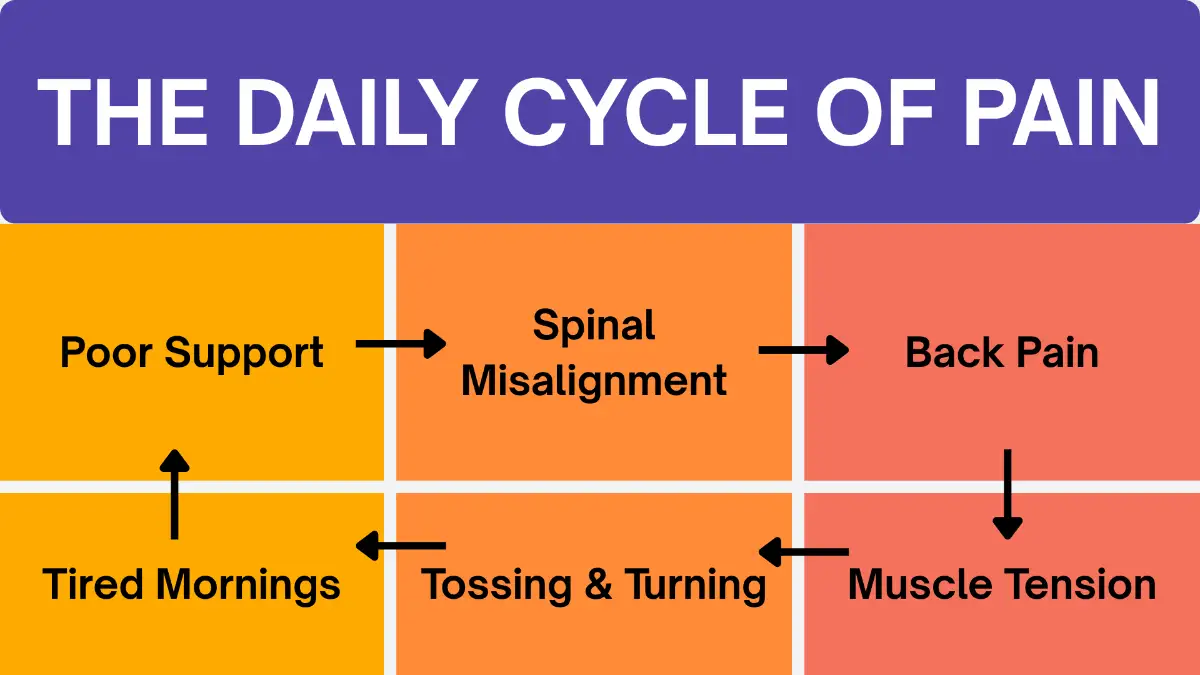
The True Cost: How Bad Sleep Chips Away at Your Mental Peace
Living with constant physical pain does more than just hurt your muscles. It slowly drains your mental energy and takes away your daily confidence.
When you go to bed worrying whether you will wake up in pain, sleep becomes a source of anxiety instead of comfort.
This constant stress keeps your nervous system on high alert, making it even harder for your muscles to relax and heal.
Over time, this cycle of poor sleep and pain can make you feel helpless, irritable, and constantly exhausted.
You deserve to wake up feeling fresh, strong, and ready to face the world without physical limitations holding you back.
Understanding what actually makes a bed supportive is the first step toward reclaiming your health and peace of mind.
The Science of Support: How to Choose a Mattress for Pain-Free Sleep
To find a mattress that actually heals your back, you need to look past the sales talk and understand the basic biology of sleep.
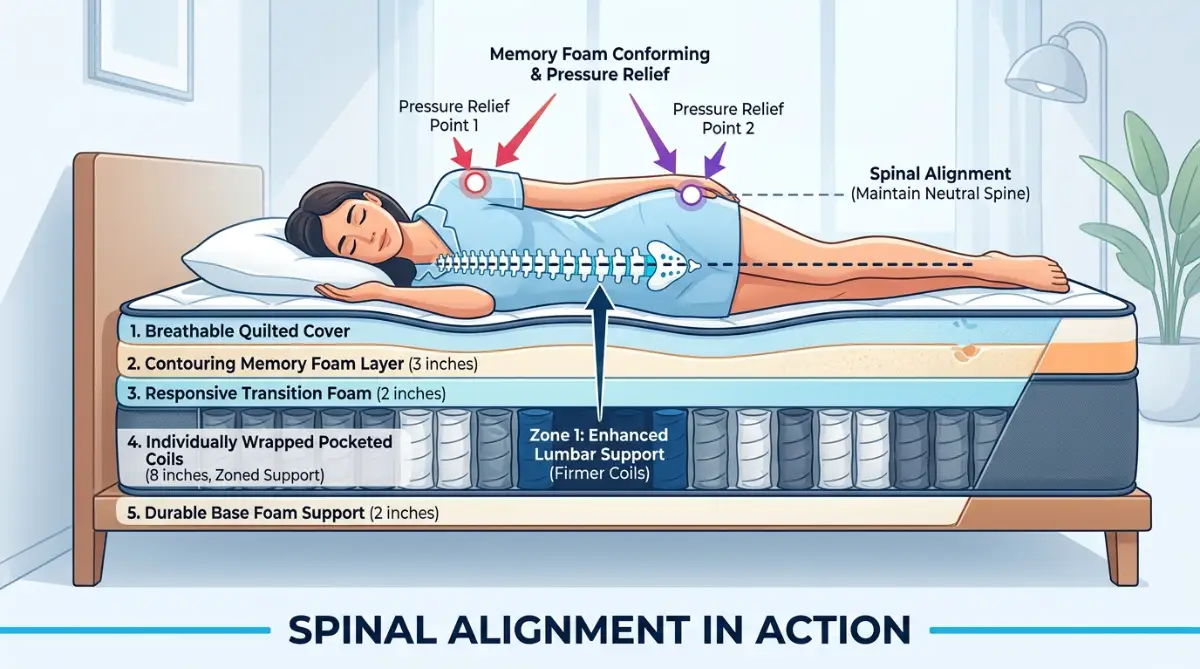
Your body needs two main things when you lie down: proper spinal alignment and effective pressure relief.
Let us break down the exact steps you need to take to find a mattress that provides both of these essential elements.
Step 1: Prioritize Spinal Alignment Over Everything Else
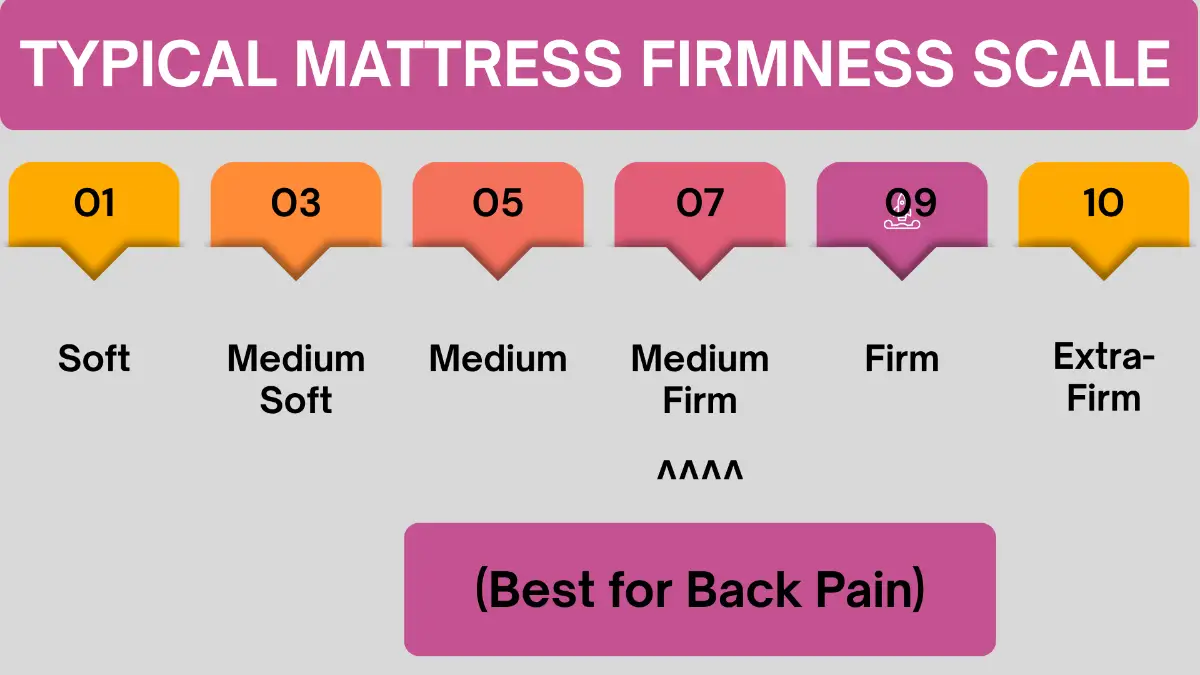
Think of your spine as a straight line when you are standing with good posture. When you lie down to sleep, that line should stay exactly the same.
If your mattress is too soft, your hips will sink too deep, bending your spine into a hammock shape.
If the bed is too firm, your shoulders and hips will be pushed upward, forcing your spine to curve in the opposite direction.
Neutral alignment means your muscles do not have to work overtime to keep your skeleton in place while you sleep.
When your muscles can finally relax, your body can direct its energy toward repairing tissues and reducing inflammation.
Always look for a mattress that adapts to the natural curves of your body while keeping your spine in a straight, relaxed position.
Step 2: Decode the Mattress Firmness Scale
Mattress firmness is usually rated on a scale from 1 to 10, with 1 being as soft as a cloud and 10 being as hard as a wooden floor.
For back pain relief, the sweet spot is almost always in the medium-firm range, which is typically a 6 or 7 on the scale.
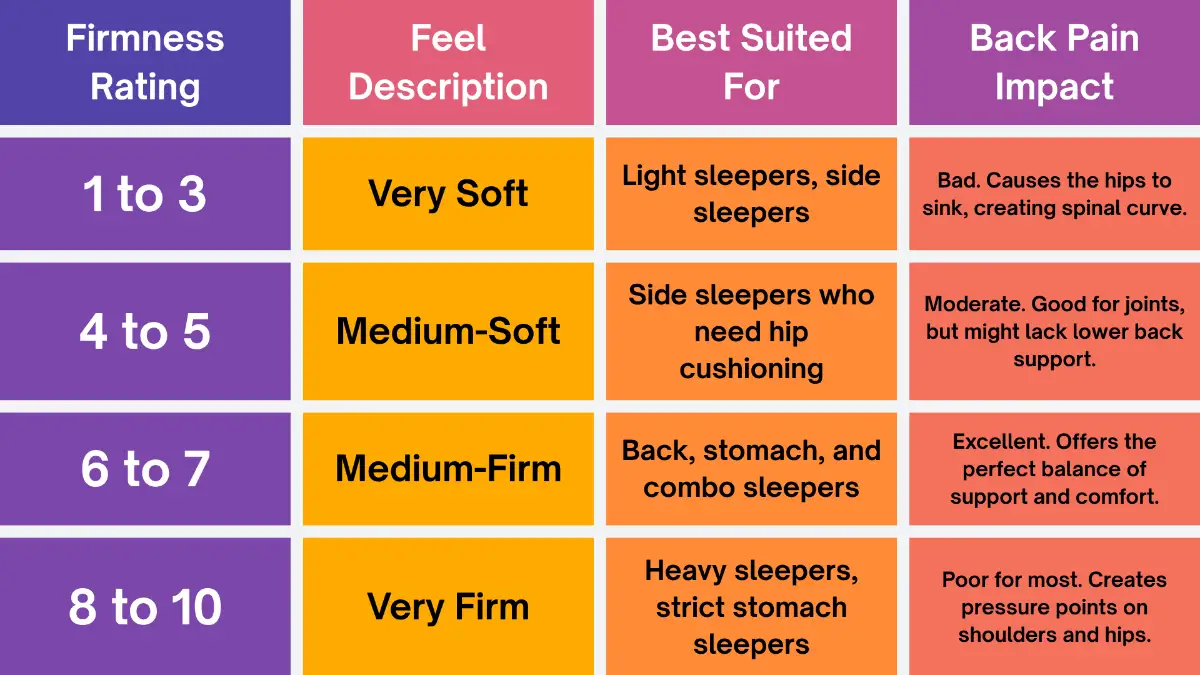
A medium-firm mattress provides enough surface tension to keep your hips from sinking, while still offering enough cushion to cradle your joints.
Medical studies have shown that patients sleeping on medium-firm beds consistently report less pain than those on very firm beds.
Step 3: Compare Materials (Memory Foam, Latex, and Hybrids)
Different materials support your body in completely different ways, and choosing the right one is key to your comfort.
Let us look at how the three most common mattress materials handle back support and pressure relief:
- Memory Foam: This material is famous for its contouring ability. It reacts to your body heat and weight to hug your curves, which is fantastic for pressure relief. However, traditional foam can trap heat, and some people dislike the feeling of being "stuck" in the bed.
- Natural Latex: Made from rubber tree sap, latex offers a responsive, springy support. It pushes back against your body weight, keeping you on top of the bed rather than sinking into it. It is also naturally cool and highly durable.
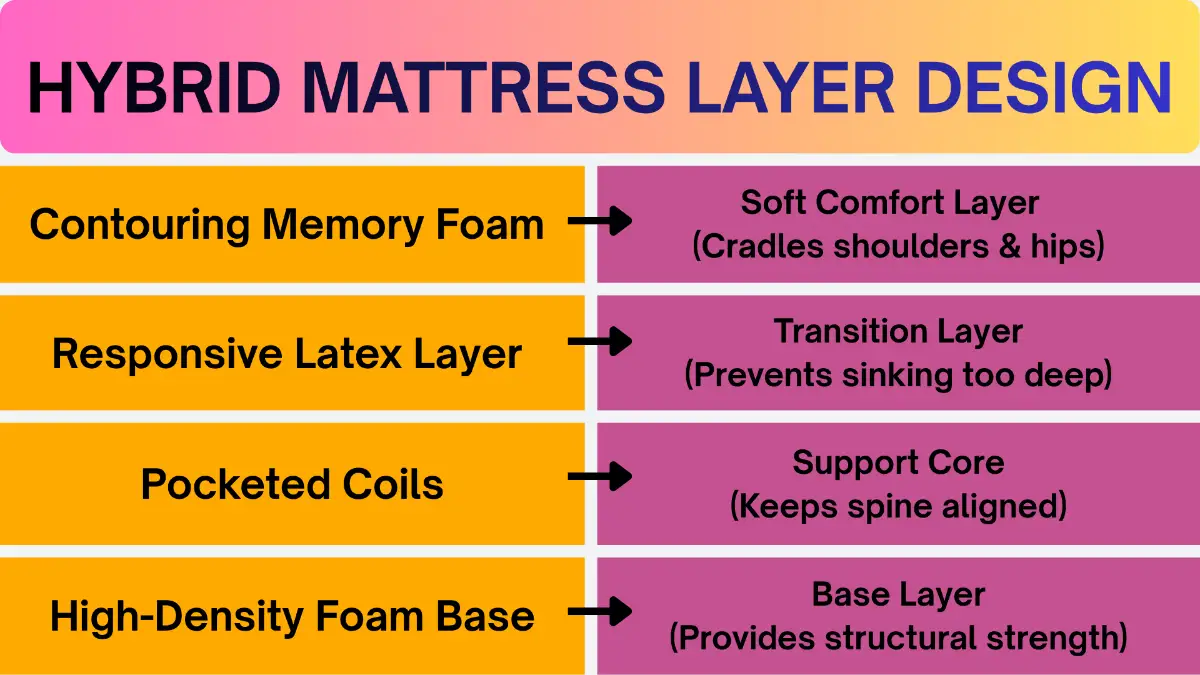
- Hybrid Mattresses: These beds combine a pocketed coil support core with top layers of foam or latex. This design gives you the best of both worlds: the deep, structural support of steel springs and the contouring comfort of foam.
For severe back pain, a hybrid mattress is often the safest bet because the individual coils can move independently to support different parts of your body.
Step 4: Match Your Sleeping Position to Your Bed
Your preferred sleep style dictates exactly where your body needs the most support throughout the night.
If you do not match your mattress to your position, you will likely end up with localized pain in your neck, shoulders, or lower back.
If You Are a Back Sleeper:
You need a mattress that fills the small gap between your lower back and the bed surface.
A medium-firm hybrid or memory foam bed works best here because it supports the natural curve of your lumbar spine.
If You Are a Side Sleeper:
Your shoulders and hips bear the brunt of your body weight, which can create painful pressure points.
You need a slightly softer mattress (around a 5 or 6 on the firmness scale) with thick comfort layers to cushion these heavy areas while keeping your spine straight.
If You Are a Stomach Sleeper:
This is generally the worst position for back pain because gravity pulls your midsection down, arching your lower back.
You need a firmer mattress (a 7 or 8 on the scale) to keep your hips elevated and prevent your spine from bending unnaturally.
Step 5: Check for Targeted Lumbar Support
Some high-quality mattresses come with zoned support systems, which mean the bed is divided into different firmness zones.
The middle third of the mattress, where your hips and lower back rest, is made slightly firmer than the head and foot of the bed.
This targeted support prevents your heaviest zone from sinking, keeping your spine in perfect alignment without making the whole bed feel too hard.
When you shop, look for mattresses that explicitly mention zoned coils or reinforced center zones.
Pro Tip: The Pillow Factor
A great mattress can only do so much if your pillow is wrong. Your pillow should keep your neck in a neutral position, matching the rest of your spine. If you sleep on your side, use a thicker pillow to fill the space between your neck and the mattress. If you sleep on your back, a thinner, contoured pillow is ideal.
Step 6: Test for Ease of Movement and Edge Support
When you have a sore back, the last thing you want is to feel trapped in your bed when you try to change positions.
Traditional memory foam can sometimes create a deep body impression, making it difficult to roll over without straining your back muscles.
Look for a mattress with good responsiveness—meaning the material bounces back quickly when you move.
Additionally, strong edge support is important because it allows you to sit comfortably on the side of the bed when getting up.
If the edges of the bed sag when you sit on them, it forces you to use more back strength to stand up, which can trigger morning spasms.

Step 7: Give Your Body Time to Adjust
When you bring a new mattress home, your body will not adapt overnight, especially if you have been sleeping on a bad bed for years.
Your muscles have developed muscle memory to cope with the old, unsupportive mattress.
When you switch to a bed that actually keeps your spine aligned, your muscles might feel slightly sore or stiff for the first few weeks.
This adjustment period is completely normal and can take anywhere from three to four weeks.
This is why it is highly recommended to choose a mattress that offers a generous, risk-free sleep trial of at least 100 nights.
By focusing on these core elements—firmness, materials, sleep position, and alignment—you can make an informed choice that will help you wake up pain-free and ready for your day.
Advanced Alignment Tricks: Going Beyond the Mattress Surface
Buying a great bed is only half the battle when you want to live without back pain. To get the best results, we must look at how we prepare our sleep environment and how we position our bodies every single night.

The Power of Dynamic Pillow Placement
Many people do not realize that your pillow and your mattress work as a team to protect your spine. If you only focus on the bed, your neck and upper back will still suffer from poor support.
For back sleepers, placing a small pillow under your knees can make a massive difference in your daily comfort. This simple change relaxes your hip flexors and flattens your lower back against the mattress surface.
We don't have to let a bad sleeping posture ruin our spine health. If you want to dive deeper into the clinical perspective, I highly recommend checking out Mayo Clinic's guide on sleeping positions that reduce back pain.
It is a fantastic resource that visually demonstrates how simple pillow adjustments can keep your body in harmony all night long.
If you prefer to sleep on your side, try placing a firm pillow between your knees. This prevents your upper leg from pulling your spine out of line and twisting your lower back during the night.
Stomach sleepers can place a flat pillow under their pelvis to keep their hips from sinking too deep into the mattress.
This small lift keeps your lower spine from arching too much, which is a major cause of morning stiffness.
Evaluating the Foundation Beneath Your Bed
A mattress is only as good as the surface it rests upon. If you put a brand-new, high-quality bed on an old, sagging box spring, you will not get the support you need.
Slatted bed frames are very popular, but the gaps between the slats must be close together. If the gaps are wider than three inches, your mattress will begin to sag into the empty spaces.
This sagging ruins the structural integrity of your bed, causing your back to curve unnaturally while you sleep.
Before you buy a new bed, check your current frame to ensure it provides a completely flat, sturdy foundation.
We often underestimate how much our daily habits and support structures dictate our orthopedic health.
To understand this connection better, I suggest you take a look at Harvard Health Publishing's overview on posture and back health.
It reminds us that proper skeletal alignment is a 24-hour job, not just something we think about when we lie down.
For heavy hybrid and latex mattresses, a solid platform bed or a reinforced steel frame is always the best choice.
These materials need continuous, strong support to keep their shape and give you the pain relief you paid for.
The Six-Month Rotation Routine
To keep your mattress supportive for many years, you need to distribute the wear and tear evenly across the surface.
We naturally sleep in the exact same spot every night, which puts continuous pressure on the same areas of foam or springs.
Over time, this repeated weight creates soft spots and minor dips in the mattress comfort layers. To prevent this, make a habit of rotating your mattress 180 degrees every six months.

This simple task ensures that your heaviest parts, like your hips, rest on fresh, firm materials that have had time to recover.
Please note that you should only rotate your mattress, not flip it over. Most modern beds are designed with a specific top-to-bottom layout,
and sleeping on the hard base layer will cause severe discomfort.
Taking care of your mattress is just as important as choosing the right one. If you are struggling to get comfortable tonight,
I've found that implementing the sleep hygiene tips in Sleep Foundation's manual on how to sleep with lower back pain can offer immediate, practical relief while you wait for your body to adjust.
Hidden Hazards: The Most Common Mattress Mistakes to Avoid
When you are in pain, it is easy to make quick decisions based on frustration rather than logic. Let us look at the most common mistakes people make when trying to fix their sleeping setup, and how these errors can harm your health.
1. Trying to Fix a Sagging Mattress with a Foam Topper
When an old bed starts to sag in the middle, many people try to save money by buying a thick memory foam topper. They hope this extra layer of cushion will fill the dip and bring back the comfort they lost.
This is a major mistake because a topper simply follows the shape of the mattress underneath it. If your bed has a deep dip in the middle, your new topper will simply sink right into that same hole.

You will still wake up with a curved spine, but now you will also have to deal with the heat trapped by the extra layer of foam.
Trust me, I know how tempting it is to buy a quick fix, but a topper will not cure a broken mattress. Instead of wasting your hard-earned money on a temporary band-aid, let's learn to recognize when a bed is truly past its prime.
You can read more about the telltale warning signs in WebMD's guide on signs that you need to replace your mattress.
2. Overlooking the Relationship Between Body Weight and Density
A mattress that feels perfect for a light person might feel like a sinking trap for someone who carries more weight. Many shoppers fail to match their body weight to the density of the mattress materials.
If you weigh over 200 pounds, a standard all-foam bed will likely compress too much under your hips. This deep compression pulls your lower back out of line, causing severe muscle strain by morning.
Larger sleepers need high-density foams and thick steel coils to get the proper resistance their bodies require.
Conversely, very light sleepers might not be heavy enough to compress the comfort layers of a firm mattress, leading to painful pressure points on their shoulders and hips.
Our bodies are unique, and what works for a lightweight sleeper will feel completely different to someone with a larger frame.
To understand how mechanical stress and physical factors influence the severity of spinal issues, I highly recommend reading through the National Institute of Neurological Disorders and Stroke (NINDS) low back pain overview.
It explains the underlying science of how pressure affects our lumbar region.
3. Keeping Your Bed Beyond Its Natural Lifespan
We often get attached to our beds, but mattresses do not last forever. Even high-end beds lose their ability to support your spine after seven to ten years of continuous use.
The springs inside a hybrid bed slowly lose their tension, and memory foam loses its ability to bounce back to its original shape.
If you find yourself waking up with back pain that slowly fades away after you stretch and walk around for an hour, your bed is likely worn out.

Holding onto an old mattress to save money will only cost you more in chiropractic visits and lost productivity.
4. Buying a Mattress Without a Long-Term Sleep Trial
Lying on a bed in a retail showroom for ten minutes is one of the worst ways to choose a mattress. Your body is fully awake, your muscles are tense, and you are likely wearing outdoor clothes.
It takes your body at least three to four weeks to fully adjust to a new sleeping surface. This is why you should never purchase a bed from a retailer that does not offer a risk-free home trial of at least 100 nights.
If the company does not give you enough time to test the bed in your own home, walk away and find a brand that does.
Never let a quick 10-minute showroom test decide the fate of your spinal health. We need a real-world trial of at least 30 to 100 nights to let our muscles adjust.
If you want a deeper look into the clinical process of choosing the perfect bed, check out Spine-health's expert guide on choosing the best mattress for lower back pain.
It is an incredibly detailed resource that I personally refer to all the time.
5. Ignoring the Danger of Sleeping Too Hot
When a mattress traps your body heat, your core temperature rises, which signals your brain to wake up. This heat build-up causes you to toss and turn throughout the night as your body searches for a cool spot on the bed.
All this constant movement keeps your back muscles tense when they should be resting and recovering.
If you already struggle with back pain, this continuous movement can trigger painful muscle spasms during the night.
Look for beds that use breathable covers, open-cell foams, or pocketed coils that allow air to flow freely through the mattress.
If you are constantly tossing and turning because you are sweating, your back muscles will never get the chance to heal.
Maintaining a cool, stable sleeping environment is key to keeping those painful nighttime spasms at bay.
To learn more about how to set up your bedroom for optimal comfort, you can read Cleveland Clinic's advice on sleep posture and back pain coping tips.

Your Roadmap to Pain-Free Mornings: The 24-Hour Spinal Recovery Plan
Taking action to improve your sleep setup is one of the most powerful steps you can take for your long-term health. You do not have to live with the constant dread of morning back pain.
By making smart, informed choices about your bed, your pillows, and your sleep habits, you can give your body the rest it needs to heal.
Imagine waking up, stretching your arms, and stepping out of bed with a body that feels light, relaxed, and completely pain-free.

This future is completely possible when you prioritize your spinal health and invest in a sleep setup that supports your body.
Start today by evaluating your current mattress and testing the pillow tips we discussed in this guide. Your back will thank you for years to come.
Do's and Don'ts for Better Sleep Hygiene
To help you put this guide into action, here is a quick reference list of daily habits that support your back and improve your sleep quality:
- DO rotate your mattress every six months to keep the support layers even and prevents sagging.
- DO use a supportive pillow that matches your preferred sleeping position to keep your neck aligned.
- DO ensure your bed frame has strong, closely spaced slats to support your mattress.
- DON'T sleep on an old, sagging bed that forces your spine into an unnatural curve.
- DON'T use a thick memory foam topper as a permanent fix for a broken mattress.
- DON'T rush your mattress decision without taking advantage of a long-term home sleep trial.
A Checklist for Your New Mattress Search
If you decide it is time to replace your old bed, take this checklist with you to ensure you make the right choice:
- Does the mattress offer a medium - firm feel (6 or 7 on the firmness scale)?
- Is the support core made of high-quality pocketed coils or high-density foam?
- Does the brand offer at least a 100-night risk-free home sleep trial?
- Are the materials breathable and designed to prevent heat trapping?
- Does the mattress have strong edge support to help you sit and stand easily?
- Is the warranty period at least ten years against major sagging or dips?
By following these simple guidelines and avoiding common buying traps, you will find a bed that supports your body and protects your spine.
Frequently Asked Questions (FAQs)
Q1: Is a memory foam mattress good for lower back pain?
Kamal's Take: Yes, absolutely—but with a catch! High-quality memory foam is fantastic for lower back pain because it contours to your body’s unique curves and relieves painful pressure points. However, if you choose a foam that is too soft, your hips will sink, pulling your spine out of alignment. If you love foam, I suggest looking for a medium-firm feel (around a 6 or 7 on the scale) with a high-density support core to keep your spine straight.
Q2: Is a firm mattress always the best choice for back pain?
Kamal's Take: This is one of the biggest myths in the sleep industry! For decades, we were told to sleep on a bed as hard as a floor. But the truth is, an extra-firm mattress doesn't contour to the arch of your lower back, leaving your lumbar spine unsupported. It also creates painful pressure points on your shoulders and hips. Clinical studies have shown that a medium-firm mattress is actually the sweet spot for the vast majority of back pain sufferers.
Q3: How often should I rotate my mattress to prevent sagging?
Kamal's Take: I always recommend rotating your mattress 180 degrees every six months. Since we tend to sleep in the exact same spot night after night, our body weight naturally compresses the comfort layers in those specific areas. Rotating the bed ensures that the heavy areas of your body (like your hips) rest on fresh, supportive materials, which prevents saggy dips from ruining your spinal alignment.
Q4: Can a bad pillow actually cause lower back pain?
Kamal's Take: It certainly can. Your neck is the top part of your spine, and if your pillow is holding your neck at an awkward angle, the muscle tension will travel all the way down your back. If your neck is misaligned, your lower back muscles have to work twice as hard to keep your skeleton balanced. Always treat your pillow and mattress as a single, combined system designed to keep your entire spine neutral from head to toe.
Disclaimer:
The information provided in this article is for educational and informational purposes only. It is not intended to be a substitute for professional medical advice, diagnosis, or treatment. Always seek the advice of your physician or other qualified health provider with any questions you may have regarding a medical condition, chronic back pain, or joint issues. Never disregard professional medical advice or delay in seeking it because of something you have read in this article. The author and publisher do not assume any responsibility for any physical injuries or health issues that may result from using the bedding suggestions or sleep positions described in this guide.

