
The Hidden Nightmare of Flimsy Appliances and Why Build Quality Matters More Than Shiny Features
I still remember the rainy Tuesday evening when my brand-new washing machine suddenly stopped spinning mid-cycle. I had bought it just three months prior, completely captivated by its sleek digital display and flashy control buttons.
My kitchen floor quickly turned into an absolute lake of dirty, soapy water that flooded under the cabinets. I was terrified and deeply annoyed as I rushed around grabbing every single bath towel in my house.
When the repair technician finally opened the back panel, he pointed at a small cracked plastic bracket holding the motor. He told me that manufacturers often hide cheap plastic components inside shiny metallic shells just to cut production costs.
That single awful moment completely changed how I look at every single device I buy for my home. I made a promise to myself never to trust flashy advertising campaigns or fancy touchscreen displays ever again.
Since that day, I have made it my personal mission to physically test appliance materials before spending my hard-earned money. I want to share my hard-learned lessons with you so you never have to deal with a flooded kitchen floor.
Buying a major appliance is supposed to bring convenience, comfort, and peace of mind into your daily routine. However, bringing home a poorly constructed unit turns your peaceful home into a ticking time bomb of unexpected breakdown headaches.
Imagine waking up on a blistering hot summer morning only to find your refrigerator compressor failed because of flimsy thermal housing. Your expensive groceries are spoiled, your morning routine is destroyed, and you are forced to wait days for a service technician.
These constant surprise failures create immense mental fatigue and drain your hard-earned savings on endless repair service calls. Cheap plastic latches snap during normal use, flimsy knobs break off in your hand, and thin metal panels dent from minor bumps.
When appliances fail prematurely, the emotional strain impacts your entire family, turning simple daily chores into frustrating chores. You end up wasting precious weekend hours sitting on hold with unresponsive customer support channels.
Understanding how to evaluate physical construction helps you break free from this painful cycle of buying disposable products. You regain complete control over your home investments by learning exactly what materials to look for in showroom displays.
<div style="background-color: #f8f9fa; border-left: 4px solid #007bff; padding: 18px; margin: 25px 0; border-radius: 6px;">
  <h3 style="margin-top:0;">💡 Quick 10-Second Appliance Inspection Checklist</h3>
  <p>In a rush at the showroom? Here is my personal quick-check checklist to test appliance build quality before spending a single dollar:</p>
  <ul>
    <li><strong>Frame & Panels:</strong> Press the side walls—thick metal stays firm; thin metal flexing or popping means cheap construction.</li>
    <li><strong>Door Hinges:</strong> Open the door and wiggle it vertically—look for thick cast metal or forged steel, never thin plastic sleeves.</li>
    <li><strong>Control Knobs:</strong> Turn and wiggle controls—feel for smooth rotational resistance and solid metal spindles underneath.</li>
    <li><strong>Sealing Gaskets:</strong> Perform the paper test—close the door on a piece of paper; if it slips out effortlessly, the magnetic seal is weak.</li>
    <li><strong>Overall Weight:</strong> Lift a corner if possible—heavier units usually house durable copper motors and solid internal steel bracing.</li>
  </ul>
</div>
Practical Hands-On Checks to Evaluate Appliance Durability Before Buying
1. Inspecting Cabinet Casing, Frame Thickness, and Exterior Metals
The outer shell of an appliance provides structural integrity and protects internal electrical components from external damage. You should always run your hands along the side panels and press gently on the metal walls.
Thick gauge steel or heavy-duty aluminum panels will remain firm and silent under moderate hand pressure. If the sheet metal flexes easily, bends inward, or makes a loud oil-canning sound, the manufacturer used thin, cheap metal.
Look closely at the corner seams, joint welds, and structural frame rivets along the back and bottom edges. Well-built machines feature smooth, continuous welds or tightly fitted steel rivets that show zero gaps or misaligned edges.
Avoid units with wide gaps between external panels where moisture, dirt, or dust can easily creep inside the internal wiring. Solid outer construction ensures the machine can withstand vibrations, minor impacts, and years of regular family use.
2. Testing Door Hinges, Mounting Hardware, and Sealing Gaskets
Doors on refrigerators, ovens, microwave units, and washing machines undergo thousands of opening and closing cycles every single year. Inspecting the hinge hardware is one of the quickest ways to spot cheap production standards right away.
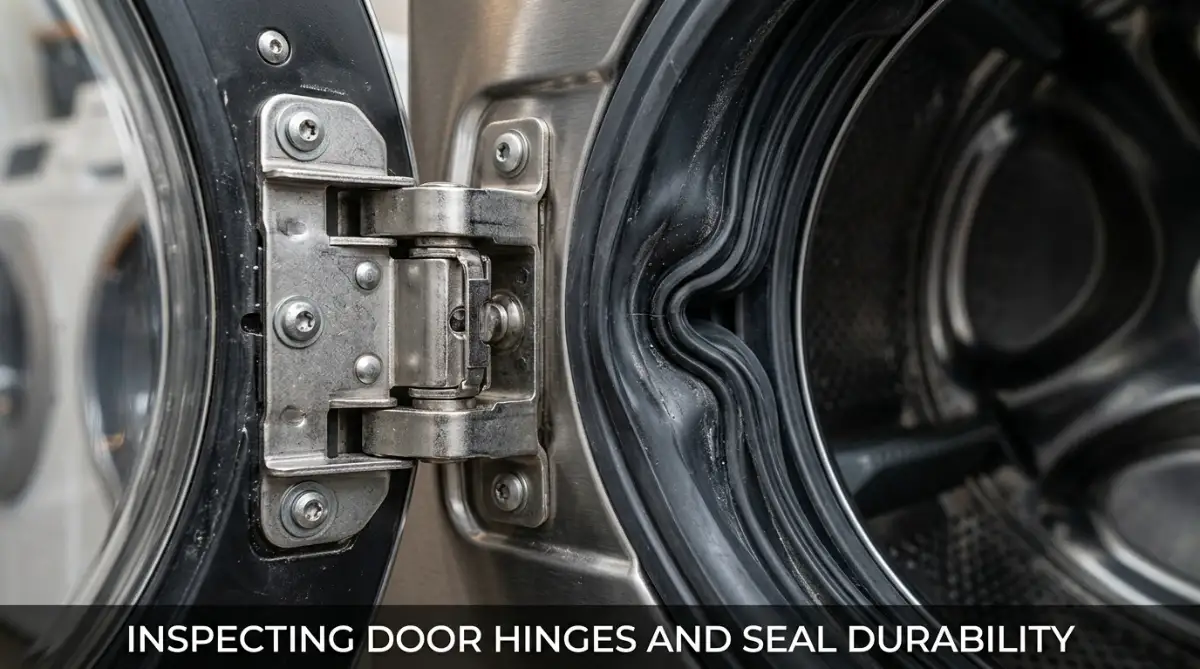
Open the door completely and try to wiggle it gently up and down to feel for looseness or play in the hinge pins. High-quality appliances use heavy cast metal, thick forged steel, or brass-bushing hinges that hold the door completely firm.
Avoid models that rely on thin plastic hinge sleeves, visible plastic mounting brackets, or flimsy stamped sheet metal hinges. These cheap plastic parts degrade under constant weight, causing doors to sag, misalign, and leak air over time.
Inspect the rubber sealing gaskets running around the inner edge of doors on refrigerators, freezers, and dishwashers. The rubber should feel thick, springy, and flexible rather than hard, thin, brittle, or sticky to your touch.
A simple test is to close the door on a standard sheet of paper and try to pull it out smoothly. If the paper slides out effortlessly without any friction resistance, the magnetic seal is weak and will waste electricity.
3. Feeling Knob Resistance, Buttons, and Digital Control Interfaces
Control interfaces are the main physical touchpoints you interact with every single time you cook meals or wash laundry. Cheaply made switches, loose dials, and poorly mounted touchscreens are major warning signs of poor internal electronic quality.
Turn every control knob slowly to test its movement smoothness, tactile feedback, and internal shaft firmness. A solid appliance knob offers smooth rotational resistance and is mounted on a thick metal control spindle beneath the panel.
Wiggle the knob side to side gently to check if it feels wobbly, loose, or feels like it might pop off easily. If the dial feels hollow, light, and plastic-on-plastic, the internal switches behind the board are likely cheap components too.
For appliances with digital push buttons or touchpads, press firmly along the edges of the control display panel. High-grade control boards remain completely rigid without flexing inward or creaking under reasonable finger pressure.
Ensure modern touchscreens are sealed completely flush against the appliance frame without visible edge gaps where kitchen grease or moisture could enter. Unsealed control screens often fail early when humidity penetrates the electronic circuit boards behind the faceplate.
4. Evaluating Motor Mounts, Air Vent Housing, and Electrical Cords
The internal motor or compressor is the true heart of any motorized kitchen or laundry appliance you purchase. While you cannot open the appliance completely inside a showroom, you can gather crucial clues by examining ventilation grilles and cords.
Look through the rear air ventilation slots using your smartphone flashlight to inspect the internal motor mounting frame. Premium appliances secure their motors to heavy steel base plates using vibration-damping thick rubber grommets and sturdy metal bolts.
Budget models often secure small motors directly to cheap plastic base trays with simple self-tapping screws that loosen over time. Loose motor mountings create excessive rattling noises, intense vibrations, and cause premature motor bearing burnout.
Examine the main power cord coming out from the back or bottom section of the home appliance unit. A heavy-duty appliance always features a thick, well-insulated power cord equipped with robust molded strain-relief boots at the entry point.
Thin, flexible cords with flimsy plastic entry grommets suggest the brand cut costs on basic safety and wiring hardware. Ensure the back cover panels protect internal wiring from exposure to accidental bumps or sharp metal edges.
+------------------------------------+---------------------------------------+---------------------------------------+
| Inspection Feature                 | High Build Quality Indicator          | Low Build Quality Indicator           |
+------------------------------------+---------------------------------------+---------------------------------------+
| Exterior Frame & Panels            | Heavy-gauge steel, zero panel flex   | Thin sheet metal, flexes with sound   |
| Door Hinges & Brackets             | Cast metal or thick forged steel      | Thin plastic sleeves, stamped metal   |
| Control Knobs & Switches           | Smooth resistance, metal shaft        | Wobbly, hollow plastic feel           |
| Sealing Gaskets                    | Flexible, thick, strong seal pull     | Hard, thin, loose paper test pull     |
| Drawer Glides & Shelves            | Ball-bearing steel slides, tempered   | Thin plastic tracks, thin wire racks  |
| Motor Mount Base                   | Heavy steel plate, rubber dampers     | Plastic base plate, simple screws     |
+------------------------------------+---------------------------------------+---------------------------------------+
5. Checking Weight, Structural Balance, and Stabilizing Feet
Weight is often one of the most reliable physical indicators of overall component quality when comparing similar models. Heavy-duty copper motor windings, cast-iron burner grates, steel support frames, and thick glass shelves naturally add substantial total weight.
Try lifting one corner of a small appliance or pressing firmly on the frame of a large floor unit. Lightweight appliances often hide thin plastic structural components, smaller aluminum motor wiring, and thin, flimsy exterior casing walls.
Inspect the bottom frame to evaluate the adjustable leveling feet and structural base support legs carefully. High-quality appliances feature heavy-duty steel threaded leveling legs tipped with thick, high-density non-marking rubber pads.
Avoid machines with thin plastic screw-in feet that can bend, snap, or strip their internal threads under load. Sturdy rubber feet absorb operational vibrations, keeping your appliance stable, quiet, and securely anchored to your floor.
Pro Tip: When I was shopping for a kitchen blender recently, I spent twenty minutes comparing two models that looked identical on the display shelf. I lifted both base units and immediately noticed one felt twice as heavy because of its solid metal gear housing. That extra physical weight told me everything I needed to know about the internal motor quality before spending my money.
6. Assessing Internal Shelving, Drawer Glides, and Moving Parts
Open the main compartments of refrigerators, dishwashers, and ovens to carefully inspect all internal components and accessories. Internal components take constant daily abuse from heavy pots, full milk jugs, and stacks of heavy ceramic dishes.
In refrigerators, look for thick tempered glass shelves framed with protective plastic or aluminum edge guards. Slide the vegetable crisping drawers in and out several times to check the smoothness of the tracking system.
Look for metal ball-bearing glide tracks rather than cheap plastic tabs sliding inside simple molded plastic side grooves. Plastic-on-plastic sliders stick, jam, and crack easily when loaded with heavy produce or glass containers over time.
For ovens and ranges, pull the baking racks out completely to test their weight capacity and structural firmness. Heavy wire racks made from thick stainless steel or porcelain-coated steel will not sag or bend under heavy bakeware.
Check that internal oven rack guides are securely stamped into the side walls or held by sturdy stainless racks. Flimsy wire supports can bend out of alignment, causing hot baking dishes to tip or slide off unexpectedly.
7. Evaluating Operational Noise, Vibration Isolation, and Damping Materials
Excessive vibration and operational noise are clear signs of poor internal structural balance and weak insulation materials. When appliances vibrate violently, internal solder joints, water lines, and electrical connections wear down prematurely from constant stress.
While you cannot always plug in every floor model in a showroom, you can check for sound-damping features visually. Look at dishwashers and clothes washers to see if heavy felt insulation blankets wrap around the outer tub.
High-end dishwashers surround stainless steel tubs with thick asphalt-based or heavy bitumen sound-deadening pads glued to the metal exterior. Budget models leave bare stainless steel or use thin foam sheets that offer very little noise dampening or temperature insulation.
For laundry washers, reach inside the drum and push it firmly to feel the suspension spring resistance. Premium washing machines feature heavy-duty dampening shocks and strong steel coil springs that absorb heavy load imbalance forces effectively.
If the inner tub bounces loosely like a pogo stick with zero resistance, the suspension system is cheap. A weak suspension system will cause loud banging noises and walk across your floor during high-speed spin cycles.
Watching a hands-on physical inspection video helps you spot hidden construction flaws before making an expensive appliance buying decision.
Before you head to the store, I highly recommend watching hands-on teardown and review videos from certified repair technicians. You can browse through to see how expert mechanics dismantle major brands and reveal hidden plastic gears inside before you buy.
8. Material Science: Metal vs Polycarbonate vs Recycled Plastics
Understanding basic material properties helps you evaluate why certain home appliances last decades while others break within months. Metals like stainless steel, cast iron, and powder-coated galvanized steel offer unmatched structural rigidity and heat resistance.
Stainless steel tubs in dishwashers and washing machines resist stains, odors, rust, and withstand high drying temperatures easily. Plastic tubs, while cheaper to manufacture, absorb food odors, stain over time, and retain less heat during drying cycles.
However, not all plastics used in modern home appliances are created equal for long-term durability standards. High-grade polycarbonate and ABS engineered plastics offer fantastic impact resistance and flexibility for drawer bins and control housings.
Problems arise when manufacturers use cheap, brittle recycled plastics for high-stress internal load-bearing components and brackets. These low-grade brittle plastics become hard and crack easily when exposed to thermal cycling near heater elements or motors.
Look closely at plastic component edges for thin flashing lines, uneven material thickness, or rough, unpolished plastic edges. High-quality molded plastic components have clean, smooth edges, uniform wall thickness, and solid structural reinforcing ribbing.
9. Inspecting Door Handles, Latches, and Catch Mechanisms
Door handles and latch mechanisms endure direct mechanical force every single time you use an appliance throughout the day. A broken handle or snapped latch can render an entire microwave, refrigerator, or dishwasher completely useless immediately.
Examine how door handles attach to the main body panel on microwave ovens, ranges, and large refrigerators. Solid handles are secured with heavy-duty metal screws anchored into internal metal reinforcement plates inside the door structure.
Avoid handles made of thin plastic painted with chrome finish that mount directly onto thin outer plastic door skins. These cheap painted handles flex when pulled, peel over time, and snap off easily at the mounting point screws.
Test the door latch mechanism on microwaves and dishwashers by closing the door slowly until it catches firmly. A well-designed latch engages with a solid, quiet click and holds the door tight without any loose play.
If the door requires slamming or feels spongy when latching, the internal plastic catch hooks will wear out quickly. Choose appliances with reinforced door catches that operate smoothly without requiring excessive force to close or open cleanly.
10. Analyzing Thermal Insulation and Heat Management Systems
Proper heat management and thick thermal insulation are critical for safety, energy efficiency, and appliance longevity standards. Cooking appliances like ovens, air fryers, and cooktops generate extreme internal heat that must be safely contained away from electronics.
Inspect the thickness of oven doors by opening them halfway and looking at the side profile edge width. A durable oven door features triple-pane tempered glass panels separated by wide air gaps and heavy insulation layers.
Touch the outer side panels of display models to feel for solid construction and proper heat shielding space. Appliances with poor insulation allow excessive heat to escape, raising your home cooling bills and cooking surrounding cabinets over time.
Heat escaping from poorly insulated oven cavities also damages internal sensitive electronic control boards located directly above doors. Look for models with dedicated cooling fans that vent air away from top-mounted electronic displays during high-temperature baking.
11. Inspecting Cooktop Elements, Burner Caps, and Glass Surfaces
Kitchen ranges and cooktops demand exceptional material quality to handle extreme cooking heat, heavy cast pans, and frequent food spills. Inspecting gas burner components and glass cooktop surfaces reveals a great deal about overall manufacturing quality.
On gas cooktops, lift off the burner grates to check their material weight, coating, and underside support feet. Heavy cast-iron grates coated in durable porcelain enamel provide superior stability for heavy pots and resist thermal warping.
Avoid thin stamped steel grates that feel light, flex under weight, or lack protective rubber feet on the bottom. Inspect the gas burner caps to ensure they are made from solid brass or heavy cast aluminum alloy materials.
For electric smooth-top ranges, check the edge perimeter where the glass top meets the surrounding metal frame. High-grade cooktops feature a protective stainless steel border trim that prevents cast-iron pans from chipping the glass edge.
Avoid flush unshielded glass cooktop edges where a minor impact from a heavy frying pan can shatter the entire surface. Premium glass tops utilize thick ceramic glass engineered specifically to withstand sudden temperature changes without thermal cracking.
12. Assessing Water Line Connections, Valves, and Internal Piping
Water leaks from washing machines, ice makers, and dishwashers cause thousands of dollars in sudden home water damage. Inspecting water connection points before purchasing gives you valuable insight into long-term leak prevention design standards.
Look at the back of washing machines and refrigerators to examine the water inlet valve connection threads closely. Solid appliances feature brass or heavy-duty reinforced brass-threaded water connection ports that resist cross-threading during installation.
Budget appliances often use cheap plastic threaded ports that can strip or crack easily when tightening water hoses. Plastic threads under constant home water line pressure are far more likely to split open and flood your home.
Examine any visible internal flexible water lines or drain tubing running along the rear or bottom base section. High-grade internal piping uses thick reinforced silicone or braided metal flex hoses secured with heavy spring-tension steel clamps.
Avoid appliances with thin clear vinyl tubing held by cheap plastic wire ties that loosen under heat and pressure. Investing in sturdy brass connections and reinforced tubing gives you long-term protection against devastating household floor flooding.
13. Examining Assembly Finish, Paint Quality, and Surface Coatings
The overall surface finish quality provides clear clues about a manufacturer’s internal factory quality control standards. A company that takes pride in its painting and coating processes usually maintains high standards for internal mechanical components.
Inspect painted steel surfaces on refrigerators, dryers, and ranges under bright showroom lighting at various viewing angles. The paint finish should look completely smooth, deep, and uniform without orange-peel texture, thin spots, or overspray runs.
Check for powder-coated finishes rather than simple wet spray paint on interior cabinet walls and structural frame components. Powder coating provides superior resistance against rust, scratches, chipping, and harsh household chemical cleaner damage over time.
For stainless steel appliances, check if the metal features a high-grade smudge-resistant or clear protective finish coat. High-quality stainless steel uses non-magnetic 304-grade steel that resists corrosion, water spots, and surface rust far better.
Bring a small decorative magnet to test stainless steel panels in the showroom before making your final purchase decision. If the magnet sticks strongly to stainless steel, the manufacturer used lower-grade 430 stainless steel with higher iron content.
Lower-grade magnetic stainless steel is far more prone to developing small surface rust spots in humid kitchen environments over time. Choosing non-magnetic stainless steel guarantees your kitchen appliances keep their gleaming, pristine aesthetic look for many years.
14. Evaluating Storage Drawers, Slides, and Freezer Compartments
Bottom storage drawers on ranges and freezer basket slides in refrigerators are often subjected to heavy loads every day. Inspecting how these sliding storage compartments are mounted reveals whether the appliance is built for long-term household utility.
Pull bottom range storage drawers out completely and push gently down on the front drawer lip to test rigidity. Well-constructed drawers slide on heavy steel tracking rails equipped with smooth rolling steel ball bearings that prevent jamming.
In cheap ranges, bottom drawers use thin stamped sheet metal tabs that slide directly inside painted side channels without rollers. These cheap drawer channels bind up, scrape off paint, rust, and jump off their tracks when loaded with heavy cookware.
In chest and upright freezers, check the material strength of wire baskets and pull-out plastic storage drawers carefully. Cold temperatures make low-grade plastics extremely brittle, causing thin plastic baskets to crack when filled with heavy frozen meat packages.
Look for thick wire baskets coated in resilient vinyl or heavy-duty freezer-grade ABS plastic containers with reinforced bottom ribs. High-quality freezer drawers operate smoothly even in sub-zero conditions without snapping handles or cracking under full heavy loads.
15. The Importance of Serviceability and Component Accessibility
Even the highest build quality appliance may eventually require standard maintenance or component replacement after years of constant service. How easily a technician can access internal components determines whether a minor repair is affordable or ridiculously expensive.
Inspect the back of laundry appliances and ranges to see if major access panels are secured with standard screws. Removable back panels allow fast access to drive belts, heating elements, water valves, and main motor control boards.
Some low-cost modern appliances feature fully sealed, glued, or riveted outer cabinets that prevent easy disassembly by repair technicians. When a minor internal component fails in a sealed unit, you are forced to replace the entire machine.
Look for clear wiring diagrams often tucked inside lower panel compartments or attached securely near internal motor housings. A manufacturer that provides clear diagnostic access and logical component layout builds products intended to be serviced, not trashed.
Choosing serviceable appliances ensures you can easily replace worn drive belts, thermal fuses, or water pumps years down the road. This smart component design keeps your home appliances running smoothly while saving you hundreds of dollars in replacement costs.
Pro-Level Secrets for Evaluating Appliance Durability Beyond Showroom Displays
Decoding Serial Plates, Model Numbers, and Factory Origin Marks
Every single household appliance carries a hidden story stamped directly onto its metallic serial plate tag. You can usually find this metal tag tucked inside refrigerator door frames, behind washer doors, or on rear panel bases.
Learning how to read these serial plates gives you immediate insight into where and how the product was built. Many top-tier appliance brands manufacture their premium commercial-grade lines in high-precision facilities while outsourcing budget models to cheaper third-party factories.
Look closely at the country of origin and factory codes printed alongside the main model serial number. Higher quality builds often feature heavy-duty stamped serial tags fixed with metallic rivets rather than cheap paper stickers.
Paper stickers often peel, fade, or indicate cheap factory assembly lines where thermal labels replace permanent hardware tags. You can even trace the brand’s true manufacturing origins and plant codes directly through the Federal Trade Commission website database to verify whether your unit was built in a high-precision factory or outsourced to a budget third-party facility.
Taking a quick photo of these serial tags allows you to look up exact replacement part costs before spending your money. If simple wear items like door seals or water valves are outrageously expensive, the overall long-term maintenance cost will be high.
Testing Mechanical Resonances and Structural Flexing in the Field
When you visit an appliance showroom, you must perform active physical tests rather than just standing back and admiring shiny surfaces. Push firmly against the upper diagonal corners of freestanding ranges, washing machines, and refrigerator cabinets.
A unit constructed with heavy internal steel cross-bracing will resist twisting forces and remain completely rigid on the floor. If the cabinet twists easily or makes creaking plastic noises, the machine lacks proper internal structural support beams.
Next, pull open main appliance doors and apply moderate downward pressure on the outer edge of the open door frame. High-grade metal hinges absorb this downward leverage easily without flexing downward or stressing the cabinet frame.
If you notice the outer frame bending or hear strain from surrounding panels, walk away immediately. That flexing proves the hinge mounts are secured into thin sheet metal or plastic housing rather than reinforced steel plates.
Whenever I inspect floor models, I always use my smartphone flashlight to take clear close-up photos of the rear frame joints and lower hinge mounts. That way, I can review the structural weld points and sheet metal thickness at home before making my final purchasing decision.
Evaluating Thermal Cycling Endurance and Rubber Seal Quality
Appliances like dishwashers, ovens, and clothes dryers operate under extreme temperature swings during normal daily operation. Repeated heating and cooling cycles cause low-grade materials to expand, shrink, degrade, and eventually fail prematurely.
To evaluate thermal resilience, inspect the flexible rubber gaskets around oven doors and dishwasher tub rims very closely. High-grade thermal seals utilize thick food-grade silicone or heavy EPDM synthetic rubber that maintains elasticity under severe heat.
Cheap vinyl or thin PVC seals harden quickly after several heat cycles, causing air leaks, moisture buildup, and ruined cabinet surfaces. Press your thumbnail into the rubber seal to check if it immediately bounces back to its original shape.
Inspect internal seal attachment points to see if the gasket is held securely inside a recessed metal channel. Avoid designs where rubber seals are simply glued onto smooth plastic frames with basic heat-sensitive adhesives.
If you want to know how rigorous safety testing works, you can check the official safety certification criteria established by UL Solutions (Underwriters Laboratories), which tests thermal insulation and flame resistance in consumer household appliances.
Inspecting Internal Motor Brush Systems and Pump Assemblies
The longevity of motorized appliances depends directly on the mechanical design of internal drive pumps and electric motors. Traditional brushed electric motors rely on carbon brushes that wear down over time, creating internal carbon dust and requiring replacement.
Modern high-durability appliances utilize brushless direct-drive or inverter induction motors that eliminate wearing physical carbon brushes completely. Inverter motors produce significantly less operational heat, run much quieter, and last twice as long as traditional belt-driven assemblies.
Reach inside washing machine drums and turn them by hand to feel the rotational resistance of the drive bearing system. A premium bearing assembly feels heavy, smooth, and dead silent when rotated quickly by hand in the showroom.
If you feel grinding, light clicking, or rough resistance, the unit utilizes cheap bearings or light plastic pulley wheels. You can take sharp photos of these internal mechanical layouts and use smart techniques for upscaling details without losing quality when reviewing online spec sheets.
+------------------------------------+---------------------------------------+---------------------------------------+
| Appliance Component                | Premium Build Standard                | Budget/Low-Quality Standard           |
+------------------------------------+---------------------------------------+---------------------------------------+
| Electric Drive Motor               | Brushless Inverter Direct-Drive       | Traditional Belt-Driven Brushed Motor |
| Water Inlet Connections            | Solid Machined Brass Threads          | Molded Plastic Screw Threads          |
| Thermal Door Seals                 | EPDM Rubber / Food-Grade Silicone     | Thin PVC or Cheap Vinyl Gaskets       |
| Cabinet Support Frame              | Heavy Steel Internal Cross-Bracing    | Thin Sheet Metal / Unreinforced Frame |
| Cabinet Paint Finish               | Multi-Coat Powder-Coated Finish       | Single-Layer Wet Spray Paint          |
+------------------------------------+---------------------------------------+---------------------------------------+
Long-Term Maintenance Practices to Preserve Built-In Quality
Even the most rugged, high-build-quality appliance requires simple preventive care to achieve its maximum possible operational lifespan. Establishing a routine maintenance schedule prevents minor wear from turning into costly major mechanical component failures.
Clean refrigerator condenser coils at least twice a year using a long coil brush or vacuum hose attachment. Accumulated dust forces the cooling compressor to run much longer cycles, generating excessive heat that shortens motor life.
Inspect clothes washer water inlet hoses every six months for tiny bulges, hairline stress cracks, or weeping connection joints. Replacing standard rubber supply hoses with braided stainless steel flood-check lines provides ultimate protection against sudden basement flooding.
For dishwashers, pull out the lower spray arm periodically to clear food debris clogging the tiny water jet nozzles. Clean water jets maintain proper internal pump pressure and prevent unnecessary strain on the recirculating motor assembly.
When documenting your routine maintenance checks or recording serial numbers, keep your photos and records clear for smooth warranty claims.

Costly Appliance Inspection Traps That Fool Unsuspecting Buyers
Falling for Glossy Finishes and Fancy Digital Gadgets
One of the most dangerous traps buyers fall into is letting shiny exterior appearances distract them from poor internal hardware. Manufacturers spend millions of dollars designing beautiful glass control panels, glossy colors, and fancy smartphone connectivity features.
They know that an attractive touchscreen display can easily trick shoppers into ignoring flimsy plastic door hinges and cheap motors. You must look past the flashy cosmetic styling and evaluate the underlying physical chassis that does the actual hard work.
A smart appliance with built-in Wi-Fi and giant digital displays is completely useless if the main drive motor dies in two years. Prioritize heavy metal frames, strong door latches, and durable mechanical components over temporary digital novelty features.
When browsing online sales brochures, avoid getting blinded by glossy promotional photos designed to hide cheap manufacturing standards. I always tell my readers to skip the first three pages of marketing buzzwords and jump straight to the technical specification sheet where the true component materials and physical unit weights are listed.
Relying Solely on Short-Term Online Customer Reviews
Relying entirely on short-term customer review scores posted online within weeks of purchase is another massive trap for appliance shoppers. Most standard online product reviews are written by customers who have only owned the appliance for a few days.
A brand-new machine usually works beautifully during its first month, leading excited buyers to give it glowing five-star ratings. These initial shallow ratings tell you absolutely nothing about how the internal components will hold up after three years of daily use.
Look specifically for long-term review feedback, repair technician forum reports, and long-term customer reliability statistics instead.To get an honest picture of long-term reliability, I always cross-check independent testing data and annual owner surveys on Consumer Reports Appliances section. They track breakdown rates across tens of thousands of real households over 5 to 10 years.
Pay close attention to complaints mentioning repeated service calls, broken door handles, leaky water valves, or cracked plastic drawers. Patterns of identical component failures across multiple user reports point directly to fundamental build quality flaws in that specific model line.
Assuming High Price Tags Guarantee Exceptional Durability
Assuming that buying the most expensive luxury appliance on the showroom floor guarantees long-lasting physical durability is a costly mistake. High prices often reflect expensive European brand import taxes, designer styling, or niche luxury features rather than heavy-duty internal construction.
Some mid-tier commercial-style appliances actually utilize far heavier steel components and simpler, more reliable internal motors than ultra-luxury designer units. Fancy luxury units often pack delicate electronic control boards into tight, hot cabinet spaces where thermal stress causes early board failures.
When you pay top dollar, ensure your money goes directly toward commercial-grade mechanical hardware, solid metal components, and thick cabinet insulation. Inspect every luxury unit with the exact same strict physical testing criteria you apply to budget models.
Do not let impressive showroom price tags or high-end brand name badges lower your inspection standards for a single second. Always demand physical proof of durability by testing knobs, hinges, drawers, and cabinet rigidity with your own hands.
Ignoring Noise Damping, Weight Metrics, and Vibration Damping
Skipping physical weight checks and ignoring vibration-damping construction details leads directly to noisy, annoying appliance operation at home. Lightweight washing machines with cheap suspension springs will shake violently and dance across your floor during high-speed spin cycles.
Flimsy dishwashers lacking sound-deadening insulation blankets turn peaceful evening post-dinner conversations into loud, irritating noise environments. Always check the total shipping weight listed on official product specification sheets before making your final purchasing decision.
A heavier total unit weight almost always indicates thicker metal panel walls, larger copper motor windings, and solid internal counterweights. Always check the noise ratings (dB levels) and structural efficiency guides provided by the official Energy Star Program before purchasing. Quiet appliances don't just protect your peace of mind—they usually feature far superior vibration insulation and heavy-duty motor mounts.
Investing in a solidly built, well-insulated appliance ensures your home stays quiet, peaceful, and free from violent machine vibration noises. Taking the extra time to check these physical details saves you from years of daily operational noise frustration.
Neglecting Serviceability, Part Availability, and Local Repair Access
Buying an appliance built with unique, proprietary components that local service repair technicians cannot easily source is a major long-term trap. Even sturdy appliances eventually require simple wearable parts like door gaskets, drain pumps, or drive belts after years of service.
If a brand does not distribute replacement parts locally, your appliance will sit completely broken for months waiting for overseas shipping. Worse yet, some off-brand manufacturers discontinue replacement part production entirely after just a couple of production years.
Before buying, call a local independent appliance repair shop and ask which brands they recommend for easy part availability. Reliable brands maintain massive spare parts distribution networks, allowing local technicians to repair your unit quickly and affordably.
Ensure the appliance utilizes standard fasteners and accessible panels so technicians do not have to break plastic housing tabs during simple repairs. Choosing a brand with widespread local repair support protects your home investment for many years to come.
+------------------------------------+---------------------------------------+---------------------------------------+
| Common Buyer Mistake               | Why It Hurts You                      | How to Avoid It                       |
+------------------------------------+---------------------------------------+---------------------------------------+
| Buying for Touchscreens & Wi-Fi    | Hidden cheap motor & thin frame       | Inspect physical hardware first       |
| Reading Only 1st-Week Reviews      | Misses long-term breakdown trends     | Seek long-term reliability data       |
| Assuming Expensive = Durable       | Paying for style, not heavy steel     | Test metal thickness & hinge play     |
| Ignoring Unit Shipping Weight      | Signals thin plastic & light motor    | Compare total specs weight metrics    |
| Buying Exotic Off-Brand Imports    | Impossible to source local parts      | Verify local repair part availability |
+------------------------------------+---------------------------------------+---------------------------------------+
Your Smart Action Plan for Buying Long-Lasting Home Appliances
Evaluating the build quality of household appliances before purchasing is the single best way to protect your hard-earned family savings. By shifting your focus away from glossy marketing tricks and focusing on physical hardware quality, you take complete control of your buying decisions.
Remember to physically test door hinges, feel control knob resistance, press against side cabinet metal, and check heavy rubber sealing gaskets. Looking past flashy electronic touchscreens ensures you bring home reliable, solid machines that perform flawlessly for many years to come.
Always check weight metrics, inspect motor housing construction, look for non-magnetic stainless steel, and verify local service part availability. Taking these practical inspection steps guarantees your home remains comfortable, efficient, and completely free from sudden kitchen appliance breakdown disasters.
Don't be afraid to take your time at the showroom. Open the doors, feel the knobs, press the frame panels, and trust your hands over glossy marketing claims. Buying a solid, heavy-duty appliance might take a few extra minutes of physical checking, but it will save you years of sudden breakdown headaches and costly repair bills!
I spent years dealing with frustrating appliance breakdowns before I finally learned how to physically test build quality before spending my money. Once I started checking metal thickness, testing door hinges, and inspecting motor mounts, I never bought a lemon again. I know you can take these exact same simple steps today and feel completely confident on your next showroom visit!
Common Questions Homeowners Ask About Appliance Durability
How can I tell if an appliance uses real stainless steel or cheap plastic?
Bring a small refrigerator magnet with you to the showroom and place it directly on the metal cabinet surface. Premium 304-grade stainless steel is non-magnetic, so the magnet will fall off or show very weak magnetic attraction. If the magnet sticks firmly, the panel is made of cheaper, high-iron steel that can develop rust spots in humid kitchen air.
Is a heavier household appliance always better quality than a lighter model?
Yes, in almost all consumer appliance categories, a heavier total weight indicates thicker steel framing, larger motor copper windings, and sturdier internal components. Lightweight appliances often cut costs by using thin plastic framing, smaller motors, and flimsy outer metal panels that flex easily.
Are digital touchscreens less reliable than mechanical control knobs?
Digital touchscreens have more sensitive electronic circuit boards that can suffer damage from cooking steam, humidity, and kitchen heat over time. Solid mechanical control knobs mounted on thick metal shafts are generally far more durable and much cheaper to repair if they ever wear out.
How do I check if appliance replacement parts will be easy to find later?
Before making your final purchase, search for the model number on major independent appliance part supply websites to see part pricing and availability. You can also call a local repair technician and ask if they regularly stock common replacement parts for that specific brand.
Why do plastic parts inside refrigerators and freezers crack so easily?
Cold freezing temperatures make cheap, low-grade plastics extremely brittle and prone to snapping under heavy weight loads. Premium refrigerators utilize high-impact ABS or polycarbonate plastics reinforced with thick molded structural ribbing that remains flexible in sub-zero air.
Are extended warranties worth buying for modern household appliances?
If you thoroughly inspect the physical build quality, metal gauge, motor mounts, and hinges before buying, you usually do not need extended warranties. Investing that extra warranty money into a higher-grade appliance with heavy-duty commercial construction is a much smarter choice.
Disclaimer:
The information provided in this guide is for educational, informational, and consumer guidance purposes only. While every effort has been made to ensure the accuracy and reliability of the advice presented, appliance models, manufacturing standards, and component specifications vary by brand and region. Readers are encouraged to perform their own due diligence, consult official manufacturer manuals, and seek advice from certified professional appliance technicians before making major purchasing decisions or attempting home repairs. The author and publisher disclaim any liability for personal injury, property damage, or financial loss resulting from the use or application of the information contained in this article.

