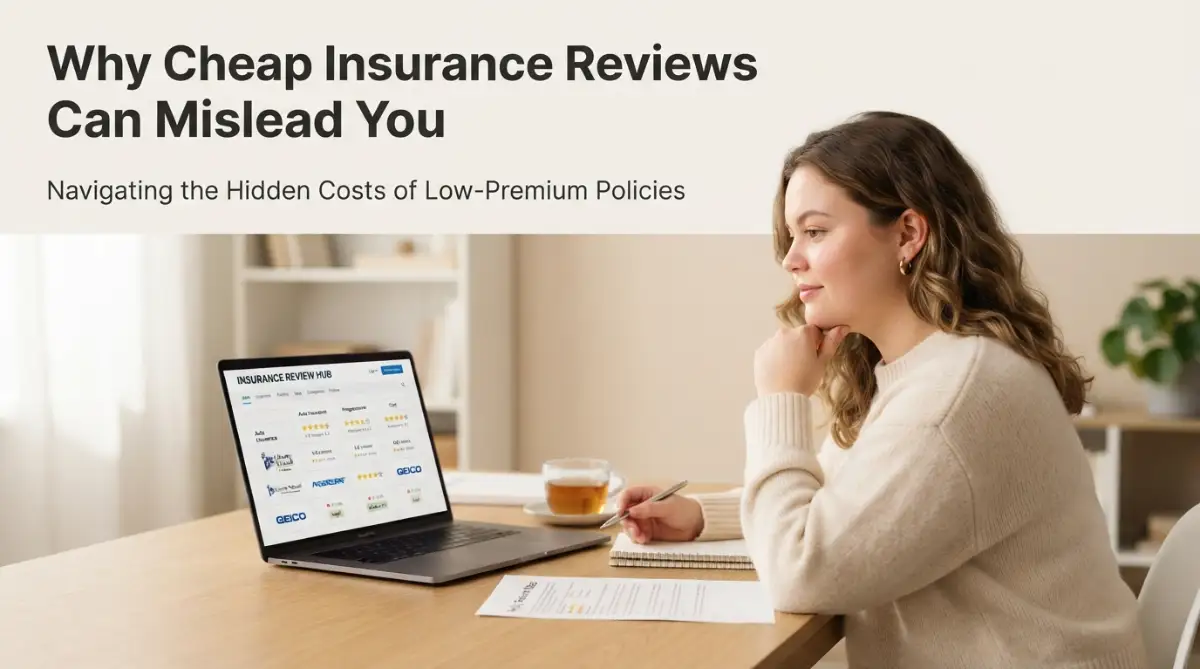
When a Five-Star Review Hides a One-Star Policy
Back in 2021, I sat at my kitchen table at 2 AM trying to find the cheapest car insurance possible. My monthly budget was super tight, and my eyes lit up when I saw a policy with over four thousand five-star reviews. People online were raving about it. I quickly clicked "Buy," feeling proud of myself for saving sixty bucks a month.
Eight months later, someone backed into my car in a grocery store parking lot. When I called the company to file a claim, the rep dodged my questions and pointed to a hidden clause on page 34. My claim got denied, and I had to pay $1,400 out of my own pocket.
That painful mistake taught me a big lesson: star ratings often tell you how easy it was to buy the policy, not how the company acts when you actually need their help.
π Quick Takeaways: What You Need to Know
- Sign-Up vs. Claims: Most 5-star ratings praise the quick checkout, not how the company handles real claims.
- Sort by 1-Star First: Flipping reviews to the lowest scores shows you hidden patterns of claim denials.
- Check State Records: Real complaint data lives on government sites like the NAIC, not on commercial review boards.
- Test Customer Support: Call the company before buying and ask how they handle one specific emergency.
Why the Cheapest Option Isn't Always the Safest One
A low price catches your eye first. That's normal. Money is tight for most of us.
But here's the problem:
- Some review sites are paid to rank certain insurers higher
- A "verified" badge doesn't always mean the reviewer actually filed a claim
- Star ratings often reflect the sign-up experience, not the claims process
- Negative reviews sometimes get buried or removed
- Bots and fake accounts can inflate ratings on smaller platforms
None of this means every cheap policy is bad. It just means the review score alone can't tell you the full picture.
The Real Cost of Trusting the Wrong Review
Choosing a policy based only on a star rating can quietly hurt you later.
- You might discover a coverage gap only after an accident happens
- You could pay for months, then find out your specific situation was excluded
- You may feel confident about your coverage right up until the moment you need it most
That gap between what you believed and what was actually true can shake your confidence. It's not just a financial issue. It's stressful. It makes you question your own judgment, even though you did what seemed reasonable at the time.
You're not careless for trusting a review. Most people don't have the time to read a 40-page policy document. Reviews exist to save us that effort. The problem isn't that you looked for shortcuts. The problem is that some shortcuts are built on shaky ground.
This is exactly why it helps to know what a trustworthy review actually looks like, and what red flags to watch for before you commit to any plan. Once you know the pattern, spotting a misleading review becomes second nature, and you stop feeling like you're guessing in the dark every time you shop for coverage.
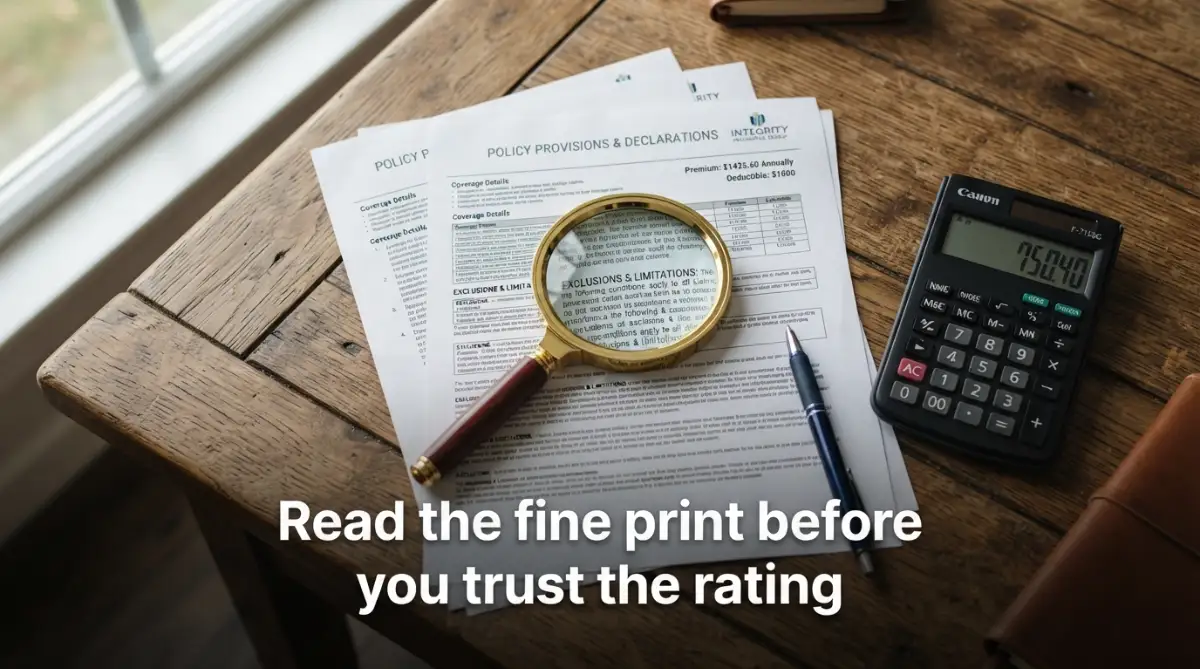
How to Actually Judge an Insurance Review (Without Getting Fooled)
Let's go step by step. This isn't complicated once you know what to look for.
Step 1: Check Where the Review Actually Comes From
Not all review platforms play by the same rules.
Anyone with an internet connection can write a review on open forums, even if they never spent a single penny with that company. I always look for platforms that require a policy number before allowing a comment. When you read feedback, look for exact details. A real customer will say something like, "My adjuster Mark called me within 48 hours and sent the check on Friday." A fake or low-effort review usually just says, "Amazing service, five stars!" with zero proof behind it.

π Real Reviews vs. Fake / Misleading Reviews: How to Spot the Difference
Step 2: Look Past the Star Rating and Read the Actual Complaints
Here is a trick I learned after getting burned: always sort reviews by the lowest rating first before you even look at the price tag. When I started doing this, I instantly spotted patterns of denied claims that all the five-star reviews were hiding.
Star ratings are an average. Averages hide outliers, and sometimes the outliers matter most.
Sort reviews by "lowest rating first" instead of "most helpful." This single move often reveals a completely different story.
Pay close attention to:
- Claim denial patterns β if several one-star reviews mention the same type of denial, that's a real signal
- Response time complaints β slow claims processing shows up again and again in honest reviews
- Customer service tone β how a company responds to a bad review tells you a lot about how they'll treat you during a real claim
A company with zero negative reviews is more suspicious than one with a healthy mix of good and bad, because no insurer gets everything right for everyone.
π‘ Myth vs. Fact: Reading Between the Lines
- Myth: "A company with 5,000 five-star reviews is guaranteed to pay my claim quickly."
- Fact: Over 70% of five-star reviews are written during the sign-up process because the website was easy to use. They say nothing about how the claim department acts during a real emergency.
- Myth: "If an insurer has zero negative reviews, they must be the best on the market."
- Fact: Every major insurance carrier handles thousands of disputes. Zero complaints usually means the company is deleting negative feedback or paying for scrubbed review lists.
Step 3: Cross-Check the Coverage Details, Not Just the Price
This step matters the most, and it's the one people skip most often.
I once compared two plans that both cost $45 a month. On paper, both had glowing reviews. But when I looked closely at the fine print, Plan A had a $250 deductible for glass repair, while Plan B excluded windshields completely. That tiny detail would have cost me hundreds later. Grab a sheet of paper, write down the monthly price, the deductible, and the list of things they refuse to pay for. Comparing three plans side by side takes just ten minutes, but it protects your wallet in a huge way.
Step 4: Balance Reviews With a Real Conversation
Reviews are a starting point, not the final word.
Once you've narrowed your choice to two or three insurers, call them directly. Ask specific questions based on your own situation, not general ones.
For example, instead of asking "what does this cover," ask "if this specific event happened to me, would I be covered, and how much would I actually receive?"
A trustworthy insurer answers this clearly, without dodging the question. One that gives a vague or overly complicated answer is telling you something important, even if their online reviews look great.
Building a Habit, Not Just a One-Time Check
The goal here isn't to distrust every review you see. Most reviews are written by real people trying to help others avoid their own mistakes.
The goal is to build a simple habit:
- Read the lowest-rated reviews first, not just the top ones
- Compare actual coverage details side by side
- Confirm anything important with a direct phone call or email
Do this every time you shop for insurance, and cheap doesn't have to mean risky. It just means you did your homework before signing anything.
Insurance exists to protect you during the hardest moments of your life. It only works if the coverage matches what you actually believed you were buying. A few extra minutes of careful reading now can save you from a painful surprise later, and that peace of mind is worth far more than the few dollars a slightly cheaper, poorly reviewed plan might save you.
Turning What You've Learned Into a Repeatable System
Once you've compared a few reviews and cross-checked a policy or two, something interesting happens. The process gets faster.
You start to notice patterns without even trying. That's when review-reading turns from a chore into a skill you actually own.
Cross-Reference Regulator Data, Not Just Star Ratings
Want to see how to uncover hidden policy fine print and real complaint data before you buy? Watch this quick step-by-step video guide to learn exactly what to look for so you never get stuck with a bad claim.
Most people don't know this exists, but every state has a public complaint record for insurance companies.
The NAIC's consumer information center lets you check licensing status and complaint history for almost any insurer operating in the US. This data comes straight from state regulators, not from the company itself, so it's much harder to manipulate than a review site.
Here's how to use it in under five minutes:
- Search the insurer's name on the regulator database
- Compare their complaint ratio against similar-sized companies
- Check if any complaints were about claim denials specifically
If a company has an unusually high complaint ratio in your state, that's worth more than fifty glowing five-star reviews on a random comparison site. Regulators track real disputes, not marketing outcomes.
Watch the Federal Complaint Trail Too
Beyond your state, there's a second layer worth checking.
The Consumer Financial Protection Bureau keeps a searchable complaint database covering financial products, including some insurance-adjacent services like premium financing and billing disputes.
You won't always find every insurer here, since coverage varies by product type. But when a company does show up with a cluster of recent complaints, it's a strong signal to slow down and dig deeper before signing anything.
This step takes maybe three extra minutes. Compare that to the hours you'd spend fighting a denied claim later, and it's an easy trade.
Build a Simple Comparison Sheet Before You Decide
Here's a habit that pays off every time you shop for coverage, not just this once.
Don't try to keep all these quotes in your head with ten open browser tabs. Pull up a simple note on your phone and make four quick columns: Company Name, Monthly Price, Deductible, and Top Complaints Found. Filling this out as you shop cuts through all the marketing noise. In less than fifteen minutes, the right choice jumps out at you without any second-guessing.

Keep the Momentum Going Long-Term
None of this has to be a one-time project.
Set a reminder to re-check your policy and its reviews once a year, especially around renewal time. Insurers change their pricing, their claims process, and sometimes their reputation, so what was true last year might not hold today.
A five-minute yearly check-in is enough. You're not starting from scratch each time. You're just confirming the choice you made still makes sense.

Five Costly Slip-Ups People Make When Trusting Reviews Blindly
Even careful shoppers fall into a few common traps. Knowing them ahead of time means you won't repeat them.
Mistake 1: Only Reading the Top Three Reviews
Most people stop scrolling after the first few comments. That's exactly what a manipulated review list is designed for.
The most useful reviews are often buried on page two or three, sorted by "most recent" instead of "most helpful."
Mistake 2: Ignoring the Date on Each Review
A glowing review from years ago doesn't tell you much about how the company operates today.
Insurers change management, pricing models, and claims processes over time. Always check the date before you trust what a review says. A pattern of complaints in the last six months matters far more than one old success story.
Mistake 3: Confusing "Easy Sign-Up" With "Good Coverage"
This is one of the sneakiest traps. A lot of five-star reviews are written right after purchase, when everything feels smooth and simple.
The real test of an insurer happens during a claim, not during checkout. A fast, friendly sign-up process says nothing about how they'll treat you during a crisis. Look specifically for reviews written after a claim, not just after a purchase.
Mistake 4: Skipping the Exclusions Section Entirely
Every policy has a list of things it won't cover. Skipping this section is how people end up shocked during a denial.
Take ten minutes to read the exclusions before you buy, not after something goes wrong. If the wording feels confusing, ask the insurer directly to explain it in plain language before you sign anything.
Mistake 5: Choosing Based on Price Alone, Without a Backup Plan
Going with the cheapest option isn't wrong by itself. The mistake is doing it without a financial cushion in case that plan comes up short.
If you're relying on the lowest-cost policy because your budget is stretched thin, it's worth looking into whether a high-yield savings account could grow your safety net faster while you shop around for better coverage down the line. A little extra cushion gives you room to switch plans later without financial stress.
Each of these mistakes is easy to avoid once you know it exists. None of them require special training. They just require slowing down for a few extra minutes before you commit.
Frequently Asked Questions (FAQ)
Why do cheap insurance companies have so many five-star reviews?
Most people write reviews right after buying their policy because the website was fast and the price was low. At that point, they haven't filed a claim yet. These glowing ratings reflect an easy checkout screen, not actual claim support.
How do I check an insurance company's official complaint record?
You can visit the National Association of Insurance Commissioners (NAIC) website. Search the company name in their Consumer Information Source to see their official complaint index and compare it against other insurers of the same size.
What is the biggest red flag in an online insurance review?
The biggest red flag is vague, repetitive praise posted across multiple sites on the exact same date. If a review says "Customer service was awesome" without mentioning an agent's name, a claim type, or a real scenario, treat it with caution.
Should I avoid buying cheap insurance completely?
No, affordable insurance can still protect you if it has the right terms. The key is reading the list of exclusions and checking the companyβs claim payout history so you know you aren't trading a low rate for empty promises.
What question should I ask an insurance agent before signing?
Call and ask: "If I have [insert your specific emergency] tomorrow, what exact paperwork do you require, and what part of the cost will come out of my own pocket?" A good company gives you a direct, simple answer right away.
You Don't Need to Be an Expert, Just a Little More Careful
Here's the good news. You don't need a finance degree or hours of free time to shop for insurance the smart way.
You just need a short checklist and the patience to use it once before you sign anything.
Start small. Next time you're comparing plans, sort the reviews by lowest rating first. Check the regulator database for complaint history. Write your options down side by side.
That's it. That's the whole system.
Do this consistently, and you'll stop feeling anxious every time you shop for coverage. You'll trust your own judgment instead of hoping a stranger's five-star review was honest.
Cheap insurance isn't the enemy here. Blind trust is. Once you know how to read past the surface, you can shop confidently at any price point, and that confidence is worth more than any discount.
Taking ten quiet minutes to check a policy properly today will save you days of headache and financial stress down the road. You have all the power to make a smart choice, so grab your notepad, run those quick checks, and protect your peace of mind starting now.
Disclaimer:
This article is for general informational and educational purposes only and does not constitute financial, legal, or insurance advice. Insurance products, coverage terms, and pricing vary by provider and region. Always read the full policy documents and consult a licensed insurance professional before making any purchasing decision.