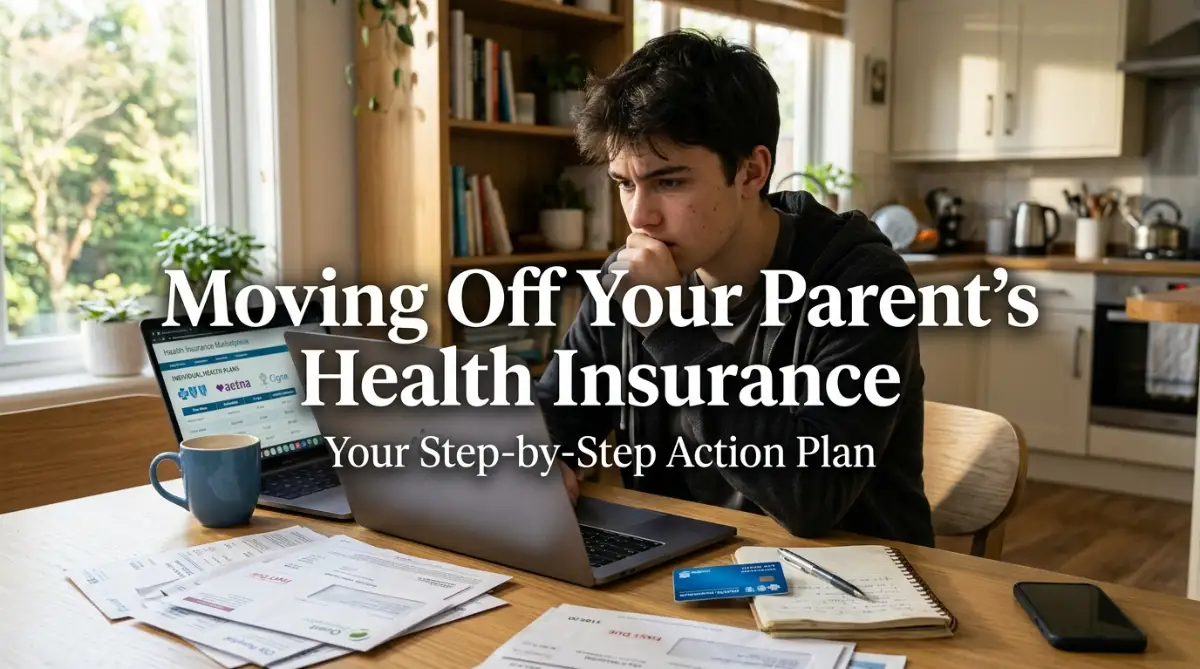
That Terrifying 26th Birthday Letter
Two weeks before my twenty-sixth birthday, a thick envelope from my mom’s insurance carrier landed in our mailbox. I ripped it open expecting a routine update, but my stomach instantly dropped. The letter bluntly said that in twenty-four days, I was officially getting booted off my parents' health coverage. I froze. I was working a part-time retail gig, paying off student loans, and trying to cover rent. The thought of paying for my own doctor visits and daily asthma inhaler terrified me.
I opened my laptop and stared at words like "deductibles," "coinsurance," and "out-of-pocket maximums." It felt like reading another language. I almost panicked and gave up, thinking about skipping doctor visits just to dodge medical bills. But I quickly realized that avoiding the problem was a recipe for massive debt if an accident happened. I rolled up my sleeves, spent weeks researching every tiny rule, and made plenty of mistakes along the way. I built this straightforward guide so you can skip the sleepless nights, pick the right plan easily, and protect your hard-earned money.
📌 Quick Takeaways: What You Need to Know Right Now
- The Strict Hard Deadline: Under federal law, you lose coverage under your parents' health plan at age 26 (usually on the last day of your birth month).
- Your 60-Day Special Window: Aging out triggers a Special Enrollment Period (SEP), giving you exactly 60 days before or after your birthday to lock in a new plan.
- Free Wellness Visits: Almost every Affordable Care Act (ACA) compliant policy covers annual checkups, routine blood work, and vaccines at 0 USD out-of-pocket.
- Income-Based Subsidies: If your job does not offer coverage, you can get steep discounts (Premium Tax Credits) on the official marketplace based on what you earn.

The Reality of Turning 26 and Losing Coverage
Turning twenty-six is a fun birthday milestone, but insurance companies show zero mercy when the clock strikes midnight. Federal rules strictly require insurers to let adult children stay on a parent’s policy only until age twenty-six. In most cases, your coverage officially ends on the final day of your birth month. You cannot simply call up customer support and ask for a polite extension. It is a firm legal cutoff, and you have to take charge before that safety net disappears.
Start Planning Before the Cutoff Date
Do not wait until the day after your birthday to start looking for options. It takes time to research policies, submit applications, and get your new cards in the mail. If you wait too long, you might experience a gap in your coverage.
A gap means you will be fully responsible for all medical bills if an accident happens during that time. Start your research at least two months before your official cutoff date. This gives you plenty of breathing room to compare prices without feeling rushed.
Exploring Your Workplace Options
If you have a full-time job, your employer might be your best resource right now. Many companies offer medical benefits to their workers at a heavily discounted rate. The company pays a portion of your monthly bill, making it much cheaper than buying it completely on your own.
Talk to your Human Resources department to ask about the benefits package. They can tell you exactly when you are eligible to join the company plan. Most employers have a waiting period of a few months before new workers can sign up for benefits.
Understanding Special Enrollment Periods
Usually, you can only sign up for a company policy during a specific time of the year called Open Enrollment. However, losing your previous coverage counts as a major life event. This triggers a Special Enrollment Period just for you.
This special window allows you to join your company's policy immediately, regardless of the current month. You usually have about sixty days from the time you lose your old coverage to submit your paperwork. Do not miss this window, or you will have to wait until the next calendar cycle to get protected.
Are you ready to see a visual breakdown of how insurance pricing works? Watch this short, incredibly helpful explanation below to finally understand where your money goes every month.
Finding Plans on the Open Market
Not everyone has access to medical benefits through their current job. If you work part-time, freelance, or are currently looking for work, you still have great options available. The government provides a public marketplace where you can shop for individual policies.
These platforms allow you to compare dozens of different options side-by-side. Make sure you know the smart way to read insurance policy reviews and avoid bad advice while evaluating each company. You can easily see exactly how much each option costs and what doctors are included in their network. It feels very similar to shopping for a hotel or a flight online.
Financial Help is Available
Many people avoid looking at the public market because they assume it will be too expensive. However, you might qualify for significant financial assistance based entirely on your current income. These discounts are called premium tax credits, and they directly lower your monthly bill.
If you make an entry-level salary, these credits can reduce your monthly payment to almost nothing. You just need to estimate your expected income for the year when you fill out the application. The system will automatically calculate how much of a discount you deserve.
Decoding the Confusing Terminology
Insurance companies use a very specific language that can feel incredibly confusing at first glance. You cannot pick the right policy if you do not understand what the words actually mean. Let us break down the most common terms you will see while shopping.
Your Premium is the fixed amount of money you must pay every single month just to keep your account active. You can learn more about how companies score your risk and set insurance rates to understand how these numbers are calculated. You have to pay this bill whether you visit the doctor zero times or fifty times. Think of it exactly like a monthly subscription fee for a streaming service.
Your Deductible is the amount of your own money you must spend on health care before the company starts helping you. For example, if your deductible is 1,000 USD, you pay the first 1,000 USD of your medical bills yourself. Once you hit that magic number, the company steps in and starts covering the remaining costs.
Copays and Coinsurance Explained
Even after you pay your deductible, you usually still have to pay a small portion of your visits. A Copay is a flat, predictable fee you pay for specific services, like 25 USD for a normal checkup. It is always the same amount, making it very easy to budget for.
Coinsurance, on the other hand, is a percentage of the total bill. If your coinsurance is twenty percent, you will pay twenty percent of the total cost of a surgery, and the company pays the remaining eighty percent. This can make estimating your final bill a bit more difficult, as costs vary based on the treatment.
The Out-of-Pocket Maximum
This is arguably the most important number on your entire policy document. The out-of-pocket maximum is the absolute highest amount of your own money you will ever have to spend in a single year. Once your deductibles, copays, and coinsurance add up to this limit, the company pays one hundred percent of your bills.
This number is your ultimate financial safety net against total bankruptcy, much like why you might need umbrella insurance coverage today for complete personal protection. If you get into a terrible accident and rack up 100,000 USD in hospital bills, your maximum limit protects you. You will only pay up to that specific limit, and not a single penny more.
I made a huge, costly blunder with my first plan. I wanted to save money, so I grabbed the cheapest option with an 85 USD monthly premium. What I failed to notice was the brutal 7,000 USD deductible. When I caught a severe sinus infection three months later, I walked into an urgent clinic thinking my card would cover everything. Instead, I got hit with a 420 USD bill for the visit and testing because I had not paid off my giant deductible yet. That painful mistake taught me that a dirt-cheap monthly payment usually means massive bills at the doctor's office. Always look out for cheap insurance reviews and what they don't tell you before picking the lowest price.
Comparing the Different Plan Types
When you look at your options, you will notice letters like HMO and PPO next to the names. These letters describe how the plan handles the network of doctors and hospitals you are allowed to use. Choosing the wrong type can severely limit your choices when you need care. If you are torn between network styles, you can read our detailed breakdown on HMO vs PPO health insurance and which plan actually saves you money.
Health Maintenance Organizations (HMO)
An HMO is usually the most affordable option you can find on the market. However, this affordability comes with very strict rules about which doctors you can visit. You must use doctors and hospitals that are strictly inside the company's approved network.
If you go outside of this network, the company will not pay for anything, and you will face the full bill alone. Additionally, HMOs require you to choose one primary care doctor to manage your health. If you want to see a skin specialist or an eye doctor, you must get a referral from your primary doctor first.
Preferred Provider Organizations (PPO)
A PPO gives you much more freedom and flexibility, but it usually comes with a higher monthly premium. You do not need to choose a single primary doctor to manage your care. You also do not need permission or referrals to go see a specialist directly.
You can visit any doctor you want, even if they are not in the approved network. However, you will pay less money if you decide to stay inside the network. This option is great if you travel often or if you have a specific doctor you absolutely refuse to leave.
📊 HMO vs. PPO vs. HDHP: Real Cost & Coverage Breakdown
Figuring Out What You Actually Need
Picking the right option is all about balancing your current health needs with your budget. There is no single perfect choice that works for every single person. You have to look honestly at how often you actually use medical services.
If you are young, perfectly healthy, and only visit the doctor once a year for a checkup, a high-deductible option might make sense. You will save a lot of money on your monthly premiums throughout the year. Just make sure you have some savings set aside in case an emergency does happen.
If you have a chronic condition like asthma or diabetes, you will need a completely different strategy. You know you will have regular doctor visits and consistent prescription costs every month. In this case, paying a higher monthly premium for a much lower deductible is usually the smartest financial move.
Checking Your Prescriptions
Never assume that a new policy will cover your specific medications automatically. Every company has a unique document called a formulary, which is simply a list of approved drugs. They group these drugs into different tiers, with generic medicines being the cheapest and brand-name medicines being the most expensive.
Before you click the buy button, search the company's website to find their exact formulary list. Look up the name of every single medication you currently take to see what tier it falls under. If your necessary medication is not on their list, you might have to pay hundreds of dollars for it out of your own pocket.
Keeping Your Favorite Doctor
If you have a doctor you really love and trust, you need to make sure they are included in your new network. Calling the doctor's office and simply asking "Do you take my insurance?" is often a big mistake. The front desk staff might say yes, but they might be thinking of a different tier or network from the same company.
Instead, log into the official website of the insurance policy you want to buy. Use their online provider directory tool to search for your doctor's exact name and clinic location. This is the only way to be one hundred percent sure that your visits will be fully covered.
Alternative Safety Nets
Sometimes, the prices on the public market and at your job still feel completely out of reach. If you have a very low income, you might qualify for Medicaid in your local area. Medicaid is a government assistance program that provides free or nearly free health coverage to those who need it most.
The rules for who qualifies for Medicaid vary drastically depending on where you currently live. Some areas have expanded their programs to include almost all low-income adults. Check your local government website to see the exact income limits for your specific region.
Student Health Services
If you are currently enrolled in college or a university, you have another great option available. Most major schools offer their own sponsored health plans exclusively for their registered students. These plans are specifically designed to be affordable and often cover services right on campus.
The premiums are usually rolled directly into your tuition bill every semester. This makes it very easy to pay for with student loans or financial aid money. It is an excellent temporary bridge to keep you fully protected until you graduate and find a full-time job.
Catastrophic Coverage Options
If you are under thirty years old, you have access to a unique category called catastrophic health plans. These options have incredibly low monthly premiums but feature massively high deductibles. They are specifically designed to protect you from extreme worst-case scenarios, like a major car accident or a sudden severe illness.
They usually cover three regular doctor visits per year before you even have to meet that giant deductible. This means you can still get your basic checkups without spending a fortune. However, you will have to pay for almost all other routine care out of your own pocket until you hit that high limit.
Making the Final Decision
Once you have gathered all your research, it is time to confidently make your choice. Sit down with a calculator and look at a full year of estimated costs for your top three choices. Add up twelve months of premiums, your deductible, and your estimated copays for the year.
Comparing these total annual estimates will clearly show you which option makes the most financial sense. Do not rush this math, as it will determine your budget for the next twelve months. Once you submit your application, make sure you pay your very first premium bill on time to officially activate your new coverage.
Organizing Your New Life
A few weeks after you pay your first bill, your brand-new medical card will arrive in the mail. Take a clear photo of the front and back of this card with your smartphone right away. Keep this picture saved in your favorites folder so you never get caught without your basic policy details.
Next, immediately call your regular doctors and the local pharmacy to update your file. Give them your new member ID number so they can start billing your new company properly. Taking these small steps today will prevent incredibly frustrating billing errors from happening in the future.
Beyond the Basics: Pro Secrets for Mastering Your New Coverage
Finding your own medical policy is just the very beginning of your journey as an independent adult. Actually using your new benefits without losing money requires a completely different set of skills. Insurance companies love it when you do not fully understand your rights because it saves them thousands of dollars. You can easily outsmart the system if you know exactly where to look for hidden benefits.
Here is a trick that saved my wallet: routine preventive care is 100% free under federal rules. That means your yearly wellness checkup, standard blood tests, cholesterol checks, and flu shots cost you 0 USD out-of-pocket, even if you have not met your high deductible. But you have to be careful when booking your visit. When you call the front desk, explicitly state that you are booking a "Routine Annual Wellness Exam." If you start bringing up a random shoulder pain or an old injury during the checkup, the clinic will recode your visit as diagnostic and bill you for an office copay.
The Magic of Health Savings Accounts (HSAs)
If you chose a policy with a very high deductible, you might unlock a secret financial weapon called a Health Savings Account. This is a special bank account designed specifically to help you pay for medical expenses tax-free. You put a portion of your paycheck into this account before the government takes any income taxes out of it.
You can then use that tax-free money to pay for things like prescription glasses, dental work, or sudden doctor visits. The best part about an HSA is that the money rolls over completely every single time your calendar resets. You never lose your hard-earned savings, meaning you can build a massive emergency medical fund over time.
Many young adults confuse the HSA with a Flexible Spending Account (FSA), which works very differently. An FSA usually forces you to spend all your saved money before the policy period ends. If you do not use your FSA funds in time, the company simply takes your money away.
Always Ask for the Itemized Hospital Bill
Medical billing departments make mistakes on a daily basis, and patients end up paying for them. If you ever have to visit the hospital, they will usually send you a summary bill with a giant total amount at the bottom. This single piece of paper tells you almost nothing about what you are actually paying for.
You should immediately call the billing department and request a fully itemized receipt for your stay. This detailed document lists every single bandage, pill, and consultation they are charging you for. Patients frequently find charges for medications they never took or meals they never ate while sitting in the waiting room.
Once you spot these errors, you can call the hospital and demand they remove the fake charges immediately. If you are struggling to afford a massive bill, you can also look into managing consumer medical debt through official financial protection programs. Hospitals often have hidden financial assistance programs that can wipe out your entire debt if you simply ask for an application.
Decoding Your Explanation of Benefits (EOB)
A few weeks after you visit a doctor, you will get a confusing letter in the mail called an Explanation of Benefits. This paper always has huge letters at the top stating, "This is not a bill." Even though it is not a bill, you must read it carefully to protect your wallet.
The EOB shows exactly how much the doctor charged, how much your insurance agreed to pay, and what your final responsibility should be. You must compare this paper to the actual bill you receive from the doctor's office a few weeks later. Sometimes, shady clinics will try to charge you more money than the insurance company officially allowed.
This sneaky practice is called balance billing, and it is entirely illegal in many situations. If the numbers on your doctor's bill do not match the final patient responsibility number on your EOB, do not pay it. Call your insurance provider immediately and let them fight the greedy clinic on your behalf.
The Urgent Care Hack
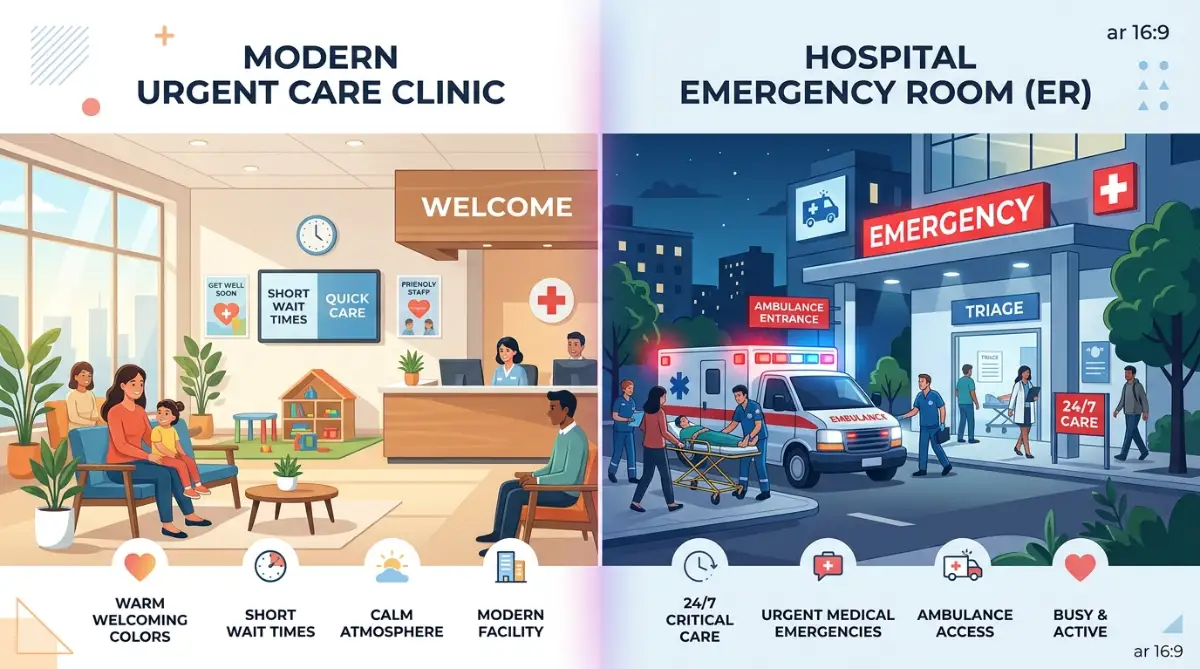
Most people panic when they get sick on a weekend and rush straight to the hospital emergency room. This is the absolute worst financial decision you can make unless your life is truly in danger. Emergency rooms charge thousands of dollars just for walking through their front doors.
Instead, use a local urgent care clinic for things like a twisted ankle, a sudden fever, or a minor cut that needs simple stitches. Urgent care visits usually cost a tiny fraction of what an emergency room charges. Your standard copay for an urgent care visit might only be 50 USD, compared to a 500 USD copay at the hospital.
Before you actually get sick, take ten minutes to map out the closest in-network urgent care center to your apartment. Save their address and phone number directly into your smartphone contacts. When a sudden fever hits you at midnight, you will know exactly where to go without having to think about it.

Hidden Traps That Can Drain Your Bank Account
Taking control of your own medical needs is incredibly empowering, but the road is completely covered in dangerous financial traps. People make small, accidental mistakes every single day that end up costing them thousands of dollars in unexpected bills. You have to stay incredibly alert, especially during your very first year off your parent's family plan.
The most terrifying trap of all is falling into the out-of-network billing nightmare. Imagine going to an in-network hospital for a planned surgery and paying your normal copay at the front desk. You wake up perfectly fine, only to receive a surprise bill for 4,000 USD from the specific doctor who put you to sleep.
This happens because the anesthesiologist who worked on you was an independent contractor who did not take your specific insurance. Even though the hospital itself was covered, the random doctor standing in your room was not. You can protect yourself by learning about federal protections against surprise medical bills which make it illegal for them to charge you these hidden out-of-network fees in many emergency and non-emergency settings.
Missing Your Magic Enrollment Window
Time is your absolute worst enemy when you are dropping off a family policy. I mentioned the Special Enrollment Period earlier, but people constantly underestimate how strict this deadline truly is. You generally have exactly sixty days from the moment your old coverage ends to secure a new policy.
If you get distracted by life and miss that specific deadline by just one single day, the system completely locks you out. You will not be able to buy a comprehensive medical policy until the nationwide open market begins again months later. During that long waiting period, you are flying completely blind without any financial safety net.
If you break your arm or get a severe infection during those unprotected months, you pay every single dollar yourself. Medical debt is the leading cause of personal bankruptcy, and a simple missed deadline can push you right to the edge. Mark your exact cutoff date on your physical calendar, your phone, and a sticky note on your bathroom mirror.
Lying About Your Income Expectations
When you apply for a policy on the public marketplace, they ask you to estimate how much money you will make this year. They use this exact number to give you a discount on your monthly premium. Many people intentionally guess a super low income just to get a cheaper monthly bill right now.
This seems like a clever life hack, but it is actually a massive ticking time bomb for your taxes. At the end of the year, the government checks your real tax return against the fake estimate you provided to the marketplace. If you actually made much more money than you claimed, they will demand all that discount money back immediately.
You could wake up in April and suddenly owe the government 2,000 USD in returned tax credits. Always estimate your income as accurately as possible, and log back into the system to update it if you get a surprise raise or a better job. Honesty on your application saves you from a massive financial panic attack during tax season.
💡 Health Coverage: Myths vs. Real Facts
- Myth: "I am young, athletic, and fit, so I don't need health coverage right now."
- Fact: An unexpected broken wrist or a sudden appendix surgery can easily bill upwards of 35,000 USD in a US hospital, ruining your credit score for years.
- Myth: "Missing my 60-day birthday window isn't a big deal; I can sign up whenever I want."
- Fact: Missing your Special Enrollment Period locks you out until the next nationwide Open Enrollment in the fall, leaving you completely unprotected for months.
- Myth: "A basic health plan will automatically cover my dental cleanings and eye exams."
- Fact: Standard adult medical plans do not include routine adult vision or dental work. You must purchase separate dental and vision riders (usually 15 USD to 25 USD monthly).
Forgetting Your Eyes and Teeth
Adult health coverage is completely different from the pediatric coverage you had when you were a teenager. When you were on your parent's plan, things like dental cleanings and eye exams were often bundled together automatically. In the adult insurance world, your medical policy almost never covers your teeth or your eyes.
If you just buy a standard medical policy, you will have to pay full price for your contact lenses and your cavities. You actually have to purchase entirely separate, standalone policies for dental and vision benefits. Luckily, these extra policies are usually very cheap, often costing only 15 USD to 20 USD per month.
Do not wait until your tooth starts hurting to try and buy a dental policy. Most dental companies impose a strict waiting period of six months before they will pay for major work like a root canal or a crown. Buy your extra coverage the exact same day you buy your main medical policy so your waiting periods finish quickly.
Blindly Trusting the Auto-Renew Feature
Insurance companies make it dangerously easy to keep the same exact policy year after year. They send you an email saying your policy will automatically renew unless you actively log in and cancel it. Most people just ignore the email, thinking they are saving themselves a bunch of boring paperwork.
What they fail to tell you is that your monthly premium will almost certainly increase significantly for the new year. They might also quietly drop your favorite daily medication from their approved formulary list without sending a warning. Suddenly, you are paying 40 USD more per month, and your asthma inhaler is no longer covered at the pharmacy.
Always treat your renewal period exactly like you are shopping for a brand-new policy from scratch. Learning how to update insurance policies the right way keeps your coverage up-to-date as your career and life change. Take an hour to compare your current plan against the new options on the market. You will often find a competitor offering much better benefits for a significantly lower monthly price.
Frequently Asked Questions About Turning 26 & Health Coverage
1. What exact day do I lose coverage after turning 26?
Under most employer-sponsored family plans, your coverage continues until the last calendar day of the month you turn 26. However, if your parent's policy is through the federal Marketplace (HealthCare.gov), you are usually covered through December 31st of the year you turn 26. Always confirm with the plan administrator.
2. How much does an individual health plan cost on average?
Without financial aid, an unsubsidized individual plan ranges from 300 USD to 500 USD per month depending on your state and age. However, if you earn an entry-level wage or work freelance, federal subsidies can lower that cost down to between 10 USD and 100 USD monthly.
3. Can I stay on my parents' plan past 26 if I am disabled or a student?
Being a full-time student does not extend coverage past age 26 under federal law. However, if you have a permanent physical or intellectual disability that leaves you dependent on your parents for support, most states and insurers allow an exemption to remain on their policy indefinitely.
4. What documents do I need to prove my Special Enrollment eligibility?
To prove you lost coverage, you will need a formal Certificate of Creditable Coverage or an official letter from your parent's previous insurance provider stating your full name and the exact termination date.
5. Is there a penalty for not having health coverage?
At the federal level, the individual mandate tax penalty is currently 0 USD. However, several states (including California, Massachusetts, New Jersey, Rhode Island, and Washington D.C.) still impose state-level tax penalties if you stay uninsured without an exemption.
Your Action Plan for Complete Peace of Mind
Stepping out from under your family's protective wing is a massive milestone in your adult life. It feels incredibly intimidating to handle strange legal documents and terrifying medical terminology all by yourself. However, once you learn the basic rules of the game, managing your own healthcare becomes entirely predictable and safe.
You now know exactly how to balance your monthly budget against your potential emergency risks. You understand how to spot shady hospital billing tactics and how to use free preventative care to stay healthy. You have completely transformed from a confused dependent into an empowered, smart consumer who cannot be tricked by greedy healthcare systems.
The hardest part is simply taking that very first step to start researching your options today. Gather your current medical ID cards, write down a list of your prescriptions, and start exploring the open market or your job's benefit portal. Protecting your physical health and your bank account is the greatest gift you can ever give to your future self.
I remember staring at my computer screen at 2 AM, completely terrified that making the wrong choice would bankrupt me if I ever got hurt. I felt so alone trying to translate the confusing insurance jargon, constantly second-guessing every tiny detail on the application. But once my new ID card finally arrived in the mail and I successfully used it to pick up my regular prescription for just ten dollars, a massive wave of relief washed over me. I realized that the whole system was just a puzzle, and I was entirely smart enough to put the pieces together. My biggest piece of advice for you is to simply trust yourself, read the fine print slowly, and remember that taking action today completely eliminates the anxiety of tomorrow.
📖 Recommended Insurance Guides & Smart Money Tips
Looking to protect other parts of your daily life and budget? Check out our expert guides below:
🚗 Auto & Vehicle Protection
- Cut Car Costs: How to Lower Your Car Insurance Premiums Without Sacrificing Coverage
- Carrier Showdown: State Farm vs GEICO: A Complete Comparison Guide for Smart Drivers
🏡 Home, Property & Natural Disaster Coverage
- Avoid Claim Traps: 9 Costly Homeowners Insurance Claim Mistakes That Drain Your Wallet
- Older Homes Savings: How to Lower Home Insurance Rates for Older Properties Easily
- Flood & Quake Prep: A Complete Homeowner’s Guide to Earthquake and Flood Insurance
💼 Long-Term Security, Business & Review Advice
- Retirement Defense: How Early Long-Term Care Insurance Can Save Your Retirement Savings
- Spot Fake Reviews: Before You Trust That Insurance Review, Read This First
- Commercial Asset Safety: The Hidden Traps: Mistakes to Avoid When Purchasing Commercial Property Insurance
Disclaimer:
The information provided in this article is for educational and informational purposes only and does not constitute financial, medical, or legal advice. Healthcare laws and insurance policies vary widely by region and individual circumstances. Always consult with a licensed insurance agent, HR professional, or certified financial advisor before making any final decisions regarding your health coverage.


