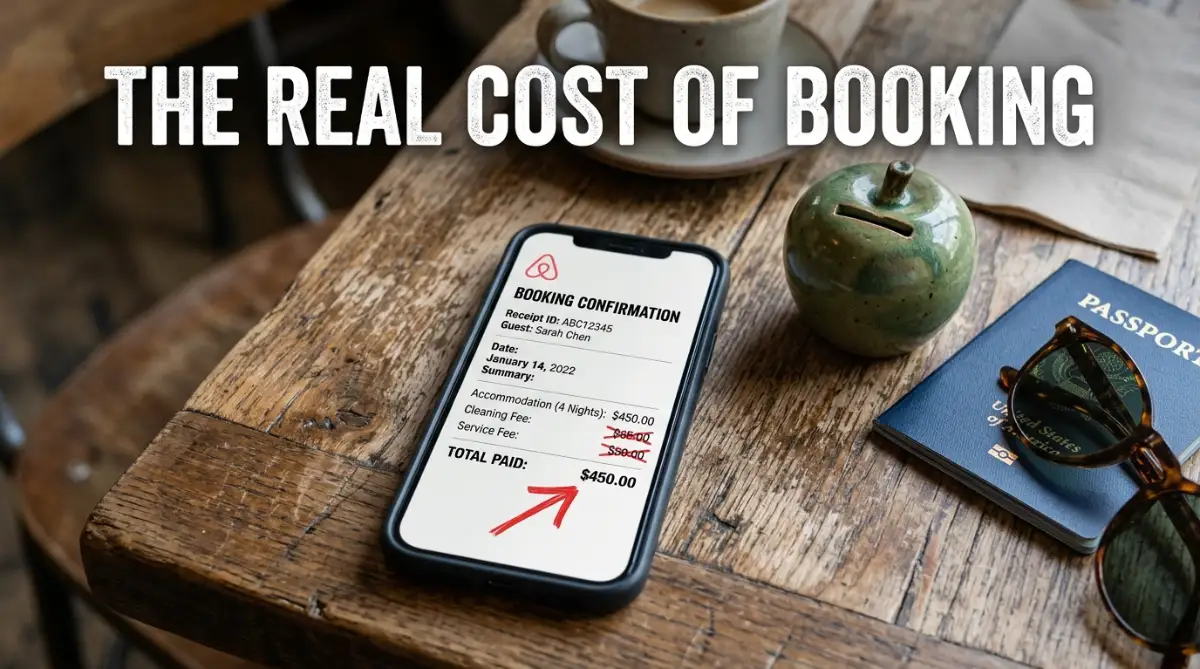
The Hidden Stress of Booking Your Next Stay: What Nobody Tells You
You spend weeks planning the perfect vacation. You dream of tasting local food, walking down historic streets, and relaxing away from your daily worries.
But then comes the hardest part of the process. You must decide where you will sleep at night.
Should you book that cozy-looking apartment on a quiet side street, or should you choose the established hotel downtown? The decision feels heavy because a single mistake can ruin your entire trip.
We have all heard the horror stories from fellow travelers. People arrive at a rental only to find out the property does not exist.
Others check into a hotel room and realize the lock on the window is broken. These are not just minor inconveniences.
They can turn your dream trip into a living nightmare. You want to save money, but you also want to feel secure when you close your eyes at night.
The search for the perfect place to stay often leads to deep frustration. You spend hours reading reviews that contradict each other.
One traveler says a place is wonderful, while another calls it a disaster. This confusion makes you feel stuck and anxious.
Quick Navigation: My Top Takeaways
If youβre in a rush to plan your next adventure, let me give you the quick, honest breakdown from my years on the road:
- The Cost Verdict: For quick stays (1 to 3 nights), hotels almost always win on price because those sneaky Airbnb cleaning fees wonβt eat up your budget. For group trips or stays longer than a week, vacation rentals offer much better value.
- The Safety Verdict: Hotels offer a higher, standardized baseline of security with 24/7 staff, keycard access, and fire codes. Rentals can be perfectly safe, but they require a lot more research and vigilance on your part.
- My Golden Rule: Never book a place without reading the five most recent reviews and checking the public transit routes surrounding the neighborhood.
Why Finding Clear Travel Information Feels Impossible
Finding honest answers about safety and costs has become incredibly difficult today. Many travel websites hide the negative sides of lodging options because they want to earn commissions.
- Misleading Photo Angles: Rental listings often use wide-angle lenses to make tiny rooms look like giant suites.
- Hidden Fee Tricks: The price you see on the search page is rarely the price you pay at checkout.
- Fake Online Reviews: Many hosts and hotels buy positive reviews to drown out real complaints from guests.
- Outdated Safety Guidelines: Government rules for home rentals are often lax compared to strict hotel standards.
- Confusing Cancellation Policies: Reading the fine print of a booking can feel like trying to decode a legal contract.
These challenges leave travelers guessing instead of planning with confidence. When you cannot trust the information you find, making a decision feels like a gamble.
How Booking Mistakes Rob You of Peace and Confidence
This constant uncertainty does more than waste your valuable time. It slowly chips away at your excitement and causes unnecessary stress before you even pack your bags.
- Sleepless Trip Planning: You stay up late scrolling through endless pages of listings, feeling more confused with every click.
- The Fear of the Unknown: You worry about arriving in a strange city at night and finding yourself locked out.
- Financial Anxiety: You worry that unexpected fees will ruin your dining and sightseeing budget.
- Loss of Control: You feel helpless when booking platforms refuse to help you resolve issues with hosts or managers.
- Regret Before Departing: You begin to doubt your choices, wondering if you made a massive mistake that will ruin the vacation.
You deserve to travel with absolute confidence and clarity. Let us break down the facts so you can make the smartest, safest, and cheapest choice for your next journey.

The Ultimate Cost Breakdown: Airbnb Fees vs. Hotel Pricing
When you first look at room prices online, holiday rentals often seem much cheaper than hotels. A cute apartment might list for seventy dollars a night, while a nearby hotel asks for one hundred dollars.
But you must look closer at the final checkout screen. The initial price is rarely the final price you will pay.
To understand the real math, we must look at how each option calculates their fees. This is where many budget travelers make painful mistakes.
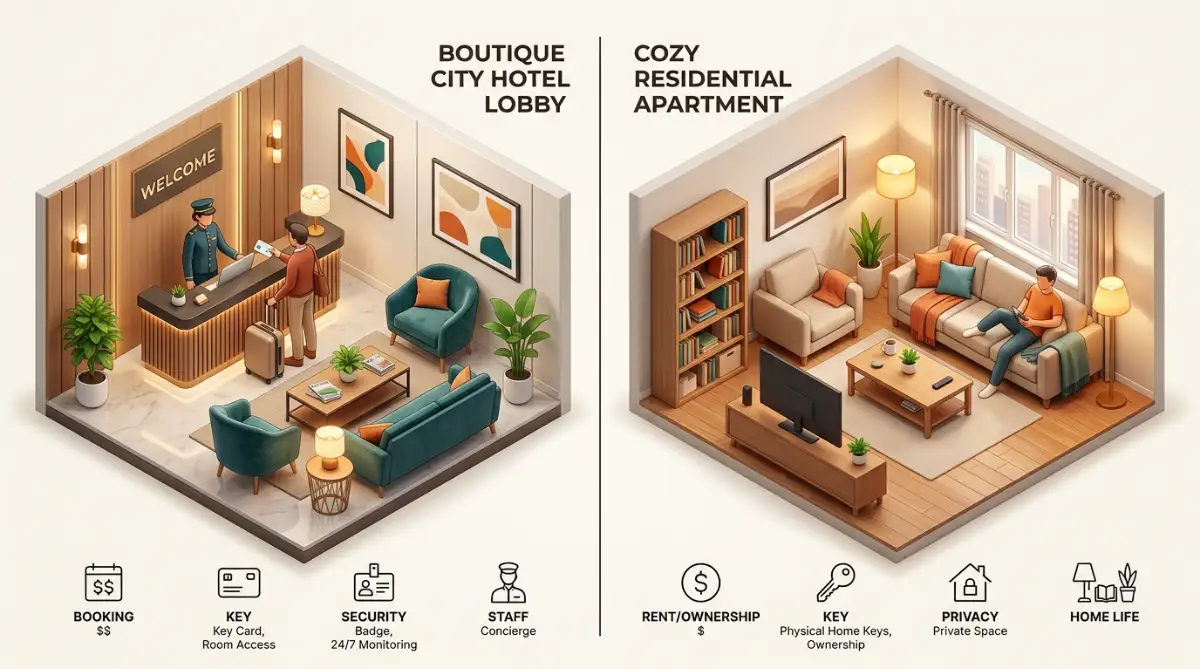
The True Cost of Booking an Airbnb
Holiday rentals are famous for adding extra fees at checkout. These charges can turn a cheap stay into an expensive mistake.
Let me share a quick reality check with you. Iβve been tracking these pricing trends for years, and a recent data study from <a href="https://upgradedpoints.com/travel/airbnb-vs-hotel-cost-comparison/" target="_blank">Upgraded Points</a> across major U.S. cities revealed something eye-opening: hotels actually turned out to be cheaper than whole-unit Airbnbs in the vast majority of analyzed cities once you add up all those checkout fees.
Another extensive analysis by <a href="https://airroi.com/" target="_blank">AirROI's STR Pricing Insights</a> found that the average Airbnb checkout price is marked up by a median of 55.9% compared to the initial nightly rate you see on the search page! So, when you see a cozy apartment listed for a bargain, we have to remember that the platform isn't showing us the full story upfront.
The Shock of Cleaning Fees
A host can set any cleaning fee they want. You might book a one-night stay for fifty dollars and find a seventy-dollar cleaning fee added to the bill.
This fee stays the same whether you stay for one night or seven nights. Because of this, short stays at home rentals are often highly expensive.
If you are only staying for a night or two, hotels almost always win the price battle.
Platform Service Fees
Booking platforms charge a service fee to cover their customer support and website maintenance. This is usually around fourteen percent of the booking subtotal.
You have no way to avoid this fee. It is a mandatory cost of using the platform.
Local Occupancy Taxes
Many local governments now tax home rentals just like hotels. These taxes are added automatically at the end of your booking process.
Sometimes, these taxes can add an extra ten to fifteen percent to your total bill.
+-------------------------------------------------------------+ | THE REAL COST OF A 2-NIGHT STAY | +------------------------------+------------------------------+ | Typical Airbnb Stay | Typical Hotel Stay | +------------------------------+------------------------------+ | Base Rate: $100/night ($200) | Base Rate: $130/night ($260) | | Cleaning Fee: $80 | Cleaning Fee: $0 | | Service Fee: $35 | Service Fee: $0 | | Taxes: $30 | Taxes: $35 | +------------------------------+------------------------------+ | TOTAL: $345 | TOTAL: $295 | +------------------------------+------------------------------+
The Real Cost of Booking a Hotel
Hotels have a more predictable pricing structure, but they are not entirely free of hidden charges. You must know what to watch out for before you swipe your card.
Resort and Amenity Fees
Some hotels, especially in popular tourist cities, charge a mandatory daily resort fee. This fee covers things like Wi-Fi, pool access, and fitness center use.
They charge this even if you never use the pool or the gym. Always check the hotel policy to see if a resort fee is waiting for you.
Parking Costs
If you are driving a car, hotel parking can be a major expense. City hotels often charge thirty to sixty dollars per night for parking.
Many home rentals, on the other hand, offer free parking in a private driveway or on the street.
Complimentary Breakfast and Perks
Many mid-range hotels include free breakfast for all guests. This can save a family of four thirty to fifty dollars every single morning.
You also get free coffee in the lobby and daily room cleaning. These small perks add up to big savings over a week-long trip.
How to Build a Smarter Travel Budget (And Spot Hidden Fees Early)
Iβve learned the hard way that a "cheap" nightly rate can easily morph into a financial headache if you donβt keep your eyes open. To build a budget that actually keeps you stress-free, I always recommend creating a "Buffer Fund"βessentially an extra 15% added to your estimated lodging cost. Why? Because of those sneaky, post-booking surprises.
We must plan with these hidden costs in mind so we can reclaim control over our money. Take a moment to calculate these variables upfront. If you want a deeper dive into stress-free planning, I highly recommend checking out our comprehensive <a href="https://infobuyr.com/ guide on managing your travel budget</a> to learn how to keep your daily trip expenses completely under control.
Safety and Security: Where Are You Truly Protected?
Your physical safety is the most important part of any trip. Saving twenty dollars a night is not worth putting yourself in danger.
Let us compare how these two lodging options handle guest safety and emergency situations.
Look, saving a few bucks is great, but as someone who has slept in everything from boutique resorts to remote spare rooms, I can tell you that peace of mind is priceless. If you are leaning toward hotels for safety, you are not alone.
According to lodging survey data from <a href="https://savanta.com/knowledge-centre/view/understanding-the-perfect-stay-airbnb-vs-hotel/" target="_blank">Savanta's Lodging Preference Study</a>, around 68% of travelers still actively choose hotels over vacation rentals, primarily because they value standardized quality, reliable safety measures, and on-site, 24/7 support.
I always tell my readers: when youβre in an unfamiliar city, having a real human being at the front desk at 3:00 AM isn't just a comfortβit's your safety net.
The Structured Safety of Hotel Environments
Hotels operate under strict government regulations and industry standards. This creates a highly secure environment that private rentals simply cannot match.
24/7 Staff and Active Monitoring
A major benefit of a hotel is the constant presence of staff. There is always someone working at the front desk, even at three o'clock in the morning.
If you hear a strange noise or see someone suspicious, you can call the desk immediately. Most hotels also have security guards patrolling the hallways and parking lots at night.
Electronic Locks and Access Control
Hotels use electronic keycard systems that change codes with every new guest. This means former guests cannot access your room.
Elevators in modern hotels also require a room keycard to access guest floors. This keeps random people off the streets from wandering near your room.
Fire Safety and Emergency Plans
Hotels must install professional sprinkler systems, smoke detectors, and fire alarms in every room. They have clearly marked escape routes on the back of every door.
These systems are inspected regularly by local fire departments to ensure they work perfectly.
The Unpredictable Safety of Private Vacation Rentals
Private rentals do not have the same level of oversight as hotels. Staying in a home rental means you are trusting an individual host with your safety.
The Smart Lock and Keybox Risk
Many hosts use simple lockboxes with physical keys or basic smart locks. Sometimes, the entry code is rarely changed between guests.
This means previous renters, cleaners, or maintenance workers might still have access to the property. This is a quiet risk that many travelers never consider.
The Hidden Camera Concern
While booking platforms strictly ban indoor security cameras, some dishonest hosts still install them secretly. Finding a hidden camera in a bedroom or bathroom is a terrifying experience.
Although this is rare, it is a risk that simply does not exist in professional hotels due to strict privacy laws and corporate liabilities.
Unfamiliar Neighborhoods
A rental might look beautiful in photos, but the street it sits on could be dark, isolated, or unsafe at night. You do not have a local concierge to warn you about areas to avoid.
If you feel unsafe, you cannot easily walk downstairs to request a different room.
Myth vs. Reality: Debunking Common Lodging Beliefs
Many beliefs about hotels and vacation rentals are simply outdated or incorrect. Let us examine the most common ideas travelers hold.
Myth 1: Airbnbs Are Always Cheaper for Groups
- The Reality: While a large house can be cheaper than booking three separate hotel rooms, this is not always true. High service fees, cleaning costs, and the price of utilities can make a large rental highly expensive. Sometimes, booking adjoining rooms at a suite-style hotel is much more affordable and convenient.
Myth 2: Hotels Offer No Cooking Options
- The Reality: Many modern hotel chains now offer extended-stay rooms with fully equipped kitchens. These rooms give you the ability to cook your own meals while still enjoying daily cleaning services and hotel security.
Myth 3: Private Hosts Provide Better Local Tips
- The Reality: Many vacation rentals are now managed by large property companies rather than local families. You might never meet your host, and your messages may be answered by an automated system or an offshore customer service team.
Step-by-Step Guide: How to Choose the Best Option for Your Next Trip
You do not have to guess which option is best for your specific situation. Follow this simple guide to make the right choice every single time.
Step 1: Calculate the Total Cost (The Honest Way)
Never trust the nightly rate you see on the initial search page. To find the real price, you must follow these steps.
- Enter Your Exact Dates: Prices change based on the day of the week and local events.
- Add the Number of Guests: Some rentals charge extra for each guest after the first two.
- Go to the Final Payment Screen: Look at the total price including cleaning fees, service fees, and local taxes.
- Add the Cost of Extras: Calculate how much you will spend on parking, breakfast, and internet if they are not included.
- Divide by the Number of Nights: This gives you the true nightly cost of each option.
Before we move to safety, here is a personal hack I use every single time I book. When you are looking at the location map on an app, don't trust the marketing pins. I always open the destination city's official public transit website in a separate tab to map out the route.
If a cheap Airbnb requires a 20-minute walk through an unlit zone to reach the nearest train, itβs not worth it. I would rather pay $15 more for a hotel right next to a well-lit transit hub. We must factor the cost and safety of our daily commute into the overall accommodation budget.
The Safe Neighborhood Blueprint: Why I Trust Transit Maps Over Marketing Pins
Let me share a secret that has saved me both money and endless worry. When you look at an accommodation map on a booking site, the area might look incredibly close to the city center. But marketing pins are designed to make places look ideal.
Here is what I do instead: I open the cityβs official public transit website in a separate browser tab. I look at the subway, metro, or light rail lines. If a budget-friendly Airbnb or a boutique hotel is located three or four stops outside the tourist zone, but sits right along a major, well-lit transit line, that is your sweet spot!
Choosing these neighborhoods does two things for you: it dramatically lowers your nightly rate, and it ensures you aren't stranded in an isolated, dark residential block with no easy way to get home at night. We want you to feel safe walking back to your room, even if it is a little late.
Step 2: Assess Your Personal Safety Comfort Level
Different travelers have different safety needs. Consider who is traveling and where you are going.
- Solo Female Travelers: If you are traveling alone, hotels generally offer better security with 24/7 staff, well-lit hallways, and secure keycard entry.
My Solo Travel Safety Standard: Protecting Yourself on Your Own Terms
If you are traveling solo, your safety is non-negotiable. I always suggest taking a few extra precautions to build a protective shield around your stay.
First, before you book any vacation rental or independent boutique hotel, send a quick message to the host or property manager. Ask them about the check-in process for solo arrivals, especially if your flight lands after dark. A warm, responsive, and detailed reply is a great indicator that they will look out for you.
Second, always share your live location or the exact address of your stay with a trusted friend or family member back home. It takes ten seconds, but it gives you immense peace of mind knowing someone always has your back.
- Families with Young Kids: Hotels offer childproof rooms, cribs upon request, and gated pool areas with lifeguards.
- Adventure Travelers: If you are staying in a remote nature area, a private cabin might be your only choice, but you must prepare for self-reliance.
Step 3: Compare the On-Site Support Systems
Think about what you will do if something goes wrong during your stay.
- The Hotel Solution: If your air conditioner breaks at a hotel, you can call the front desk. They will send a repair person immediately or move you to a new room within minutes.
- The Rental Solution: If the air conditioner breaks at a home rental, you must message the host. You might have to wait hours for a reply, and days for a technician to arrive.
Real-Life Scenarios: Which Option Wins?
To make this even clearer, let us look at three common travel situations. These examples show how the best choice depends entirely on your specific needs.
Scenario A: The Weekend Solo City Trip
- The Goal: A quick two-night stay in Chicago to see some museums.
- The Winner: Hotels.
- Why: For a short stay, Airbnb cleaning fees will make the apartment too expensive. A hotel near a metro station provides easy access to public transit, free morning coffee, and a safe walk back to your room at night.
Scenario B: The One-Week Family Reunion
- The Goal: Six adults and two children spending a week near the beach.
- The Winner: Vacation Rentals.
- Why: Booking multiple hotel rooms for a large family is highly expensive. A large rental home provides a private kitchen to cook meals, a backyard for kids to play, and a communal space where everyone can spend time together.
Scenario C: The Long-Term Remote Work Stay
- The Goal: A freelance writer spending three weeks in a quiet mountain town to finish a book.
- The Winner: Vacation Rentals.
- Why: Many rental platforms offer deep discounts for stays longer than one week. Having a private kitchen, a washing machine, and a dedicated workspace makes a long stay comfortable and affordable.
Practical Checklist: How to Stay Safe in Any Accommodation
No matter which option you choose, you should always take steps to protect yourself. Use this quick checklist when you arrive at your lodging.
For Vacation Rental Stays
- Check the Reviews: Look for listings with at least forty reviews and a rating above 4.8.
- Locate the Fire Extinguisher: Ask the host where the safety equipment is kept.
- Inspect for Cameras: Look closely at clocks, chargers, and smoke detectors in private areas.
- Test the Locks: Ensure all doors and windows lock securely from the inside.
- Keep the Host App Open: Always communicate through the official platform to keep a record of your conversations.
For Hotel Stays
- Use the Deadbolt: Always lock the manual deadbolt and security latch when you are inside your room.
- Check the Peephole: Ensure the peephole on your door is clear and has not been tampered with.
- Locate the Exit Stairs: Walk down the hallway to find the nearest fire exit.
- Use the In-Room Safe: Store your passport, extra cash, and electronics in the room safe.
- Verify Visitors: Never open your door to someone claiming to be hotel staff unless you called the front desk first.
Making Your Final Decision with Confidence
There is no single correct answer to the accommodation debate. Both hotels and vacation rentals have unique advantages that make them suitable for different kinds of trips.
If you prioritize maximum safety, predictable pricing, and helpful on-site service, a hotel is your best bet. It takes the guesswork out of your travel and lets you relax completely.
If you want more space, a private kitchen for long stays, or a unique local experience, a vacation rental can be a wonderful choice. Just make sure to read the reviews carefully and calculate the total cost with all fees included.
By taking the time to analyze your options using this guide, you can avoid costly surprises and ensure a safe, comfortable, and highly enjoyable trip. Pack your bags, make your choice, and enjoy your journey with complete peace of mind.
Mastering the Booking Game: Advanced Insider Secrets to Save Money and Stay Secure
Finding the right place to stay is not just about choosing a room. It is about understanding how the travel industry works behind the closed doors of booking sites.
If you want to get the best deals and stay safe, you need to think like a professional traveler. Regular tourists simply search a website, click book, and hope for the best.
I want to show you how to do things differently. With a few smart strategies, you can save hundreds of dollars and protect yourself from unpleasant surprises.
The Secret Art of Direct Host Communication and Soft Negotiation
Many travelers do not realize that the prices listed on vacation rental platforms are not set in stone. Private hosts often have the freedom to adjust their rates whenever they want.
If you are planning a stay that is longer than four days, you have room to negotiate. The key is to communicate politely and professionally through the official messaging system.
Start by asking a few detailed questions about the property to show you are a serious and responsible guest. You can ask about the speed of the internet or the closeness of the nearest grocery store.
Once you establish a friendly connection, you can ask if they offer any special rates for your dates. Many hosts prefer to have a guaranteed booking rather than an empty home, especially during the middle of the week.
Using these smart travel tips can help you secure discounts of ten to twenty percent. Always keep your conversations inside the official platform to protect your money and your account.
Unlocking Hidden Hotel Discounts and Credit Card Hacks
Hotels have their own set of secret pathways to cheaper rates. While third-party booking engines are convenient, they often charge hotels high commission fees.
Because of this, hotels prefer that you book directly through their own website or phone line. If you find a cheap rate online, call the hotel directly and ask if they can match or beat it.
Many times, the front desk manager will match the price and throw in a free upgrade or complimentary breakfast. They are happy to do this because they do not have to pay a commission to a booking website.
In addition, you should always check your credit card benefits before making a purchase. Many cards offer built-in protections that can save you in an emergency.
These perks often include trip cancellation insurance, lost luggage protection, and even rental car coverage. Utilizing these credit card travel protections means you do not have to buy expensive extra insurance policies.
You can also read our detailed guide on how to manage your travel budget to learn more about saving on daily trip expenses.
The Hidden Neighborhood Zoning Trick for Maximum Safety
When you look at lodging options, the location map can be highly deceptive. A neighborhood that looks close to downtown might actually be isolated or difficult to access at night.
To avoid this, you should always look at the public transit corridors of your destination city. Safe and budget-friendly neighborhoods are often located slightly outside the tourist center but along major subway or light rail lines.
By staying three or four transit stops away from the main attractions, you can often cut your lodging costs in half. At the same time, you will stay in a quieter, more residential area where local families live.
These areas often have cheaper restaurants and grocery stores, which helps you save even more money. You can research local city maps and transit systems to find these safe pockets.
By staying three or four transit stops away from the main attractions, we can often cut our lodging costs in half. Plus, you will stay in a quieter, more residential area where local families actually live.
To help you research safe areas, feel free to use our curated strategies on <a href="https://yourwebsite.com/choosing-safe-neighborhoods" target="_blank">choosing safe neighborhoods</a> to guide your search and avoid booking in a high-crime zone.
A Quick Guide to Advanced Booking Strategies
To help you visualize these choices, here is a quick guide comparing advanced strategies for both options.
Pro-Level Q&A: Your Burning Booking Questions Answered
To help you navigate this complex topic, let us answer some of the most common questions travelers ask.
Is it safer to book a newly listed rental or an older one?
You should almost always choose properties that have been active for at least six months. New listings may have lower prices to attract guests, but they lack a proven safety record.
Older listings with many positive reviews give you a clear picture of what to expect. If a host has hosted hundreds of guests without any issues, you can feel much more secure booking with them.
Do hotels really have better emergency response plans?
Yes, professional hotels are legally required to have clear emergency plans, backup power generators, and direct lines to local emergency services. They also must follow strict hotel safety regulations that private home rentals do not have to follow.
In a natural disaster or medical emergency, having trained staff on-site can make a massive difference. Private hosts are often not in the area and cannot provide immediate physical help.
How do I check for hidden cameras in a rental room?
When you first enter your rental, turn off all the lights and close the curtains. Use your smartphone flashlight to scan the room slowly.
Look for tiny reflections of light, which often indicate a camera lens. Pay close attention to items like alarm clocks, smoke detectors, and wall chargers that are pointed toward the bed or bathroom.
"Is there a way to verify if a rental property is legally registered?"
Yes, and I highly recommend doing this for peace of mind. Many cities now require short-term rental hosts to display a registration or permit number directly on their listing page.
You can read how this works on the official <a href="https://www.airbnb.com/help/article/3190" target="_blank">Airbnb Help Center on Pending/Exempt Licenses</a>. Before you book, check the listing description or the 'about the host' section for a license code.
If you don't see one, I suggest sending a quick, friendly message to the host: 'Hi! Iβm planning my trip and just wanted to confirm if your property is registered with the city, as I couldn't find the permit number on the listing.' A professional, law-abiding host will gladly share this information with you.
Real-Life Scenario: How Jack Saved Money and Stayed Safe
Let us look at a real-world example of how these advanced tips work in action. Meet Jack, a freelance graphic designer who wanted to spend two weeks working from a quiet coastal city.
Jack initially found a trendy apartment listed for ninety dollars a night. However, when he reached the checkout screen, the total price jumped because of a heavy cleaning fee and a service charge.
Instead of booking immediately, Jack searched for local boutique hotels in the same area. He found a family-run hotel that offered free breakfast and had a secure parking garage.
Jack called the hotel manager directly and explained that he was staying for two weeks. The manager was delighted to offer him a twenty percent discount on the room rate to secure a long-term guest.
By booking directly, Jack saved over two hundred dollars compared to the rental apartment. He also enjoyed the security of a 24/7 front desk and free daily breakfast, which kept his food costs very low.
I want us to pause here for a second. Weβve all been in Jack's shoesβrubbing our tired eyes in front of a glowing laptop screen at 2:00 AM, feeling overwhelmed by twenty open browser tabs. My goal is to help you cut through that anxiety.
You don't have to get lucky to find a safe, budget-friendly stay. You just have to be willing to pick up the phone, speak to people directly, and look beyond the surface-level advertisements.

Dangerous Traps: The Most Expensive Booking Mistakes You Must Avoid
Even experienced travelers can fall into common booking traps if they are not careful. These mistakes can cost you hundreds of dollars and leave you stranded in a foreign city.
By understanding these pitfalls, you can protect your wallet and your peace of mind. Let us look at the biggest mistakes you must avoid on your next trip.
Mistake 1: Trusting Star Ratings Without Reading Recent Reviews
Many people select a hotel or rental simply because it has a four-star rating. This is a major mistake because ratings can be easily manipulated.
A property might have had excellent service years ago, but a recent change in management can quickly ruin the quality. Always filter reviews to show the most recent ones first.
Pay close attention to reviews written in the last two months. If multiple recent guests complain about dirty sheets, broken locks, or poor communication, believe them.
You can also use tools and resources on review verification tips to spot fake or paid feedback. Consistent, recent feedback is the only true measure of quality.
Mistake 2: Forgetting to Calculate Local Transportation Costs
A room might seem like an incredible bargain, but if it is located far away from the main attractions, you will pay the price in transportation. Many budget travelers forget to calculate the cost of daily taxi rides or train tickets.
If you must spend thirty dollars a day on transportation, your cheap room is no longer a deal.
Always calculate the total cost of your stay, including your daily commute. Sometimes, paying a higher rate for a central hotel will actually save you money and time.
It also keeps you safer because you will not have to navigate unfamiliar public transport systems late at night. You can check our guide to solo travel safety for more advice on navigating new cities securely.
Mistake 3: Paying or Communicating Outside the Official Platform
This is perhaps the most dangerous trap for vacation rental users. A host might message you and offer a ten percent discount if you pay them directly through a bank transfer or wire service.
They will claim this saves both of you from paying platform fees.
Never agree to this request, no matter how friendly the host seems. Once you send money outside the platform, you lose all your consumer protections. If the listing turns out to be a scam, the booking platform cannot help you get your money back.
To protect your hard-earned cash, you can read more about identifying and <a href="https://consumer.ftc.gov/articles/how-avoid-vacation-rental-scams" target="_blank">avoiding travel scams through official government portals</a> like the FTC's dedicated guide.
If the listing turns out to be a scam, the booking platform cannot help you get your money back. For more information on staying safe from online theft, you can read about avoiding travel scams through official government portals.
How to Spot Travel Scams and Keep Your Money Safe
We have all heard about travelers who paid hundreds of dollars only to arrive at an address that didn't exist, or a property that looked nothing like the photos. These scams are heartbreaking, but you can easily protect yourself if you know what red flags to look for.
The most important rule I can share is this: never, under any circumstances, click on a payment link sent to you via email or personal text message. If a host asks you to pay a deposit through a bank transfer, WhatsApp, or any external platform, stop immediately and report them.
Additionally, I recommend cross-checking the listing images using Googleβs reverse image search. If the exact same luxury apartment photos show up on five different websites with different addresses and host names, itβs a scam. Trust your instinctsβif a deal feels too good to be true, your gut is usually trying to protect you.
Mistake 4: Skipping the Host Communication Check
When booking a private rental, the responsiveness of your host is your safety net. If a host takes two days to answer a simple question before you book, they will likely be impossible to reach during an emergency.
Many travelers make the mistake of booking without sending a test message first.
Always send a quick, polite message to the host before you click the book button. Ask a simple question about the check-in process or local parking.
If they reply quickly and professionally, it is a good sign that they care about their guests. If they ignore you or give vague answers, look for another place to stay.
Mistake 5: Failing to Document the Property on Arrival
When you first walk into your room or apartment, you might be tired and want to collapse on the bed. However, failing to document the condition of the property can lead to costly false damage claims.
Some dishonest hosts or hotels may try to charge you for pre-existing scratches, broken appliances, or stained carpets.
Take five minutes to take clear photos and videos of every room as soon as you arrive. If you notice any damage, email the photos to the host or front desk immediately.
This creates a digital paper trail with a timestamp that proves you did not cause the damage. This simple habit can save you from losing your security deposit.
Take five minutes to take clear photos and videos of every room as soon as you arrive. If you notice any damage, email the photos to the host or front desk immediately. This creates a digital paper trail with a timestamp that proves you did not cause the damage.
This simple habit can save you from losing your security deposit. For more details on protecting yourself from hidden charges, read our practical article on <a href="https://yourwebsite.com/hidden-vacation-fees" target="_blank">understanding hidden vacation fees</a>.
Your Next Steps: A Simple Action Plan for Your Next Adventure
Now that you know the secrets and the traps, you are ready to plan your trip with absolute confidence. Let us turn this knowledge into a simple checklist you can use for your next booking.
Your Pre-Booking Checklist
- Compare the Total Price: Go to the final checkout screen for both a hotel and an Airbnb to compare the real costs.
- Read the 5 Most Recent Reviews: Look for any recurring complaints about cleanliness, safety, or noise.
- Test Host Responsiveness: Send a quick question to the rental host to see how fast they reply.
- Check the Location on a Map: Ensure the property is close to public transit and in a well-lit neighborhood.
- Review the Cancellation Policy: Know exactly when you must cancel to get a full refund if your plans change.
Your On-Arrival Checklist
- Take Photos of Every Room: Document any pre-existing damage immediately.
- Test the Door and Window Locks: Ensure you can lock yourself in securely.
- Locate the Emergency Exits: Know how to exit the building quickly in case of a fire.
- Scan for Hidden Cameras: Check suspicious items in private areas.
- Locate the First Aid Kit: Know where safety supplies are kept.
A Word of Encouragement from the Expert
Travel is one of the most rewarding experiences in life. It opens your mind, introduces you to new cultures, and creates memories that last a lifetime.
You should not let the fear of booking mistakes keep you from exploring the world. Armed with the right information, you can make smart, safe, and budget-friendly choices every single time.
Remember that the cheapest option is not always the best, and the most expensive option is not always the safest. Use your common sense, follow the steps in this guide, and trust your gut feelings.
If a deal looks too good to be true, it probably is. Invest in your safety and comfort so you can focus on the joy of your journey.
Remember that the cheapest option is not always the best, and the most expensive option is not always the safest. Use your common sense, follow the steps in this guide, and trust your gut feelings.
ο»Ώ If you want a complete roadmap for your next journey, check out our comprehensive <a href="https://yourwebsite.com/packing-trip-safety-checklists" target="_blank">packing and trip safety checklists</a>. We designed it to keep you organized and secure from the moment you leave your front door.
Safe travels, and may your next adventure be your best one yet!
Disclaimer:
The information provided in this article is for educational and informational purposes only. Travel conditions, safety situations, and pricing structures can change rapidly. Readers are encouraged to conduct their own research, read local laws, and verify safety protocols before making any booking decisions or financial commitments.