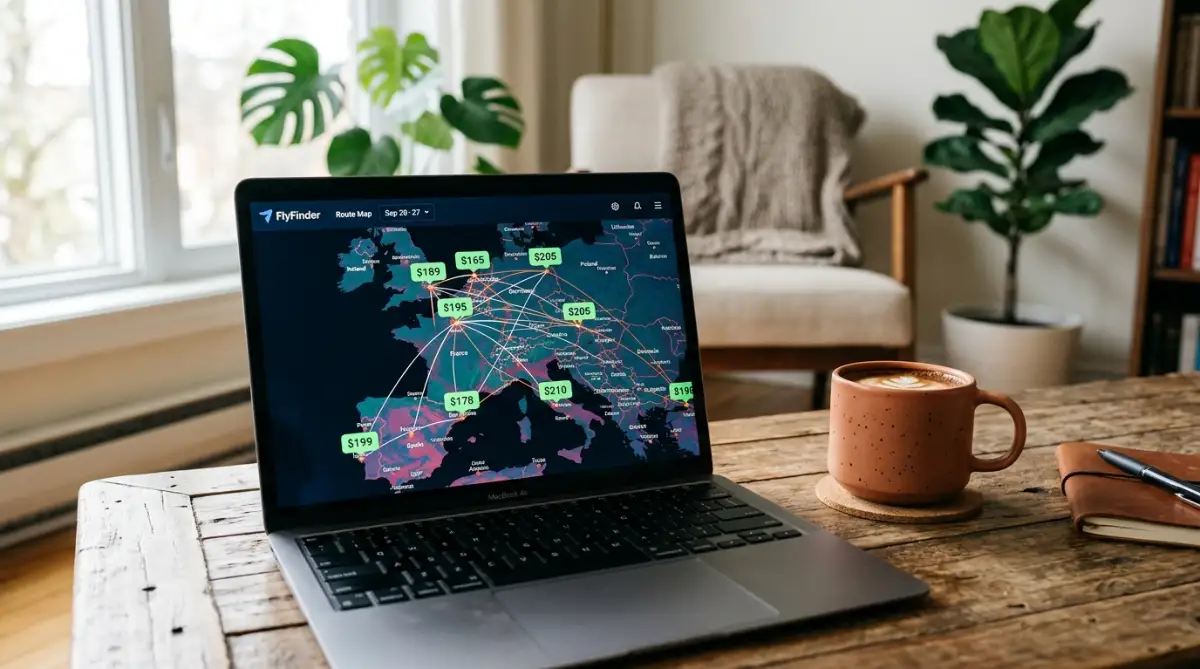
The Hidden Cost of Endless Clicking: The Real Struggle Behind Finding Cheap Flights

Have you ever spent hours staring at your computer screen, watching flight prices jump up and down? It feels like a stressful game where the rules keep changing without warning. You find a great price, but when you click to check out, the cost suddenly doubles. This endless searching leaves many travelers feeling tired and cheated.

Planning a holiday or a family visit should be an exciting time. Instead, it often turns into a headache of comparing dozens of open tabs. We all want to get the best deal, but the system feels rigged against us.

  • Dynamic Pricing Tricks: Travel sites track your interest and raise prices to make you buy quickly out of fear.
  • Hidden Fees at Checkout: Many sites hide baggage fees and seat selection costs until the final payment step.
  • Confusing Search Options: With hundreds of booking platforms online, it is hard to tell which ones are honest.
  • False Scarcity Warnings: Alerts like "only one seat left at this price" are often used just to panic you into buying.
  • Relying on a Single Source: Many people only check one search engine, missing out on major discounts elsewhere.

This constant uncertainty can make you doubt your decisions. You might feel a sense of regret right after booking, wondering if you could have saved more money. It takes away the joy of traveling and makes you feel like you are losing your hard-earned savings. Our goal is to give you back that peace of mind and help you book with absolute certainty.

How Flight Pricing Systems Actually Work

To beat the system, we must first understand how airlines set their ticket prices. It is not random, and it is not magic. Airlines use smart computer programs to change prices based on supply and demand.

Understanding the Concept of "Fare Buckets"

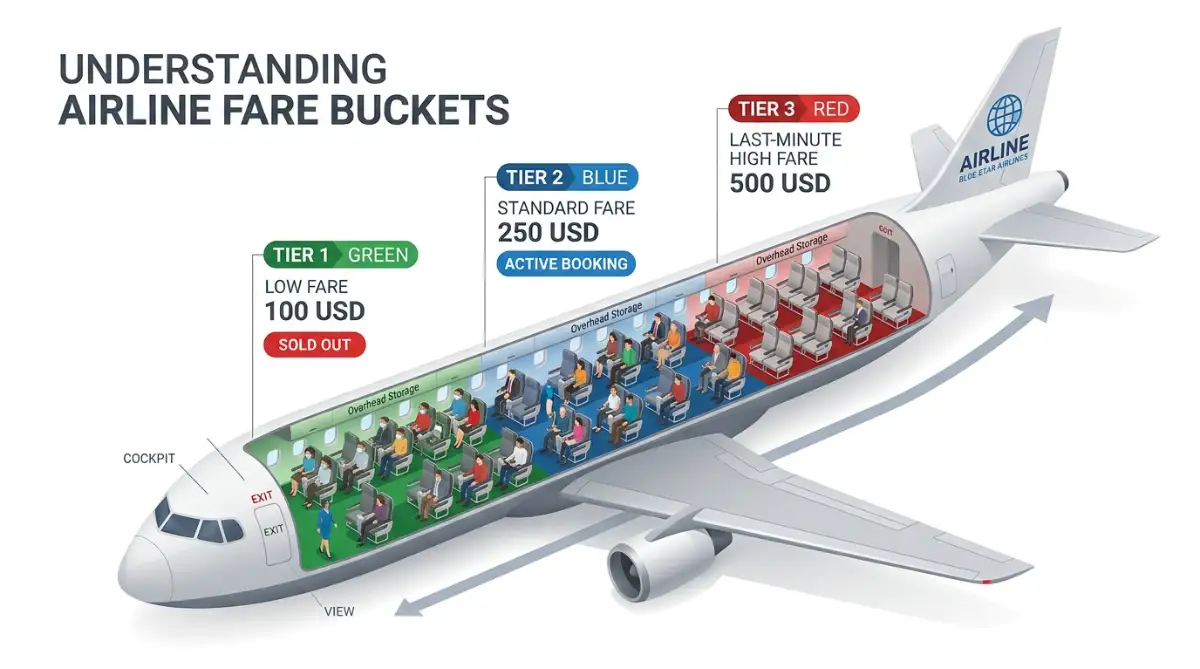
Airlines do not sell all the seats on a plane for the same price. They divide the seats in the cabin into different pricing groups called "fare buckets."

Imagine a bakery that makes twenty loaves of fresh bread. They sell the first five loaves for one dollar each to attract early customers. The next ten loaves cost two dollars each, and the last five loaves cost five dollars each because they are running out.

Airlines do the exact same thing with airplane seats. Once the cheapest bucket of seats is sold out, the system automatically moves to the next, more expensive bucket. This is why prices can rise suddenly even if you are looking at the exact same flight a few hours later.
The Role of Aggregators Versus Online Travel Agencies

Many travelers do not know the difference between a flight aggregator and an Online Travel Agency (OTA). Knowing this difference will save you a lot of time and money.

An aggregator is a search engine that looks at hundreds of other websites at once. It does not sell you the ticket directly. Instead, it shows you the prices and redirects you to the airline or an OTA to complete your purchase.

An OTA is a company that actually sells you the ticket. They handle your payment and manage your booking.

Sometimes, OTAs offer cheaper tickets because they buy seats in bulk. However, changing or cancelling a flight through an OTA can be very difficult compared to booking directly with the airline.


To make your decision-making process easier, I’ve put together this quick, handy comparison table. It will help you instantly decide when to search through an aggregator and when to book through an OTA:

| Feature / Scenario | Flight Aggregators (e.g., Skyscanner, Google Flights) | Online Travel Agencies (OTAs) (e.g., Expedia, Trip.com) |

| :--- | :--- | :--- |

| **What They Actually Do** | They act as a giant search engine, scanning hundreds of sites to find you the best price. They don't sell tickets directly. | They buy seats in bulk or partner with airlines to sell tickets directly to you and handle your booking. |

| **Best Time to Use** | When you want to compare prices across the board and find the absolute cheapest dates or routes. | When you find a rare package deal (flight + hotel) or a specific discount that isn't available on the airline's site. |

| **When Things Go Wrong** | **The Best Route:** Since you usually book directly with the airline, their support team can help you directly with delays or cancellations. | **The Hard Route:** If your flight is canceled, you have to deal with the OTA's customer service, which can sometimes be a painful waiting game. |

| **My Personal Verdict** | I use them for 90% of my searches to find the best deal, then I try to book directly on the airline's official website. | I only use them if the price difference is massive and I am absolutely certain my travel dates won't change. |


Practical Ways to Find the Cheapest Airline Tickets

Now that you know how the systems work, let us look at the exact steps you can take to find the lowest prices. These are practical, tested methods that do not rely on urban myths.

Step 1: Use Flexible Date Search Tools

The single best way to save money on plane tickets is to be flexible with your travel dates. If you must fly on a specific Friday afternoon, you will almost always pay a premium.

Most top search engines have a "flexible dates" or "whole month" view. This tool shows you a calendar grid of prices for the entire month.

Sometimes, flying just one day earlier or later can cut your ticket price in half. Mid-week days like Tuesdays and Wednesdays are generally much cheaper than weekends because fewer people want to travel then.

When I say flexible tools, I specifically mean platforms like Google Flights and Skyscanner. I love using Google Flights’ calendar view because it instantly highlights the cheapest days in green. If you can shift your departure from a Sunday to a Tuesday, you will often find yourself saving enough to cover a night or two at your hotel.


A Quick Note on Budget Carriers:

While major search engines are incredibly powerful, they don't always list every single low-cost airline. Some smaller budget carriers prefer to keep their tickets exclusive to their own websites to avoid paying aggregator fees. If you are flying in a region known for specific budget airlines (like Southwest in the US, Ryanair in Europe, or AirAsia in Asia), I highly recommend taking two extra minutes to check their official websites directly. It is a small step, but it ensures you aren't missing out on some of the best deals out there.

Step 2: Set Up Smart Price Alerts

You do not need to check travel sites every day to see if prices have dropped. Let technology do the hard work for you.

When you search for a flight, look for a button that says "Track Prices" or "Create Alert." Enter your email address, and the site will send you a quick message when the price changes.

This is highly useful if you are planning a trip several months in advance. It helps you see the price patterns so you know when a deal is truly worth grabbing.

Setting up an alert takes less than thirty seconds. On Skyscanner or Kayak, simply toggle the "Track Prices" button after entering your route. I highly recommend setting these up at least three months in advance. It gives you a baseline of what a "normal" price looks like, so when a genuine drop happens, you can book it immediately without second-guessing yourself.

If you are a visual planner like me, you don't want to waste time clicking around blindly. Here is exactly how I set up a smart alert on Google Flights in less than thirty seconds:

  1. Enter your route: Type in your departure and destination cities.
  2. Select tentative dates: Don't worry if your dates aren't set in stone yet; just pick a rough timeframe.
  3. Toggle the magic switch: Right above the search results, you will see a small button labeled 'Track prices'.
  4. Choose your tracking style: Toggle 'All available dates' if you want to find the cheapest time to fly over the next few months, or select 'Specific dates' if your calendar is locked in.
  5. Relax: Sit back and let Google do the heavy lifting. You'll get an instant email notification the second the price goes up or down.


[Pro Tip: Set up your price alerts at least three months before your trip. This gives you enough time to watch the price trend and buy when the cost drops to its lowest average point.]


Step 3: Explore Nearby Airports and Alternative Routes

Many big cities have more than one airport. For example, London has several airports, and New York has three major ones nearby.

When searching for flights, make sure to check the option that says "include nearby airports." Budget airlines often fly into smaller airports that are slightly further from the city center.

These smaller airports have lower landing fees, which means the airlines can pass those savings on to you. Just make sure to calculate the cost of public transport or a taxi from the smaller airport to your final destination before booking.

Step 4: Search as a Solo Traveler First

I’ve seen so many families and groups of friends make this mistake without even realizing it. When you are planning a trip with others, your natural instinct is to enter the total number of travelers (say, three or four people) into the search box right away.

Here is why that can cost you: remember those "fare buckets" we talked about earlier? Let’s say an airline has only two cheap seats left in a lower-priced bucket, and the rest of the seats are in a more expensive bucket. If you search for three tickets at once, the system won't split your booking. Instead, it will automatically bump all three of your tickets to the higher price bracket just to keep your group together on the same reservation.

To get around this sneaky system quirk, I always suggest searching for just one passenger first. This simple trick lets you see if there are cheaper individual seats available. If you find a cheap rate, you can book the first couple of tickets at the lower price and the remaining ones at the next tier. It requires a tiny bit of extra effort, but the savings can be quite significant!

Myth Versus Reality in the Flight Booking Industry

There is a lot of bad advice on the internet about how to find cheap flights. Let us look at the facts and clear up some of the most common myths.

Myth 1: Clearing your browser cookies always makes flights cheaper.

  • The Reality: Many people believe that travel sites raise prices if you search for the same flight twice. While airlines do use dynamic pricing, major search engines do not change prices based on your cookies alone. The price change you see is usually because another traveler bought a ticket in a cheaper fare bucket while you were searching.

Myth 2: Midnight on Tuesday is the absolute best time to buy tickets.

  • The Reality: Many years ago, airlines used to manually load their weekly sales on Tuesday nights. Today, computer systems update prices every second based on demand. You can find amazing deals on any day of the week, so do not stay awake until midnight waiting for a magic discount.

Myth 3: Buying last-minute tickets is a great way to get a discount.

  • The Reality: This might work for cruise ships or holiday packages, but it rarely works for flights. Airlines know that last-minute travelers are often business people who have to travel regardless of the cost. Because of this, ticket prices almost always skyrocket during the last two weeks before departure.

Advanced Strategies for Smart Budget Travelers

If you want to take your savings to the next level, you need to use advanced routing and search methods. These require a bit more planning but offer massive rewards.

Master the Art of Multi-City and Open-Jaw Bookings

An "open-jaw" flight is when you fly from your home city to Destination A, but you return home from Destination B.

For example, you could fly from New York to Paris, take a scenic train ride to Amsterdam, and then fly back to New York from Amsterdam.

This saves you the time and money of traveling back to your original city just to catch your flight home. Most search engines have a "Multi-City" tab next to the round-trip option that makes planning this incredibly simple.

Watch Out for the Low-Cost Carrier Baggage Trap

Low-cost airlines often advertise unbelievably cheap base fares. However, these tickets usually do not include a carry-on bag, a checked bag, or even seat selection.

By the time you add a cabin bag and select a seat next to your travel partner, the ticket might cost more than a full-service airline.

Always read the baggage rules carefully before you click pay. If you plan to travel with a lot of luggage, it is often cheaper to pay a slightly higher base fare on a traditional airline that includes baggage.

Helpful Steps for Your Next Trip

To make sure you get the best deal every single time, follow this easy checklist before you put in your credit card details:

  1. Start your search early: Begin looking at prices two to three months before your departure date.
  2. Use an aggregator first: Start on a broad search engine to compare all available airlines.
  3. Check alternative dates: Look at the calendar view to see if shifting your trip by a few days saves money.
  4. Compare with the airline directly: Once you find a cheap price, go to the official airline website to see if they offer the same price with better customer support.
  5. Calculate the total cost: Add up all bag fees, seat selection costs, and airport transfer fees before making your choice.

By staying calm and using these logical steps, you can avoid the stress of flight booking. You will feel confident knowing that you did not pay a penny more than you had to. Happy travels, and enjoy the extra savings in your pocket!

Next-Level Search Tactics for Savvy Travel Hackers

Finding cheap flights does not stop at simple price comparisons. Once you know the basics, you can use advanced booking methods to save even more money on your journeys. These smart techniques help you find hidden discounts that most everyday travelers miss.

By learning these strategies, you can take complete control of your travel budget. Let us explore the advanced steps that will help you secure the best possible airfare deals.

The Regional Website and Local Currency Hack

One of the most effective ways to find lower airfares is by changing your virtual location. Airline booking systems often show different prices for the exact same ticket depending on where the buyer is located.

When you search for flights, travel booking platforms read your computer IP address and local currency. To test this, you can use a Virtual Private Network (VPN) to change your location to a lower-income country.

Alternatively, you can manually change the country setting on the flight search engine. For instance, if you are booking a domestic flight in Peru, search on the Spanish-language version of the airline website using the local currency (Soles).

You might find that the price is significantly lower than what you see on the standard international site. Always make sure your credit card does not charge high foreign transaction fees before you complete the payment.

Let me share a quick example of how I personally do this. If I am booking a domestic flight within Europe or South America, I open my VPN (like NordVPN or ExpressVPN) and set my location to the destination country—for example, Peru or Colombia.

Next, I visit the local version of the airline's website (ending in .pe or .co instead of .com) and search in their local currency. You will be surprised to see that airlines often offer lower rates to locals than to international travelers searching from the US or UK. Just make sure to pay with a credit card that has zero foreign transaction fees so you do not lose your savings in bank charges!

A quick reality check from my own experience: while the local currency trick is incredibly powerful, some strict airlines might require your credit card's billing address to match the country of the local website you are using. If your transaction gets declined, don't panic!

I’ve found that using alternative payment methods like PayPal, Apple Pay, or an international multi-currency card (like Wise or Revolut) usually bypasses this security filter. Also, always double-check that your passport name is spelled correctly—correcting a mistake on a foreign-language local site can be a major headache later on.

The Hidden-City Booking Method

Hidden-city ticketing is a unique strategy that can save you hundreds of dollars on one-way journeys. This trick works because airlines sometimes charge more for a direct flight than for a multi-city flight that stops in your target city.

Imagine you want to fly from New York to Orlando. A direct ticket might cost three hundred dollars because of high demand.

However, a flight from New York to Miami with a layover in Orlando might only cost one hundred and fifty dollars. With a hidden-city ticket, you book the flight to Miami but simply walk out of the airport during your layover in Orlando.

If you want to try this method, there is a dedicated website that does all the hard math for you called Skiplagged. It specifically searches for these hidden-city tickets.

But let me give you a very honest, expert warning: airlines absolutely hate this strategy because it disrupts their seat inventory. If you do this, never associate your frequent flyer number with the ticket, as the airline might cancel your miles. Treat this hack as an occasional secret weapon, not your everyday booking habit.

To learn more about how airline routing works, you can read about airline hubs on Wikipedia to understand why flight paths are structured this way.

While this method is highly effective, you must follow some strict rules. First, you cannot check any baggage because your bags will go to the final destination. Second, you can only use this for one-way trips, as the airline will cancel the rest of your itinerary once you skip a leg of the journey.


[Pro Tip: Use hidden-city ticketing only on rare occasions. If you do it too often with the same airline, they might flag your frequent flyer account.]

The Power of Split-Ticket Bookings

Most travelers automatically search for round-trip flights because it seems convenient. However, booking two separate one-way tickets on different airlines is often much cheaper.

Search engines like Skyscanner do a great job of showing you these "mixed airline" options automatically.

For example, you might fly out on one budget carrier and return on a completely different airline. This allows you to choose the most cost-effective schedule for each leg of your trip.

It also gives you more flexibility if your travel plans change. You can easily manage or cancel one part of your journey without affecting the other.

If you are planning an extended trip with multiple stops, you can read our step-by-step vacation planning guide to learn how to organize your travel days smoothly.

Do's and Don'ts of Advanced Flight Booking

To keep your travel planning safe and affordable, keep this quick reference list in mind:

  • DO compare prices on both your laptop and your mobile phone, as some airlines offer app-only discounts.
  • DO use credit card portals to see if you can pay for your flights using points or reward miles.
  • DO double-check the airport codes when booking, especially in cities that have multiple airports.
  • DON'T buy non-refundable tickets unless you are absolutely sure about your travel dates.
  • DON'T forget to check if your booking is protected by consumer rights if the airline delays your flight.
  • DON'T book tight layovers that are less than ninety minutes, as any small delay could make you miss your connecting flight.

Questions and Answers About Flight Bookings

Is it safe to book flights through small online travel agencies?

Yes, but you must be careful. While smaller travel agencies might show the absolute lowest price on search engines, their customer support is often very limited. If your flight is cancelled or delayed, getting a refund from them can take a long time. For peace of mind, it is usually better to pay a few dollars more to book directly with the airline.

How do I know if a flight price is actually a good deal?

You can use tools like Google Flights to see a price history chart. This tool tells you if the current price is low, typical, or high for your specific route. Watching this chart over two weeks will give you a clear idea of what a good deal looks like.

Should I buy travel insurance when booking a cheap flight?

If your ticket is non-refundable and you are spending a large amount of money, insurance is highly recommended. It protects your budget if you have to cancel due to an emergency. To make the best choice, take a look at our expert tips on finding the best travel insurance before you buy.

What should I do if my budget flight is delayed or cancelled? Do I have any rights?

This is one of the most common worries I hear from travelers, especially when booking cheap, low-cost flights. The good news is that you are not powerless!

If you are flying within, to, or from Europe, you are protected by a law called EU Regulation 261/2004 (often just called EU261). Under this rule, if your flight is delayed by more than three hours or cancelled at the last minute, the airline may owe you cash compensation (sometimes up to €600), depending on the distance and the reason for the delay.

Similarly, in the US, the Department of Transportation has strict rules about refunds. If an airline cancels your flight for any reason, you are legally entitled to a full refund to your original payment method—even if you bought a non-refundable ticket.

My advice? Always take a screenshot of your flight status, keep all your boarding passes, and don't hesitate to ask the gate agents for a formal written statement explaining the delay. It is your right, and it can save you from a major financial headache.

To keep things completely stress-free, I always suggest bookmarking the official EU Regulation 261/2004 page on your phone before you travel to Europe.

If an airline customer agent tries to give you a hard time about a delay, simply mentioning "EU261 compensation rights" or referring to the US Department of Transportation Refund Policy usually makes them take you seriously. Remember, we are often legally entitled to cash refunds, so never let an airline pressure you into accepting a useless travel voucher instead of the cash you deserve!


Costly Mistakes That Empty Your Wallet Before You Fly

Even the most experienced travelers can fall into expensive traps if they are not careful. When you are looking for cheap flights, it is easy to get distracted by low price tags and miss the hidden costs.

Avoiding these common pitfalls will save you money and protect your peace of mind. Let us look at the biggest mistakes people make when booking their airfare.

Mistake 1: Ignoring the 24-Hour Cancellation Rule

Many people do not realize that they have a safety net right after they buy a plane ticket. In many countries, there is a consumer protection rule that allows you to cancel your booking for free.

According to the official consumer guidelines on the US Department of Transportation website, airlines must allow you to cancel or change your booking within twenty-four hours of purchase without any penalty.

This rule applies as long as you book your flight at least one week before the departure date.

If you book a flight and suddenly realize you made a mistake with the dates, do not panic. Check the airline policy immediately and use this rule to get a full refund.

Mistake 2: Failing to Check the Baggage Policy Details

This is perhaps the most common way budget travelers end up spending more than they planned. Budget airlines make their money by charging extra fees for everything, especially luggage.

Some airlines only allow you to bring a small personal item, like a backpack, that fits under the seat in front of you.

If you show up at the gate with a standard carry-on suitcase, they will charge you a massive fee to check it into the cargo hold.

Always calculate the cost of your luggage before you buy the ticket. If you need to carry a lot of bags, taking a look at our guide on smart travel gear essentials can help you pack light and avoid these extra fees.


[Real-Life Scenario: Mark found a flight from Boston to Chicago for just forty dollars on a budget airline. He did not read the baggage rules and brought a large carry-on bag. At the boarding gate, the airline charged him sixty dollars to gate-check his bag, making his total ticket cost one hundred dollars. A major airline with free carry-on options would have cost him only eighty dollars.]

Mistake 3: Booking Through Unverified Third-Party Sellers

We all love saving money, but buying your ticket from an unknown website just to save five dollars is a major risk. These shady platforms often use bots to buy tickets and might not secure your booking properly.

If the airline changes the flight time, the third-party seller might not inform you.

When you try to call their customer service for help, you may find that the phone line is inactive or their support staff speaks a different language.

Stick to well-known search aggregators like Kiwi or book directly on the official airline website to stay safe.

How to Ensure a Highly Secure Flight Booking

When we are hunting for the lowest prices, it is easy to let our guard down. However, keeping your personal details and money safe should always be your top priority. Here are a few simple habits I use to ensure a secure booking experience:

  • Look for the Padlock and HTTPS: Before entering your credit card details, check the browser address bar. Make sure the website URL starts with "https://" and has a small padlock icon. This means your data is encrypted and safe from hackers.
  • Pay with a Credit Card: I cannot stress this enough—always use a credit card instead of a debit card or bank transfer when booking flights. Why? Because credit cards offer incredibly strong fraud protection and chargeback rights [1]. If a shady, unverified booking site takes your money and fails to issue your ticket, or if an airline suddenly goes bankrupt, your credit card issuer has your back. You can easily file a dispute (often backed by consumer protection laws like the Fair Credit Billing Act in the US) to get every single penny back. I've had to do this once myself, and believe me, it saves you a world of stress! [1]
  • Double-Check the URL: Some scam sites mimic famous booking platforms with minor spelling mistakes (like "skyscannar" instead of "skyscanner"). Always double-check the spelling in your address bar before clicking purchase.

Mistake 4: Missing the Airport Transfer Costs

Sometimes, a flight is cheap because it lands at an airport that is very far from your actual destination city. These are often called secondary airports.

While the flight ticket might save you fifty dollars, the taxi ride from the distant airport to your hotel could cost eighty dollars.

In addition, you will waste hours of your precious vacation time sitting in traffic.

Always look up the distance between the airport and your hotel on a map. Check if there are cheap trains or buses available before you click the buy button.

To keep your accommodation costs just as low as your flight costs, look into our top strategies for saving money on budget hotels during your trip planning.

Mistake 5: Not Checking the Fine Print on Connection Times

When you use flight search engines, they often show flights with very short layovers. While a forty-five minute layover might look convenient, it leaves you almost zero time to change planes.

If your first flight is delayed by even fifteen minutes, you will miss your connecting flight.

This is especially risky if you are traveling internationally, as you will need to go through passport control and security check again during your layover.

For the best travel experience, look at articles on Forbes Travel Guide to see how to prepare for transit days without the anxiety of missed flights.

Your Roadmap to Hassle-Free, Low-Cost Flying

Now that you have all the tools and secrets to find cheap flights, you are ready to book your next adventure. You do not have to feel overwhelmed by shifting prices or confusing rules anymore.

By using simple logic and patience, you can consistently find amazing deals. Let us look at a simple, actionable checklist you can use for your next flight booking.

Your Ultimate Flight Booking Checklist

To make sure you never miss a saving opportunity, use this checklist before making your payment:


  • Checked the prices on at least two different flight search aggregators.

  • Checked the calendar view to see if shifting your travel dates by two days saves money.

  • Verified the baggage size limits for the selected airline.

  • Map-checked the arrival airport distance to your hotel.

  • Set up a automated price tracker on your favorite search tool.

  • Confirmed that your passport is valid for at least six months from your travel dates.

  • Checked if booking directly with the airline is the same price as the travel site.

Step-by-Step Action Plan for Tomorrow

Do not wait until you need to travel to start practicing these skills. Tomorrow, open a reliable search engine and pick a destination you have always wanted to visit.

Spend ten minutes tracking the prices, looking at alternative dates, and checking the baggage rules.

You can read expert analysis on consumer travel behaviors on websites like SmarterTravel to understand how booking trends change over time.

You can also read discussions on community forums like Tripadvisor to find local tips about your target destination.

Getting comfortable with these search tools now will make you a master by the time you are ready to book your actual vacation.

We believe that travel should be accessible to everyone, and finding cheap flights is the first step toward exploring the world. Keep your plans flexible, stay alert to hidden fees, and enjoy the wonderful journey ahead of you. You have got this!

Disclaimer:

This blog post is for educational and informational purposes only. Flight prices, airline policies, and booking platform rules can change at any time. We do not sell airline tickets or guarantee specific prices. Always verify travel requirements and ticket terms directly with your chosen airline or booking provider before making any financial decisions.

### References:

***[1] FTC Consumer Advice on Credit Card Protections:** [Federal Trade Commission - Using a Credit Card](https://consumer.ftc.gov/articles/using-credit-card-dispute-charges)

About the Author:

Kamal Uddin is a seasoned travel writer and budget-flying enthusiast who has spent over a decade exploring the world without breaking the bank. Having traveled to over 40 countries, Kamal specializes in decoding airline pricing algorithms and sharing practical, stress-free booking strategies with everyday travelers. When he is not tracking flight price drops, you can find him exploring local street food markets or planning his next train journey.