About the Author:
Hi there! I’m Kamal Uddin, a certified nutrition specialist and fitness coach. Over the last decade, I have dedicated my career to helping hundreds of everyday people rebuild their relationship with food and safely revitalize their metabolisms. My mission is to cut through the online noise and bring you realistic, science-backed advice that fits your actual life.
Medically Reviewed by: Dr. Sarah Jenkins, MD, Board-Certified Endocrinologist.
A few years ago, I remember looking at my bathroom scale every morning and almost crying from frustration. I was doing everything "right"—eating tiny salads and walking until my feet hurt—yet I felt exhausted and stuck. It took me a long time to realize my metabolism wasn't broken, but my approach was completely wrong.
The Quiet Struggle of Feeling Tired and Stuck in Your Weight Loss Journey
Many people wake up every single morning feeling completely exhausted before their feet even touch the floor.
You might be eating tiny meals, drinking gallons of water, and moving as much as possible, yet the scale refuses to budge.
It feels like your body is actively working against you, saving every single calorie you consume as stored fat.
This constant state of physical exhaustion makes even the simplest daily tasks feel like climbing a massive mountain.
You watch others eat large meals without gaining an ounce, while you seem to gain weight just by looking at a piece of bread.
This stark difference can make you feel isolated, frustrated, and deeply confused about how your own body works.
- The Trap of Quick Fixes: Many people fall into the trap of buying cheap, synthetic magic pills that promise overnight success. These products often contain dangerous stimulants that make your heart race without actually helping your long-term metabolic health.
- The Confusion of Vague Advice: Internet forums are packed with conflicting information, telling you to fast, then eat six meals a day, then cut out all carbs. This endless stream of bad advice leaves you confused, exhausted, and unsure of who to trust.
- The Cycle of Starvation: Trying to starve yourself to jumpstart your calorie burn usually backfires, slowing your metabolic rate even further. Your body goes into survival mode, holding onto fat stores even tighter than before.
- The Financial Drain: Spending hard-earned money on unproven powders and shady liquid drops creates a cycle of hope followed by deep disappointment.
- The Loss of Self-Belief: When every effort fails, you begin to lose trust in your own body and your ability to make healthy changes. This breaks down your self-esteem, making you feel like a failure even though you are trying your absolute best.
- The Social Anxiety: Avoiding dinners with friends or family gatherings because you are terrified of hidden calories ruins your social life. You become trapped in a mental cage built around food anxiety and scale numbers.
- The Constant Brain Fog: Operating on a sluggish metabolic rate means your brain does not get the steady stream of fuel it needs to think clearly. You struggle to focus at work, forget simple things, and feel irritable with the people you love most.
- The Fear of the Future: You worry that your body is permanently broken and that you will never regain the energy of your younger years. This fear can stop you from pursuing new goals and enjoying your daily life to the fullest.
What is Energy Expenditure and How Does it Actually Work?
If you want a deeper look into the science of how your body burns energy, check out this video breaking down total daily energy expenditure. Watch this guide to see how simple daily habits transform your metabolic burn before reading the rest of the article!
To understand how metabolism boosters work, we must first look at how your body uses fuel every day. Think of your body as a car engine that never fully turns off, even when parked in the garage.
Your body requires a constant supply of energy to keep your heart beating, your lungs expanding, and your cells repairing themselves.
This baseline energy usage is known as your basal metabolic rate, or BMR for short.
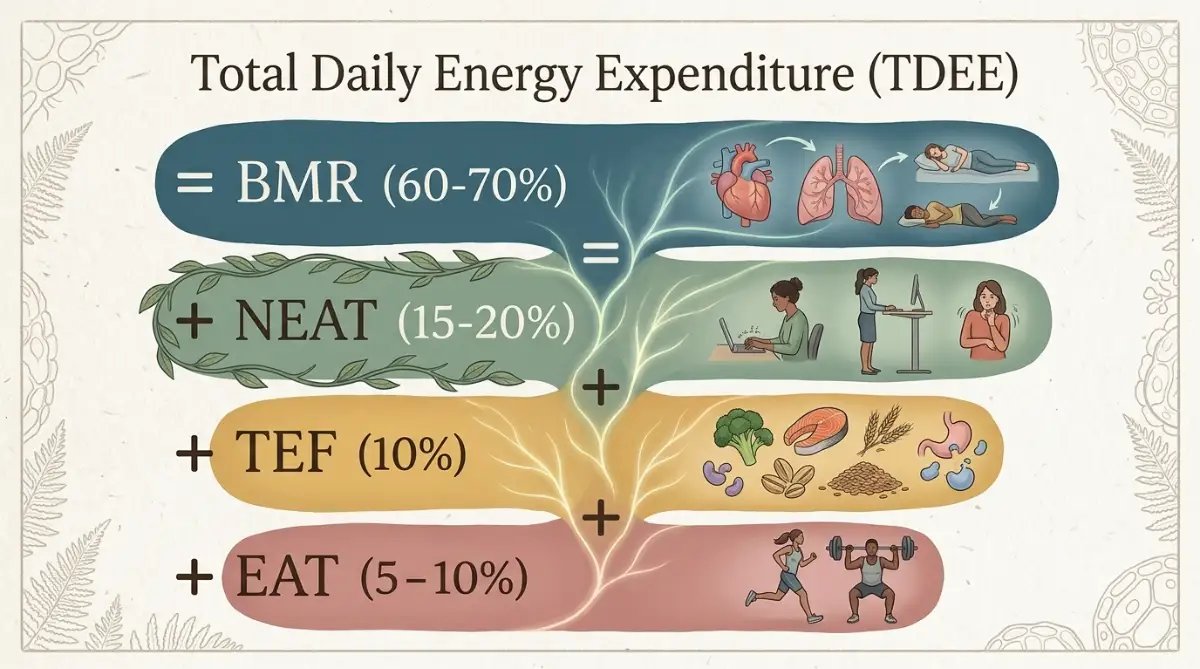
Total Daily Energy Expenditure (TDEE)
  = BMR (60-70%)
  + NEAT (15-20%)
  + TEF (10%)
  + EAT (5-10%)
In my coaching journey, I’ve had countless conversations with people who feel utterly discouraged because they believe their metabolism is naturally slower than everyone else's.
But I always love to remind them of a ground-breaking global study published in the prestigious journal Science / PubMed that analyzed daily energy expenditure across thousands of individuals throughout their lives.
The researchers discovered that our baseline metabolic rates remain incredibly stable between the ages of 20 and 60, only beginning to naturally decline after age 60.
This means that if you feel stuck, your metabolism isn’t permanently "broken" or slowed down by age or genetics; rather, we have a massive, empowering opportunity to optimize our daily burn through daily movement and thermogenesis.
Most of the calories you burn daily actually go toward these basic survival functions. The remaining energy is spent on digesting the food you eat and moving your muscles during daily activities.
To make this simple to understand, let us break down the four main ways your body burns energy every single day:
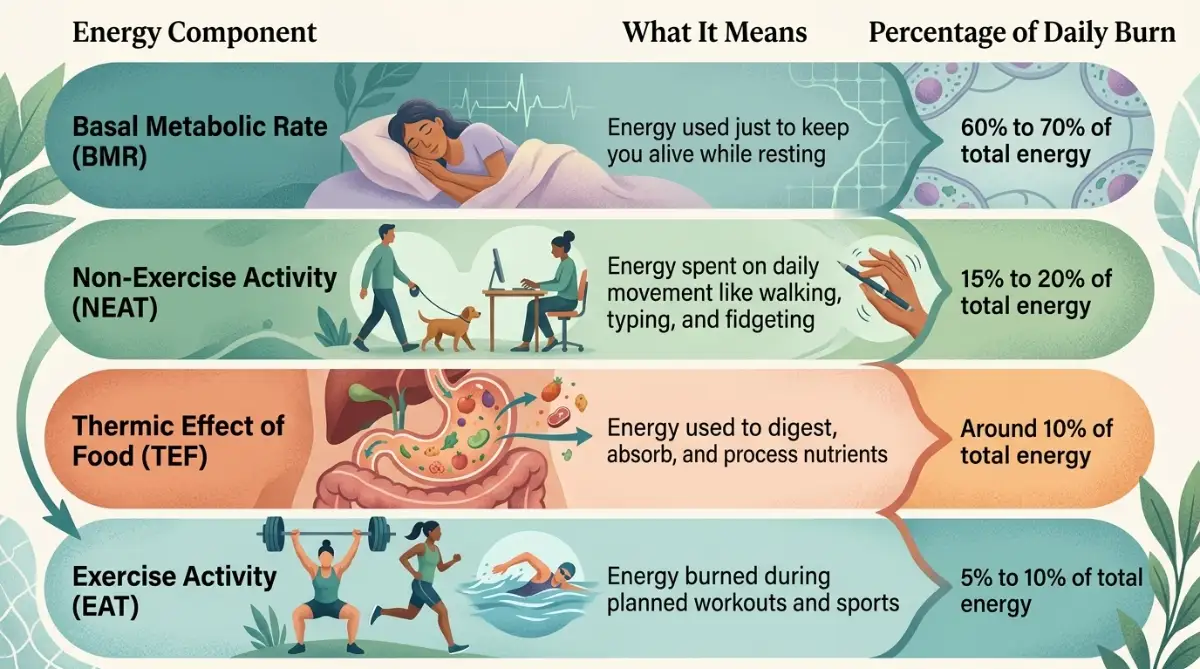
As you can see from this table, planned exercise is actually a very small part of your daily burn. This is why supporting your overall daily calorie burn through other pathways is so important.
The True Role of Metabolism Boosters in Your Daily Burn
Now that we know how the body burns fuel, we can look at the role of metabolism boosters. These supplements and natural compounds do not perform miracles, but they can support the body's natural systems.
They work by interacting with your nervous system, your body temperature, and your hormone pathways. Let us look at the three main ways these compounds help support your daily energy output.
Many popular metabolic support options contain natural stimulants like caffeine, green tea, or yerba mate. These ingredients work by temporarily blocking certain receptors in your brain that make you feel tired.
When these receptors are blocked, your body releases hormones like adrenaline and dopamine. This reaction increases your heart rate slightly and tells your body to burn more fuel for quick energy.
This temporary stimulation can help you feel more alert and active throughout your busy day. When you have more energy, you naturally move more, which indirectly increases your daily calorie burn.
Some metabolic ingredients work by slightly increasing your internal body temperature. This natural biological process is called thermogenesis, which literally means "heat creation."
Ingredients like cayenne pepper, black pepper extract, and bitter orange contain compounds that trigger this warming effect. When your internal temperature goes up, your body must work harder to cool itself back down.
This cooling process requires extra energy, which means you burn a few more calories even while sitting still. While the increase is modest, it can add up over weeks and months of consistent use.
In my coaching experience, I often get asked if adding spicy foods or cayenne extract actually moves the metabolic needle.
While it certainly won't replace a solid workout, the biological response is quite fascinating.
A comprehensive meta-analysis published on PubMed confirmed that capsaicinoids (the active heat compounds in red pepper) significantly increase energy expenditure and promote fat oxidation.
When you consume these natural thermogenic agents, they trigger a mild, temporary spike in your metabolic heat production.
We aren't talking about overnight miracles, but rather a small, consistent daily nudge that supports your broader energy goals.
Other types of metabolic helpers do not rely on stimulants at all to get the job done. Instead, they focus on helping your body access and burn stored fat cells more efficiently.
Ingredients like L-carnitine help carry fatty acids directly into your cells' powerhouses, known as mitochondria. Once inside, these fats can be burned and turned into usable daily energy.
This process can be especially helpful during light exercise or daily walks when your body prefers to use fat as its primary fuel source. It helps make the energy-burning process run a bit more smoothly.
To understand how non-stimulant helpers like L-carnitine fit into this picture, we have to look inside your cells.
Think of your mitochondria as tiny cellular furnaces, and fatty acids as the fuel. Fatty acids cannot enter these furnaces on their own; they need a transport vehicle.
According to a systematic review published on PubMed, L-carnitine plays a pivotal role in shuttling long-chain fatty acids into the mitochondria to be oxidized for energy.
When I guide clients through fat-loss phases, I emphasize that ensuring your body has adequate carnitine helps make this fat-to-energy conversion run much more smoothly.
Common Myths vs. Science-Backed Realities
The supplement industry is filled with wild claims that can easily mislead anyone looking for help. It is important to separate marketing talk from actual scientific facts so you can make smart decisions.
Let us look at three of the most common myths about metabolic rate boosters and the actual science behind them:
- Myth: Metabolism boosters can replace a balanced, healthy diet.
- Reality: These products only provide a small edge. They will not overcome a diet high in processed foods and excess calories.
- Myth: These products will melt away belly fat without any physical effort on your part.
- Reality: Fat loss happens across the entire body when you are in a consistent energy deficit. Active movement is still required to get the best results.
- Myth: The stronger the stimulant, the better the metabolic booster works for weight management.
- Reality: Excessive stimulants can cause high stress, poor sleep, and anxiety. Safe, natural ingredients that support your body gently are far better for long-term health.
5 Practical Steps to Optimize Your Daily Caloric Burn
If you want to support your energy levels and burn calories efficiently, you need a complete plan. Here are five practical, science-backed steps you can start using today.
The food you choose to eat actually requires energy to digest and process. Protein has a much higher thermic effect than fats or carbohydrates do.
When you eat protein, your body uses up to thirty percent of those calories just to break down the amino acids.
This means eating a protein-rich meal naturally increases your daily energy expenditure for several hours afterward.
Try to include clean sources of protein like eggs, fish, chicken, tofu, or lentils in every single meal. This simple habit keeps your digestive system working actively and supports muscle maintenance.
In my years of working with clients who felt completely stuck, I’ve found that simply shifting to a higher-protein lifestyle is one of the most effective, stress-free ways to support your daily calorie burn.
We aren't just making this up—it is a thoroughly researched biological fact.
A landmark clinical review published on PubMed confirmed that a higher protein diet significantly increases daily thermogenesis and enhances feelings of fullness compared to diets higher in fats or carbohydrates[1].
When you eat protein, your body literally has to work overtime to break it down, turning a massive portion of those calories directly into heat rather than storing them[1].
It is like giving your inner engine a clean, slow-burning fuel that keeps you active for hours.
Muscle tissue is highly active, meaning it burns calories even when you are completely resting or sleeping. On the other hand, fat tissue requires very little energy to maintain itself.
By doing regular strength training, you encourage your body to build and keep lean muscle mass. This naturally raises your basal metabolic rate over time, making it easier to manage your weight.
You do not need to spend hours in a commercial gym to see these benefits. Bodyweight exercises, resistance bands, or light dumbbells at home can make a massive difference.
I always tell my readers that building active muscle is like investing in a high-yield savings account for your metabolism.
Muscle is highly active tissue that demands constant energy even when you are asleep.
In a systematic study published on PubMed, researchers confirmed that resistance training significantly increases resting metabolic rate (RMR) by encouraging muscle protein synthesis and preserving lean mass during caloric restriction.
When we lift weights, we aren't just burning calories during the workout itself; we are actively upgrading our body's baseline engine to burn more fuel twenty-four hours a day.
As we saw in our table earlier, daily movement that is not formal exercise plays a huge role in your total energy burn. This is the movement you do throughout your normal day.
If you sit at a desk for eight hours, your daily movement energy burn will be incredibly low. You can change this by making small, simple adjustments to your daily routine.
- Take walking meetings: Walk around your room or office while talking on the phone.
- Choose the stairs: Skip the elevator whenever you have the option to take the stairs.
- Set a movement timer: Get up and stretch for two minutes every single hour you work.
- Pace while waiting: Walk in place while waiting for your kettle to boil or your food to microwave.
These tiny actions might seem small, but they can add up to hundreds of extra calories burned by the end of the week.
Why Small Movements Outburn Your Gym Sessions: The Science of NEAT
In my coaching practice, I often encounter people who are frustrated because they spend an hour at the gym but still can't lose weight.
The missing link is almost always NEAT. According to a landmark clinical study on PubMed, non-exercise activity thermogenesis can vary by up to 2,000 calories a day between two people of similar size, simply based on how much they move throughout their normal routines.
Here is a quick confession from my early coaching days: I used to obsess over spending two hours in the gym, only to crash on the couch for the rest of the day. Once I shifted my focus to staying active throughout the entire day with simple movements, my energy skyrocketed and the stubborn weight finally started moving.
We often underestimate the power of fidgeting, standing, and walking. I always encourage my readers to realize that your body is designed to move consistently, not just for 45 minutes on a treadmill.
By elevating your baseline daily movement, you are passively supporting a much higher daily metabolic rate.
Your thyroid gland acts as the main control center for your entire body's metabolism. If your thyroid does not have the nutrients it needs, your daily burn can slow to a crawl.
In my coaching practice, I often see people struggling with unexplained weight plateaus simply because they are trace-mineral deficient without realizing it.
We must remember that your thyroid gland cannot work in a vacuum; its hormone production is entirely dependent on certain raw materials.
A clinical study published on PubMed highlights how the joint balance of iodine, selenium, and zinc is absolutely crucial for maintaining optimal plasma concentrations of active thyroid hormones [2].
If you are missing even one of these metabolic spark plugs, your baseline calorie burn can gradually stall.
It’s not that your metabolism is permanently broken—your thyroid might just need the right nutritional support to keep your engine running smoothly [2].
To keep this important gland happy, make sure you are getting enough iodine, selenium, and zinc in your diet. These minerals are essential for creating active thyroid hormones.
You can find these nutrients in simple foods like Brazil nuts, seaweed, seafood, eggs, and pumpkin seeds. Keeping your thyroid healthy is a cornerstone of maintaining a robust and active metabolism.
If you decide to use supplements to support your goals, choose natural options with solid scientific backing. Look for ingredients that work gently with your body rather than shocking your system.
Green tea extract is highly researched and contains antioxidants that help support natural fat burning.
Chromium is another helpful mineral that assists in balancing blood sugar and managing energy levels.
Chromium's Role in Stabilizing Your Metabolic Fuel
To understand how chromium helps you manage your weight, we need to talk about insulin—the hormone that acts as a key to let blood sugar into your cells.
If your insulin receptors are sluggish, your body struggles to use carbohydrates for fuel, leading to energy crashes and sugar cravings.
A clinical review published on PubMed demonstrates that chromium supplementation significantly improves insulin sensitivity and glucose metabolism.
When I guide clients who struggle with intense afternoon sugar cravings, we often find that optimizing their chromium intake helps keep their blood sugar stable, giving them steady energy all day long without the crash.
Now, you might reasonably ask: does green tea actually make a difference, or is it just clever marketing?
While it is certainly not a magic eraser for weight management, it does offer a genuine biological edge.
A rigorous clinical trial published on PubMed demonstrated that green tea extract ingestion can significantly increase fat oxidation rates during moderate-intensity exercise by up to 17% [3].
The active antioxidants in green tea, known as catechins (specifically EGCG), work to temporarily inhibit the enzyme that degrades norepinephrine—the key hormone that tells your body to release stored fat for energy [3].
I often suggest sipping a warm cup of high-quality green tea shortly before your daily walk to naturally support this metabolic pathway.
Always start with smaller servings to see how your body reacts to any new herb or supplement. Consistency and safety should always be your top priorities when trying new wellness products.
How to Avoid Common Supplement Traps
When exploring the world of wellness products, it is easy to get swayed by flashy labels and promises of instant transformation.
To protect both your wallet and your health, you must approach these products with a critical eye.
Always read the full ingredient list on the back of the bottle rather than just looking at the front claims.
Avoid products that hide their ingredients behind proprietary blends, as you cannot know how much of each compound you are taking.
Look for products that are tested by independent labs to ensure they are clean, safe, and free from contaminants.
A trustworthy company will always be open about its sourcing, testing, and ingredient dosages.
When we talk about using metabolic helpers, I always remind my readers that more is definitely not better.
If you decide to incorporate natural aids, we must keep safety at the forefront, especially regarding stimulants.
For instance, the FDA recommends keeping your total daily caffeine intake from all sources under 400 milligrams (roughly four standard cups of brewed coffee) to prevent taxative stress on your heart and adrenal glands.
Our goal is to gently nudge your metabolic rate in the right direction, not to put your nervous system into a state of chronic, exhausting panic.
Remember that supplements are designed to support a healthy lifestyle, not replace it. The most powerful tool for a healthy metabolism will always be your daily habits, your sleep, and your nutrition.
Your Sustainable Path to Daily Energy and Balance
Improving your daily energy expenditure is not about drastic diets, intense workouts, or relying on magic pills. It is about understanding how your unique body works and supporting it with daily care.
By focusing on protein, regular movement, muscle health, and safe metabolic support, you can build a strong foundation.
This approach respects your body's natural systems and leads to steady, long-term success.
Be patient with your body as you make these positive lifestyle adjustments. True health and energy are built step by step, day by day, through consistent and loving self-care.
Going Deeper: Advanced Strategies to Keep Your Metabolic Engine Running Smoothly
Many people start their fitness journey with a lot of energy, but they soon hit a difficult progress plateau.
This happens because your body is incredibly smart and quickly adapts to your daily routine.
To keep your daily calorie burn high, you need to use advanced, science-backed strategies that prevent your body from slowing down.
These pro-level secrets go beyond simple calorie counting to target your body's natural survival mechanisms.
When you reduce your calorie intake for a long time, a key hormone called leptin begins to drop. Leptin is responsible for telling your brain that you have plenty of energy and that it is safe to burn calories.
To prevent this hormone from crashing, many modern health experts suggest using a strategy called cyclic refeeding.
This involves having one or two days a week where you intentionally increase your clean carbohydrate intake.
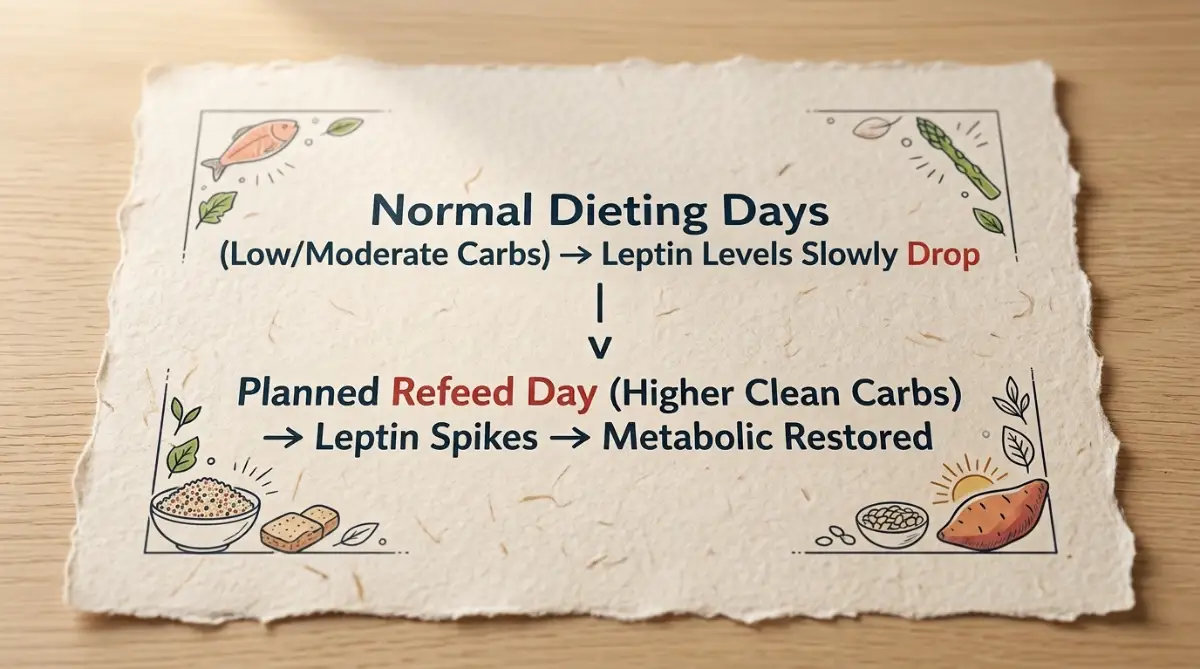
Normal Dieting Days (Low/Moderate Carbs) -> Leptin Levels Slowly Drop
      |
      v
Planned Refeed Day (Higher Clean Carbs) -> Leptin Spikes -> Metabolic Rate Restored
This sudden increase in healthy carbohydrates acts like throwing a dry log onto a dying campfire.
It sends a powerful signal to your brain that food is abundant, which helps restore your daily calorie burn to a healthier level.
If you are wondering why carbohydrate-dominant refeeds are so effective, it comes down to protecting your body from severe metabolic adaptation.
In a randomized controlled trial published on PubMed Central (PMC), researchers found that structured,
intermittent carbohydrate refeeding during energy restriction helped preserve fat-free mass and mitigated the decline in circulating leptin levels [4].
When you temporarily increase clean carbohydrates, you tell your central nervous system that food is abundant [4].
This single signal helps prevent your metabolic rate from dropping too low, making long-term fat management far more sustainable for your body and mind.
To understand how this works in real life, consider the story of John. John had been eating a very low-calorie diet for three months, but his weight loss had completely stopped.
Instead of cutting his food even further, John decided to add a structured refeed day every single Saturday.
He ate clean sources of carbohydrates like sweet potatoes, oats, and brown rice while keeping his fat intake low.
Within two weeks, John felt much more energetic during his daily workouts, and his weight loss progress started moving forward once again.
This shows that sometimes you have to eat more of the right foods to help your body burn more energy.
Most of the fat in our bodies is white fat, which simply stores excess energy for later use. However, humans also have a special type of fat known as brown fat, or brown adipose tissue.
Brown fat is highly active and acts like a tiny heater inside your body, burning calories just to generate warmth.
One of the most effective ways to activate this helpful tissue is through regular exposure to cool temperatures.
According to Mayo Clinic's research on healthy weight strategies, cold exposure can trigger your brown fat to burn extra energy to keep you warm.
You can start this practice easily by turning your shower to a cool temperature for the last two minutes of your daily wash.
Over time, this mild cold stress encourages your body to build more brown fat cells. This small daily habit can slowly raise your resting energy expenditure without requiring hours of extra exercise.
I know that turning your shower dial to cold sounds incredibly intimidating at first, but the physiological payoff is absolutely worth those brief moments of discomfort.
Clinical studies, such as the research highlighted on PubMed Central, demonstrate that intermittent cold exposure can actively stimulate your brown adipose tissue, causing it to burn lipids and glucose to generate heat[2].
We aren't just shivering for the sake of it; we are actively teaching our cells to adapt and become highly efficient, calorie-burning powerhouses even when we are resting[2].
We often think of sleep as a passive state where our bodies do nothing, but the opposite is actually true.
During deep sleep, your body repairs tissue, balances stress hormones, and regulates your metabolic systems.
I often tell my clients that you simply cannot out-diet or out-exercise chronic sleep deprivation. When we don't get enough rest, we aren't just feeling sluggish; our delicate hormonal health takes a massive hit.
Clinical evidence published on PubMed demonstrates that sleep restriction significantly elevates evening cortisol levels, which directly impairs glucose tolerance and promotes visceral fat accumulation.
When your body is constantly flooded with cortisol due to lack of sleep, it enters a protective survival mode, making it incredibly difficult to access stored fat for daily energy.
If you want to maintain a thriving metabolic rate, prioritizing seven to eight hours of deep sleep is non-negotiable.
While metabolic helpers can support your energy output, managing your daily calorie intake with dietary fiber is just as vital.
In my practice, I always emphasize whole, high-fiber foods because they do so much more than physically fill your stomach.
According to a comprehensive systematic review of clinical trials published on PubMed, dietary fibers actively trigger key biochemical signals in your digestive tract [1].
Soluble and viscous fibers slow down gastric emptying and stimulate your gut cells to secrete satiety hormones like GLP-1 and Peptide YY (PYY) [1].
This prevents sudden blood sugar spikes and crashes, effectively turning off those persistent hunger alarms that usually lead to energy slumps and intense cravings for unhealthy snacks.
Building a Sustainable Lifestyle for Permanent Metabolic Success
To maintain a healthy calorie burn over many years, you must shift your focus from temporary fixes to permanent habits.
Your body has a natural biological weight range that it wants to defend, which is often called your set-point.
If you try to force your body below this range through extreme dieting, your system will fight back by slowing your metabolic rate.
To change this set-point permanently, you must make small, gentle adjustments that you can easily maintain for the rest of your life.
Let us compare the typical short-term panic mindset with a long-term, sustainable approach to metabolic health:
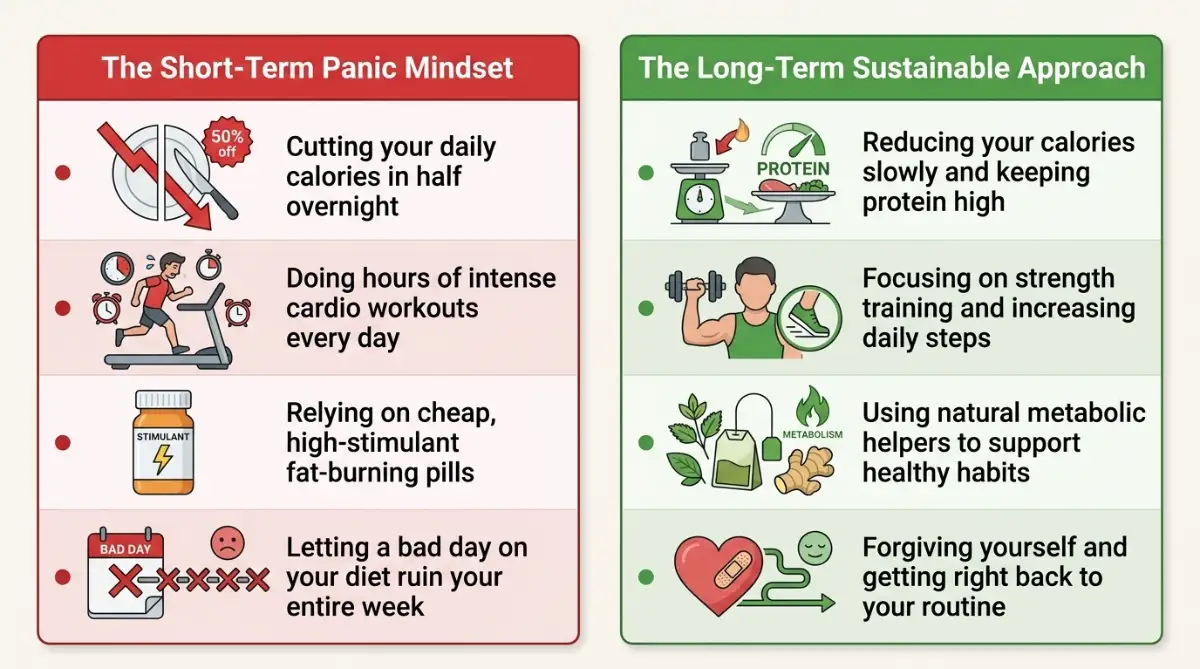
By choosing the sustainable column, you protect your body from extreme stress and build a foundation for lifelong wellness.
Consistency will always beat temporary intensity when it comes to keeping your metabolism active and healthy.

Red Flags: Metabolic Mistakes That Can Slow Your Progress
When people are desperate to see quick results, they often make choices that end up hurting their metabolic health.
Understanding these common pitfalls will help you avoid unnecessary setbacks and keep your body running safely.
Many people get into the habit of drinking multiple energy drinks or cups of coffee just to get through their daily routines.
While caffeine can temporarily raise your energy burn, relying too heavily on stimulants can backfire.
Overusing stimulants put a constant strain on your adrenal glands, which can lead to high levels of stress hormones.
This can disrupt your sleep patterns, cause jittery feelings, and ultimately lead to a severe energy crash.
Think of stimulants like a credit card; they give you quick energy now, but you must pay that debt back later with rest.
Instead of constant caffeine, focus on getting real energy from nutrient-dense foods and plenty of clean water.
The Hidden Cardiovascular Toll of High-Stimulant Fat Burners
I always caution my readers against products that promise rapid weight loss through extreme stimulant blends.
While a high dose of caffeine might make you feel like you are burning fat, it is often just taxing your cardiovascular system.
A comprehensive systematic review on PubMed highlights that high-dose stimulant and caffeine consumption can trigger adverse physiological events, such as elevated blood pressure, sleep disturbances, and chronic anxiety.
We must remember that we want to support your thyroid and mitochondria gently, not shock your central nervous system into a state of perpetual emergency.
Real, sustainable fat loss is a journey of cooperation with your body, not coercion.
One of the most common mistakes is cutting your food intake too low in an attempt to lose weight quickly.
When you eat far too few calories, your body senses a state of famine and actively slows your metabolic rate to save energy.
This biological reaction is known as adaptive thermogenesis, which is your body's natural way of keeping you alive during times of starvation.
To understand the science behind this process, you can read Healthline's review on adaptive thermogenesis and how it affects weight loss.
If you’ve ever felt like your weight loss efforts suddenly hit a brick wall despite eating very little, you are likely experiencing this exact biological defense mechanism in action.
In an extensive clinical review on PubMed, researchers confirmed that adaptive thermogenesis is a powerful evolutionary adaptation designed to conserve energy during periods of perceived famine.
When you restrict your calories too aggressively, your body dramatically decreases its daily energy expenditure to protect you from starvation.
By understanding this, we can stop blaming ourselves or our bodies, and instead focus on structured, moderate dietary deficits that respect our natural boundaries.
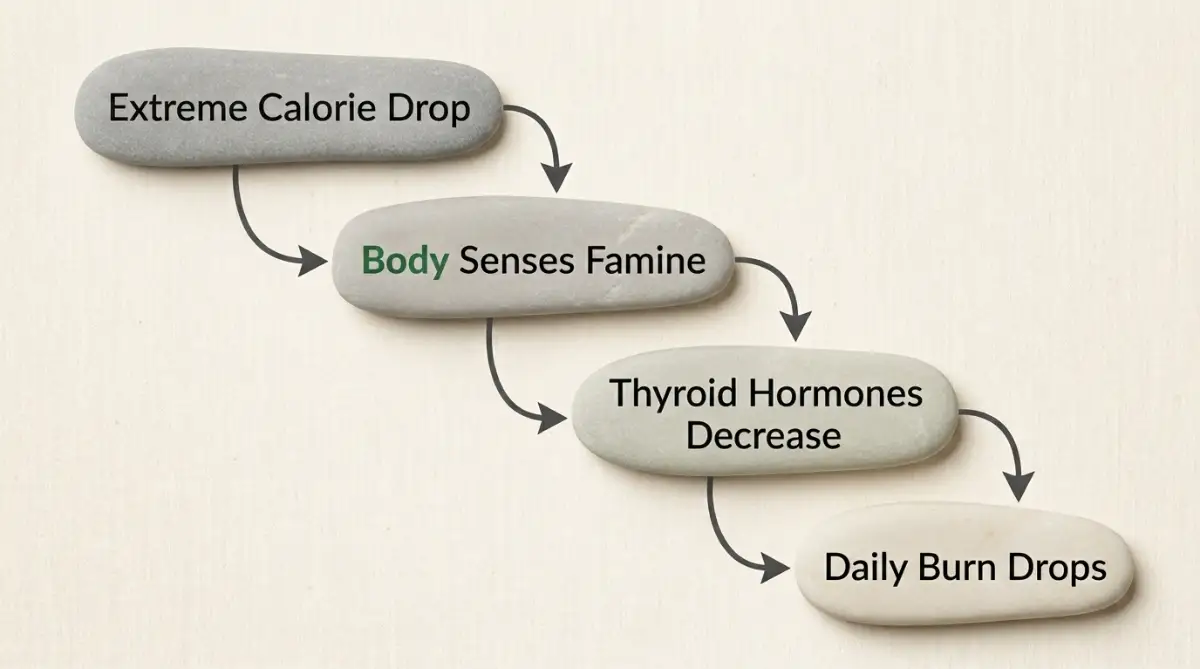
Extreme Calorie Drop -> Body Senses Famine -> Thyroid Hormones Decrease -> Daily Burn Drops
When this slowdown happens, you will feel incredibly tired, cold, and weak throughout the day.
It is far better to eat at a mild calorie deficit that allows your body to function properly while slowly burning fat stores.
In my coaching practice, the most common mistake I see is the "less is always better" mindset.
When you slash your calories below what your body needs to survive, your brain immediately acts to protect you.
Research published on PubMed shows that prolonged, extreme calorie restriction triggers significant adaptive thermogenesis[3].
This means your system actively dials down its baseline metabolic rate to defend its remaining energy reserves[3][4].
I always advise my readers to approach weight loss with compassion, using a modest deficit that nourishes your cells rather than forcing your entire metabolic system into a protective shutdown.
We often separate our mental health from our physical health, but your body experiences all stress in a similar way.
Whether you are stressed about work deadlines or stressing your body with extreme workouts, your system releases cortisol.
High cortisol levels make it much harder for your body to convert thyroid hormones into their active, energy-burning forms.
This means that living in a constant state of high anxiety can actively slow down your daily calorie burn.
Make sure to include relaxing activities in your weekly routine, such as walking in nature, reading, or practicing slow breathing.
Reducing your overall stress levels is just as important for your metabolism as eating healthy foods.
When buying wellness supplements, some people simply grab the cheapest bottle with the most colorful label.
These products often use terms like "energy blend" or "metabolic complex" to hide the exact amounts of each ingredient.
This practice makes it impossible for you to know if you are taking a safe dose or just consuming a bottle full of cheap fillers.
It is essential to choose brands that offer complete transparency and display every single ingredient dose clearly on the label.
When you start a new diet or take a supplement, you might see a sudden drop of several pounds on the scale within the first few days.
This initial weight loss is almost always water weight rather than actual body fat.
When you reduce carbohydrates, your body burns through its stored glycogen, which holds a lot of water inside your muscles.
When this water is released, the scale drops quickly, but this progress can easily reverse once you eat a normal meal.
Do not let these sudden changes on the scale discourage you or lead you to make drastic changes to your plan.
Real fat loss is a slow, steady process that takes weeks of consistent habits to show true physical results.
Continuing down a path of extreme dieting and stimulant abuse can lead to serious, long-term health consequences.
Over time, your body will become chronically exhausted, making it difficult to perform even simple daily movements.
This state of physical burnout can lead to muscle wasting, as your body breaks down muscle tissue to use for energy.
Since muscle tissue is a primary driver of your daily calorie burn, losing muscle will permanently lower your metabolic rate.
By recognizing these red flags early, you can protect your physical health and build a system that works with your body, not against it.
Your Daily Action Plan to Achieve Lasting Metabolic Balance
To help you put this information into practice, let us look at some common questions and a simple daily checklist.
This will give you a clear path forward as you work to support your energy levels naturally.
- Can I permanently ruin my metabolism through dieting?
- No, your metabolism is highly adaptable and is not easily broken forever. If your daily calorie burn has slowed down due to extreme dieting, you can restore it by slowly increasing your calories and building muscle through strength training.
- Are metabolic support supplements safe to take every day?
- Most natural supplements made from clean, tested ingredients are safe when used according to the label directions. However, it is always a good idea to cycle off stimulant-based products every few weeks to give your nervous system a rest.
- How long does it take to see changes in my daily energy levels?
- While stimulants can provide a quick boost within an hour, long-term improvements in your daily calorie burn take time. You should expect to see steady changes in your stamina, strength, and body composition within four to six weeks of consistent habits.
- Eat high-quality protein: Include a serving of clean protein with every meal to support digestion and muscle.
- Move your body naturally: Take the stairs, walk during phone calls, and aim to increase your daily steps.
- Stay fully hydrated: Drink plenty of pure water throughout the day to support your cellular processes.
- Prioritize quality rest: Aim for seven to eight hours of deep sleep to keep your stress hormones balanced.
- Choose clean products: Avoid proprietary blends and select natural helpers with fully transparent labels.
You now have the knowledge and tools you need to take control of your daily energy expenditure safely and effectively.
Remember that your body is a highly sophisticated system that responds best to gentle, consistent care rather than extreme measures.
Do not let past frustrations or slow progress keep you from making positive changes today. Focus on building healthy daily habits, eating nutrient-dense foods, and supporting your body with safe, natural helpers.
You have the power to create a lifestyle that keeps you feeling energetic, strong, and confident for many years to come.
Take your first small step today, and trust that your consistent efforts will lead to the lasting results you deserve.
If I can rebuild my energy and relationship with food after years of feeling completely stuck, you can too. Start with just one small change today—like adding a bit more protein or taking a short walking break—and watch how your body responds over time.
Disclaimer:
The information provided in this article is for educational and informational purposes only and should not be considered medical advice. Always consult with a qualified healthcare professional before starting any new supplement, diet, or exercise program, especially if you have existing health conditions.