
Meet the Author:
Hi there! Iβm Kamal Uddin, a dedicated nutrition writer and wellness advocate. Over the years, Iβve helped countless individuals break free from the exhausting cycle of chronic dieting and rebuild a healthy, intuitive relationship with food. I firmly believe that true health shouldn't feel like a punishmentβit should be a delicious, self-nourishing journey. In this guide, I want to share a simple, science-backed tool that completely transformed my own approach to daily cravings: natural dietary fiber. Let's dive in together!
The Hidden Battle with Your Appetite and the Daily Food Cycle
You wake up with the best intentions to eat healthy and stay on track. By mid-afternoon, a sudden and powerful urge to snack completely takes over your mind.
You try to fight it with willpower, but the constant thoughts of sweet or salty treats keep calling your name.
Before you know it, you are standing in front of the pantry, eating things you promised yourself you would avoid.
This daily struggle is not a sign of weakness, and you are definitely not alone in feeling this way. Millions of people face this same exhausting cycle of hunger, cravings, and regret every single day.
The constant noise of a noisy stomach makes it feel almost impossible to maintain a balanced lifestyle. It feels like your body is working against you, no matter how hard you try to make healthy choices.
The real problem is that most modern foods are designed to be digested quickly, leaving your system empty and searching for quick energy.
This creates a rollercoaster ride of blood sugar spikes and sudden crashes that trigger instant hunger.
- Many people fail because they try extreme starvation diets that only make food cravings much stronger.
- The market is flooded with quick-fix products that promise magic results but leave your stomach irritated and empty.
- Misleading fitness trends tell you to cut out entire food groups, which only starves your beneficial gut bacteria.
- Without the right bulk in your diet, your brain never receives the chemical signal that your stomach is actually full.
- Most processed snacks lack the structural thickness needed to slow down your digestion process naturally.
- This lack of knowledge leads people to buy expensive products instead of looking at simple kitchen ingredients.
This constant, losing battle with food can slowly damage your mental peace and steal your self-confidence.
You begin to feel like you have no control over your own choices, which brings a heavy sense of guilt.
Every failed attempt to manage your eating habits makes you feel like you are back at square one. It is deeply frustrating to put so much effort into your health and see very little progress in return.
- You might feel embarrassed when you cannot resist snacks during work hours or social gatherings.
- The worry of constant weight fluctuations can make getting dressed in the morning a stressful experience.
- Losing trust in your own body makes you feel disconnected from your natural hunger cues.
- This constant stress about food can take away the simple joy of sharing a relaxed meal with your family.
- It is time to stop blaming your willpower and start understanding the natural biology of physical fullness.
The Hidden Power of Natural Dietary Fibers
To solve the hunger puzzle, we need to understand exactly what happens inside our digestive system.
Natural dietary fiber is the part of plant foods that your body cannot fully digest or absorb. Unlike carbs, fats, or proteins, fiber passes through your stomach mostly intact, acting as a natural regulator.
This unique feature is exactly what makes fiber your best ally for keeping a busy appetite quiet.
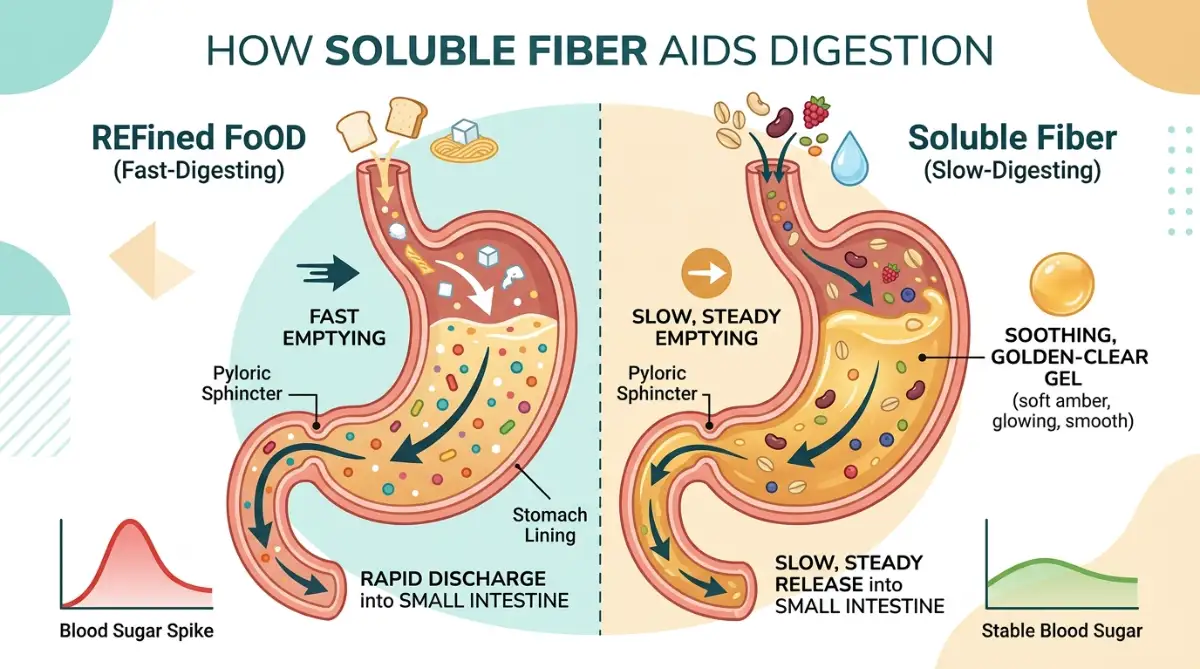
Think of your stomach as a busy kitchen where food is prepared and sent out to the body. If you eat fast-digesting foods, the kitchen empties out in minutes, and the brain immediately asks for more.
When you add fiber, it is like hiring a slow, careful chef who takes time to process every single order. This keeps the kitchen busy and happy for hours, so your brain does not feel the need to shout for snacks.
We can divide natural fiber into two main categories: soluble and insoluble. Both work together in different ways to help you feel satisfied without adding unnecessary stress to your mind.
The Magic of Soluble Fiber: Your Natural Stomach Gel
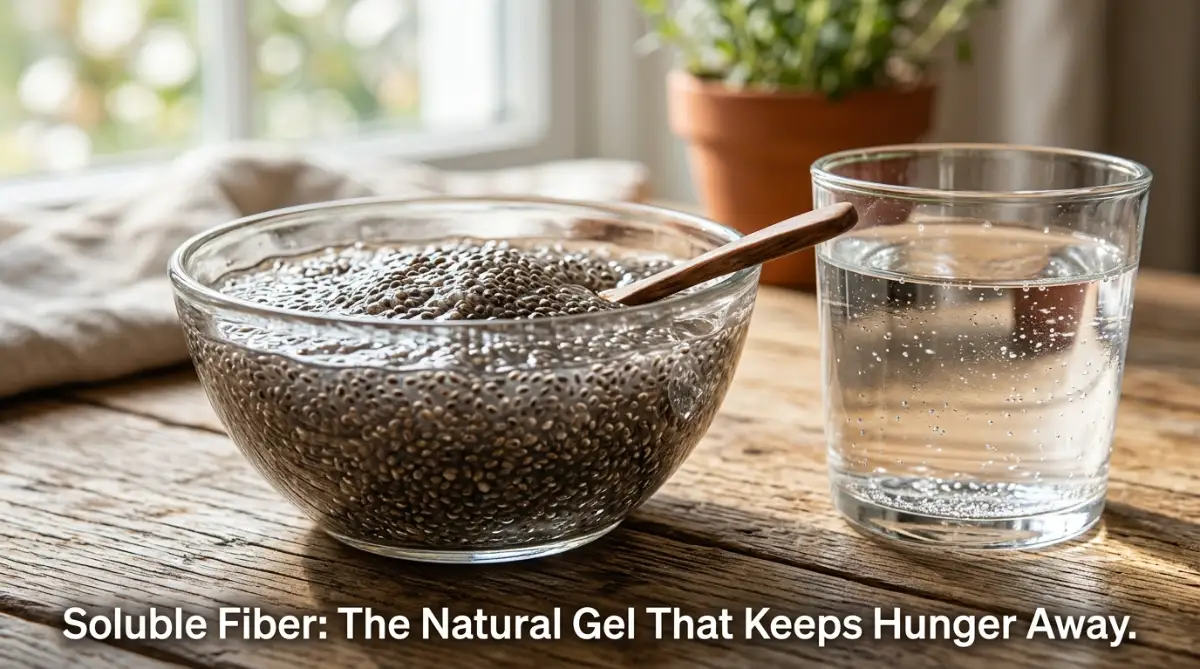
Soluble fiber dissolves in water to form a thick, jelly-like substance inside your digestive tract. When you eat foods rich in this fiber, they mix with your stomach fluids and expand gently.
This slow-moving gel acts like a natural sponge, coating the walls of your intestines and slowing down the absorption of sugars.
Because the gel slows everything down, your body receives a steady, continuous stream of energy instead of a sudden rush.
This prevents the sharp drop in blood sugar that usually makes you crave sweet snacks at three in the afternoon. It is a simple, physical way to keep your energy levels smooth and steady.
Insoluble Fiber: The Natural Filler and Bulking Agent
Insoluble fiber does not dissolve in water, meaning it remains relatively solid as it travels through your body.
It acts like a soft, natural brush that sweeps through your digestive system, keeping things moving regularly. By adding physical bulk to your meals, it physically fills up your stomach space.
Your stomach has special stretch receptors that tell your brain when you have eaten enough food. Insoluble fiber triggers these receptors early in the meal, helping you feel satisfied with smaller portions.
It is like putting a gentle, natural brake on your appetite before you have a chance to overeat.
How Your Hunger Hormones Respond to Fiber
Your body uses fascinating chemical messengers called hormones to tell you when to eat and when to stop. The two main players in this setup are ghrelin, the hunger hormone, and leptin, which acts as your natural fullness switch [1, 2].
When your stomach sits empty, ghrelin levels naturally rise, creating that sharp, growling feeling in your belly that we've all felt at one point or another.
When you consume a meal rich in natural dietary fibers, the physical bulk stretches the stomach wall. This stretching action signals the body to stop releasing ghrelin, which quickly quietens down the urge to eat.
At the same time, fiber helps trigger the release of key gut hormones like GLP-1 and PYY, which send a direct, powerful signal to your brain telling you that you are completely satisfied [2].
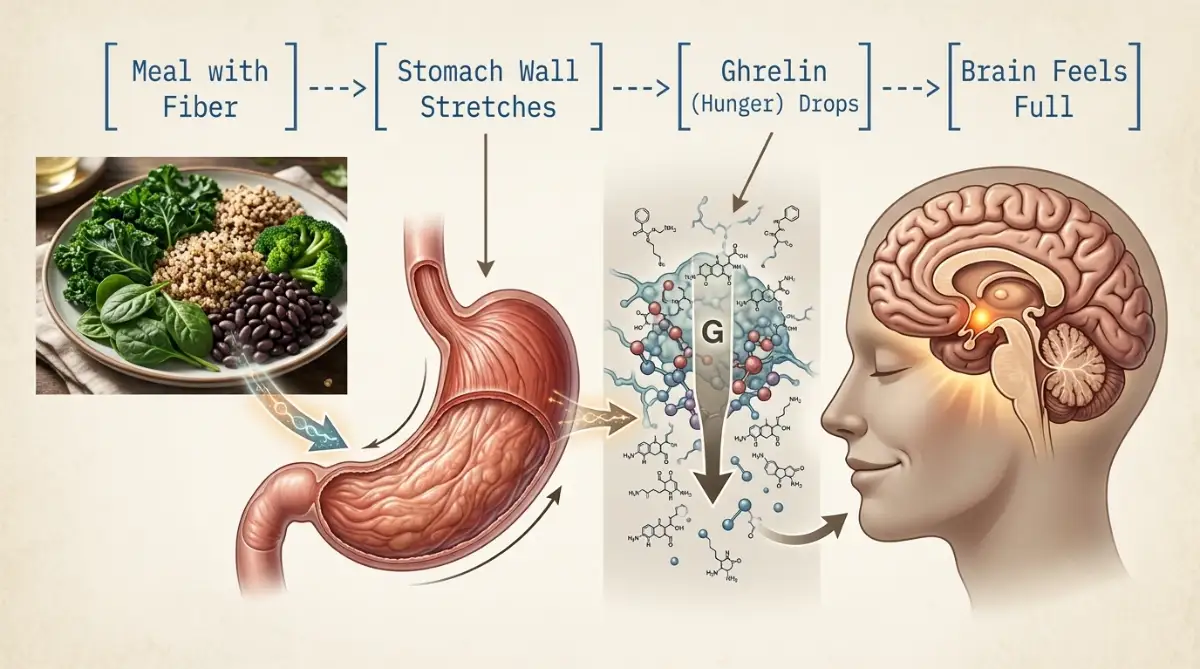
[ Meal with Fiber ] ---> [ Stomach Wall Stretches ] ---> [ Ghrelin (Hunger) Drops ] ---> [ Brain Feels Full ]
This natural hormonal response is much more powerful than simple willpower. Instead of fighting your body, you are working with its natural design to achieve a state of peaceful satisfaction.
A Simple Five-Step Guide to Managing Hunger with Fiber
Now that we know how fiber works, let us look at some practical ways to add it to your daily routine. You do not need to make massive, stressful changes overnight to see great results. Small, consistent steps will help your digestive system adjust comfortably and happily.
Step 1: Start Your Morning with a Warm Fiber Base
The way you begin your day sets the tone for your appetite over the next twelve hours. Skipping breakfast or eating a sugary pastry will set you up for a day of intense cravings.
Instead, choose a warm bowl of rolled oats topped with a spoonful of ground flaxseeds or chia seeds.
Oats are packed with a special type of soluble fiber called beta-glucan, which is famous for its heart and digestive benefits.
In fact, clinical data featured in this PubMed Central study on oats and satiety shows that the viscous nature of oat beta-glucan slows down digestion, helping you feel fuller for much longer [3].
When you eat oatmeal, it absorbs water like a sponge to create a thick, slow-digesting barrier in your gut, meaning you'll easily sail past your typical mid-morning cravings.
Step 2: Use the Two-Spoon Chia Seed Trick
If you struggle with afternoon cravings, this simple hydration trick has been a total game-changer for my routine and many of my clients.
As detailed in the Harvard Nutrition Source guide to chia seeds, these tiny powerhouses are exceptionally rich in fiber, antioxidants, and healthy fats.
About an hour before your typical craving time, mix two tablespoons of chia seeds into a large glass of water. Let the mixture sit for about ten minutes until it forms a soft, gel-like drink.
Squeeze in a little fresh lemon juice for taste and drink it down slowly. The chia seeds will continue to expand gently in your stomach, creating a natural feeling of physical fullness.
This simple habit fills the empty space in your stomach, making it easy to breeze past the snack cabinet.
Step 3: Swap Your White Grains for Whole Varieties
One of the easiest ways I've found to increase daily fiber without actually eating more food volume is to upgrade your grains.
Processed grains like white rice, white bread, and regular pasta have had their nutritious, fiber-rich outer layers completely stripped away.
This refining process makes them digest incredibly fast, leaving you feeling empty and searching for another snack shortly after eating.
When you switch to brown rice, quinoa, wild rice, or whole-wheat pasta, you are keeping the entire grain intact.
As the Harvard Nutrition Source whole grains guide beautifully points out, whole grains contain the bran, germ, and endospermβretaining all the natural fiber, minerals, and healthy fats that slow down digestion.
I always tell my clients that these options require more chewing, which naturally gives your brain the time it needs to receive the 'full' signal, keeping your appetite beautifully stable for hours.
Step 4: Make Vegetables the Star of Your Plate
Instead of viewing vegetables as a boring side dish, make them the main volume provider of your meals.
Non-starchy vegetables like broccoli, cauliflower, Brussels sprouts, and leafy greens are incredibly low in calories but very high in fiber.
Filling half of your plate with these colorful options allows you to eat a large, satisfying portion of food.
Your eyes and stomach will see a full plate, which helps satisfy your mind visual-wise. At the same time, the high water and fiber content will keep you full for hours after you finish eating.
Step 5: Drink a Glass of Water with Every Fiber-Rich Meal
This is perhaps the most critical step of all when we decide to increase our fiber intake. Fiber absolutely needs plenty of water to do its job properly, especially the soluble kind that swells up to form that soothing digestive gel.
Without proper hydration, that fiber acts like dry clay, slowing down too much and causing uncomfortable bloating or mild stomach pressure.
I highly recommend making it a firm, daily habit to drink a full glass of pure water alongside every high-fiber meal or snack.
As outlined in the Mayo Clinic water guidelines, staying adequately hydrated helps your body flush out waste, prevents constipation, and supports smooth digestion.
When we pair water with fiber, we allow the fiber to expand to its maximum, satisfying volume in our stomach. Think of water as the essential partner that helps fiber work its appetite-managing magic.
Common Fiber Mistakes to Avoid
While adding fiber is highly beneficial, doing it the wrong way can lead to temporary discomfort. Here are some simple tips to keep your stomach happy and light during this transition.
- Increasing your intake too quickly: Adding massive amounts of fiber overnight can overwhelm your gut bacteria, leading to gas. Increase your portions slowly over a few weeks to let your body adapt.
- Forgetting to drink enough water: Fiber acts like dry clay without water. Make sure you are drinking fluids consistently throughout the entire day.
- Relying on processed fiber bars: Many packaged "high-fiber" snacks are loaded with artificial sweeteners and processed fibers that can cause bloating. Stick to natural, whole foods from the earth whenever possible.
- Not chewing your food thoroughly: Since fiber is tough, your teeth need to do the initial work to help your stomach digest it easily. Take your time and enjoy each bite.
Comparing the Fiber Content of Everyday Foods
To help you make smart choices at the grocery store, here is a simple comparison of natural foods. Knowing which foods pack the most fiber makes planning your meals much easier.

By choosing items from the high-fiber column, you can easily double or triple your daily fiber intake. This simple switch can make a dramatic difference in how your body manages hunger throughout the day.
Myth vs. Reality: The Truth About Fiber and Hunger
There are many misconceptions about how to properly manage a busy appetite. Let us clear up some of the most common myths so you can focus on what actually works.
- Myth: You must eat tiny, unsatisfying portions to manage your appetite.
- Reality: Eating fiber allows you to eat large, high-volume meals that physically fill your stomach without overloading your body.
- Myth: All fibers are exactly the same.
- Reality: Soluble fiber forms a stomach gel to slow digestion, while insoluble fiber adds physical bulk to keep your digestive tract moving smoothly.
- Myth: High-fiber foods are dry, bland, and boring to eat.
- Reality: Delicious foods like avocados, sweet raspberries, roasted almonds, and warm oatmeal are incredibly rich in natural fiber.
- Myth: Drinking green juice is the same as eating whole vegetables.
- Reality: Juicing removes the beneficial fibrous pulp, leaving you with mostly sugar water that digests too fast and spikes hunger.
Simple Daily Meal Ideas with Fiber
To make this journey as practical as possible, here is a simple look at how a high-fiber day can look. These meal ideas are designed to be simple, delicious, and easy to prepare in any kitchen.
A Satisfying Morning Option
Start with a warm bowl of oatmeal cooked in your choice of milk. Stir in a small handful of fresh blueberries, a tablespoon of ground flaxseeds, and a sprinkle of cinnamon.
This combination offers a perfect mix of soluble and insoluble fiber to keep your energy steady for hours.
A Filling Midday Plate
For lunch, enjoy a large bowl of mixed leafy greens topped with warm quinoa, roasted broccoli, and half an avocado.
Add some boiled chickpeas or lentils on top for an extra boost of plant protein and fiber. This colorful, textured plate provides plenty of chewing time, which naturally signals your brain that a hearty meal is being enjoyed.
A Restful Evening Meal
Keep dinner simple with a side of roasted sweet potatoes, steamed Brussels sprouts, and your favorite protein source.
Sweet potatoes retain their natural fibers when eaten with the skin on, offering a delicious, comforting source of slow-digesting carbs.
This setup ensures you go to bed feeling completely satisfied, preventing midnight kitchen trips.
A Gentle Path to a Happier, Fuller You
Managing your daily appetite does not have to feel like a constant, stressful war against your own body.
By simply introducing more natural dietary fibers into your meals, you are giving your digestive system the physical tools it needs to feel satisfied.
You are stepping away from the exhausting cycle of starvation and cravings, and moving toward a peaceful relationship with food.
Remember to be patient with your body as you make these positive changes. Start slowly, drink plenty of fresh water, and enjoy the natural process of feeding your body real, whole foods.
Over time, you will find that those intense, sudden cravings begin to fade away, replaced by steady energy and a calm, quiet appetite.
You have the power to take control of your health journey, one delicious fiber-rich bite at a time.
Advanced Strategies for Mastering Your Daily Appetite
Building a healthy relationship with your stomach goes far beyond just counting calories or choosing salad over chips.
If you want to truly master your daily hunger, you need to use advanced eating methods that work with your biology.
These expert techniques will help you stay satisfied without feeling like you are constantly restricting yourself.
The Art of Pre-Loading Your Main Meals
One of the most effective secrets of nutrition experts is a method called fiber pre-loading. This simply means consuming a small, high-fiber snack about twenty minutes before your main lunch or dinner.
When you do this, you give the fibers a head start to begin expanding inside your digestive tract.
By the time you sit down for your main meal, your stomach stretch receptors are already partially active.
You will naturally find yourself eating smaller portions of heavy foods because your body already feels a gentle sense of fullness.
A simple pre-loading snack could be a handful of raw almonds or a small bowl of fiber-rich vegetable soup.
To make this work beautifully, I highly encourage you to check out the Harvard School of Public Health fiber guide.
It is a fantastic, easy-to-read resource that shows you exactly how different plant foods interact with your system.
Personally, I keep it bookmarked because it strips away all the confusing marketing hype and focuses on raw, evidence-based nutrition that we can actually use in our daily kitchens.
This simple timing trick takes the stress out of portion control because your physical stomach does the work for you.
You do not have to rely on raw willpower when your stomach is already sending satisfied signals to your brain.
Change Your Eating Order to Control Insulin Spikes
The sequence in which you eat the foods on your plate makes a massive difference in how long you stay full.
Most people tend to eat their carbohydrates first, which causes a rapid spike in blood sugar. Instead, you should always aim to eat your high-fiber vegetables first, followed by proteins, and finally your carbohydrates.
When fiber enters your stomach first, it forms a protective, gel-like barrier along the walls of your small intestine.
This physical mesh slows down the rate at which sugars from your carbohydrates enter your bloodstream.
The result is a highly stable energy curve that prevents the sudden, sharp crashes that make you search for sugary snacks.
This isn't just an empty theory, either. Many clinical studies, including this landmark National Institutes of Health study on fiber and health benefits, show that changing your food sequencing and prioritizing fiber can dramatically improve metabolic health.
It is a fantastic tool for natural appetite control because it keeps your hormones balanced throughout the day.
When we slow down our carb absorption, we prevent those nasty energy crashes that make us run to the snack drawer at 3 PM.
I've seen this single tweak transform my clients' energy levels within just a few days, and you still get to enjoy your favorite carbohydrates in the process!
Feeding Your Invisible Gut Partners for Brain Fullness
Inside your digestive system live trillions of tiny, beneficial bacteria that play a massive role in your overall appetite.
These microbes absolutely love to feed on prebiotic fibers, which are found in abundance in everyday kitchen ingredients like garlic, onions, leeks, and slightly green bananas.
When your gut bacteria break down these specific fibers, they produce special chemical compounds called short-chain fatty acids.
These molecules travel through your bloodstream and act as direct messengers to your brain, specifically targeting your appetite control center.
They help trigger the release of natural fullness hormones, making you feel peaceful and satisfied from the inside out.
By keeping your gut microbes happy, you are directly investing in your long-term comfort and hunger management.
If you love diving into the science as much as I do, you can learn more about how this complex system works by checking out the Medical News Today reporting on gut hormones and appetite.
It beautifully breaks down the communication loop between our gut microbes and our brain's satiety centers.
Feeding your microscopic partners is a wonderful way of improving digestion naturally while keeping your daily cravings under tight control.
When we nourish these tiny gut partners with real prebiotic foods, we aren't just digesting betterβwe are directly quietening the mental noise of constant food cravings.

[ Eat Prebiotic Fiber ] ---> [ Gut Bacteria Fermentation ] ---> [ Short-Chain Fatty Acids Produced ] ---> [ Brain Signals Satiety ]
How to Stay Consistent with Your Fiber Habits for Life
The key to long-term success with fiber is making sure your new eating habits feel natural and completely stress-free.
Many people start with great enthusiasm but quickly give up because they try to follow overly complicated rules.
To build a lifestyle that lasts, you should focus on adding small, enjoyable fiber sources to the meals you already love.
For example, if you love eating pasta, you do not have to give it up entirely to see great results. Simply toss a generous handful of spinach, mushrooms, and zucchini into your sauce to boost the physical volume and fiber content.
This gentle method allows you to enjoy your favorite comfort foods while supporting your journey toward healthy weight management naturally.
Over time, your taste buds and your stomach will naturally adapt to these wholesome, satisfying changes.
You will start to crave the refreshing crunch of fresh vegetables and the hearty texture of whole grains.
Consistency is not about being perfect every single day; it is about making small, positive choices that build up over time.
Real-Life Scenario: The Power of a High-Fiber Afternoon Snack
Let us look at a simple example to see how these advanced fiber tips play out in a typical day. Imagine it is three in the afternoon, and you are starting to feel that familiar, distracting energy slump at your desk.
In the past, you might have run to the vending machine for a sugary soda or a chocolate bar to get a quick lift.
Instead, you decide to try a high-fiber approach by eating a crisp sliced apple paired with a tablespoon of natural almond butter.
The apple provides plenty of water and soluble pectin fiber, while the almond butter adds healthy fats and plant protein.
This combination digests incredibly slowly, providing your brain with a steady flow of clean energy.
By the time dinner rolls around, you are not starving or desperate to eat everything in sight. You can make calm, thoughtful food choices because your afternoon snack kept your blood sugar levels completely stable.
This is a perfect example of how simple, natural fiber choices can completely change the direction of your entire day.

Hidden Pitfalls That Can Stall Your Fiber Progress
While adding natural fiber to your diet is highly beneficial, it is very easy to make simple mistakes along the way.
These common errors can lead to temporary stomach issues or make you feel like giving up on your goals.
By learning about these traps early, you can protect your digestive health and keep moving forward comfortably.
The Sudden Overload Trap
One of the most frequent mistakes I see people make is trying to double their fiber intake in a single day.
If your stomach is currently used to highly processed foods, throwing a massive amount of fiber at it overnight is going to completely overwhelm your system.
This sudden shock to your body often leads to uncomfortable gas, bloating, and temporary stomach cramps.
Think of your digestion like training a muscle; you wouldn't try to lift the heaviest weight on your very first day at the gym, right?
Your digestive system has specialized enzymes and friendly bacteria that need time to grow and adapt to a high-fiber diet.
Please, do not rush this process. I always advise my readers to take it slow and steady. You can easily review the Mayo Clinic dietary fiber recommendations to find safe, gradual guidelines for structuring your daily meals.
By slowly raising your intake over a period of three to four weeks, your gut microbiome will happily adapt, and you'll skip the unpleasant bloating entirely.
Trust me, patience is your best friend when it comes to supporting your natural biology.
The Silent Hydration Gap
As we discussed briefly before, fiber and water must work together as a team to support your health.
If you eat plenty of high-fiber foods but forget to drink enough water, the fiber can become dry and compacted in your gut.
This can lead to painful constipation and make you feel heavy and sluggish.
When we consume soluble fiber, it acts just like a dry sponge waiting to absorb liquid and expand into a soothing gel.
If there is no water available, that sponge simply cannot do its job, and your digestion will slow down to a grinding halt.
That is why I always tell my readers to make it a firm, daily rule to carry a reusable water bottle with you wherever you go.
To get a much better idea of how fluid and food bulk work together to keep you full, I highly suggest you read the Cleveland Clinic hunger control and filling foods guide.
It is packed with practical hydration tips that will help make sure fiber moves smoothly through your system, keeping your digestion regular and your appetite quiet.
Trust me, staying on top of your water intake is the secret key that unlocks fiber's true appetite-managing power.
Falling for the "High-Fiber" Packaged Food Illusion
Walk down any grocery store aisle, and you will see dozens of processed snack bars and cookies claiming to be rich in fiber.
Many of these products are made by adding isolated, synthetic fibers like polydextrose or soluble corn fiber to highly refined ingredients.
While the nutrition label might look impressive, these processed fibers do not behave the same way as natural, whole-food fibers.
These synthetic fibers are often fermented very quickly by your gut bacteria, which can cause sudden, painful gas and bloating.
In addition, these packaged snacks are often loaded with artificial sweeteners and unhealthy fats that can actually trigger more food cravings.
You are much better off choosing real, whole foods that come straight from nature.
If you want to skip the processed marketing traps altogether, I've got your back. For a highly comprehensive, dietitian-approved list of genuine, whole-food options, take a look at the WebMD guide to high-fiber foods.
Real foods like lentils, pears, and pumpkin seeds provide a rich package of vitamins and minerals that synthetic bars simply cannot match.
Keeping this list on your phone during your next grocery trip will help you make much smarter, nutrient-dense choices for you and your family while keeping your stomach light and happy.
Do's and Don'ts for a Smooth Fiber Transition
To help you stay on the right track, here is a quick guide to some daily habits you should adopt or avoid:
- Do leave the skin on organic fruits like apples, pears, and peaches, as this is where the highest concentration of insoluble fiber lives.
- Don't rely on fiber supplements as a replacement for whole vegetables, because supplements lack the natural water and nutrients of real food.
- Do steam or lightly cook your vegetables if you have a sensitive stomach, as cooking breaks down tough fibers and makes them easier to digest.
- Don't drink high-calorie sugary juices that have had all their beneficial fiber pulp completely removed.
- Do enjoy a wide variety of colorful plant foods to ensure you are feeding different types of beneficial gut microbes.
Stripping Away the Natural Protection of Your Food
Another common pitfall is the habit of peeling every vegetable and fruit before you eat it. For many plants, the outer skin is the exact place where the majority of the beneficial insoluble fiber is stored.
When you peel an apple, a pear, or a cucumber, you are throwing away the very tool that helps slow down your digestion.
In addition, the skin of these foods is packed with powerful antioxidants that help protect your cells from stress.
Whenever possible, simply wash your organic produce thoroughly and eat them with the skins intact. This simple change instantly boosts the fiber content of your snacks with zero extra effort on your part.
I always tell my clients: don't throw away your food's built-in defense system! If you want to dive deeper into the physical structure of these plants and how they work, the Healthline analysis of fiber types and benefits is a fantastic, straightforward place to start.
Keeping our foods as close to their natural state as possible is the easiest way to let nature do the portion-control work for us. Let nature do the prep work for you, and your body will thank you for it.
Relying on Fiber as a Solo Miracle Solution
While fiber is an incredibly powerful tool for managing hunger, it is not a magic bullet that can fix a poor lifestyle on its own.
If you are sleeping poorly, experiencing high levels of daily stress, or neglecting clean protein, fiber cannot solve all your cravings.
Your body is a deeply connected system that requires balance in all areas to function at its best.
For instance, protein works hand-in-hand with dietary fiber to trigger those physical satiety hormones we discussed earlier.
If you only eat fiber but skip protein, you might find your hunger returning sooner than expected.
Always aim to pair your fiber-rich vegetables and grains with a clean source of protein, such as tofu, beans, eggs, or fish.
Remember, we are looking at your health as a whole, beautiful picture. To understand the broader aspect of daily nutrition and balanced eating, I recommend exploring the Academy of Nutrition and Dietetics expert resources.
Their evidence-based guides will show you how to harmoniously combine fiber, clean proteins, and healthy lifestyle changes to achieve your long-term wellness goals without feeling deprived.
By taking a complete, balanced approach to your daily habits, you will find it much easier to achieve your health goals.
Your Action Plan for Tomorrow and Beyond
Taking control of your appetite is a beautiful journey toward self-care, and you can start making positive changes starting tomorrow morning.
You do not need to wait for the perfect moment or make major, stressful life changes to feel the benefits.
By focusing on a few simple, daily actions, you can build a stable routine that keeps you feeling satisfied and energized.
A Simple Day of Fiber-Rich Eating
To help you get started easily, here is a quick, practical look at how you can structure your meals tomorrow:
- Morning Breakfast: A warm bowl of rolled oats topped with fresh ground flaxseeds, a handful of blueberries, and a large glass of pure water.
- Mid-Afternoon Snack: A crisp, unpeeled organic apple paired with a small handful of raw walnuts to keep your energy steady.
- Evening Dinner: A colorful plate featuring roasted broccoli, carrots, and sweet potatoes, served alongside a serving of lentils or clean protein.
This simple day of eating provides a fantastic balance of both soluble and insoluble fibers without requiring any complex recipes.
It is a highly practical way to start nutritious meal planning that fits perfectly into a busy modern schedule. You will likely notice a pleasant difference in your energy and hunger levels before the day is even over.
Quick Q&A: Common Questions About Fiber and Appetite
Here are some quick answers to common questions to help clear up any remaining doubts you might have:
Q: Can I take a fiber supplement instead of eating vegetables?
A: While supplements can be helpful in some situations, they do not offer the same fullness benefits as whole foods, which contain natural water, bulk, and essential vitamins.
Q: How do I know if I am eating too much fiber?
A: If you experience persistent bloating, gas, or stomach discomfort, you may have increased your intake too quickly; simply scale back slightly and drink more water.
Q: Will fiber help me stop wanting sweet snacks at night?
A: Yes, because eating fiber during your day keeps your blood sugar levels stable, which prevents the dramatic evening crashes that trigger intense sugar cravings.
A Warm Message of Encouragement for Your Journey
As you move forward, remember that true wellness is a gentle, ongoing process of learning what makes your unique body feel its best.
There is no need to rush, and you should never feel guilty about taking small, gradual steps toward your goals.
Every single high-fiber choice you make is a wonderful act of kindness toward your physical and mental health.
By working with your body's natural hunger hormones instead of fighting them, you are setting yourself up for long-term comfort and freedom.
You can find more wonderful, structured guidance on your path to wellness by checking out the CDC fiber benefits overview.
It's a great tool to keep you motivated and remind you of the incredible, long-term health protections you are building with every high-fiber bite.
Be patient with yourself, listen to your body, and enjoy this delicious journey to a happier, calmer you.
Scientific References & Sources:
[1] Melanson, K. J., et al. Health benefits of dietary fiber. [PMC Diet and Satiety Overview](https://www.ncbi.nlm.nih.gov/pmc/articles/PMC3257631/).
[2] Medical News Today. How satiety hormones and gut peptides regulate human appetite. [MNT Satiety Article](https://www.medicalnewstoday.com/articles/appetite).
[3] Harvard T.H. Chan School of Public Health. Beta-Glucan: The heart-healthy soluble fiber in oats. [Harvard Nutrition Source: Carbohydrates and Fiber](https://www.hsph.harvard.edu/nutritionsource/carbohydrates/fiber/).
Disclaimer:
The information provided in this article is for educational and informational purposes only and should not be considered as professional medical advice, diagnosis, or treatment. Always consult with a qualified healthcare provider, physician, or registered dietitian before making any significant changes to your diet, exercise routine, or overall health habits. Individual nutritional needs can vary greatly based on personal health history, and a professional can help you design a plan that is safe and effective for your specific body.