The Sudden Puddle Next to Your Cooling System
I remember waking up on a scorching summer afternoon, stepping into my hallway, and landing right in a cold, soggy puddle leaking from my air conditioner. Panic immediately kicked in as I pictured thousands of dollars in ruined floors and drywall damage. It took me a few costly mistakes before I realized how easy it actually is to fix these annoying leaks on my own.
It is the middle of a hot summer afternoon, and your cooling system is running hard to keep your home comfortable. You walk into your utility closet, basement, or hallway and suddenly feel a cold, squishy wetness beneath your feet.
You look down to discover a growing puddle of dirty water spreading across your floor, threatening your carpets and wooden boards. The sight of water pooling around your expensive air conditioner immediately sends a chill down your spine.
You start to worry about the cost of drywall repair, structural wood rot, and the dark shadow of mold growth inside your walls. Your cooling unit is supposed to bring comfort, but now it is actively threatening to damage your home.
Why Many Homeowners Face Costly Mistakes and Bad DIY Advice
When faced with a sudden water leak, many people panic and try quick, unverified fixes that often cause more harm than good. Finding reliable, simple guidance can be difficult when the internet is filled with confusing trade jargon.
Here are the main reasons why homeowners struggle to find the right solution for an AC leak:
- Using harsh chemical drain cleaners: People often pour acidic store-bought cleaners down their PVC drain lines, which can melt the plastic pipes and cause massive hidden leaks.
- Ignoring the warning signs: Many assume a small drip is normal condensation and leave it alone until it turns into a massive flood that ruins their ceiling.
- Rushing to call emergency services: Homeowners often pay hundreds of dollars for an emergency service call without checking simple things like a dirty filter.
- Plugging the drain line completely: Some try to stop a drip by duct-taping the end of the drain pipe, which forces water to back up directly into the furnace cabinet.
- Failing to turn off the power: People sometimes attempt to clean the internal parts of their AC while the electrical power is still connected, risking severe shocks.
The Hidden Stress and Costly Consequences of Ignoring Water Leaks
An unresolved water leak from your central cooling system does more than just make a mess on your utility room floor. It slowly chips away at your daily peace of mind and introduces several hidden household hazards.
- The threat of toxic mold growth: Standing water in dark, warm spaces creates the perfect breeding ground for mold spores, which can ruin your indoor air quality.
- Fear of structural ceiling collapses: If your AC is located in the attic, a continuous slow drip can rot the ceiling joists and cause your living room ceiling to cave in.
- Anxiety over high energy bills: A system that is struggling with a block or ice buildup runs less efficiently, causing your monthly electricity bills to spike.
- The dread of electrical short circuits: Water dripping near your furnace or air handler can get into the electrical wiring, creating a major fire hazard.
Fortunately, you do not need to be a professional technician to solve this common household problem. With a few basic tools and a little patience, you can identify the root cause and dry up your home safely.
Step 1: Clearing a Clogged Condensate Drain Line
The most common cause of a leaking central air conditioner is a blocked condensate drain line. As your AC cools your home, it removes humidity from the air, turning gaseous moisture into liquid water.
The Science of Algae and Gunk Buildup
Trust me, I learned this the hard way: never pour harsh chemical drain cleaners down your PVC line thinking it will quickly dissolve the clog. A few years ago, I ruined my drain pipe doing that, turning a simple ten-dollar fix into a massive headache. Stick to plain white vinegar instead—it breaks down sticky algae safely without damaging your pipes.
This liquid water drips off your cold evaporator coils and falls into a small plastic drain pan below. From there, the water flows through a white PVC pipe that leads outside your house or into a floor drain.
Because this drain line is warm, dark, and constantly damp, it becomes a perfect home for algae, mold, and dust to grow.
Over time, this sticky organic gunk forms a thick plug inside the pipe, preventing the water from escaping. Since the water has nowhere to go, it overflows the edges of the drain pan and spills onto your floor.
How to Unclog the Drain Line with a Wet-Dry Vacuum
Want to see how this quick fix works before you try it at home? Watch this simple step-by-step video to see exactly how to hook up your vacuum and clear out that stubborn clog in under three minutes!
To clear this block yourself, you will need a standard home wet-dry shop vacuum. Do not use a regular household vacuum cleaner, as normal vacuums are not designed to handle water and can short circuit.
First, locate the end of the PVC drain line outside your home, which is usually located near your outdoor condenser unit.
Wrap a small towel around the end of the PVC pipe to create a tight seal, then press your wet-dry vacuum hose against it.
Turn the vacuum on and let it run for about thirty seconds to pull the clog out of the pipe.
Once you turn the vacuum off, open the canister to see the clump of algae and dirt you successfully removed.
Finally, pour a cup of plain white vinegar down the indoor drain line's access T-pipe to kill any remaining algae spores.
Step 2: Replacing a Dirty Air Filter to Prevent Coil Freezing
If your drain line is completely clear but you still see water dripping, your indoor cooling coils might be freezing over. This issue is almost always linked to a restricted airflow caused by a dirty air filter.
The Relationship Between Airflow and Ice
Your air conditioner needs a steady stream of warm indoor air flowing over its cold evaporator coils to work properly. This warm air keeps the coils at a temperature well above freezing while absorbing heat from your home.
If your air filter is clogged with dust, pet hair, and lint, it acts like a thick wall blocking this airflow.
Without warm air to heat the coils, the condensation on the metal fins quickly turns to solid ice. This ice blocks the air channels completely, causing more ice to build up on the outside of your unit.
When the AC eventually cycles off, this massive block of ice begins to melt rapidly.
The volume of melting water is simply too much for the shallow drain pan to handle, causing a major overflow.
Troubleshooting and Thawing Your System
Start by turning off your air conditioning system completely at your thermostat to prevent further ice buildup. Set your thermostat fan switch from "Auto" to "On" to run the fan without running the compressor.
This forces warm indoor air over the frozen coils, helping them melt slowly and safely.
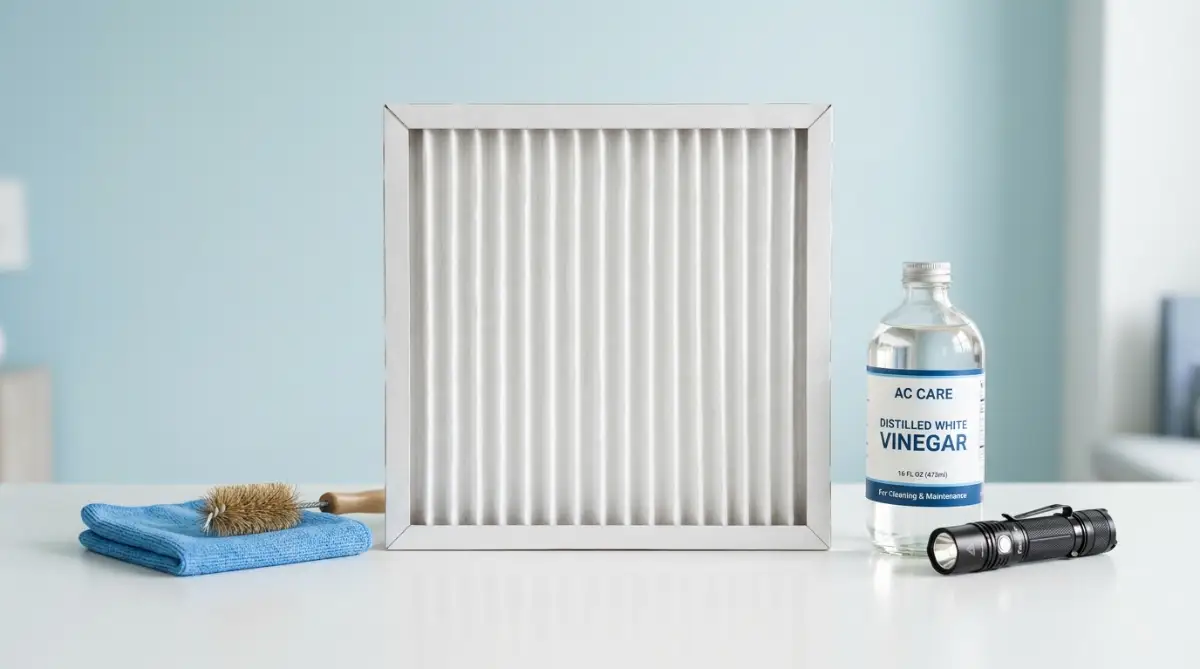
While the system is thawing, slide out your old air filter and inspect it against a bright light source.
If you cannot see light passing through the fiber mesh, the filter is dirty and must be thrown away.
Replace it with a fresh, clean filter, making sure the arrows on the frame point in the direction of the airflow.
Allow the system to dry completely for a few hours before turning your cooling system back on.
Step 3: Inspecting and Repairing the Condensate Drain Pan
If your drain line is clear and your coils are not frozen, the issue might be a damaged or rusted drain pan. Your system usually has two pans: a primary pan welded directly under the coils, and an emergency pan sitting under the entire unit.
Checking for Cracks and Rust Spots
Over many years of service, metal drain pans can begin to rust due to the constant exposure to water.
Plastic pans can become brittle from the cold air, eventually cracking along the corners or seams.
Use a bright flashlight to examine the edges and bottom of your drain pan for any dark rust spots or visible hairline cracks.
How to Patch a Damaged Drain Pan Temporarily
If you find a small crack or hole in a plastic or metal pan, you can seal it using a water-resistant sealant.
First, use a clean towel to dry the inside of the pan completely, making sure no moisture remains near the damaged area.
Sand the area lightly with fine sandpaper to create a rough surface that the sealant can grab onto.
Apply a generous layer of silicone caulk or water-resistant epoxy patch directly over the crack.
Allow the patch to cure completely for twenty-four hours before turning your air conditioner back on.
Keep in mind that patching a pan is only a temporary solution to protect your home.
You should plan to have a professional technician replace the damaged drain pan to ensure your system remains dry in the long run.
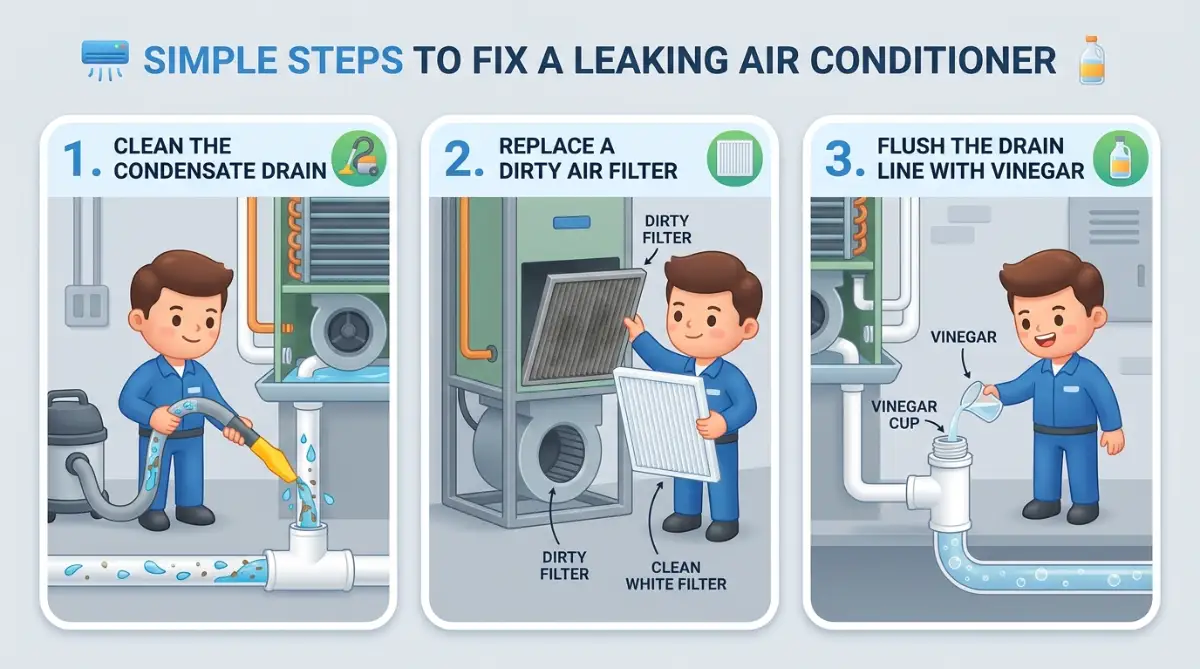
By taking these three simple steps, you can resolve the majority of central AC water leaks on your own. You will keep your home dry, improve your system's efficiency, and save money that would have been spent on professional repair visits.
Advanced Maintenance Tactics and Professional Secrets
If the simple steps did not stop the drip, you may need to look at the mechanical parts of your cooling system. These advanced steps focus on parts that handle water flow when gravity alone cannot do the work.
By understanding these systems, you can quickly find and fix hidden issues before they cause water damage. You will also learn how to protect your home from future leaks with simple safety upgrades.
Step 4: Troubleshooting and Servicing the Condensate Pump
Many homes have air handlers located in basements or closets below ground level. In these situations, gravity cannot pull the condensation water outside your home.
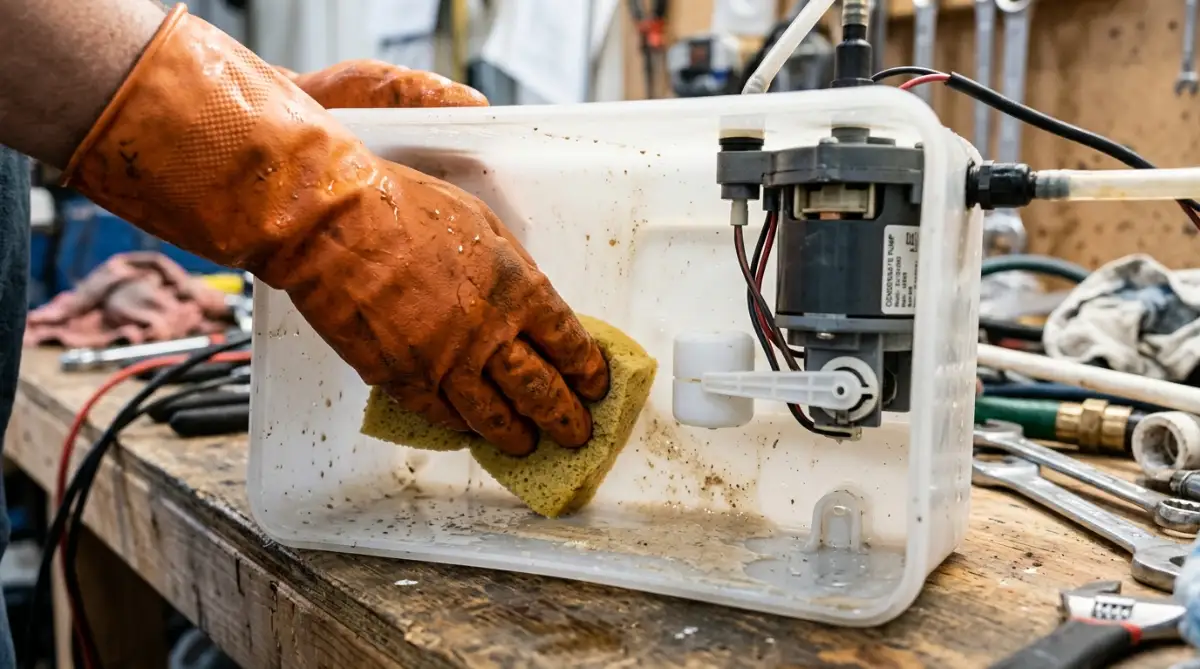
Instead, your system uses a small mechanical device called a condensate pump to push the water up and out [8]. This pump sits in a small plastic tank next to your indoor AC unit.
When the water in the tank reaches a certain level, a plastic float rises and turns on a small motor to pump the water away.
How to Clean and Test Your Pump
If the pump motor burns out or the float gets stuck, the small plastic tank will overflow onto your floor.
First, locate the pump and make sure it is plugged into a working electrical wall outlet.
Disconnect the power to the pump before you touch any internal parts to avoid electrical shocks.
Unsnap the top plastic cover of the pump and look inside the reservoir tank.
You will often find a thick layer of black slime or algae that is pinning the plastic float in the down position.
Use an old sponge and warm water to scrub the tank clean, making sure the float moves up and down freely.
Plug the pump back in and slowly pour a cup of water into the tank to test the motor.
If the float rises but the motor does not turn on, you will need to replace the pump unit.
Step 5: Identifying and Managing Low Refrigerant Leaks
When your cooling system runs low on refrigerant, the internal pressure drops drastically.
This drop in pressure causes the evaporator coils to get incredibly cold, far below the freezing point.
As moisture from your home contacts these freezing coils, it immediately turns into a thick sheet of ice.
The Signs of Low Refrigerant
If you notice your AC is running constantly but your home is not getting cooler, you may have a refrigerant leak.
Listen closely near your indoor coil cabinet for a faint hissing or bubbling sound.
You might also see ice forming on the copper refrigerant lines that connect your indoor and outdoor units.
Do not try to add refrigerant yourself, as this requires special licensing, tools, and safety gear.
Instead, turn off your system immediately to prevent the compressor from burning out.
Let the ice melt completely, then call a certified technician to find and repair the leak in the copper lines.
Step 6: Installing an Overflow Safety Float Switch
One of the best ways to protect your home is by installing a safety float switch on your drain line.
This inexpensive device acts like an automatic emergency brake for your air conditioner.
It is installed directly into the secondary drain port of your evaporator coil pan or inline with your main PVC drain.
How the Safety Switch Saves Your Home
Inside the switch is a small magnetic float that rises if water begins to back up in the drain pipe.
When the float reaches the top, it breaks the low-voltage electrical circuit that connects your thermostat to the AC compressor.
This instantly shuts down the cooling system before a single drop of water can overflow the pan.
You will notice your house getting warm and can check the drain line before any water damage occurs.
You can purchase these switches online or at hardware stores and install them with basic tools.
Setting Up Your Long-Term AC Protection Plan
Keeping your air conditioner dry and running well requires a small amount of regular attention.
By setting up a simple seasonal routine, you can avoid emergency repairs and keep your utility bills low.
The Monthly Vinegar Flush
During the hot summer months when your AC runs daily, pour a cup of plain white vinegar down the drain T-pipe once a month.
The acetic acid in the vinegar kills algae and mold spores before they can grow into a thick clog.
Avoid using harsh bleach, which can ruin the plastic drain pan and create strong fumes inside your home.
Keep the Outdoor Unit Clear
Your outdoor condenser unit needs plenty of space to release the heat it pulls from your home.
Clear away any tall weeds, leaves, or shrubs within two feet of the metal cabinet.
Dirty coils on the outdoor unit make the indoor coils work harder, increasing the risk of freezing and leaks.
Wash the outdoor metal fins gently with a garden hose once a year to remove pollen and dust.
Critical Mistakes That Turn Small Drips into Major Disasters
When water starts leaking into your home, it is natural to want a quick fix right away.
However, making hasty decisions or using the wrong materials can turn a simple drip into an incredibly expensive repair project.
Avoid these five common pitfalls to protect your cooling system and your home.
1. Pouring Strong Chemical Bleach Down PVC Pipes
Many homeowners think pouring heavy liquid bleach down the drain is the best way to clear out organic slime.
While bleach does kill algae, it can actually destroy the plastic materials inside your air conditioning system.
The harsh chemicals can also corrode the metal evaporator coil fins, leading to expensive refrigerant leaks.
Always stick to safe, mild acids like white vinegar to clean your drain lines.
2. Forgetting to Flush the Line with Clean Water
If you use vinegar or mild soap to clean your drain line, you must always follow it with plenty of clean water.
Leaving cleaning mixtures sitting in the pipe can cause the loosened gunk to settle and harden into a solid plug.
Always pour a large pitcher of warm water down the drain after cleaning to ensure the pipe is completely clear.
This simple step verifies that the water is flowing freely all the way to the outside exit.
3. Running the AC Continuously While the Coils are Frozen
If you see ice on your indoor unit, you might feel tempted to keep the system running, hoping it will still cool your home.
This is a dangerous mistake that can destroy the heart of your air conditioning system.
Running a system with frozen coils puts extreme stress on the compressor motor, which can cause it to burn out completely.
Compressors are incredibly expensive to replace, and a failure often means you will need to buy a whole new outdoor unit.
Turn the system off immediately at the thermostat and let the ice melt naturally before restarting it.
4. Disabling or Bypassing the Safety Float Switch
Sometimes, a dirty safety switch will trip and shut down your system even when there is no active leak.
Out of frustration, some homeowners bypass the switch by cutting the wires to keep the house cool on a hot day.
This action removes your only line of defense against a major household flood.
If a real clog occurs while the switch is disabled, water will quickly overflow and destroy your ceilings and walls.
Take the time to clean or replace a faulty switch instead of bypassing this key safety feature.
5. Ignoring Small Water Spots on Your Ceilings or Walls
If your air handler is in the attic, a small water spot on your drywall ceiling is an emergency warning sign.
Some people ignore these spots, thinking they are old stains or minor drips that will dry up on their own.
Continuous water exposure ruins the strength of drywall, making it heavy and soft.
If left alone, a large section of your ceiling can collapse without warning, causing massive damage to your furniture and floors.
Protecting Your Home and Keeping Your Cool
Taking care of your central air conditioner does not have to be a source of stress and worry.
By understanding how your system manages condensation, you can handle most minor water leaks with confidence.
Regular maintenance, like changing your filter and flushing your drain line, is the secret to a dry, comfortable home.
You do not need expensive tools to keep your system running safely and efficiently.
Take a few minutes today to check your AC drain pan and change your air filter.
By being proactive, you can protect your home from water damage and keep your family cool and comfortable all summer long.
You do not have to live with the constant worry of high repair bills every time you hear your air conditioner turn on. Grab your wet-dry vacuum, check your air filter, and give your drain line a quick flush today. Taking action right now will keep your home dry, save your hard-earned money, and bring back your peace of mind all summer long.
Disclaimer:
Please read the following disclaimer carefully before attempting any of the maintenance or troubleshooting steps outlined in this guide:
- For Informational Purposes Only: The information provided in this article is for general educational and informational purposes only. It should not be used as a substitute for professional diagnostic, maintenance, or repair services by a licensed HVAC technician.
- Inherent Risks and Safety Hazards: Central air conditioning systems utilize high-voltage electricity, moving parts, and complex plumbing. Attempting to service or clean these components carries inherent risks of personal injury, severe electrical shock, or property damage. Always shut off the electrical power to your HVAC system at both the thermostat and the main breaker before inspecting or handling any internal components.
- Warranty Voidance: Performing DIY repairs or using unauthorized parts or methods (such as applying unapproved sealants or bypassing safety switches) may void your manufacturer’s warranty or home insurance coverage. Always consult your system's manual and warranty terms before proceeding.
- Environmental and Legal Restrictions: Handling refrigerant requires specialized licensing, tools, and EPA certification (such as Section 608 certification in the United States). Attempting to measure, recharge, or repair refrigerant lines without proper licensing is hazardous and may violate local, state, or federal laws.
- Limitation of Liability: The author and publisher of this information assume no responsibility or liability for any errors, omissions, injuries, or damages to property or equipment resulting from the application or misapplication of the steps described in this guide. If you are uncomfortable with any step or if the issue persists, immediately contact a certified HVAC professional.