Wake up, look in the mirror, and feel a sharp sting of disappointment. Your face is red, tight, dry, and constantly burning. Every moisturizer you apply feels like pure fire on your skin.
Even simple water makes your skin feel painfully stretched and irritated. It is incredibly frustrating when your own skin feels like your enemy. You try to hide the redness under makeup, but it only flakes and looks worse.
This daily battle makes you want to avoid going out or taking photos. You feel trapped in a skin that simply hurts. It is a lonely struggle that many people do not fully understand.
Why We Fail to Find the Right Solution
Harsh Physical Scrubs: Many people think scrubbing harder will clear up the redness, but physical scrubs actually scratch and tear your weak skin barrier even more.
Overusing Active Ingredients: People often use too many active ingredients like acids and retinol at once, which strips away the natural protective oils.
Complex Skincare Routines: Social media influencers promote complex routines that overload your face with chemicals when your skin actually needs simple care.
Hidden Chemical Triggers: Many commercial products labeled "natural" or "for sensitive skin" contain hidden alcohols and strong perfumes that trigger allergic reactions.
Over-Washing Your Face: We often treat dry skin by washing it more, which removes the last bit of moisture and makes the damage worse.
How It Impacts Mental Peace & Confidence
Constant Silent Stress: Living with constant skin irritation causes silent stress, making you worry about how others see your face.
Loss of Focus: This chronic discomfort can ruin your focus at work or school, as you are always feeling the itching and burning.
Social Anxiety: You lose confidence in your looks, leading to social anxiety and a desire to cancel plans with friends.
Emotional Exhaustion: The endless search for a cure makes you feel helpless and exhausted from spending money on products that fail.
Reduced Self-Worth: It hurts to feel uncomfortable in your own body, which slowly chips away at your daily happiness and self-worth.
Understanding Your Skin Barrier
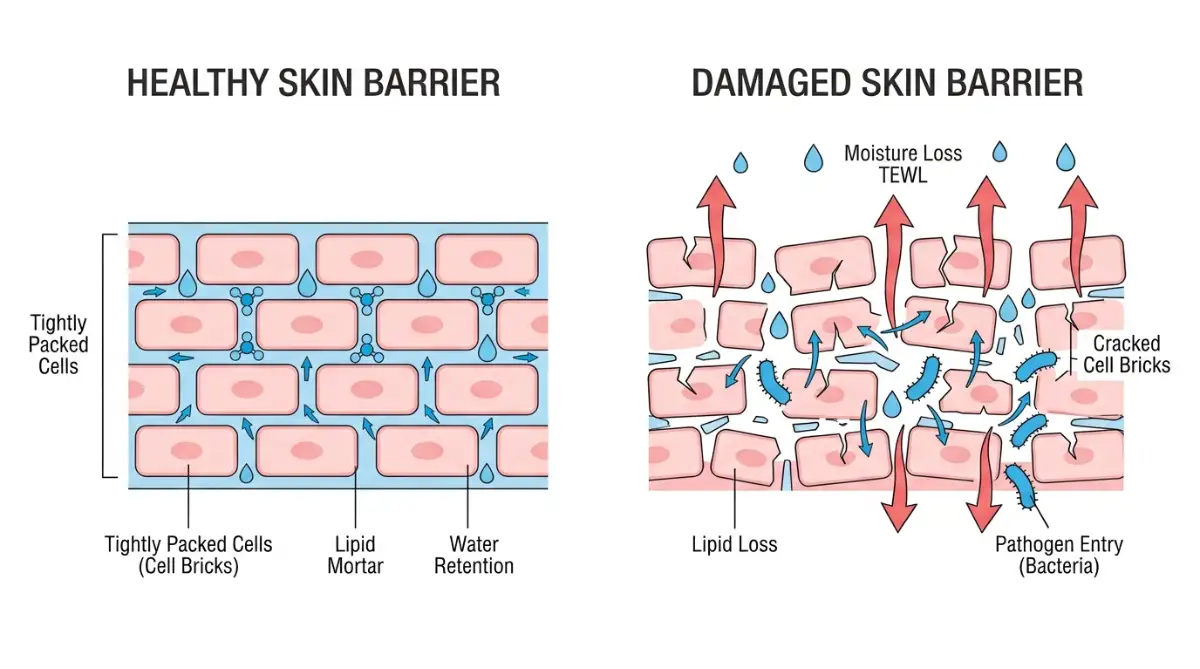
Understanding your skin barrier is the first step to healing it. Think of your skin barrier as a protective brick wall. The skin cells are the bricks, and natural lipids or fats are the mortar that holds them together.
When this wall is strong, it keeps moisture inside. It also blocks harmful bacteria, pollution, and dirt from entering. This keeps your skin looking healthy, soft, and smooth.
However, harsh soaps, over-washing, and cold weather can wash away this mortar. When the protective fats are gone, the bricks fall apart, leaving gaps in your wall. Moisture quickly evaporates through these gaps, causing extreme dryness and dehydration.
At the same time, irritating particles slip inside these gaps. This triggers deep inflammation, redness, and tiny bumps. This is why your skin feels so sensitive to even the mildest products.
You do not need to buy expensive creams to fix this. Your skin is amazing and has a natural power to heal itself. You just need to give it the right environment.
The secret is to stop attacking your skin and start protecting it with gentle, natural methods. Let us look at how you can do this easily at home.
Step-by-Step Educational Guide
Step 1: Simplify Your Skincare Routine (Strip It Down)
To fix a broken wall, you must first stop throwing stones at it. The biggest mistake people make is trying to heal their skin by adding more products. You must stop using all chemical exfoliants, retinoids, and strong vitamin C serums immediately.
These active ingredients are too harsh for raw and damaged skin. Think of your skin barrier like a fresh scratch on your arm. You would not pour lemon juice or scrub a fresh scratch.
For the next two to three weeks, use only a super gentle cleanser and a plain moisturizer. Your cleanser should not foam up too much. Heavy foam means harsh ingredients that strip away natural oils.
Look for cream-based or milk cleansers that feel soft on your face. Wash your face with lukewarm water, as hot water melts away your skin's protective fats. Even better, try washing your face with only plain water in the morning.
This keeps the natural moisture your skin made overnight completely safe and untouched. It gives your skin a chance to rebuild its natural shield without any disturbance.
Step 2: Use Natural Humectants to Lock in Water
Your damaged skin is like a thirsty sponge that has dried up and shrunk. To make it plump and soft again, you need to feed it water-loving ingredients. These are called humectants, and they act like tiny magnets for moisture.
One of the best natural humectants you can find in your kitchen is raw honey. Raw honey is packed with natural sugars that pull moisture from the air directly into your skin. It also contains natural healing properties that soothe redness.
To use it, apply a thin layer of raw honey to your clean, damp face. Leave it on for fifteen minutes, then rinse it off gently with cool water. Your skin will instantly feel softer and much less tight.
Another wonderful plant-based option is pure aloe vera gel. Aloe vera contains a high amount of water and healing vitamins that cool down irritated skin. You can apply fresh aloe gel straight from the leaf for a quick soothing effect.
Make sure to apply these natural hydrates while your face is still slightly damp. This traps the water on your skin surface before it has a chance to evaporate into the dry air.
Step 3: Seal the Barrier with Natural Plant Oils
Adding water to your skin is not enough if you do not lock it in. Without a protective seal, all that hydration will just float away into the air. This is where natural plant oils come in to act as the protective mortar.
You want to use oils that are very similar to your skin's natural sebum. Jojoba oil is an excellent choice because its structure is almost identical to human skin oil. It tricks your skin into thinking it has enough protection, which stops overproduction of grease.
Another amazing option is cold-pressed rosehip seed oil. This oil is rich in fatty acids that help rebuild the broken lipid wall. It absorbs quickly without leaving a heavy, sticky feeling on your face.
Squalane oil, derived from olives, is also extremely gentle and lightweight. It rarely causes breakouts and works wonders to soften rough, flaky patches.
To apply, rub two drops of oil between your palms to warm it up. Gently press your hands onto your face as the final step of your simple routine. This forms a safe shield that lets your skin heal underneath.
Why Natural Home Remedies Work Better for Repair
Many store-bought creams contain artificial preservatives and fragrances to make them last longer on shelves. These chemicals can cause more itching when your skin barrier is open and weak. Natural ingredients are fresh, simple, and free from synthetic chemicals.
They work with your body's natural healing cycle to repair the damage from the inside out. Plus, you can save a lot of money by using simple ingredients already sitting in your kitchen.
Using home remedies also helps you avoid the cycle of buying and trying endless products. When you stick to pure, single-ingredient options, you know exactly what is touching your face. This reduces the risk of new allergic reactions.
Understanding the Science of Skin Healing
Your skin is constantly renewing itself in a cycle that takes about twenty-eight days. During this time, new skin cells are born at the bottom layer and move up to the top. If you keep scrubbing or using harsh products, you disrupt this natural birth cycle.
By keeping your routine simple, you allow these new cells to grow healthy and strong. This is why patience is your best friend when repairing a damaged skin barrier. You cannot rush a natural process that takes a few weeks to complete.
Think of it as growing a small seed into a plant. You must water it gently and leave it alone in the sun. If you keep digging up the soil to check on it, the plant will die.
Simple Daily Habits to Protect Your Skin Barrier
Healing your skin is not just about what you put on your face. Your daily lifestyle habits play a massive role in how fast your skin barrier recovers. Making small changes in your daily routine can speed up the healing process significantly.
First, drink plenty of water throughout the day to keep your body hydrated from within. This ensures that your skin cells have enough internal moisture to function properly. Eating foods rich in healthy fats, like walnuts and flaxseeds, also helps feed your skin barrier.
Second, use a cool-mist humidifier in your bedroom if the air in your house is very dry. This adds moisture to the air, preventing your skin from drying out while you sleep.
Third, avoid touching your face with dirty hands to prevent spreading unwanted bacteria. You should also change your pillowcases every few days to keep your sleeping surface clean. Dirty pillowcases can harbor oils and bacteria that irritate your weak skin.
Finally, try to get at least seven to eight hours of restful sleep every night. Your body goes into repair mode while you sleep, producing natural growth hormones which help heal tissues. Skipping sleep can raise your stress levels, which makes skin inflammation much worse.
Step 4: Calm Your Skin with Colloidal Oatmeal Masks
When your skin is burning and red, you need a safe way to cool it down. One of the best home ingredients for this is colloidal oatmeal. This is not the regular sugar-filled oatmeal you eat for breakfast.
Colloidal oatmeal is simply whole oat grains ground into a super fine powder [1]. When you mix this powder with water, it forms a soft, milky paste [1]. This paste creates a temporary protective shield over your raw skin cells [1].
Oats contain special natural compounds called avenanthramides. These compounds work quickly to stop itching and reduce swelling. This makes oatmeal perfect for soothing raw skin, sunburn, or chemical irritation.
To make this at home, grind organic oats in a clean blender until they look like soft flour. Mix one tablespoon of this oat powder with a little warm water to make a smooth paste. Gently spread this mixture over your clean face.
Leave it on for ten to fifteen minutes before rinsing it off with cool water. You will notice an immediate reduction in redness and skin heat. This is a very cheap and gentle way to treat your face daily without any side effects.
Step 5: Restore and Balance Your Skin's Acid Mantle
Your skin has a natural, slightly acidic layer on the surface called the acid mantle [2]. This acidic environment acts as a shield against harmful bacteria and pollution [2]. The ideal pH level of your skin is around five point five.
Most cheap bar soaps and foaming cleansers are highly alkaline. When you wash your face with these, you destroy your acidic shield. This leaves your skin dry, tight, and completely open to bad bacteria.
To protect your acid mantle, only use products that match your skin's natural pH level. If your local tap water is very hard or full of heavy minerals, it can also disrupt your pH. In this case, try using bottled or distilled water to rinse your face.
You can also make a very gentle, diluted apple cider vinegar toner to balance your skin's pH. Mix one teaspoon of raw apple cider vinegar with one cup of distilled water. This dilution is key, as pure vinegar will burn your skin.
Apply this diluted mixture gently using a soft cotton pad only once or twice a week. It helps restore the natural acidity of your skin, making it harder for bad bacteria to survive. This simple trick supports your skin's natural defenses beautifully.
How to Maintain Your Healthy Skin Barrier Long Term
Once your skin stops burning and flaking, you might feel tempted to jump right back into your old routine. This is a trap that many people fall into too quickly. Your newly healed skin is still very young and delicate.
You must treat your skin like a patient recovering from a broken bone. Just because the cast is off does not mean you should run a marathon immediately. You need to transition back to your normal routine slowly and carefully.
Introduce only one active product back into your routine at a time. For example, use your favorite vitamin C serum only once a week to see how your skin reacts. If your face shows any sign of redness or irritation, stop immediately and rest.
We highly recommend following the eighty-twenty rule for your long-term skincare. This means eighty percent of your routine should focus on basic hydration and protection. Only twenty percent should focus on active treatments like anti-aging or acne care.
Also, learn to adjust your daily skincare routine based on the seasons. During cold winter months, the dry air will pull more moisture from your skin. You should switch to a heavier moisturizer and use fewer exfoliating steps.
In the warm summer months, you can switch back to lighter, water-based gels. Always listen to what your skin is telling you every day. If it feels tight or looks slightly red, step back and give it a day of pure hydration.
Common Mistakes to Avoid (The Pitfalls)
Mistake 1: Scrubbing Away the Flaky and Peeling Skin
When your skin barrier is healing, you will often notice dry, flaky patches on your face. It is very tempting to use a scrub or a washcloth to rub these flakes away. Many people believe this will make their skin look smooth and clean.
However, these flakes are actually a protective sign that your skin is repairing itself underneath. When you rub them off, you tear away the new, fragile skin cells before they are ready. This resets your healing clock back to day one.
Instead of scrubbing, apply a tiny drop of natural oil to the dry spots. This will flatten the flakes and keep them soft while they naturally fall off on their own.
Mistake 2: Rinsing Your Face with Hot Water
Taking a hot shower feels amazing, but hot water is an enemy to a damaged skin barrier. Hot water melts and washes away the natural fats and lipids that hold your skin cells together. This leaves your face completely stripped, dry, and red.
Always use lukewarm or cool water when washing your face. Cool water helps reduce inflammation and calms down active redness. It also keeps your natural oils right where they belong, protecting your skin.
Mistake 3: Switching Skincare Products Every Few Days
We live in a world where we expect instant results from everything we buy. Many people try a new gentle moisturizer, see no change in two days, and throw it away. They then buy another product, causing endless stress to their skin.
Your skin cells need at least twenty-eight days to fully renew themselves. Constant switching overloads your face with different ingredients and causes deeper irritation. Stick to a simple, clean routine for at least four weeks before deciding if it works.
Mistake 4: Skipping Sun Protection to Avoid Greasiness
When your skin is irritated, you might worry that sunscreen will clog your pores or cause breakouts. Because of this fear, many people skip sun protection entirely while healing their barrier. This is a very dangerous mistake.
Unprotected exposure to ultraviolet rays destroys collagen and breaks down the skin barrier even further. It also darkens any red marks or scars left behind by acne.
To protect your healing skin, use a gentle, mineral-based sunscreen containing zinc oxide. Zinc oxide is actually a natural anti-inflammatory agent that helps calm irritated skin while blocking harmful sun rays.
Mistake 5: Overloading Your Skin with Heavy, Thick Creams
When your face feels dry, your natural reaction is to apply a massive amount of thick cream. While some heavy moisture is good, putting on too much can block air from reaching your skin. This can lead to clogged pores, tiny bumps, and sweat rash.
It can also trigger a sensitive skin condition called perioral dermatitis, which causes red bumps around the mouth. Instead of using a thick layer, apply a thin layer of moisturizer twice a day. This allows your skin to breathe while staying properly protected.
The Real Damage of Making These Common Mistakes
If you do not avoid these five mistakes, you can cause long-term harm to your skin. Your simple dry skin can turn into chronic conditions like rosacea or eczema. These conditions are much harder to treat and can stay with you for years.
You also risk developing deep scars and permanent dark marks from minor irritations. The constant cycle of irritation and healing can make your skin age much faster. You will also end up spending thousands of dollars on expensive treatments to fix the self-made damage.
Final Conclusion & Actionable Takeaways
Your Path to Healthy, Radiant Skin Starts Today
Healing a damaged skin barrier does not require expensive treatments or complex routines. Your skin is a living, breathing organ that knows exactly how to heal itself. You just need to step out of the way and give it the quiet environment it needs to recover.
By stripping down your routine, using natural humectants, and protecting your skin with gentle oils, you can restore your healthy glow. Remember that real beauty takes time, patience, and a lot of gentle self-care.
Take a deep breath and put away those harsh scrubs and chemical peels tonight. Start your simple, natural healing routine right now. Your skin will thank you with a soft, pain-free, and natural glow in the coming weeks.
Your Actionable Tonight Checklist
To help you start right now, here is a simple three-step action plan for tonight. First, wash your face with only plain, lukewarm water. Do not use any soap or cleanser, even if it says it is gentle.
Second, apply a single layer of pure aloe vera gel or a tiny bit of raw honey while your skin is damp. Leave the honey on for fifteen minutes and wash it off, or let the aloe vera dry naturally.
Third, press two drops of pure jojoba oil or squalane oil onto your damp face to lock in the moisture. Go to bed early and let your body do the rest of the repair work. This simple routine is the perfect way to begin your skin healing journey.