The Hidden Anxiety of Entering the Cryptocurrency World
Learning how to navigate the digital currency space can feel like walking through a minefield. You probably see stories on the news every day about people losing their life savings to online scams. This constant stream of negative news creates deep anxiety for anyone trying to take their first step.
You want to grow your savings, but the fear of making a simple mistake holds you back. It is completely normal to feel overwhelmed by the complex terms and technology. This fear often stops good people from exploring new financial options that could help them.
The internet is filled with confusing advice, and finding a trustworthy starting point feels almost impossible. Many beginners end up frozen in place, unsure who to trust or where to click.
Why Many Beginners Fall into Costly Traps
- Overwhelming Information: Searching for advice online brings up thousands of conflicting videos and articles that confuse readers.
- Fake Trading Platforms: Scammers often build realistic websites that look like real exchanges to steal deposit money.
- Get-Rich-Quick Prompts: Social media influencers often promise instant wealth, leading beginners to make rushed decisions.
- Lack of Basic Security Knowledge: Many people do not know how to protect their accounts before sending their money.
- No Clear Step-by-Step Path: Most guides assume you already understand advanced technology, leaving out the simple steps.
How Confusing Information Impacts Your Peace of Mind
- Constant Worry: The fear of clicking the wrong button or losing your password can cause real mental stress.
- Loss of Confidence: Making a small mistake early on can make you feel like you are not smart enough to manage your money.
- Financial Regret: Watching others learn and succeed while you stay stuck due to fear is deeply frustrating.
- Skepticism of Real Projects: Bad experiences make people distrust the entire digital asset space, missing out on safe learning.
This emotional weight is why we need to slow down and look at the facts. You do not need a degree in computer science to do this safely. You simply need a clear, logical plan that protects your hard-earned money at every single turn.

A Clear Roadmap to Buying Your First Bitcoin Safely
We will now look at a practical, step-by-step method to buy your first digital asset. This guide does not require any prior technical experience. We will focus entirely on safety, clarity, and protecting your personal information.
Step 1: Choosing a Highly Secure and Regulated Platform
The very first step is deciding where you will buy your digital currency. You should think of a cryptocurrency exchange like a traditional bank in your town. You would not put your savings in a bank that has no locks on the doors or no government license.
You must look for platforms that are fully regulated in your country of residence. Regulated platforms are legally required to protect user assets and follow strict security rules. They must verify your identity, which keeps the entire platform safe from illegal activity.
Avoid platforms that offer heavy discounts or prizes just to sign up immediately. Safe businesses do not need to use aggressive sales tactics to win your trust. Look for companies that have a long history of solid service and transparent business practices.
Once you find a regulated exchange, your very next task is to secure your account. Do not rely on a simple password that you use for your social media. Create a completely unique password that is long and uses a mix of letters, numbers, and symbols.
After setting up your password, you must turn on Two-Factor Authentication (2FA). Do not use SMS-based 2FA, as hackers can sometimes redirect text messages to their own phones. Instead, use an authenticator app on your smartphone, which generates a new code every thirty seconds.
This simple setup step acts like a double lock on your front door. Even if someone guesses your password, they cannot access your account without your physical phone. Taking this extra ten minutes protects your funds from the vast majority of online attacks.
Step 2: Understanding Digital Storage and Personal Wallets
A common mistake beginners make is keeping their digital assets on the exchange forever. While exchanges are convenient for buying, they are not designed to act as long-term storage safes. If the exchange suffers a technical failure or faces legal trouble, your access could be temporarily cut off.
To understand this, imagine buying a gold coin at a local jewelry store. You would not leave the gold coin on the shop counter and expect them to keep it safe for years. You would take the coin home and put it in your own secure safe box.
In the digital world, your personal safe box is called a digital wallet. There are two primary types of wallets you can use to store your digital assets. Let us look at how they work so you can make an informed choice.
Software Wallets (Hot Wallets)
These are programs or mobile apps that run on your phone or computer. They are highly convenient because you can access your funds quickly whenever you want. Since they are free to download, they are a great starting point for small amounts of digital assets.
However, because your phone is connected to the internet, these wallets carry some security risks. If you download a malicious file or click on a bad link, your wallet could be exposed. Therefore, only use software wallets for small amounts of money that you plan to use soon.
Hardware Wallets (Cold Wallets)
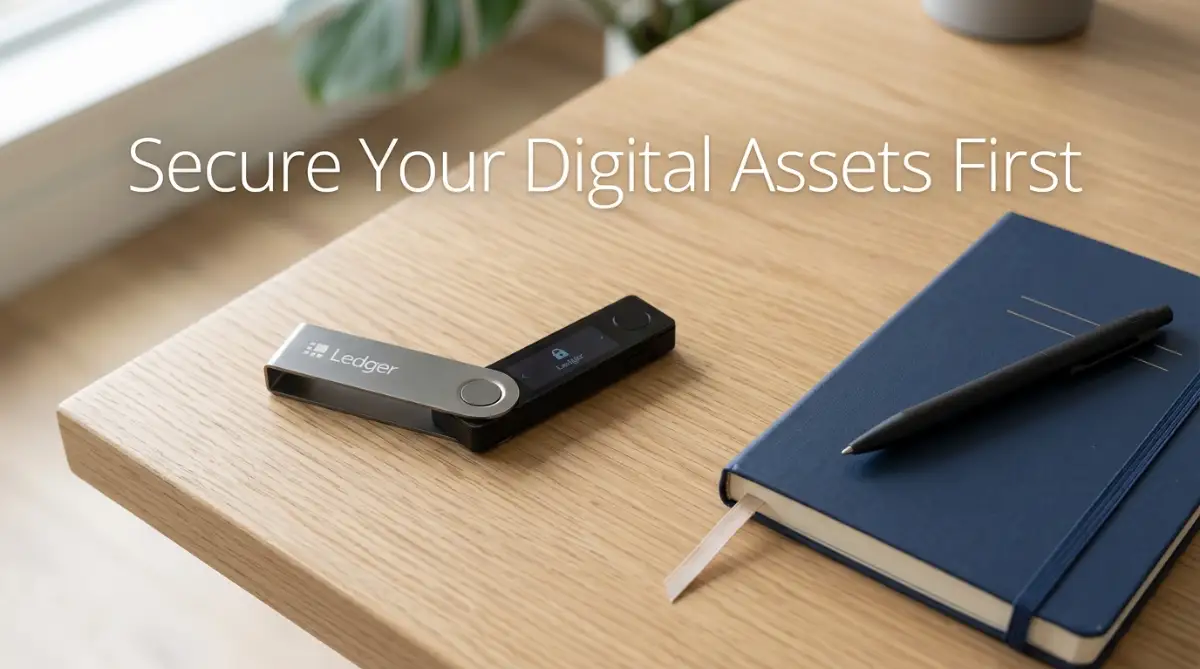
These are physical devices that look like small USB drives. They keep your private keys completely offline, far away from any internet connection. This offline status makes it virtually impossible for an online hacker to steal your funds.
If you plan to buy a significant amount of digital currency, a hardware wallet is highly recommended. It is a one-time purchase that provides immense peace of mind. You should only buy these devices directly from the official manufacturer to ensure they have not been tampered with.
The Magic of the Recovery Phrase
When you set up any personal wallet, the system will give you a list of twelve or twenty-four random words. This list of words is called your recovery phrase or seed phrase. It is the single most important piece of information you will ever receive.
This phrase is the master key to your digital assets. If your phone breaks or you lose your hardware device, you can enter these words into a new device to recover everything. Anyone who gets hold of this phrase can instantly take all of your funds.
- Never save your recovery phrase on a computer, phone, or cloud storage account.
- Never take a photo of your recovery phrase with your phone camera.
- Write the words down on physical paper using a durable pen.
- Store this paper in a secure, fireproof location that only you know about.
Treat this phrase with the same level of care you would treat physical cash. If an online service asks you to type in your recovery phrase, it is always a scam. No legitimate support agent or wallet provider will ever ask for these words.
Step 3: Depositing Funds and Making Your First Purchase
Now that you have selected a secure exchange and understand storage, you are ready to make a purchase. The process of moving traditional money into the digital space is straightforward but requires care. You want to avoid high transaction fees and make sure your transfer goes through smoothly.
Most regulated exchanges allow you to connect your traditional bank account directly. This is usually the cheapest way to send money, though it can take a couple of business days to clear. Avoid using credit cards to buy digital assets, as card companies often charge high fees for these transactions.
Once your deposit arrives in your exchange account, do not feel rushed to buy everything at once. Many beginners make the mistake of spending all their deposited cash in a single minute. A more logical approach is to start with a very small amount to test the system.
For example, you could start by purchasing just ten or twenty dollars worth of digital currency. Doing this allows you to see how the interface works without risking a large portion of your savings. It turns a stressful event into a low-stakes learning experience.
When you look at the exchange interface, you will see two main types of orders: market orders and limit orders. Let us break down the difference in simple terms so you know which one to choose.
Market Orders
A market order tells the exchange to buy your asset immediately at the current market price. This is the simplest way to buy, and your order will complete in just a few seconds. It is excellent for beginners who want to complete their first transaction quickly without waiting.
The downside is that market prices can move up or down slightly while your order is processing. This means you might pay a tiny bit more than the price you saw on your screen. For small test amounts, this tiny difference does not matter much.
Limit Orders
A limit order allows you to set the exact price you are willing to pay for your digital asset. The purchase will only happen if the market price drops to match your set limit. This gives you complete control over your spending, but it requires patience.
If the market price never drops to your limit, your order will simply sit there unfilled. For your very first purchase, a market order is often preferred because of its simplicity. As you gain experience, you can start using limit orders to save on costs.
Once the purchase is complete, you will see your digital asset balance update in your exchange account. Take a moment to celebrate this milestone, as you have officially taken your first step. However, remember the safety rules we discussed: do not leave those funds on the exchange long-term.
Your final task in this step is to practice moving a small amount from the exchange to your personal wallet. Copy your wallet address very carefully, and always double-check the first and last five characters. Send a tiny test transfer first to confirm that you have done everything correctly.
Once you see the test amount arrive safely in your personal wallet, you can send the remaining balance. This two-step transfer process removes all the fear of losing funds due to a typing error. You are now in complete control of your digital assets, stored safely away from online risks.
Essential Habits for Long-Term Digital Asset Security
Buying your asset is only half the battle; keeping it safe over time is where real security lies. The digital asset world moves quickly, and bad actors are always finding new ways to trick users. By developing a few simple security habits, you can protect your assets for years to come.
First, always bookmark the official website of your exchange and wallet provider. Never use search engines to look up the login page every time you want to sign in. Scammers sometimes pay for search advertisements that look exactly like the real site but steal your login details.
Second, be highly skeptical of any direct messages you receive on social media platforms. Legitimate crypto companies will never send you direct messages on Telegram, Discord, or Facebook to offer help. If someone reaches out to you claiming to be "support," block them immediately.
Third, keep your investment activities quiet. Sharing how much digital currency you own on public forums makes you a target for hackers. It is always best to learn quietly and keep your financial details to yourself.
Finally, treat your digital security like a regular home checkup. Every few months, review your account settings, update your software apps, and make sure your physical backup phrases are safe. These small, consistent actions build a solid wall of security around your hard-earned wealth.
Strengthening Your Personal Security and Long-Term Strategy
Now that you understand the basic setup, we must focus on stronger safety measures. Taking your first steps is exciting, but protecting your digital wealth over time requires advanced planning. Let us look at how you can build a secure wall around your digital holdings.
When you start learning about asset protection, the sheer number of security tools can feel confusing. According to the Investopedia guide on Bitcoin, digital assets rely on cryptography to secure transactions. This means that you are your own bank, which gives you complete control over your money.
To keep this control safe, we need to think like professional security experts. You can use some of the same methods that large organizations use to protect their digital keys. Let us examine two major advanced methods that you can start using today.
Step 4: Setting Up Multi-Signature Security systems
The standard digital wallet uses a single private key to sign and approve transactions. This is like having a house with only one door key. If a thief steals that single key, they can enter and take everything.
A multi-signature wallet, often called multi-sig, changes this dynamic entirely. This setup requires multiple separate keys to approve a single transaction. For example, you might set up a system that requires two out of three keys to move any funds.
Imagine a traditional bank safe box that requires two different people with two different keys to open it. One key could stay on your laptop, and the other key could stay on your mobile phone. Even if a hacker gains full access to your laptop, they cannot steal your funds without your phone key.
This setup practically removes the risk of a single point of technical failure. If you lose one key, you can still recover your funds using the remaining backup keys. It is one of the most reliable ways to protect a growing digital portfolio.
Step 5: Utilizing the Power of Hidden Wallet Features
Most high-quality hardware wallets offer a advanced feature called a passphrase or a hidden wallet. This is sometimes referred to as the twenty-fifth word in your recovery phrase setup. It acts like a secret room inside your main security vault.
When you set up a standard wallet, you write down your twenty-four-word recovery phrase. If you turn on the passphrase feature, you can add any word or phrase of your choice to this list. This custom word acts as an additional layer of password protection.
If someone finds your paper backup of the twenty-four words, they still cannot access your hidden wallet. They would also need to know your exact secret passphrase to see those specific funds. This provides an incredible layer of safety against physical theft or threats.
However, you must be extremely careful when using this advanced security feature. If you forget your custom passphrase, even the wallet manufacturer cannot help you recover your assets. Write it down and store it in a completely separate secure location from your main recovery phrase.
How to Build a Sound Long-Term Investing Framework
To get the best results over time, you must integrate digital assets into your broader financial plan. You should never buy these volatile assets using money that you need for your daily living costs. Doing so can force you to sell your assets at a massive loss during a sudden market downturn.
Before you invest a single dollar into any digital currency, you should focus on building a secure emergency fund for unexpected expenses. Having cash set aside for medical emergencies or car repairs keeps your investments safe from panic selling. It gives you the breathing room to hold your digital assets through difficult market cycles.
You should also practice creating a realistic household budget to identify exactly how much surplus cash you have each month. Only use a small percentage of this surplus cash for your digital asset purchases. This keeps your financial foundation strong and prevents you from taking on too much risk.
According to a security report from Forbes Advisor on cryptocurrency security, the vast majority of consumer losses occur due to simple user errors. By managing your budget first, you reduce the pressure to make quick, emotional decisions. You can approach your digital purchases with a calm, analytical mind.
Step 6: Using Dollar-Cost Averaging to Minimize Risk
Trying to guess when the price of an asset is at its lowest point is a losing game. Even professional traders with years of experience fail to predict short-term price movements consistently. For beginners, trying to time the market only leads to stress and financial loss.
Instead of trying to time your purchases, you can use a strategy called Dollar-Cost Averaging (DCA). This method involves investing a fixed, small amount of money at regular intervals. For example, you might decide to buy ten dollars worth of digital currency every single Sunday.
When the price of the asset is high, your ten dollars will buy a smaller fraction of it. When the price of the asset drops, your ten dollars will automatically buy a larger fraction. Over several months, this simple habit averages out your overall purchase price.
This plan removes all the emotional stress from your daily investing routine. You no longer need to check price charts every hour or worry about sudden market movements. You simply let your automated plan work quietly in the background while you focus on your life.

The Most Costly Mistakes Beginners Make and How to Avoid Them
Even with a great plan, it is easy to make a mistake if you do not know where the traps are. Let us examine the five most common pitfalls that catch beginners off guard. By learning about these mistakes now, you can keep your money safe from common errors.
1. Leaving Your Funds Sitting on a Centralized Exchange
Many people find the process of moving assets to a personal wallet slightly intimidating. As a result, they leave their digital purchases on the exchange platform for months or even years. This is a highly dangerous habit that exposes your savings to unnecessary risks.
If the exchange platform faces a technical issue, a security hack, or legal trouble, your account could be locked. You do not truly own your digital assets unless you hold the private keys yourself. Always move your assets to a personal wallet as soon as you complete your purchase.
2. Falling for Social Media Giveaways and Investment Schemes
Scammers love to use social media platforms like YouTube, Telegram, and X to run fake giveaway events. They often create high-quality videos showing famous business leaders promising to double your money. They ask you to send them a small amount of digital currency, promising to send back twice as much.
These offers are always completely fake, and any money you send will be lost forever. No legitimate company or wealthy individual will ever ask you to send them money to receive a prize. If an offer sounds too good to be true, it is always a scam.
3. Panic Selling Your Assets During a Price Drop
The digital currency market is famous for its rapid price movements up and down. It is common to see prices swing by ten percent or more in a single afternoon. For beginners, seeing their account value drop can trigger a strong wave of panic.
This panic often leads people to sell their assets at the absolute bottom of a market drop. To prevent this, make sure you are tracking your daily spending habits to keep your cash flow positive. If you do not need the money for your immediate living costs, you will not feel forced to sell during a temporary drop.
4. Taking a Screenshot or Photo of Your Recovery Phrase
We live in a world where we take photos of everything to remember them later. However, taking a digital photo of your twenty-four-word recovery phrase is a critical security mistake. Most modern smartphones automatically upload your photos to cloud storage accounts.
If a hacker gains access to your email or cloud storage, they can find that photo and steal your wallet. Your recovery phrase must never touch any digital screen or internet-connected device. Write it down on a physical piece of paper and keep it offline.
5. Chasing Small Hyped-Up Coins with No Real Utility
Many beginners get distracted by cheap, hyped-up alternative coins that promise overnight wealth. These speculative assets are highly risky and are often controlled by small groups of people who manipulate the price. Most of these projects lose nearly all of their value within a few weeks.
Instead of gambling your hard-earned money on risky hype, focus on building a safe, long-term portfolio. If you want to grow your wealth with minimal stress, consider moving cash to high-yield savings accounts for your traditional savings. Keep your digital asset investments focused on established, highly secure projects.
Mistake Potential Consequence Safe Alternative Habit Leaving funds on exchanges Loss of access during platform failures Move funds to a personal cold wallet Joining fake giveaways Total loss of sent digital assets Block and report any direct message offers Panic selling during drops Locking in financial losses Invest only money you do not need soon Storing seed phrases digitally Hacker access via cloud backups Write keys on physical paper and store offline Buying hyped-up cheap coins Complete loss of capital Stick to established assets and high-yield savings
Your Path to Confident Financial Management
Taking control of your own financial path is a highly rewarding journey. By learning how to buy and store digital assets safely, you are developing valuable modern skills. You do not need to let fear or confusing technical terms stop you from exploring this new space.
Remember that building real wealth is a slow, steady process that requires patience and discipline. Start with small, manageable steps that do not put your daily life or family security at risk. As you gain hands-on experience, your confidence will naturally grow.
Protect your accounts with strong passwords, turn on app-based two-factor authentication, and keep your recovery phrases offline. These simple actions will keep your savings secure from the vast majority of modern online risks. You have all the tools and knowledge you need to start this journey with complete peace of mind.
Take action today by setting up your secure email, choosing a licensed exchange platform, and completing your first small test transaction. Every step you take builds a stronger financial future for you and your loved ones. Stay curious, stay safe, and enjoy the process of learning something new.
Important Disclaimer:
This blog post is for educational and informational purposes only. The information provided here does not constitute financial, investment, legal, or tax advice. Cryptocurrency investments are subject to high market volatility and risk. You should always conduct your own research, assess your personal financial situation, and consult with a licensed professional financial advisor before making any investment decisions. The author and publisher are not responsible for any financial losses or security breaches you may experience.