
The Hidden Struggle of Chasing the Real Estate Dream Without a Strategy
Imagine spending your hard-earned life savings on a rental property that you hope will fund your retirement. You spend weeks searching the internet, looking at beautiful home photos, and reading excited articles about booming neighborhoods. You finally buy a house in a city that everyone on social media claims is the next big thing.
But within a few months, the local economy takes a sudden downturn, and the main employer in town shuts down. Your tenants lose their jobs, stop paying rent, and you are forced to spend thousands of dollars on eviction lawyers. To make matters worse, property values in the area drop, leaving you with a massive mortgage on a home that is worth less than what you paid for it.
Every single month, you have to send a large mortgage payment to the bank out of your own personal pocket. Your dream of building passive wealth quickly turns into a stressful second job that drains your bank account. This terrifying financial trap is the quiet reality for thousands of unprepared real estate investors.
Why Beginners Fail to Find the Right Investment Locations
Many new investors want to make smart choices, but they are overwhelmed by a sea of conflicting information. The internet is flooded with hype, making it incredibly difficult to find honest data. Here is why so many people make expensive mistakes when choosing an investment city:
- Trusting biased social media advice: Many beginners follow online gurus who promote get-rich-quick property schemes. These promoters often hide the serious risks and high costs of investing in overvalued markets.
- Relying on outdated housing statistics: People often look at past home price gains and assume the growth will continue forever. This mistake leads to buying properties at peak prices right before a market correction.
- Overlooking local tax and insurance costs: Many investors calculate their potential rent but forget to factor in property taxes and landlord insurance. In high-tax states, these hidden expenses can eat up your entire monthly profit.
- Ignoring the legal rules of the local state: Buying a rental home in a state with highly restrictive tenant laws can be a nightmare. If a tenant stops paying rent, the legal eviction process can take up to a year to resolve.
The Heavy Emotional Toll of a Bad Property Purchase
Owning a failing investment property creates a constant cloud of anxiety over your daily life. You hesitate to spend money on your family because you are constantly worried about the next unexpected repair bill. This financial stress can strain your relationships and destroy your personal confidence.
- Sleepless nights over empty properties: When your rental home sits vacant, you must pay the mortgage, utilities, and taxes yourself. This monthly drain creates intense financial pressure inside your household.
- A feeling of helplessness against legal systems: Dealing with non-paying tenants and complex court dates is emotionally exhausting. It makes you feel like you have lost control over your hard-earned money.
- Loss of confidence in your financial future: Failing on your first property investment makes you doubt your ability to build wealth. You feel like you have made a massive mistake that will take years to recover from.
- Regret over missed opportunities elsewhere: Watching other asset classes grow while your money is locked in a money-losing property is incredibly frustrating. It makes you wish you had never started your real estate journey.
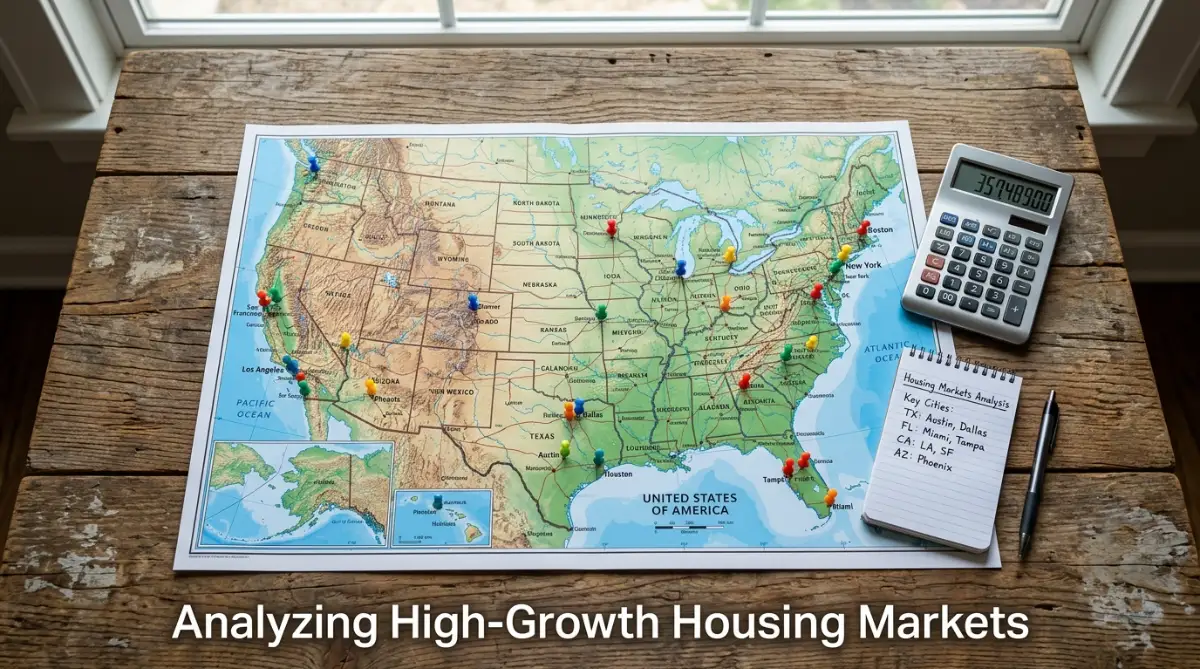
Step 1: Evaluating Population Growth and Employment Diversification
The first step to finding a great investment city is to analyze who is moving there and why. A healthy real estate market must have a steady stream of new residents looking for housing. Without population growth, you will struggle to find reliable tenants and your property values will remain flat.
You can find free, accurate population data by looking at the official census records and local government websites. Look for cities that have shown steady population increases over the past five to ten years. A growing population creates a natural, long-term demand for rental housing.
However, people do not move to a new city just for the weather; they move for jobs. You must look into the local job market to see if it is growing and diverse. Avoid towns that rely on a single industry, such as a single manufacturing plant or a single coal mine.
If that main industry faces trouble, the entire town's economy can collapse overnight, leaving you with vacant properties. Instead, target cities with a healthy mix of employers in healthcare, technology, education, and government. This diversity protects your investment because if one sector struggles, the other sectors will keep the local economy strong.
To measure this, check the local unemployment rates and compare them to the national average. Look for cities where the job growth rate is consistently higher than the rest of the country. These booming job hubs are the safest places to invest your hard-earned capital.
Step 2: Calculating the Rent-to-Price Ratio for Safe Cash Flow
Once you find a city with job growth, you must analyze if the numbers actually make financial sense. Many new investors make the mistake of buying homes in beautiful coastal cities where prices are incredibly high. They assume that high home prices automatically mean high rental profits.
To avoid this trap, you must learn how to calculate the Rent-to-Price (RTP) ratio. You can find this ratio by dividing the expected monthly rent by the total purchase price of the property. For example, if a home costs two hundred thousand dollars and rents for two thousand dollars a month, the RTP ratio is one percent.
In expensive markets like San Francisco or New York, a home might cost one million dollars but only rent for three thousand dollars a month. This is an RTP ratio of only zero point three percent. In these markets, your monthly rental income will rarely cover your mortgage, taxes, and insurance.
As a general rule, beginners should look for markets where the RTP ratio is as close to one percent as possible. These affordable inland and midwestern markets offer much safer cash flow. This monthly profit acts as a protective cushion that covers your expenses during unexpected vacancies.
To find these high-yield areas, spend time comparing active property listings with local rental prices on public real estate sites. Look for cities where home prices are moderate but the demand for rentals remains high. This simple mathematical check will keep you from buying properties that drain your wallet.
Step 3: Analyzing State Taxes and Local Landlord Regulations
The final step in your initial market research is to study the legal and tax environment of the state. Many people forget that local laws and property taxes can make or break a real estate investment. A city can have great job growth, but if the local taxes are too high, your profits will vanish.
Some states have property tax rates that are three times higher than neighboring states. For example, if you buy a home in a high-tax state, you might pay five thousand dollars a year in property taxes. If you buy a similar home in a low-tax state, you might only pay fifteen hundred dollars a year.
You must also research the local landlord-tenant regulations before buying a property. Some states are highly landlord-friendly, meaning the laws protect property owners if a tenant breaks the lease. In these states, if a tenant stops paying rent, you can legally reclaim your property within a few weeks.
Other states are highly tenant-heavy, meaning the legal process to evict a non-paying tenant is incredibly slow and expensive. In these areas, a bad tenant can live in your property for months without paying a single dollar. This long legal battle can easily wipe out your entire emergency savings.
Look for cities located in landlord-friendly states with reasonable property tax rates. These regions offer a much safer business environment for independent landlords. This legal safety net allows you to manage your properties with confidence and peace of mind.
Step 4: Measuring the Quality of Local Neighborhoods and Schools
Once you have selected a target city, you must narrow your focus down to specific neighborhoods. Every city is a collection of unique micro-markets, and property values can change drastically from one street to the next. You want to buy in an area where people actively want to live and raise their families.
Look for neighborhoods with highly rated public schools and low local crime rates. Families with young children are the most stable, long-term tenants you can find. They tend to stay in one place for several years to keep their children in the same school system, reducing your vacancy costs.
- Low Crime Rates: Safe neighborhoods attract high-quality tenants who pay their rent on time and take care of your property.
- Good Public Schools: High school ratings naturally keep property values strong and protect your investment during market drops.
- Proximity to Parks and Shops: Homes located near parks, grocery stores, and restaurants are always in high demand.
You should also look for areas with planned public infrastructure improvements, such as new transit lines, parks, or shopping centers. These government investments show that the neighborhood is receiving active funding and support. It is a strong indicator that property values in the area will grow naturally over the next decade.
Avoid buying the cheapest home in a high-crime area just because the price looks like a bargain. These "cheap" properties often come with high tenant turnover, property damage, and endless management headaches. Focus instead on solid, middle-class neighborhoods where people feel safe walking their dogs at night.
Step 5: Researching the Supply and Demand of the Local Housing Market
To protect your investment, you must understand the balance between housing supply and demand in your chosen city. If a city has unlimited open land, developers can build thousands of new homes very quickly. This sudden increase in housing supply can cause rental prices to drop across the entire city.
Look for cities that have geographic or regulatory barriers to new construction. Cities surrounded by mountains, lakes, or oceans have a limited amount of land available for building. Similarly, cities with strict zoning laws make it difficult for developers to build massive new apartment complexes.
When the supply of housing is limited but the population continues to grow, rental prices and property values naturally rise. This supply squeeze protects your investment from being diluted by sudden new developments. It ensures that your rental unit remains a scarce and valuable asset in the local market.
You can track this supply by looking at the number of new building permits issued by the local city hall. If the number of permits is skyrocketing while population growth is slowing down, it is a warning sign of future oversupply. Stick to markets where demand consistently stays ahead of new construction.
Building a robust real estate portfolio is very similar to preparing to buy your very first residential property. If you want to build wealth safely, you should understand how to stop making costly savings mistakes when buying your first home before you start signing purchase contracts in distant states.
To ensure your financial research is accurate, we can look at the data provided by the official US Census Bureau. Their regular housing and population reports outline where people are relocating and which metro regions are expanding.
Many successful real estate buyers also study market metrics published on Realtor.com to track active home sales. These detailed industry reports help you compare home pricing trends across multiple states.
For those who are still gathering their initial capital, avoiding cash traps is highly necessary during the early stages. You can protect your hard-earned funds by reviewing the mistakes to avoid when saving money for your first home down payment to keep your investment momentum strong.
In addition, you should read about real estate finance structures on Investopedia to understand the leverage options available for out-of-state buyers. Using correct financing channels can keep you from overextending your personal bank accounts.
Step 6: Building a Reliable Remote Property Management System
The best cities to invest in are often located hundreds of miles away from where you currently live. To succeed in these high-growth markets, you must learn how to manage your rental business from a distance.
This means you need to build a highly reliable, professional team on the ground in your target city. Your remote team acts as your eyes and ears, keeping your properties safe and your tenants happy.
Your most important team member is a local, licensed property manager who understands the neighborhood dynamics. A great manager will handle tenant screening, rent collection, and emergency repair requests for you.
When interviewing property managers, ask them about their average tenant placement times and their specific eviction rates. You want to hire a manager who is proactive and highly organized to keep your vacancy rates low.
To find these experts, you can read online reviews on professional business directories and ask for references from other local landlords. A top-tier property manager is worth every penny of their monthly fee because they save you from stressful emergency phone calls.
You also need to find a trusted, licensed general contractor to handle property maintenance. Your property manager will often have a list of preferred repair workers they trust for quick fixes.
Investing in out-of-state real estate without a local manager is like trying to pilot a plane from the ground with a broken remote. It is highly risky and almost always leads to a costly financial crash.
By putting a solid management structure in place, you turn your out-of-state house into a truly passive income generator. This structure allows you to build wealth in the best US cities while staying comfortably in your home state.
Step 7: Using Local Real Estate Alliances to Uncover Off-Market Deals
To find the absolute best deals in your chosen city, you must look beyond public real estate websites. The most profitable investment properties are often sold before they are ever listed online.
These opportunities are known in the industry as off-market deals, and they are highly sought after by experienced investors. They are often sold by tired landlords or estate executors who want a quick, private transaction.
You can gain access to these hidden properties by joining local Real Estate Investors Associations (REIAs) in your target city. These groups are filled with local agents, wholesalers, and other landlords who share valuable deal leads.
Many of these local groups host regular virtual meetings and online forums where members share active property leads. Participating in these groups allows you to build personal relationships with people who are active in your target market.
You can also connect with professional local wholesalers who spend their days tracking down discounted homes. Wholesalers find distressed properties, secure them under contract, and then pass them on to investors for a small fee.
She joins an online southern investor forum and connects with a local wholesaler who has access to an off-market duplex. The owner needs to sell the property quickly to settle a family estate.
Maria purchases the duplex for thirty percent below its actual market value, securing instant equity on the day of closing. This smart deal is only possible because she built a local alliance in her target city.
Managing Your Capital Safely for Long-Term Real Estate Success
Once you have purchased a property in a great city, you must manage your investment capital with extreme discipline. Real estate is a long-term business, and you must prepare for unexpected market changes.
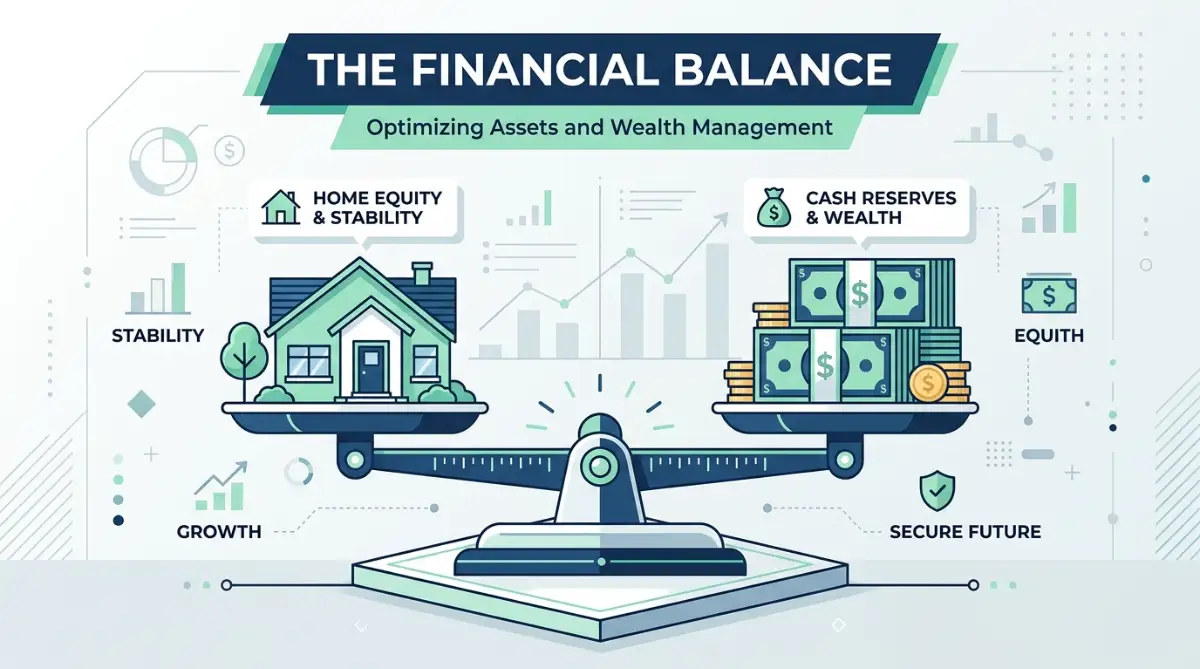
You must build a dedicated reserve account for every single rental property in your portfolio. This cash is used to cover regular maintenance, emergency repairs, and occasional tenant vacancy periods.
If a property suddenly needs a new roof or a new heating system, you should not have to pay for it out of your personal pocket. To build this essential cash reserve, you should learn how to build an emergency fund from scratch when money is already tight. Having this cash shield ready keeps your real estate business running smoothly during difficult months.
- Capital Expenditures (CapEx): Set aside a small percentage of your rent every month to pay for big future repairs like roofs or pipes.
- Vacancy Reserves: Keep at least two to three months of mortgage payments in a separate account to cover empty periods.
- Regular Legal Funding: Maintain a small reserve to cover local license renewals, property taxes, and accounting fees.
To maximize your backup cash reserves, avoid leaving them in a standard, low-interest checking account. Instead, learn why high-yield savings accounts are better than traditional bank accounts to grow your property reserves safely.
This simple strategy ensures that your backup cash continues to grow at a high rate while remaining completely liquid and ready to use. It is a necessary habit that separates highly successful real estate owners from struggling hobbyists.
Review your rental rates and local property tax assessments every six months to make sure your numbers remain accurate. Keeping a close eye on your financial data ensures your property continues to generate strong profits for decades.

The Worst Pitfalls That Can Ruin Your Real Estate Investing Career
Pitfall 1: Falling in Love with a Property Instead of the Financial Math
One of the most common errors made by new investors is buying a rental home based on personal emotion. They walk into a property and fall in love with the paint colors, the kitchen cabinets, or the view from the deck.
They start imagining themselves living in the home instead of looking at it as a cold business asset. This emotional connection often leads to overpaying for properties that do not make financial sense.
Real estate investing is a game of pure mathematics. If the monthly rent does not easily cover your mortgage, taxes, insurance, and maintenance, you must walk away from the deal.
Keep your personal tastes completely separate from your business decisions. Focus strictly on the numbers, the neighborhood demand, and the cash yield to keep your finances safe.
Pitfall 2: Underestimating the True Cost of Maintenance and Empty Periods
Many beginners calculate their potential profit by simply subtracting their mortgage payment from their monthly rental income. They assume that their property will be fully occupied every single day of the year and will never need a plumber.
This unrealistic view can lead to serious financial trouble when reality inevitably strikes. Appliances break, roofs wear out, and tenants eventually move on to new homes.
If you do not budget for these expenses, a single major repair can wipe out your entire year of rental profits. Professional investors always assume a certain percentage of vacancy and repair costs in their monthly math.
Always set aside a portion of your monthly rent into a separate account to cover these inevitable events. This disciplined habit ensures that a sudden plumbing emergency remains a simple task rather than a financial disaster.
Pitfall 3: Buying Properties in High-Crime Neighborhoods for Cheap Prices
It is very common for beginners to get excited when they see homes for sale at incredibly low prices in struggling neighborhoods. They assume they can buy these cheap properties, find tenants quickly, and collect massive rental yields.
However, these low-cost areas are often cheap for a reason. High-crime neighborhoods usually come with extremely high tenant turnover, frequent property damage, and high eviction rates.
You will spend your time chasing down late rent payments, repairing damaged walls, and dealing with expensive legal processes. The constant stress and high maintenance costs will quickly destroy any potential profits you hoped to make.
Instead of chasing the cheapest price tag, focus on solid, middle-class neighborhoods with good schools and low crime rates. These stable areas attract reliable tenants who pay their rent on time and respect your property.
Pitfall 4: Managing Properties Personally from a Distance to Save on Fees
Some out-of-state investors try to save money by acting as their own landlord from hundreds of miles away. They think they can easily manage tenant complaints, coordinate repairs, and find new renters over the phone.
While this might work for a few weeks, it quickly becomes an exhausting and stressful nightmare when a major issue arises. If a pipe bursts in the middle of the night, you cannot easily drive down to fix it.
Trying to manage a property from a distance without local help often leads to delayed repairs, unhappy tenants, and longer vacancy periods. It can also cause you to miss local housing violations, resulting in expensive fines from the city.
Pay a professional property manager to handle the daily operations of your investment property. Their fee is a necessary cost of doing business, allowing you to enjoy truly passive wealth while focusing on your day job.
Pitfall 5: Failing to Run a Thorough Background Check on Potential Renters
When a property sits empty, it is easy to feel rushed to find a tenant as quickly as possible to stop the monthly financial drain. Beginners often sign a lease with the first person who shows interest without doing any research.
This impatience is a massive mistake that can cost you thousands of dollars in future legal fees and property damage. A bad tenant can stop paying rent immediately, refuse to leave, and destroy your property from the inside out.
Always run a complete background check on every single adult who applies to live in your property. Verify their current income, check their credit history, and call their previous landlords to ask about their behavior.
Taking a few extra days to find a highly qualified, responsible tenant will save you from months of legal headaches. A reliable tenant is the absolute foundation of a successful, stress-free real estate investment.
Taking Your First Confident Steps Toward Real Estate Ownership
Building a successful real estate portfolio in the best US cities is a highly rewarding journey. It is a proven path to securing your family's financial future, building passive income, and gaining true personal independence.
By studying the local job markets, calculating your cash flow ratios, and avoiding the common pitfalls, you can build a highly profitable business. You can step forward with the confidence of an expert, knowing that your hard-earned money is protected by a solid strategy.
Do not let the fear of complex markets hold you back from taking your first step. Start by opening up a map, picking a few target cities, and researching their local population trends this week.
Every successful investor started exactly where you are today. With consistent research, careful planning, and a disciplined approach, you can turn your real estate dreams into a secure and highly profitable reality.
Disclaimer:
The information provided in this article is for educational and informational purposes only. Real estate investing involves significant financial risk, and market conditions can change rapidly. We are not licensed financial advisors, attorneys, or certified real estate brokers. Always perform your own deep research, consult with local professionals, and check local laws before making any financial investments or property purchases. This website does not guarantee any specific financial returns or investment outcomes.