
The Hidden Struggle of Living in the Financial Middle Ground
Having a fair credit score is a unique kind of financial limbo. You are not dealing with completely ruined credit, but you also do not have the golden key to the best interest rates. Every time you apply for a loan, you might feel a knot in your stomach, wondering if you will be rejected or charged an insanely high rate.
This silent struggle happens in households all over the country. You might need money for a sudden car repair, a medical bill, or to consolidate high-interest credit card debt. Yet, the mainstream banking system often treats you with suspicion, leaving you feeling stuck and helpless.
Why Finding Honest Financial Help Feels Almost Impossible
When you try to search for options, the search results do not always help. Instead, you are met with a wall of confusing terminology and traps. Here is why the search for a fair credit loan is so frustrating:
- The Flood of Predatory Offers: Many online searches lead to high-interest payday lenders disguised as helpful personal loan providers. These lenders try to trap you in cycles of high-interest debt that are hard to escape.
- Confusing Fine Print: Lenders often hide upfront costs, like origination fees, deep inside their agreements. You might think you are getting a great deal, only to find out you are getting less cash than you expected.
- Rejection Without Explanation: Automated lending systems often decline applications instantly based on a single number. They fail to look at your steady income, your career growth, or your personal story.
- The Fear of Credit Damage: Every time you submit a formal application, you risk hurting your score even more. This makes many people too scared to shop around for a better deal.
How Financial Stress Quietly Steals Your Peace of Mind
This constant worry does more than just affect your bank account. It can slowly wear away your confidence and keep you awake at night.
- Constant Worry and Anxiety: Waiting for a loan approval decision can make you feel helpless. You spend hours checking your email, hoping for a positive update while your bills keep piling up.
- Feeling Judged by a Three-Digit Number: It is deeply discouraging when a single score determines your financial worth. You know you are responsible, but a past mistake continues to hold you back.
- Strained Personal Relationships: Financial stress rarely stays quiet. It often causes tension at home, making simple conversations about money feel like a battlefield.

Your Practical Blueprint to Navigating the Personal Loan Market
We understand how tiring this journey can be. That is why we wrote this guide to show you that you have real, safe options. Let us look at how you can take back control of your finances and secure the funding you need.
Understanding the True Meaning of Your Credit Score
Before we look at lenders, we need to know exactly where you stand. In the credit industry, a fair credit score usually falls between 580 and 669 on the FICO scale.
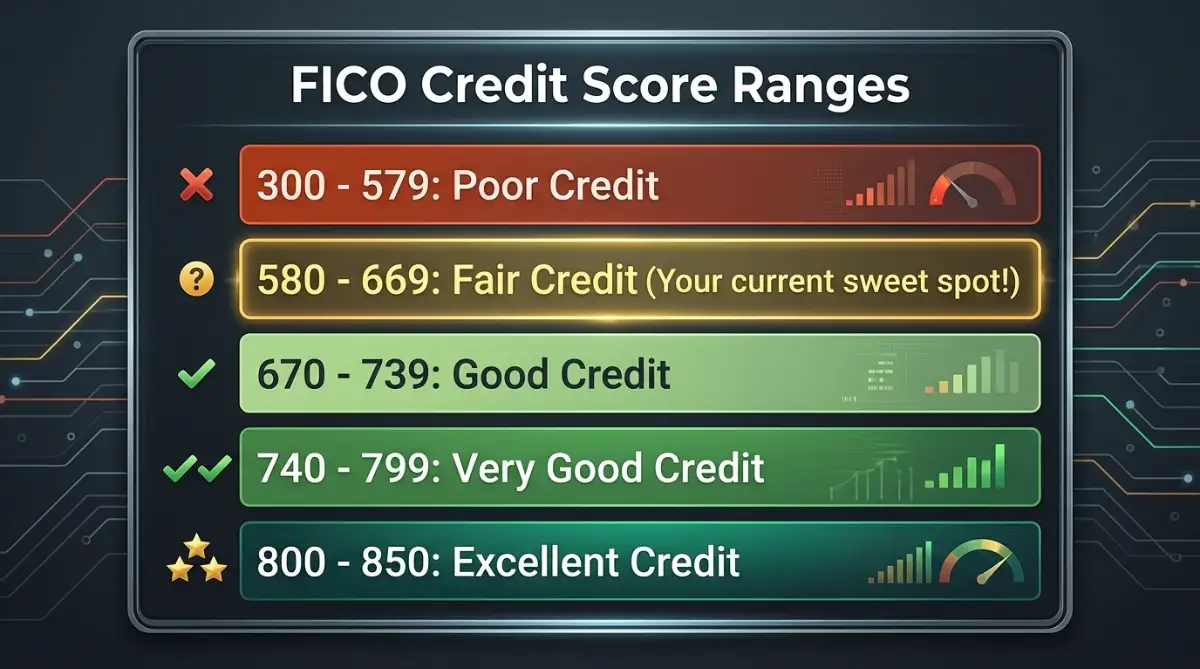
+-------------------------------------------------------------+ | FICO Credit Score Ranges | +-------------------------------------------------------------+ | 300 - 579: Poor Credit | | 580 - 669: Fair Credit (Your current sweet spot!) | | 670 - 739: Good Credit | | 740 - 799: Very Good Credit | | 800 - 850: Excellent Credit | +-------------------------------------------------------------+
If you fall into this range, you are actually in a great position to show lenders that you are actively moving upward. Lenders see that you have a history of paying bills, even if you have hit a few bumps along the way[7]. This score means you are a reasonable risk, and many modern lenders are eager to work with you.
Step 1: Discovering Lenders Who Look Beyond Just a Simple Score
The traditional big banks might say no, but online lenders and community organizations are changing the game. They use smart technology to look at your whole financial life, not just your FICO score.
The Rise of Fintech Lenders
Some modern financial technology platforms look at your education and your employment history. They want to know if you have a stable job and a steady income, which shows you can afford the monthly payments. For example, platforms like Upstart or Upgrade are famous for approving borrowers who have fair credit profiles. They look at the big picture to give you a fair chance.
Why Credit Unions Are Your Best Secret Weapon
If you want a more personal touch, you should look into local credit unions. Credit unions are member-owned, non-profit institutions. Because they do not answer to Wall Street investors, they can offer lower interest rates and more flexible terms. They will often sit down with you, listen to your story, and help you find a loan that fits your budget.
Online Lenders Built for Fair Credit
There are several reputable online lenders that focus on borrowers with scores in the 600s. These lenders offer quick online applications, clear terms, and fast funding times. They make it easy to see what you qualify for without leaving your home.
Step 2: How to Master the Pre-Qualification Process Without Hurting Your Score
One of the biggest mistakes borrowers make is submitting multiple formal applications at once. This can hurt your score and make you look desperate to lenders. Instead, you must learn to use the pre-qualification process.
The Difference Between Soft and Hard Credit Pulls
When you pre-qualify for a personal loan, the lender performs a soft credit check. This is a basic review of your credit that does not affect your score at all. A hard credit check only happens after you accept an offer and officially apply.
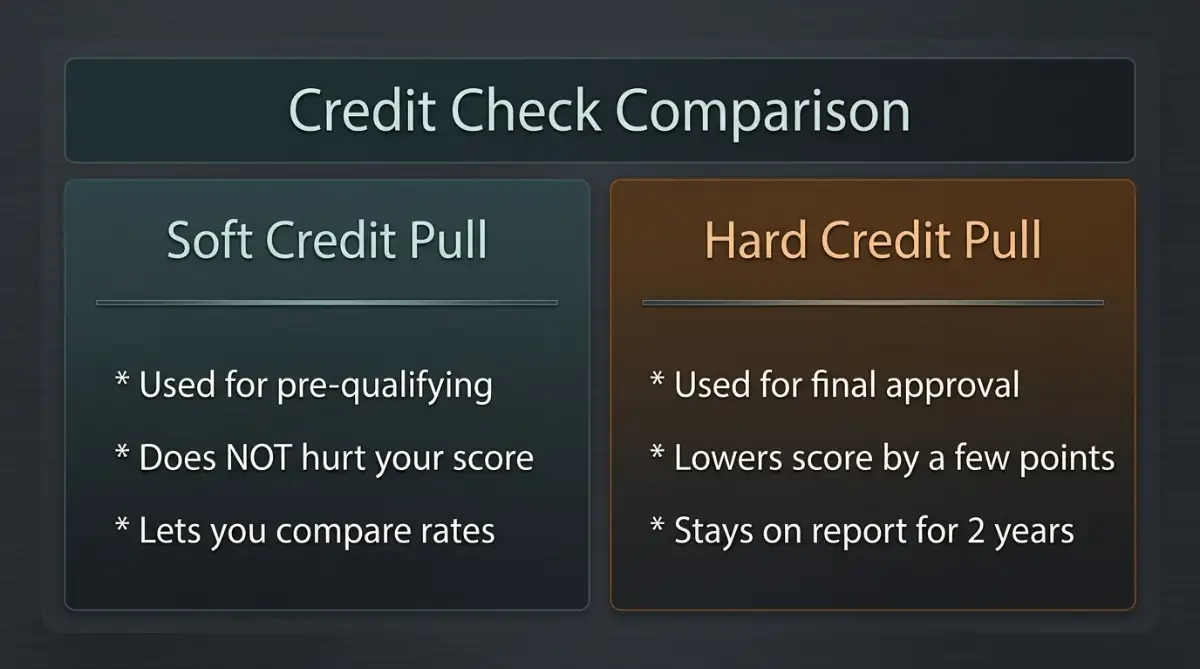
+---------------------------------------------------------------+ | Credit Check Comparison | +---------------------------------------------------------------+ | Soft Credit Pull | Hard Credit Pull | | ------------------------- | ----------------------------- | | * Used for pre-qualifying | * Used for final approval | | * Does NOT hurt your score | * Lowers score by a few points | | * Lets you compare rates | * Stays on report for 2 years | +---------------------------------------------------------------+
Always look for the words "check your rate without affecting your credit score" on a lender's website. If a lender does not offer this option, you should look elsewhere.
How to Compare Offers Like an Expert
Once you gather three or four pre-qualification offers, do not just look at the monthly payment. You need to look at the Annual Percentage Rate (APR). The APR includes both the interest rate and any fees the lender charges, giving you the true cost of the loan.
You should also look at the repayment term length. A longer term will give you lower monthly payments, but you will pay more total interest over time. A shorter term saves you money on interest, but the monthly payments will be higher.
Step 3: Lowering Your Borrowing Costs with Smart Strategies
You do not have to accept the first high interest rate you are offered. There are simple, proven ways to make yourself look like a lower-risk borrower.
Improve Your Debt-to-Income (DTI) Ratio
Lenders look closely at your debt-to-income ratio, which is the percentage of your monthly income that goes toward paying debts. You can calculate your DTI ratio with a simple formula:
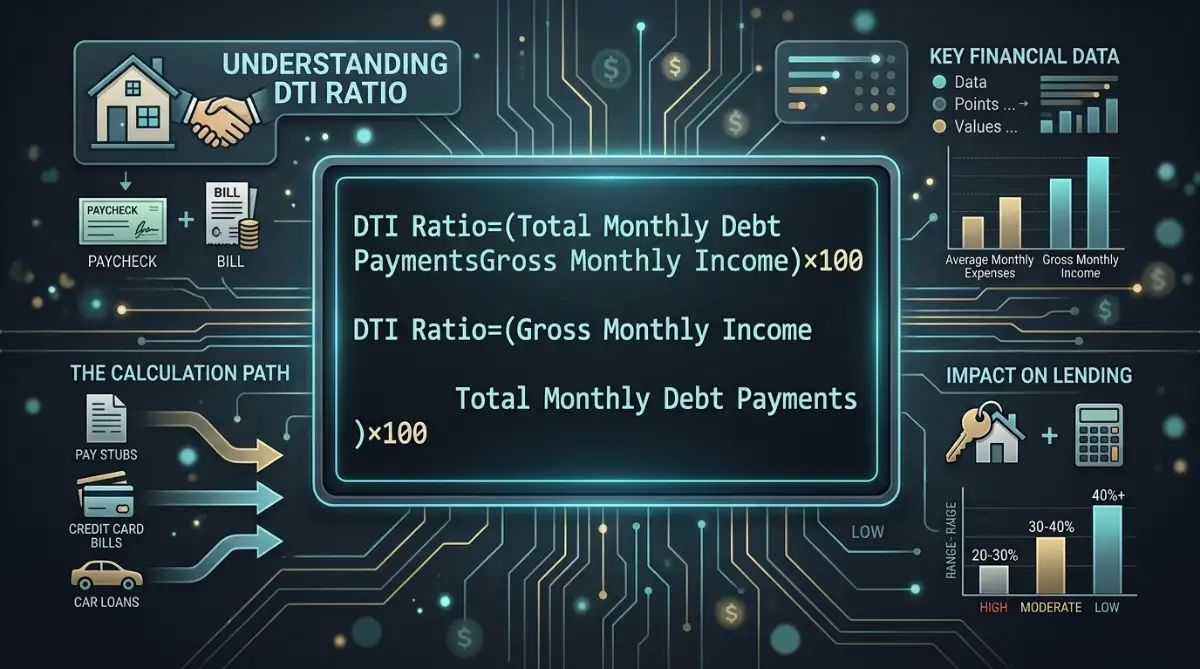
DTI Ratio=(Total Monthly Debt PaymentsGross Monthly Income)ร100 DTI Ratio=(Gross Monthly Income Total Monthly Debt Payments โ)ร100
If your DTI ratio is above 40%, lenders might worry that you are stretched too thin. You can lower this ratio by paying down a small credit card balance or by finding ways to boost your income. Even a small drop in your DTI ratio can help you qualify for a much better interest rate.
Consider a Co-signer or Co-borrower
If your credit score is on the lower end of the fair range, adding a co-signer with good credit can make a massive difference. A co-signer promises to pay back the loan if you cannot. This gives the lender extra peace of mind, which often results in instant approval and a much lower interest rate. Just remember that if you miss a payment, it will hurt both your credit score and your co-signer's score.
Look Into Secured Loan Options
Most personal loans are unsecured, meaning they do not require any collateral. However, if you are struggling to get approved, you might want to look into a secured loan. You can secure the loan using a savings account, a certificate of deposit (CD), or even your car's title. Because the lender can take the asset if you fail to pay, they are much more likely to offer you a lower rate.
Spotting Hidden Traps and Dangerous Loan Offers
As you look for a loan, you must protect yourself from dishonest lenders. Knowing what to watch out for can save you from a financial disaster.
Avoid the Payday Loan Trap
Payday loans are short-term, high-cost loans that you must pay back on your next payday. These loans often carry APRs as high as 400%. They are designed to keep you trapped in debt, forcing you to take out new loans to pay off the old ones. Always stick to structured, personal installment loans with fixed monthly payments and clear terms.
Watch Out for High Origination Fees
Many lenders who work with fair credit borrowers charge an origination fee. This fee is usually a percentage of your total loan amount, ranging from 1% to 10%.
For example, if you borrow $10,000 with a 5% origination fee, the lender will deduct $500 before sending you the money. You will only receive $9,500 in your bank account, but you will still have to pay back the full $10,000 plus interest. Always ask if the fee is deducted from the loan balance or added to it.
+---------------------------------------------------------------+ | Example of an Origination Fee Impact | +---------------------------------------------------------------+ | Requested Loan Amount: $10,000 | | Origination Fee (5%): -$500 | | Actual Cash Sent to Your Bank: $9,500 | | Total Amount You Must Repay: $10,000 + Interest | +---------------------------------------------------------------+
Beware of Guarantees
No honest lender can guarantee that you will be approved before reviewing your financial profile. If an online lender promises 100% guaranteed approval without checking your credit or income, stay away. This is a major warning sign of a scam designed to steal your personal information or charge you upfront fees.
Making Your Final Choice and Managing the Loan Safely
Once you find the right loan, the journey does not stop there. You must use this opportunity to build a stronger financial future.
Build Your Credit with Every On-Time Payment
A personal loan is a fantastic tool to improve your credit score. Your payment history makes up 35% of your FICO score. By making every single monthly payment on time, you show credit bureaus that you are highly responsible. Over a few months, you will likely see your score climb out of the fair range and into the good range.
Set Up Autopay for Easy Discounts
Almost every personal lender offers a small interest rate discount if you sign up for automatic payments. This discount is usually around 0.25%, which might seem small but adds up over the years. Even better, autopay ensures you never miss a payment deadline, protecting your credit score from accidental late fees.
Create a Budget to Keep Yourself on Track
Before the loan money arrives in your bank account, make a clear plan for how you will use it. If you are consolidating debt, pay off those high-interest credit cards immediately. Do not leave the extra cash sitting in your checking account where you might be tempted to spend it on unnecessary things. Treat this loan as a fresh start for your financial life.
Real-Life Scenario: How Sarah Saved Thousands
To see how these steps work in the real world, let us look at Sarah's story. Sarah had a credit score of 620 and was carrying $8,000 in credit card debt with a 24% interest rate. She felt overwhelmed by the multiple monthly payments and high interest charges.
Instead of applying randomly, Sarah used the pre-qualification process with three different online lenders. She found an offer for a $8,000 personal loan with a 14% APR and a three-year term.
By using the loan to pay off her credit cards, Sarah simplified her finances into one single monthly payment. She also saved over $1,500 in interest charges and lowered her credit utilization ratio. Within a year of making on-time payments, Sarah's credit score rose to 680, moving her out of the fair credit trap forever.
Final Thoughts on Your Financial Journey
Finding a personal loan when you have fair credit does require some extra effort, but it is entirely possible. By taking your time, comparing rates, and understanding the terms, you can find an affordable option that fits your life.
Remember that your current credit score is just a temporary number, not a permanent reflection of your financial ability. With the right tools and a careful approach, you can secure the funds you need today while building a brighter, more secure financial tomorrow.
Now that we have covered the basics of identifying your credit tier and researching lenders, we can move on to advanced strategies. Taking control of your personal finances requires a deeper level of planning and action.
By learning these insider tips, you can position yourself as a highly attractive applicant to lenders. This helps you get better terms, lower fees, and faster approval times.
Let us explore how you can take these advanced steps to make the system work for you.
Advanced Strategies for Mastering Fair Credit Borrowing
To get the most out of your borrowing experience, you need to think like a financial expert. Understanding the mechanics of lending allows you to make moves that protect your bank account.
These next steps are designed to put the power back in your hands.
Step 4: Optimizing Your Debt Structure Before Applying
Before you click the submit button on any loan application, you must prepare your financial profile. Lenders do not just look at your final credit score. They look closely at your current monthly debt payments compared to your income.
One of the best ways to prepare is by understanding how personal loans work on a structural level. You can learn more about this by understanding how personal loans work from top financial experts. This knowledge helps you see exactly what lenders look for when they review your file.
You can also prepare by reducing your credit utilization ratio. This is the amount of credit you are using compared to your total credit limits. If you can pay down even a small portion of your credit cards, your score can jump up quickly.
Try to keep your credit utilization below thirty percent on each card. If you can get it below ten percent, you will look even better to underwriting teams. This simple move shows lenders that you are not relying too heavily on borrowed money.
It is also wise to check guidelines from federal financial protection agencies like the Consumer Financial Protection Bureau. They offer excellent resources on your rights as a borrower and how to handle debts safely.
Another smart move is to clean up any negative marks on your credit profile. If you have active errors on your report, you should work to fix them immediately. You can raise your credit rating quickly by fixing report errors to ensure your score is as high as possible before applying.
+-------------------------------------------------------------+ | Ideal Credit Utilization Targets | +-------------------------------------------------------------+ | Over 50%: High Risk (Avoid this before applying) | | 30% to 50%: Moderate Risk | | Under 30%: Good Zone (Highly recommended) | | Under 10%: Excellent Zone (Best rates possible) | +-------------------------------------------------------------+
Step 5: Leveraging the Right Loan Term to Your Advantage
Choosing the length of your loan is a balancing act between your monthly budget and the total cost of borrowing. Many fair credit borrowers make the mistake of only looking at the monthly payment.
If you choose a five-year term, your monthly payment will be low and easy to manage. However, you will pay a massive amount of interest over those five years. A three-year term will have a higher monthly payment, but it will save you a lot of money in total interest.
Let us look at a quick comparison to see how this works in real life. Imagine you borrow ten thousand dollars at a fifteen percent interest rate.
+---------------------------------------------------------------+ | How Loan Terms Affect Your Wallet (Example) | +---------------------------------------------------------------+ | Loan Term: 36 Months | 60 Months | | Monthly Payment: $347 | $238 | | Total Interest Paid: $2,480 | $4,272 | | Difference in Interest: $1,792 Saved! | +---------------------------------------------------------------+
As you can see, choosing the shorter term saves you nearly eighteen hundred dollars. If your budget allows, always choose the shortest term you can comfortably afford. This keeps your total borrowing costs low and helps you get out of debt much faster.
You should also look for a loan that does not charge a prepayment penalty. This allows you to pay extra money toward your principal balance whenever you have spare cash. By making extra payments, you shorten your loan term and save even more money on interest.
Maintaining Long-Term Financial Health and Boosting Your Score
Once you receive your loan, your main focus should be on building a strong financial foundation. A personal loan is a powerful tool to reshape your credit history if you use it correctly.
One way to do this is by adding variety to your credit profile, which is known as your credit mix. Lenders like to see that you can handle different types of debt, such as credit cards and installment loans. By successfully managing a personal loan, you show that you are a well-rounded borrower.
To make sure you never miss a payment, create a dedicated payment calendar. You can link your loan payments to your payday so the money leaves your account immediately. This prevents you from accidentally spending the loan payment money on other things.
If you are using the loan to consolidate credit card debt, do not close your old credit card accounts. Keeping those accounts open helps your credit history length and keeps your total credit limit high. Just make sure you do not start spending on those cards again.
If you have other smaller debts that you could not include in the loan, do not panic. You can use the debt snowball method to build momentum and wipe out those remaining balances one by one. This strategy helps you stay motivated by focusing on quick wins.

Major Pitfalls to Avoid on Your Borrowing Journey
When you are looking for a loan with fair credit, you are in a vulnerable position. Many companies try to take advantage of your situation with confusing offers and hidden fees.
Being aware of these traps is the best way to protect your hard-earned money. Let us examine the five most common mistakes borrowers make and how you can avoid them.
Mistake 1: Accepting the First Offer Without Shopping Around
When you need money quickly, it is tempting to accept the very first offer you receive. You might feel relieved that a lender said yes, so you sign the paperwork immediately.
This mistake can cost you thousands of dollars over the life of your loan. Different lenders have completely different ways of calculating risk for fair credit borrowers. One lender might offer you an eighteen percent interest rate, while another might offer you twelve percent for the exact same loan.
To prevent this, give yourself at least a week to check rates with multiple providers. Use the pre-qualification tools we discussed earlier to compare offers side by side. This extra step is one of the easiest ways to save money on your loan.
Mistake 2: Ignoring the Fine Print on Fees and Penalties
A loan offer is much more than just an interest rate and a monthly payment. There are several other fees that can quickly increase the cost of your debt.
Many fair credit lenders charge late payment fees, returned payment fees, and administrative fees. Some even charge a fee just to process your application, regardless of whether you are approved.
Always read the fine print of your loan agreement before signing. Look for a section called the "Truth in Lending Disclosure" which lists every single fee in plain English. If you do not understand a fee, call the lender and ask them to explain it before you agree to anything.
Mistake 3: Borrowing More Money Than You Actually Need
When you apply for a loan, a lender might approve you for a higher amount than you requested. If you asked for five thousand dollars, they might offer you eight thousand dollars.
It is highly tempting to accept the extra money, thinking you can use it for holiday shopping or a weekend trip. However, you must remember that this extra money is not free. You will have to pay interest on every single dollar you borrow.
Taking on more debt than you need makes your monthly payments higher and increases your risk of defaulting. Stick to your original plan and only borrow the exact amount you need to cover your expenses.
Mistake 4: Failing to Address underlying Credit Report Errors
Many people have errors on their credit reports without even knowing it. These errors can include incorrect balances, accounts that do not belong to you, or old negative marks that should have been removed.
If you apply for a loan with these errors on your report, you will likely pay a much higher interest rate. In some cases, these mistakes can lead to an instant rejection.
Always check your credit reports from the three major credit bureaus before applying for a loan. If you find any errors, file a dispute immediately to get them corrected. This simple step can clean up your history and help you qualify for much better rates.
Mistake 5: Using Loans Without a Solid Budget Plan
A personal loan can solve your immediate cash flow problem, but it does not fix bad spending habits. If you use a loan to pay off your credit cards and then run those cards up again, you will end up in a much worse position.
You will have to pay both the new credit card bills and the monthly personal loan payment. This double-debt situation is a fast track to financial trouble.
Before the loan funds arrive, you must establish a realistic budget to manage your money. You need to learn how to stop living paycheck to paycheck so you can keep your spending under control. A solid budget ensures that you use your loan as a stepping stone to safety, rather than a slide into more debt.
+---------------------------------------------------------------+ | The Dangerous Cycle of Double Debt | +---------------------------------------------------------------+ | Step 1: You take out a loan to pay off credit cards. | | Step 2: Your credit cards now show a zero balance. | | Step 3: You continue spending without a budget. | | Step 4: You now have credit card debt AND loan payments. | | Result: Extreme financial stress and potential default. | +---------------------------------------------------------------+
Your Road to Financial Confidence and Lasting Success
Securing a personal loan with a fair credit score is a major milestone. It shows that you are actively taking charge of your financial situation and working toward a better future.
By using the steps in this guide, you can avoid common traps, save money on interest, and rebuild your credit rating. Remember to focus on finding lenders who look at your complete financial story, rather than just your credit score.
Always compare multiple offers using the pre-qualification process to protect your credit score from unnecessary hard inquiries. Keep your borrowing amount to a minimum and choose a repayment term that fits comfortably within your monthly budget.
As you begin making your on-time payments, you will watch your credit score grow stronger month after month. This loan is not just a way to cover an emergency expense. It is an opportunity to move into the good and excellent credit tiers, opening doors to even better opportunities in the future.
To make sure you do not fall back into stressful situations, start planning for unexpected costs today. You can build your emergency savings from scratch even if your budget feels very tight right now. Having a small savings cushion ensures you will not need to borrow money the next time an emergency happens.
We believe in your ability to take control of your financial journey. Use these tips, stick to your budget, and build the bright financial future you deserve