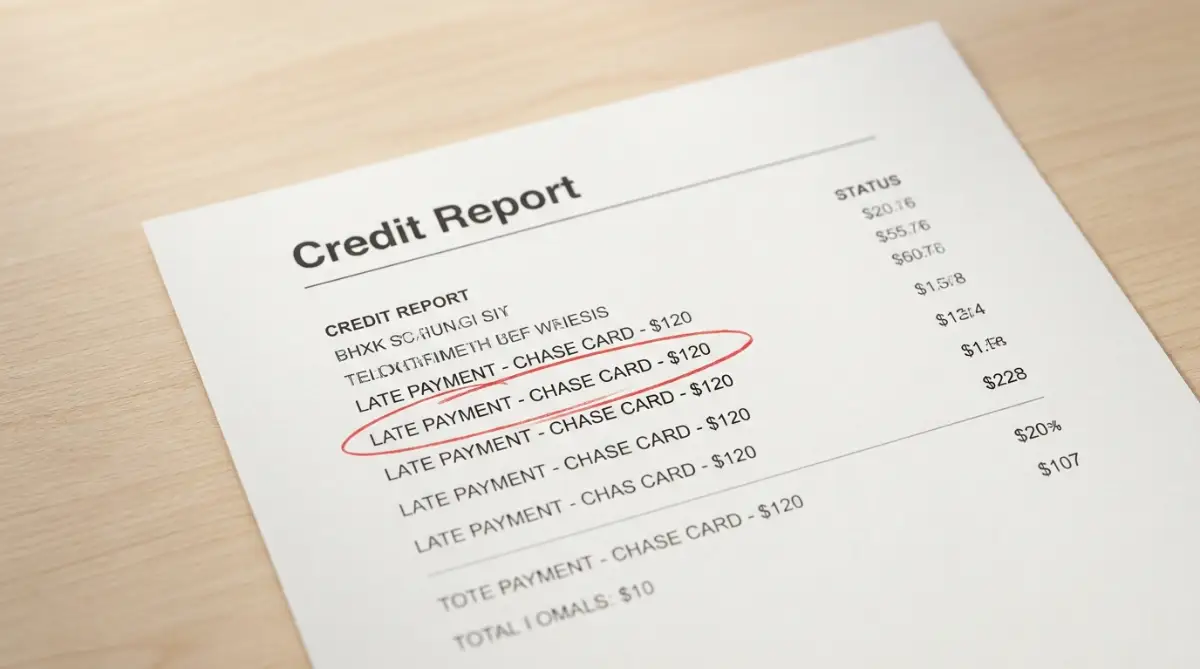
Why One Small Mistake on Your Credit Report Can Wreck So Much
You apply for an apartment, a car loan, or a new credit card. Then the rejection comes back, and the reason makes no sense to you at all.
You pull your credit report and there it is. A late payment you never missed. An account that isn't even yours. A balance that's wrong by hundreds of dollars.
This happens far more often than people realize. And the worst part is, most people never even check, so the error just sits there quietly hurting them.
Why So Many People Never Catch These Errors
Credit reports are long, confusing, and full of codes that don't explain themselves.
- Most people never pull their own report, so a mistake can sit there for years
- The three credit bureaus don't always have matching information, so an error might show on one report but not the others
- People assume the bureau is always right, so they don't think to question what they see
- Account names on reports are often shortened or unclear, making it hard to even recognize what debt is being listed
- Many people confuse "checking your score" with actually reviewing the full report line by line, which are two very different things
This mix of confusion and assumption is exactly why so many real errors go unnoticed and unfixed.
How a Damaged Score Quietly Affects Your Confidence and Plans
A lower score because of someone else's mistake doesn't just cost you money. It costs you peace of mind.
- It makes you dread applying for anything that requires a credit check
- It creates a constant background worry about being rejected again
- It chips away at your confidence, even when the problem was never your fault to begin with
- It can delay major life plans, like renting a new place or buying a car
- It leaves people feeling powerless, like the system is working against them with no way to push back
None of this is really about you being careless with money. It's about a paperwork mistake that nobody bothered to fix.
What an Error Like This Actually Costs You Over Time
Think about a mortgage or auto loan. A lower score because of one wrong entry can bump your interest rate up by a noticeable amount.
Real-life example: On a $20,000 car loan, even a small jump in your interest rate from a damaged score can add over a thousand dollars in extra interest across the loan term. That's real money lost to a mistake that wasn't even yours.
It isn't only loans either. Some landlords, insurance companies, and even certain employers check credit reports as part of their decision process.
So one unresolved error can quietly follow you into housing, transportation, and sometimes even job opportunities. Fixing it isn't just a financial chore. It's protecting doors you don't want closed by mistake.
What It Actually Means to Dispute an Error on Your Credit Report
Disputing an error simply means formally telling a credit bureau, "This information is wrong, please investigate and fix it." Under the Fair Credit Reporting Act (FCRA), bureaus are legally required to investigate most disputes within 30 days.
This isn't a gray area or a favor they're doing you. It's your legal right.
Step 1: Pull Your Full Credit Report From All Three Bureaus
Your score comes from one number, but it's built from three separate reports: Equifax, Experian, and TransUnion.
These three bureaus don't always share the exact same information. An error might show up on one report and not the others, so checking only one leaves you blind to the rest.
Request your free reports directly and read through every single account listed. Look closely at account names, balances, payment history, and dates opened.
Practical tip: Treat this like proofreading an important document. Go line by line instead of skimming, because that's exactly how small but costly errors get missed.
Step 2: Spot the Error and Build Your Evidence
Once you find something wrong, don't just trust your memory. Gather actual proof.
This could be a bank statement showing a payment was made on time, a closed-account letter from a lender, or a police report if the issue involves identity theft.
Real-life example: Imagine a credit card you paid off and closed two years ago is still showing up as open with a balance. A copy of your old payoff confirmation email becomes your strongest piece of evidence.
The clearer and more specific your evidence, the faster and smoother your dispute usually moves through the process.
Step 3: File Your Dispute the Right Way
You can typically dispute directly through each bureau's official online dispute system, or by sending a written letter by mail.
A written letter often works well because it creates a paper trail. Clearly state which item is wrong, why it's wrong, and attach copies of your evidence, never the originals.
It also helps to send a copy of your dispute to the original creditor or lender, since they are required to investigate alongside the bureau.
Once submitted, the bureau generally has 30 days to investigate and respond. If the error is confirmed, it must be corrected or removed from your report.
Why This Process Actually Works, Backed by How Credit Reporting Rules Are Built
The Fair Credit Reporting Act exists specifically to give consumers the power to challenge inaccurate information, instead of being stuck with whatever a report says.
Lenders and bureaus are required to follow strict timelines once a dispute is filed. That structure is exactly why disputes that are clear, specific, and backed with evidence tend to move faster than vague complaints.
Think of it like returning a faulty product to a store. A vague complaint like "this doesn't work" gets brushed aside. A specific one like "this charged me twice on this exact date, here's my receipt" gets resolved fast.
Your dispute works the same way. Specific evidence turns a slow process into a quick one.
This is also why patience matters here. The fix isn't always instant, but once a confirmed error is removed, the score increase can show up surprisingly fast, sometimes within a single billing cycle.
Two Pro-Level Moves That Speed Up Your Score Recovery
Filing one dispute is good. Knowing these next two moves is what actually separates a slow fix from a fast one.
Escalate to the Furnisher, Not Just the Bureau
Most people only send their dispute to the credit bureau and stop there. That's only half the process.
The bureau isn't the one who created the wrong entry in the first place. The bank, lender, or collection agency that reported it, known as the furnisher, is just as responsible for fixing it.
Send a copy of your dispute letter directly to that furnisher too, along with your evidence. This puts pressure on both sides at the same time, instead of waiting on just one of them.
Real-life example: If a collection agency wrongly reported a paid-off medical bill as unpaid, disputing only with the bureau might get a slow or unclear response. Disputing with the collection agency directly often gets the correction moving faster, since they're the source of the mistake.
Use a Rapid Rescore If You're on a Time Crunch
If you're in the middle of buying a home or a car and you need your score fixed fast, ask your loan officer about a rapid rescore.
This is a service lenders can request through the bureaus once your dispute documentation is ready. Instead of waiting the full 30 days, it can sometimes update your score in just a few business days.
It isn't free, and it isn't available to everyone, but if timing matters for a loan you're trying to close, it's worth simply asking your lender directly.
Add a Dispute Statement If the Bureau Won't Budge
Sometimes a furnisher insists the information is correct, even when you know it isn't. You still have an option here.
You can request that the bureau attach a statement of dispute to your file, explaining your side of the story in your own words. Anyone who pulls your report afterward will see that explanation alongside the entry.
This won't raise your score by itself, but it gives context to any lender reviewing your file, and it keeps a paper trail of your disagreement on record.
How to Keep Your Score High After the Fix
Getting an error removed feels like a finish line, but protecting your score afterward is its own habit.
Set a recurring reminder, maybe every four months, to pull one of your three reports. Since you get free access regularly, you can spread your checks across the year instead of using them all at once.
Practical tip: Treat this the same way you'd treat checking a smoke detector. You don't wait for something to go wrong before you check it again.
Pay close attention right after closing any account, applying for new credit, or dealing with a debt collector, since these are the moments new errors are most likely to slip in.
The goal isn't to obsess over your score every single day. It's to build a light, simple habit of checking in, so a future mistake gets caught in weeks instead of years.
The Most Common Ways People Slow Down Their Own Dispute
A dispute can fail or drag on for reasons that have nothing to do with whether you're right. Here are the mistakes that cause the most delays.
Mistake 1: Disputing Too Many Things at Once Without Detail
Sending one long, vague letter that says "everything on here looks wrong" usually backfires.
The cost: Bureaus can mark unclear or unsupported disputes as frivolous, which lets them close the case without a full investigation. Being specific about one or two clear errors works far better than a broad complaint.
Mistake 2: Sending Original Documents Instead of Copies
Mailing your only copy of a bank statement or payoff letter is a risk you don't need to take.
The cost: If the document gets lost in processing, you have no proof left and have to start the entire search over again. Always send copies and keep your originals safe at home.
Mistake 3: Disputing Only the Bureau and Skipping the Furnisher
As covered above, this is one of the most common shortcuts people take.
The cost: Skipping the furnisher often means a slower, less thorough investigation, since the bureau still has to reach out to that company anyway, which adds extra time to your timeline.
Mistake 4: Closing the Disputed Account Too Early
Closing an account in the middle of a dispute might feel like progress, but it can actually complicate things.
The cost: Closing accounts can affect your overall credit utilization and history length, sometimes lowering your score for unrelated reasons right while you're trying to fix a different problem.
Mistake 5: Not Following Up After the 30-Day Window
Submitting a dispute and then forgetting about it is a common, costly habit.
The cost: If the bureau's response is unclear or the correction wasn't fully applied, you might never know unless you actively follow up. Always request written confirmation once the investigation is finished.
Your Credit Report Mistake Doesn't Have to Define Your Score
A wrong entry on your credit file isn't a reflection of how responsible you are with money. It's a paperwork problem, and paperwork problems have clear, fixable solutions.
You now know how to pull your full report, spot a real error, build solid evidence, and file a dispute that actually gets attention from both the bureau and the furnisher. You also know the small moves that speed things up and the mistakes that slow people down.
This isn't something you need to feel intimidated by. It's a process built specifically so you can correct your own record, without needing a lawyer or a credit repair company.
Pull one of your three reports today. Read it line by line, just once.
That single hour of checking is often the moment people discover the mistake that's been quietly holding their score back.