The Silent Battle: When Your Bank Account Hits Zero Before Your Next Paycheck
Have you ever sat in your car outside the grocery store, staring at your bank app with your heart racing?
You run the mental math three times, hoping you have enough to pay for milk, eggs, and bread. The fear of having your card declined is a heavy weight that sits on your chest every single week.
Living paycheck to paycheck feels like running on a treadmill that keeps getting faster, but you never actually move forward.
I still remember sitting on my kitchen floor three years ago, staring at a bank balance of just $3.12 with four days left until payday. My stomach was in knots because I had no idea how I was going to buy groceries or put gas in my car. That rock-bottom moment forced me to throw out standard money advice and build a simple system that actually works when cash is tight.
Your hard-earned money arrives on Friday, and by Monday, it has already evaporated into rent, utilities, and debt.
You are left with a tiny handful of dollars to survive the next eleven days, wondering how you will make it.
This constant financial scramble is not a personal failure, even though it feels like one when you look at your empty savings account.
It is a cycle of survival that millions of hard-working people go through every single day.
- The "Save First" advice does not work: Standard financial gurus tell you to save twenty percent of your income immediately before paying anything else. But when your basic rent and bills consume ninety-five percent of your pay, trying to save first leaves you with no food on your plate.
- Static templates ignore your timing: Most online budget spreadsheets plan for a whole month at one time. They assume you have a big pile of cash sitting in your account on day one, completely ignoring the reality of when your actual paychecks land.
- Information overload causes paralysis: There are thousands of apps and systems promising to fix your money problems in seconds. These complex tools often make you feel more confused, leading to frustration and eventually giving up entirely.
- Hidden fees and micro-transactions drain you: Small subscriptions and bank fees quietly eat away at your balance without you noticing. By the time you realize they exist, your monthly budget plan is already ruined.
- The endless fight-or-flight response: Living with no money buffer keeps your nervous system in a state of high alarm. Every text message from your landlord or email from the electric company feels like an absolute emergency.
- Shame and social isolation: You start turning down dinners with friends and family events because you cannot afford a simple plate of food. This breeds deep feelings of loneliness and makes you feel like you are failing at life.
- Loss of hope for the future: When you are focused entirely on surviving the next twenty-four hours, you stop planning for big dreams. Buying a home, starting a business, or going back to school feels like a fantasy.
- Strained relationships and arguments: Money stress is one of the leading causes of tension between partners. The quiet panic turns into short tempers, leading to disagreements over small everyday purchases.
Believing me, I’ve seen this play out in my own life and in the lives of so many of my readers. When we’re constantly worried about making ends meet, that quiet anxiety naturally bleeds into how we talk to the people we love most. And we’re not just imagining this tension—data from the American Psychological Association's Stress in America study shows that nearly one-third of adults in relationships report money as a major source of conflict. When you're living on the edge, a simple question about a grocery receipt can easily turn into a defensive, exhausting argument. We have to change the pattern, not just for our wallets, but for our peace of mind at home.
The Shift: Why You Need to Throw Away Traditional Monthly Budgets
Traditional budgeting systems assume you have a steady, comfortable buffer of cash sitting in your account at the start of the month. They tell you to divide your income into fixed categories and review it thirty days later.
But when you live paycheck to paycheck, a month is too long of a time horizon. Your actual challenge is not managing thirty days; it is managing the next seven to fourteen days until your employer pays you again.
If your rent is due on the first of the month, but your biggest paycheck does not arrive until the fifteenth, a monthly plan will fail you completely. You do not have a discipline problem; you simply have a timing problem that we need to fix together. As you can see, matching your money plan directly to your pay cycle changes everything. It gives you instant clarity on what you can actually spend right now without risking your utility bills or rent.
Traditional Budgets vs. The Paycheck-to-Paycheck Method
As you can see, matching your money plan directly to your pay cycle changes everything. It gives you instant clarity on what you can actually spend right now without risking your utility bills or rent.
The Step-by-Step Blueprint to Take Control of Your Cash Flow
Step 1: Calculate Your Absolute "Bare-Bones" Survival Number
Before we can make any progress, we need to know exactly what it costs for you to exist for one month.
We call this your survival number, and it represents the absolute minimum amount of money needed to survive.
To find this number, look at your bank statements and write down only your essential expenses. Do not include subscriptions, dining out, or shopping trips in this list.
Your survival list must only contain the four pillars of life: shelter, food, basic utilities, and transportation to work.
Once you add these up, you will have a clear, honest picture of your baseline monthly cost.
Let me tell you about Sarah. She actually reached out to me on this blog a few months ago, feeling completely overwhelmed.
As a single retail assistant making around $2,400 a month after tax, she was constantly terrified of checking her bank balance.
Together, we stripped her budget down to her absolute bare-bones survival number.
When we added up only her rent, basic groceries, gas, and electricity, we realized her core survival number was actually $1,800.
For the first time in years, I watched her take a deep breath. She realized she actually had $600 of "breathing room."
The problem wasn't that she didn't earn enough to survive; it was that her money was silently leaking out in $5 and $10 micro-transactions before she could even pay her main bills.
Once we identified that baseline, she regained complete control.
Step 2: Map Your Bills Directly to Your Paydays on a Calendar
Want to see how to break the cycle and manage your paychecks in real life? Watch this practical video to master your money mindset, and then read on below for my exact step-by-step daily spending blueprint!
The secret to breaking the cycle is aligning your bill due dates with the exact days your income hits your account.
Go find a cheap paper calendar or print a free monthly calendar template from the internet.
Write down your paydays in bright green ink so they stand out instantly. Next, write down every single bill on its exact due date in red ink, along with the minimum amount due.
Now, draw a line from each payday to the bills that must be paid before your next paycheck arrives. This shows you exactly which paycheck is responsible for which bills.
Imagine you get paid on the 1st and the 15th of the month. Your rent of $1,000 is due on the 1st, while your car payment of $300 is due on the 18th.
If you pay the rent entirely from your first paycheck, you are left with almost nothing for two weeks.
By mapping this on a calendar, you can see that you need to save $500 from your mid-month paycheck to help cover the rent due on the first.
This is exactly where the magic happens, and honestly, it’s how I finally stopped losing sleep over my rent.
When you map this out, you might realize that your first paycheck of the month is heavily overloaded with big bills, while your second paycheck is almost completely free.
We call this a "cash flow mismatch."
To solve this, you need to start treating your mid-month paycheck like a helper. I want you to take half of your rent money from that second paycheck and park it in your checking account, pretending it’s already gone.
If you want a structured template to help you master this timing, I highly recommend checking out the Consumer Financial Protection Bureau's Behind on Bills Tool. They offer incredible, free visual calendars and actionable worksheets designed specifically for households working to fix cash flow mismatches.
Here is my honest realization after years of making money mistakes: stop trying to force your life into a monthly budget when your pay arrives every two weeks. My biggest error was looking at my main account balance on payday and assuming I was doing fine. Once I started calculating my actual daily limit after subtracting upcoming bills, my financial panic vanished almost overnight.
Step 3: Calculate Your "Safe-to-Spend" Daily Balance
One of the biggest traps is looking at your bank account balance on Saturday morning and thinking you have plenty of money.
You see $400 and decide to treat yourself to a nice dinner, forgetting that a bill is auto-paying on Tuesday.
To stop this, we must calculate your safe-to-spend balance every time you get paid. Take your current paycheck amount and immediately subtract all the bills that must be paid before your next payday.
Take whatever amount is left and divide it by the number of days until your next payday. That final number is the absolute maximum amount you can spend each day on variable things like groceries, gas, and coffee.
Let’s do some quick, real-world math together so you can see exactly how simple this is. Suppose your bi-weekly paycheck is $1,200. Before your next payday,
you have three bills due: a utility bill for $80, your phone bill for $70, and your internet for $50. That’s a total of $200 in fixed obligations.
Subtract that $200 from your $1,200 paycheck, and you are left with $1,000. Now, let's say you have exactly 14 days until your next paycheck lands.
If we divide that $1,000 by 14 days, we get about $71. That $71 is your absolute maximum daily spending limit for variable things like groceries, gas, and coffee.
If you decide to spend $100 today, you have to consciously squeeze tomorrow's budget down to cover the difference.
I run this exact math on my phone’s scratchpad every single payday, and believe me, it keeps me completely honest.
Think of your bank account like a water canteen during a long desert hike. If you drink half the water on the first mile because you feel thirsty, you will collapse before reaching the end of the trail.
Pacing your spending daily ensures you have enough resources to survive the entire journey to your next payday.
Myth vs. Reality of Spending Buffers
Many personal finance books tell you that you cannot start a budget until you have a massive emergency fund.
This advice is deeply discouraging when you only have ten dollars left in your pocket.
The truth is that even a very small buffer of fifty dollars can save you from a major financial disaster. Let us bust some common myths that keep people stuck in the cycle.
- Myth: You need thousands of dollars to start saving.
- Reality: Starting with just five dollars a week builds the critical habit of saving. Over time, this small habit grows into a real cushion that protects you from minor emergencies.
- Myth: Budgets are meant to restrict your life and take away all your fun.
- Reality: A realistic plan actually gives you permission to spend without guilt. When you know your bills are covered, you can enjoy your cup of coffee with total peace of mind.
- Myth: You must use complicated apps and sync all your bank accounts.
- Reality: A simple paper notebook and a pencil are often more effective than any paid app. Writing your numbers down by hand connects your brain to your spending in a powerful way.
Step 4: Implement the Cash Envelope System for Slippery Categories
Digital spending is incredibly easy because swiping a plastic card does not feel like spending real money.
Your brain does not register the loss of funds, which leads to accidental overspending on food and shopping.
To fix this, identify your most problematic spending categories, which are usually groceries and dining out.
Go to the bank, withdraw physical cash for those specific categories, and place the money into labeled paper envelopes.
Once the cash in an envelope is gone, you cannot spend any more money in that category until your next paycheck.
This physical boundary forces you to make conscious, deliberate choices about every single purchase.
Let us say you assign $150 for groceries for the next two weeks. You place three fifty-dollar bills into an envelope labeled "Groceries".
When you go to the store, you leave your credit cards at home and only take that envelope. Seeing the physical cash leave your hand makes you think twice about buying expensive brand-name snacks.
Now, I know what some of you are thinking: "Kamal, I do all my grocery shopping online for pickup, or I pay at gas pumps where cash isn’t practical.
" I get it. We live in a digital world, and carrying physical paper money everywhere isn't always convenient.
If physical cash doesn't work for your lifestyle, we can easily go digital. What I do is use a completely separate, fee-free prepaid debit card (like a digital envelope) solely for my groceries and gas.
Every payday, I transfer my exact variable spending allowance onto that card. Once that card declines at the checkout, I know I've hit my limit for that pay cycle.
It gives you the exact same hard boundary of a paper envelope, without making you carry a pocket full of green paper.
Step 5: Create a "Starter" Emergency Fund of Just Fifty Dollars
The cycle of living paycheck to paycheck is usually broken by unexpected expenses, not daily spending.
A flat tire, a broken tooth, or a school field trip fee can instantly ruin your entire plan and force you to use credit cards.
To stop this cycle, we must build a tiny wall of protection between your life and the outside world. Your first goal is not a three-month emergency fund; it is a simple starter fund of fifty dollars.
Set up a separate savings account at a completely different bank than your main checking account.
Transfer five or ten dollars from every paycheck into this account and promise yourself you will never touch it unless it is a true emergency.
Now, I know some of you are looking at your screen right now thinking, "Kamal, that sounds nice, but I literally have $1.50 in my account.
Where on earth am I supposed to find $50?" Trust me, I have been there, and I know exactly how heavy that feeling is. But we can get creative here.
I want you to look around your room right now. Do you have an old video game console, a jacket you haven't worn in two years, or an old smartphone sitting in a drawer?
Selling just one unused item on platforms like Facebook Marketplace or eBay can easily net you that first $50 in less than 24 hours.
Alternatively, try a "no-spend weekend" where you commit to spending absolutely zero dollars on anything outside of basic food.
It’s tough, but I promise you, the immense feeling of security when you see that $50 cushion sitting in your account makes every single sacrifice worth it.
Use a bank that does not have an easy mobile app or a debit card attached to your savings account.
If it takes twenty-four hours to transfer the money back to your main account, you will not use it for impulse purchases.
This simple delay helps you build a solid defense against minor setbacks.
Step 6: Eliminate "Invisible Money Leaks" Without Hurting Your Joy
We often think our budget is tight because we do not make enough money, but small, forgotten costs are often the true culprit.
These are the monthly subscriptions, gym memberships, and streaming services we signed up for and forgot about.
Take thirty minutes this weekend to print out your bank statements from the last three months.
Use a bright yellow highlighter to mark every single recurring charge that appears automatically.
Ask yourself honestly if you have used that service in the last thirty days. If the answer is no, cancel it immediately and redirect that money toward your starter emergency fund.
Here is a quick pro-tip that saved me $45 last month alone: check your mobile phone's active subscriptions directly in your system settings.
Many of us sign up for a "free 7-day trial" of a workout app, a PDF editor, or a streaming service, delete the app, and assume the billing stops automatically. Spoiler alert: it doesn’t.
If you are on an iPhone, go to your Settings, tap your Apple ID profile at the very top, and click "Subscriptions."
If you are on Android, open the Google Play Store, tap your profile picture in the top-right corner, and select "Payments & Subscriptions."
I can almost guarantee you will find at least one old service quietly draining your card every month. Cancel it immediately, and let’s celebrate that instant win together!
Imagine your bank account is a bucket of water. You are pouring fresh water in from your paycheck, but the bucket has ten tiny pinholes at the bottom.
No matter how much water you pour in, the bucket will always run empty unless you plug those tiny holes first.
Step 7: Renegotiate Your Fixed Monthly Expenses
Many people accept their utility bills and internet costs as unchangeable facts of life. They pay the same high rate year after year without realizing they can ask for a better deal.
Call your internet provider, mobile phone carrier, and car insurance agent to ask for discounts. Politely mention that you are looking at cheaper options and want to know if they can match them.
This simple fifteen-minute phone call can easily save you thirty to fifty dollars a month. Over a year, that adds up to hundreds of dollars of extra breathing room in your budget.
I know making these phone calls can feel incredibly awkward—I used to hate them myself! You might feel like you’re begging, but remember: these companies have massive customer retention budgets specifically set aside to keep you from leaving. In fact, the [Federal Trade Commission's guide on managing debt and expenses](https://consumer.ftc.gov/articles/choosing-credit-counselor) strongly encourages negotiating directly with your service providers as soon as you realize your budget is tight, long before you ever fall behind on payments.
To make this as easy as possible for you, here is the exact script I use when I call my service providers. You can copy this word-for-word:
"Hi, I’ve been looking at my household expenses, and my current bill is simply no longer fitting into my budget.
I love your service, but I’ve seen some cheaper starter rates from your competitors. Before I look into switching my service,
I wanted to call and see if there are any current promotions, loyalty discounts, or lower-tier plans you can apply to my account to bring my monthly cost down."
If the first agent says no, don't panic. Politely ask to be transferred to the "customer retention department" and read the script again.
Nine times out of ten, they will find a way to shave $15 to $30 off your monthly bill.
The 90-Day Money Reset: What to Expect on This Journey
Changing your relationship with money is a slow process that requires patience and kindness toward yourself. You will not solve a years-old cycle in a single weekend, and that is completely okay.
Think of this journey as a ninety-day transition plan where you slowly learn the rhythm of your cash flow. Let us break down what the next three months will look like as you build momentum.
Month 1: The Awareness Phase
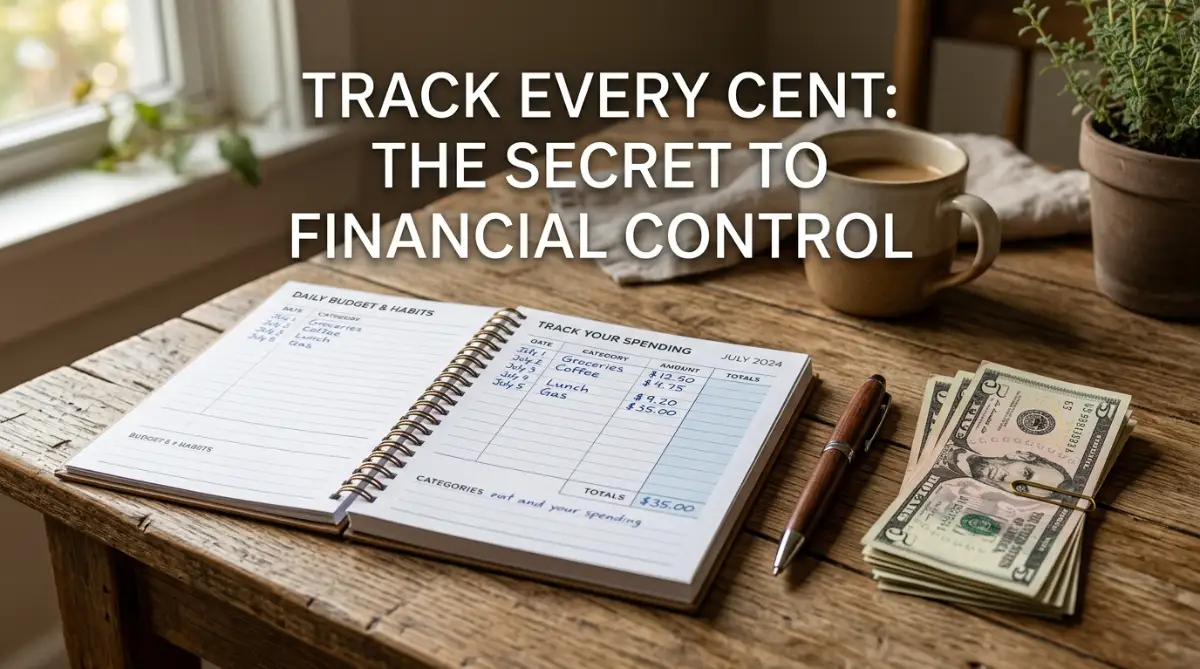
Your main goal in the first thirty days is simply to observe your cash flow without judging yourself. Write down every dollar that enters and exits your account in a small pocket notebook.
Do not worry if you overspend or make a mistake during this first month. The goal is to build the habit of looking at your numbers and understanding where your money actually goes.
Month 2: The Alignment Phase
In the second month, you will begin matching your bills to your paydays using the calendar method we discussed earlier.
You will start to see the patterns of your cash flow and adjust your spending to match your pay cycle.
You will also set up your cash envelopes for groceries and dining out. This is the month where you will feel the physical reality of your budget starting to take shape.
Month 3: The Stabilization Phase
By the third month, the initial panic of checking your bank balance will begin to fade away. You will have a small starter fund of fifty to one hundred dollars sitting in your separate savings account.
You will notice that you are no longer scrambling to cover your utility bills because you planned for them two weeks in advance. You are finally steering the ship instead of just hanging on for dear life.
Advanced Financial Protection: Secrets to Staying Ahead of Your Bills
We have established the core mechanics of tracking your survival numbers and aligning your bills on a physical calendar.
Now, let us look closely at some advanced secrets that can help you protect your progress and build a strong defense against surprise expenses.
These strategies are used by money experts to turn a chaotic cash flow into a predictable, manageable stream.
The Art of the Paycheck Split: Tackling Massive Quarterly Bills
One of the most dangerous threats to a working budget is the non-monthly bill that arrives like a surprise storm.
Think of your annual car insurance premium, quarterly trash pickup bill, or back-to-school clothing costs for your children.
If you try to pay these huge costs entirely out of a single paycheck, you will wipe out your account and slide right back into debt.
To stop this, we must use a strategy called the paycheck split. Take your annual or quarterly bills, find their total yearly cost, and divide that number by your total number of paychecks in a year.
If you get paid twenty-six times a year and your car insurance is six hundred dollars every six months, that is twelve hundred dollars a year.
Dividing twelve hundred dollars by twenty-six means you only need to save forty-six dollars from every single paycheck to cover it easily.
Let us imagine Marcus, a delivery driver who was always caught off-guard by his semi-annual car registration fee. He set up a dedicated sub-account at his credit union specifically for car expenses.
Every two weeks, his employer automatically deposited twenty-five dollars of his paycheck into this side account.
When the registration bill arrived six months later, Marcus simply paid it with the saved money without feeling any stress or stretching his main wallet.
Managing the Secret "Extra Paycheck" Phenomenon
If you get paid bi-weekly, there are two months in every year where you receive three paychecks instead of two.
Most people treat these three-paycheck months like a financial lottery and instantly spend the extra cash on clothing, electronics, or eating out.
This is a massive missed opportunity to break the cycle of living paycheck to paycheck permanently.
Because your regular monthly budget is already built around two paychecks, this third paycheck is entirely free and clear of your normal monthly obligations.
You can use this extra money to build a strong defensive cushion or put a huge dent in your high-interest credit card debt.
Treating this extra cash as a tool for your future self can change your entire economic situation in a single month.
Write down your payday schedule for the next twelve months on your wall calendar and circle the two months with three paychecks.
Knowing these dates in advance allows you to plan exactly where that third check will go before the money ever touches your hands.
This proactive planning keeps you in the driver's seat and prevents impulse spending.
The "Two-Checking-Account" System for Ironclad Discipline
Keeping your daily spending money in the same bank account as your bill-paying money is a recipe for disaster.
When you open your banking app and see one big number, your brain assumes you have plenty of room to spend.
We highly recommend setting up a two-checking-account system at your local bank to create a physical boundary between your obligations and your daily habits.
The first account is your "Bills Only" account, and the second is your "Daily Spending" account.
Your paychecks should go directly into the "Bills Only" account, where all your auto-drafted bills are paid.
Then, you set up an automatic transfer of your calculated safe-to-spend allowance into your "Daily Spending" account every week.
Using this strategy alongside structured debt management strategies will keep your essential funds separate from your variable spending.
As highlighted by the Consumer Financial Protection Bureau, keeping an organized spending structure is the most reliable way to avoid overdraft fees and build long-term stability.
If you’ve ever been hit with a $35 overdraft fee because a tiny automated subscription went through when your account was empty, you know how painful and demoralizing that is. The Consumer Financial Protection Bureau's findings on bank overdraft fees show how these sneaky "junk fees" penalize hard-working families, quietly draining billions of dollars every year from people who are simply trying to make it to payday. Setting up this two-account system is your ultimate shield. By keeping your "daily spending" money completely separate from your "bill-paying" money, we make it practically impossible to accidentally overdraw your primary account.
The Envelope Buffer: Leaving a Ten-Dollar Safe Zone
When you are first starting with the cash envelope method, it is very common to miscalculate how much you need for groceries or gas.
You might find yourself at the checkout counter with sixty dollars of food but only fifty-five dollars left in your envelope.
To protect yourself from this uncomfortable situation, we recommend adding a ten-dollar safety note to the back of every single envelope.
Fold a ten-dollar bill tightly and place it behind your normal cash as an absolute emergency reserve.
If you make it to the end of the pay cycle without touching your safety notes, you can transfer those small bills directly into your separate savings account.
This gamified approach turns budgeting into an engaging challenge that rewards you for staying under budget.
Do's and Don'ts for Long-Term Budgeting Success
- Do set up automatic transfers for your savings goals, even if the amount is only five dollars per paycheck.
- Do review your calendar weekly to ensure no automatic utility bills catch you by surprise.
- Do celebrate small wins, like going an entire week without exceeding your daily safe-to-spend limit.
- Don't try to cut out every single tiny pleasure, like your morning coffee, because this leads to emotional spending burnout.
- Don't panic if you have a bad week; simply reset your safe-to-spend calculation on your next payday and start fresh.
- Don't let credit cards remain linked to your online retail accounts where one-click buying is too easy.

The Hidden Landmines: Why Most Paycheck Budgets Fall Apart
When you are working hard to change your financial habits, it is incredibly easy to fall into hidden traps that can stall your progress.
Many people start with the best intentions but end up frustrated because they made common mistakes that could have been avoided with a little preparation.
Let us explore these dangerous pitfalls so you can protect your hard work and keep moving forward.
Falling into the "All-or-Nothing" Perfectionist Trap
One of the most common reasons budgets fail is that people try to make them perfect from day one.
They set an incredibly strict grocery budget of fifty dollars a week, despite having spent two hundred dollars a week for the last year.
When they inevitably go over that unrealistic limit, they feel like a complete failure and throw the entire system in the trash.
Budgeting is not about being perfect; it is about building awareness and making slow, steady improvements over time.
If you overspend on groceries, do not give up on your entire month. Simply adjust your daily safe-to-spend number for the remaining days of the pay cycle and keep moving forward with confidence.
Neglecting to Budget for Your Small Daily Habits
It is easy to remember your rent, car payment, and electric bills because they are large and arrive on a fixed schedule.
However, the small everyday habits like vending machine snacks, streaming services, or parking fees are what quietly destroy your bank account.
These tiny costs seem harmless in the moment, but when you add them up over a month, they can easily equal a utility bill.
If you do not write these small costs into your plan, your actual bank balance will never match your written calculations.
For instance, a simple five-dollar coffee every workday adds up to one hundred dollars a month.
That is one hundred dollars that could have been used to start building an emergency savings account to protect you from unexpected events.
Keeping Your Savings Too Easy to Access
If your savings account is at the exact same bank as your everyday checking account, it is far too easy to transfer money with a single swipe on your phone.
When you see a cute outfit or want to order takeout, you will be tempted to pull ten or twenty dollars from your savings.
This constant dipping keeps your emergency cushion at zero and prevents you from building real security.
Your savings must be placed in a separate institution where it takes effort and time to access the cash.
We recommend using an online high-yield savings account that does not have a physical debit card attached to it.
When there is a natural delay between wanting the money and actually getting it, you will find that most of your impulses disappear naturally.
Relying on Credit Cards to Cover the Gaps
Many people use credit cards as a safety valve when their bank account runs low at the end of the week. They promise themselves they will pay off the balance as soon as their next paycheck arrives.
This habit creates a dangerous loop where your next paycheck is immediately consumed by the credit card bill from the previous week.
You are constantly paying for your past instead of planning for your present.
To break this cycle, you must hide your credit cards in a safe place at home or freeze them in a block of ice.
If you are struggling with high interest rates, looking into debt management strategies can provide a path to real relief.
Your Action Plan for Tomorrow: Taking Your First Real Steps
Breaking free from the paycheck-to-paycheck cycle is not a journey that happens overnight, but it is entirely possible with the right approach.
It is not about how much money you make; it is about how you organize and respect the dollars you currently have.
You do not need to wait for a raise or a financial miracle to start building your peace of mind today.
By taking tiny, manageable steps every single day, you can slowly build a strong wall of security around your household. Let us map out an immediate, practical roadmap that you can execute tomorrow morning to start reclaiming your financial control. If you find yourself needing to stretch your food resources during this transition, take a look at [my detailed guide on frugal grocery shopping hacks](https://yourwebsite.com/frugal-grocery-hacks) to help you get maximum nutrition out of every single dollar you spend.
Tomorrow Morning's Quick-Start Checklist
- Write down your next payday date: Look at your calendar and identify the exact day your next paycheck will arrive.
- Locate your three largest bills: Find the exact due dates and amounts for your rent, car payment, and main utility bill.
- Highlight your grocery spending: Go to your bank app and look at what you spent on food over the last seven days to find your starting baseline.
- Download a free digital calendar: Or find a simple sheet of paper to begin mapping out your payment schedules.
- Set up a free, separate savings account: Choose a different bank than your primary checking account to house your starter emergency fund.
When you first start looking at your numbers, you might feel a wave of anxiety or shame about past decisions.
We want you to remember that your past money choices do not define your worth or your future potential.
Every single payday is a completely clean slate that gives you the power to make new, supportive choices for your life.
By pacing your spending daily and using the tools we have discussed, you will slowly regain your confidence and sleep better at night.
Common Questions on Starting Your Budgeting Journey
What if my income changes every week because of irregular hours?
If your paychecks are unpredictable, you should build your monthly budget plan using your lowest historical paycheck from the last six months.
Any extra income you make above this baseline should be put straight into your starter emergency fund to cushion future dry spells.
This conservative approach ensures that your basic living needs are always covered, even during slow weeks.
How do I handle pressure from friends who want me to spend money?
It can be incredibly hard to say no when coworkers want to order lunch or friends invite you out for dinner.
Instead of feeling ashamed, try being honest and telling them you are working hard on a specific financial goal right now.
Suggest low-cost or free alternatives, such as meeting at a local park for a walk or hosting a simple potluck dinner at home.
Should I focus on paying off my debt or building my savings first?
When you are living paycheck to paycheck, your immediate priority should always be building your fifty-dollar starter emergency fund. Without this basic cushion, any minor emergency will force you to swipe a credit card, keeping you trapped in a high-interest cycle. Once you have that $50 wall of safety in place, you can start using our step-by-step proven debt paydown strategy to systematically wipe out your balances without starving your daily budget.
What should I do if I get paid in physical cash or tips every day?
If you receive daily cash or tips, treat your budget with a "daily deposit routine." Instead of spending that cash directly out of your pocket, deposit your tips into your checking account at the end of every shift or every two days. From there, apply the exact same daily "safe-to-spend" calculation we covered earlier. Keeping daily cash off your person prevents accidental spending and gives you a clear, trackable number in your account.
Is it okay to use credit card reward points when I'm living paycheck to paycheck?
I completely understand the temptation to chase cash-back or travel rewards, but when you are operating on a razor-thin cash flow margin, credit cards pose a massive risk. A single missed payment or carried balance with a 24% interest rate will instantly wipe out any 1% or 2% reward points you earned. Until you have built a full 30-day cash buffer in your bank account, I strongly advise sticking strictly to debit cards or cash envelopes.
Kamal, let's be honest—fifty dollars won't even buy a single car tire. How is that going to save me from an emergency?
I hear this objection all the time from my readers, and you are 100% right. Fifty dollars is not going to cover a transmission failure or a major medical emergency.
But here is the secret we often miss: most budgets are ruined by the tiny, invisible speedbumps, not the mountain-sized emergencies.
It’s the $25 school field trip fee you forgot about, the $15 prescription co-pay, or the $40 Uber ride when your car battery dies on a rainy morning.
When you have zero savings, these tiny expenses force you to swipe a credit card, which triggers a domino effect of high-interest debt that ruins your next three months.
That $50 starter fund isn't meant to solve life's biggest disasters—it's a shield designed to stop minor inconveniences from turning into full-blown financial crises while you build momentum.
About the Author:
Hey there, I’m Kamal. I’m a personal finance writer and budgeting strategist. I didn't learn about money management from a fancy academic textbook; I learned it the hard way—by living paycheck to paycheck for years, staring at my own bank app with a knot in my stomach. Today, I help everyday people build realistic, stress-free money plans that actually fit their daily lives. My mission is simple: to help you stop worrying about tomorrow's bills so you can start enjoying today.
You do not need a huge pay raise or perfect luck to take back control of your money starting today. Take just ten minutes right now to grab a paper calendar and map out your very next paycheck. Taking that one small step today will give you more peace of mind than you have felt in months.
Disclaimer:
Disclaimer: The information provided in this article is for educational and informational purposes only. It should not be considered professional financial advice. We recommend consulting with a certified financial planner or a licensed professional before making any major financial decisions.