
The Heavy Weight of Monthly Debt and the Search for Relief
Imagine waking up every single morning with a heavy feeling in your chest. You look at your bank account and realize that almost every dollar you earn is already spoken for. The mortgage, the car payment, and those credit card bills seem to eat your paycheck before you even get to enjoy it.
This is the hard reality for millions of hardworking people who are trapped by a high debt-to-income (DTI) ratio. It feels like running on a treadmill that keeps moving faster, while you are slowly losing your breath. You want to buy a home, get a better car, or simply save for the future, but your monthly debt payments keep holding you back.
Many people try to fix this issue by looking for quick answers online, but they often end up more confused than before. Here is why finding the right help can be so difficult:
- Information Overload: The internet is filled with complex financial jargon that is hard to understand for normal people.
- Bad Advice: Some websites promise quick fixes that actually end up hurting your credit score or increasing your long-term debt.
- One-Size-Fits-All Plans: Most guides do not consider your unique situation, leaving you feeling lost and hopeless.
- Hidden Costs: Many programs that promise to help actually charge high fees that put you deeper into a financial hole.
When you cannot find a clear path forward, it does more than just hurt your wallet. This constant financial struggle takes a heavy toll on your mind and body. Here is how a high DTI ratio quietly damages your life:
- Constant Anxiety: You worry about every small expense, wondering if a single emergency will ruin your entire month.
- Damaged Self-Confidence: You might feel like you failed as a provider, which can hurt your relationships and your self-esteem.
- Loss of Hope: When you see no progress, you might stop trying to improve your situation altogether, accepting debt as a permanent state.
- Sleepless Nights: Your mind races at midnight, calculating numbers over and over again while trying to find a way out.
You do not have to live this way forever. Understanding how this ratio works is the first step toward taking back your life. Let us look at how you can measure your situation and start making real, positive changes today.
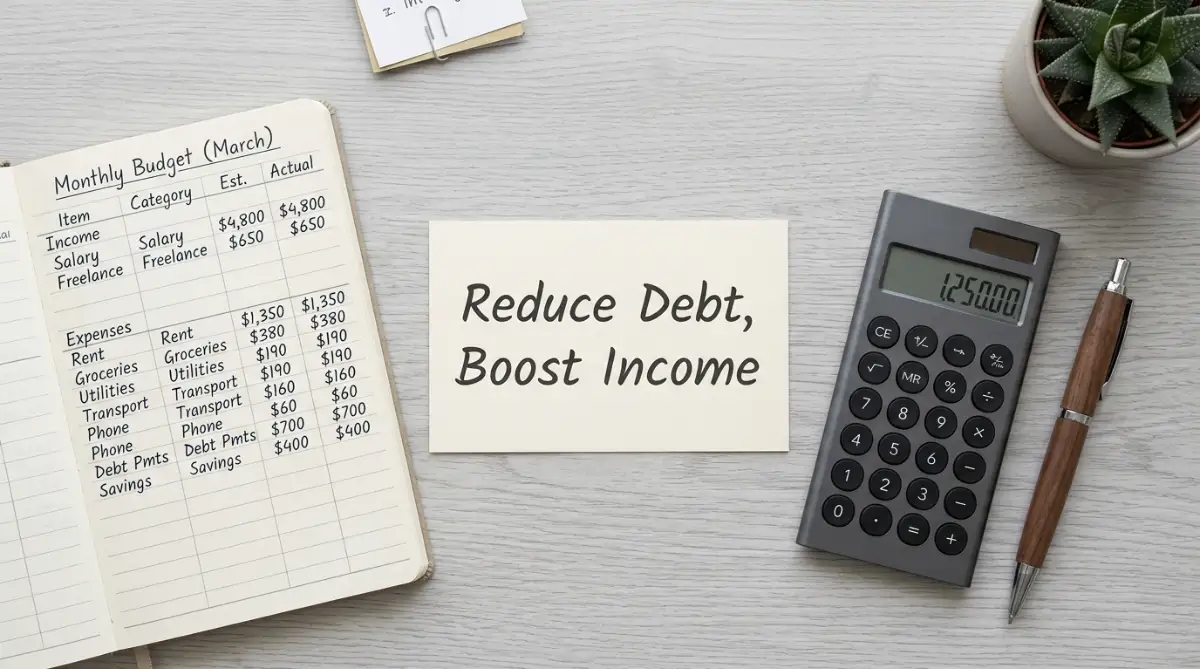
The Simple Math Behind Your Debt-to-Income Ratio
Before we can fix the problem, we need to know exactly what we are dealing with. Your debt-to-income ratio is a simple comparison between how much money you pay toward debt and how much money you earn. Lenders use this number to see how risky it is to lend you money, especially when you apply for a mortgage.
You can find this number by taking your total monthly debt payments and dividing them by your gross monthly income. Gross income is the money you make before taxes and other deductions are taken out. According to the Consumer Financial Protection Bureau, keeping this percentage low is one of the best ways to show lenders you can handle new loans.
Let us look at a simple example to make this easy to understand. Imagine you earn $5,000 every month before taxes. If you pay $1,500 for your rent, $300 for your car loan, and $200 for your credit cards, your total monthly debt is $2,000.
To find your ratio, you divide $2,000 by $5,000, which gives you 0.40. This means your ratio is 40 percent. Many lenders prefer to see a ratio of 36 percent or lower when you apply for a major loan. If your number is higher than that, do not panic. We can work together to bring that number down step by step.
Step 1: Create a Clear Map of Your Monthly Cash Flow
The very first action you must take is to find out exactly where your money goes every single month. You cannot fix a leak if you do not know where the water is escaping from. This means you need to look at your bank statements and write down every single penny you spend.
Many people think they know how much they spend, but they are often shocked when they see the actual numbers. Small daily purchases like a cup of coffee, eating out for lunch, or streaming subscriptions can add up to hundreds of dollars. By tracking daily spending, you can easily find these hidden leaks and plug them.
+-------------------------------------------------------------+
|               MY MONTHLY CASH FLOW TRACKER                  |
+-------------------------------------------------------------+
|  Gross Monthly Income: $5,000                               |
|                                                             |
|  Monthly Debt Payments:                                     |
|  - Housing (Rent/Mortgage): $1,500                          |
|  - Auto Loan: $300                                          |
|  - Credit Cards (Minimums): $200                            |
|  Total Monthly Debt: $2,000                                 |
|                                                             |
|  Current Debt-to-Income (DTI) Ratio: 40%                    |
+-------------------------------------------------------------+
Once you have a clear picture of your spending, you need to build a plan that works for you. This is where creating a realistic monthly budget becomes incredibly helpful. A good budget is not a prison; it is a tool that gives you permission to spend your money on things that actually matter.
When you create this budget, separate your expenses into "needs" and "wants." Needs are things like housing, basic groceries, and utility bills. Wants are things like dining out, entertainment, and shopping for fun.
If you want to lower your ratio, you must temporarily shrink your wants. Every dollar you save from your wants can be redirected to pay down your debts faster. This simple shift in your daily habits will build the momentum you need to succeed.
Step 2: Choose Your Debt Repayment Method
Once you have extra money from your budget, you need a structured plan to pay off what you owe. Having a plan keeps you focused and prevents you from losing motivation along the way. There are two major ways to pay down debt, and both are highly respected by financial experts.
The first method is called the debt avalanche. With this plan, you list all your debts from the highest interest rate to the lowest. You pay the absolute minimum on all your accounts except the one with the highest interest rate.
You throw all your extra money at that high-interest debt until it is completely gone. This method saves you the most money on interest over time, which makes it highly logical. However, it can sometimes take a long time to see your first complete victory if that high-interest debt is very large.
The second method is called the debt snowball strategy. With this approach, you ignore the interest rates and list your debts from the smallest balance to the largest. You focus all your extra cash on paying off the smallest debt first, while paying minimums on the rest.
This method is highly effective because it relies on human psychology. When you pay off a small card in just a couple of months, you feel a massive sense of achievement. This quick win gives you the emotional boost to keep going and tackle the larger debts on your list.
Let us look at how these two methods compare in a simple table:
Strategy Focus Area Main Benefit Best Suited For Debt Avalanche Highest Interest Rate Saves the most money on interest Highly disciplined planners Debt Snowball Smallest Total Balance Provides quick mental wins People who need motivation
Whichever method you choose, consistency is the secret. Stick to your chosen plan for at least six months without switching back and forth. You will be amazed at how much progress you can make when you stay focused on a single path.
Step 3: Grow Your Income to Change the Ratio
As we discussed earlier, your DTI ratio has two parts: your debt and your income. While paying down debt is highly important, increasing your income can lower your ratio even faster. When you make more money, your gross monthly income increases, which automatically shrinks your DTI percentage.
You do not need to find a high-paying corporate job overnight to make this work. In the modern world, there are many ways to make extra money using the skills you already have. You can start a small side hustle, do freelance work online, or work a few extra hours at your current job.
If you love your current job, consider asking for a raise. Prepare a list of your accomplishments and show your boss how you have added value to the company. A modest salary increase can significantly boost your monthly income, helping you pay down debt much faster.
DEBT-TO-INCOME (DTI) EQUATION

         Total Monthly Debt Payments
       -------------------------------  =  DTI Ratio
            Gross Monthly Income

  * To shrink the ratio:
    - REDUCE the top number (Debt)
    - INCREASE the bottom number (Income)
Another great option is to sell things you no longer use. Take a look around your home for old electronics, clothes, or furniture that are just gathering dust. Selling these items can give you a quick burst of cash that you can throw directly at your smallest debt.
Remember to send all your extra income directly to your debt payments. It can be tempting to spend this new money on nicer things, but that will keep you stuck in the same loop. Use this extra cash as a temporary tool to buy your financial freedom.
Step 4: Restructure Your Payments Through Consolidation
Now that we have covered the basics of tracking money, choosing a repayment plan, and boosting your income, let us explore some advanced options. Sometimes, your debts are spread out across too many different accounts with high interest rates. This can make it incredibly difficult to make a real dent in your balances.
In this situation, debt consolidation can be a highly effective tool. This strategy involves taking out a single new loan with a lower interest rate to pay off all your existing high-interest debts. Instead of managing multiple bills each month, you only have to focus on one single payment.
According to the debt-to-income ratio guidelines on Investopedia, lowering your interest rates reduces the amount of interest that builds up each month. This means more of your hard-earned money goes toward reducing the actual balance, rather than just paying the bank. It also helps lower your minimum monthly payment, which immediately improves your DTI ratio.
Let us look at a real-life scenario to see how this works in action. Imagine you have three credit cards with high interest rates:
- Card A: $3,000 balance at 24% interest (Minimum payment: $90)
- Card B: $4,000 balance at 21% interest (Minimum payment: $120)
- Card C: $5,000 balance at 18% interest (Minimum payment: $150)
In this case, you are paying a total of $360 every month in minimum payments just to stay afloat. If you qualify for a personal consolidation loan of
12,000ata10
12,000ata10
250**.By doing this, you instantly lower your monthly debt obligation by $110. This change immediately improves your DTI ratio, and you also save thousands of dollars in interest over the life of the loan.
However, you must be very careful when using this strategy. A consolidation loan does not make your debt disappear; it simply moves it to a different place. You must promise yourself that you will not use those credit cards again once they are paid off. If you start charging new purchases to those empty cards, you will end up with twice as much debt as before.
If you have student loans, you can look into specific repayment programs to help lower your monthly payments. Many government and private lenders offer options like income-driven repayment plans or refinancing. By paying off student loans faster, you can free up a massive portion of your monthly income and build a much safer financial future.
Step 5: Master the Art of Creditor Negotiation
Many people do not realize that they can actually talk to their creditors to get a better deal. Credit card companies and lenders would rather receive smaller payments from you than have you stop paying entirely. This gives you a lot of leverage if you know how to use it.
Pick up the phone and call the customer service number on the back of your credit card. Ask to speak with someone in the retention or hardship department, as these agents have the power to make deals. Be polite, explain your situation honestly, and ask if they can lower your interest rate.
Here is a simple script you can use when you make the call:
"Hello, I have been a loyal customer for several years, but I am currently struggling with my monthly payments. I want to pay off my balance, but the high interest rate makes it very difficult. Is there any way you can lower my rate to help me stay on track?"
You might be surprised by how often this simple request works. If they agree to lower your rate from 22% to 12%, your monthly interest charges will drop significantly. You can then use those savings to pay down the balance much faster.
If you are facing a severe financial hardship, ask if they have a formal hardship program. These programs can temporarily pause your payments or lower your interest rate for several months while you get back on your feet. It is always better to communicate with your creditors early rather than ignoring their bills.
Building a Strong Financial Safety Net for the Long Run
Lowering your DTI ratio is a fantastic goal, but keeping it low is where true financial freedom lies. Many people work incredibly hard to pay off their debts, only to fall back into the same habits a few months later. To prevent this, you need to build a strong safety net that protects you from future emergencies.
This is why building an emergency fund is so important. Life is full of unexpected events like car repairs, medical bills, or temporary job losses. Without a cash reserve, you will be forced to use credit cards to cover these costs, which will ruin your hard work.
THE STAGES OF FINANCIAL SECURITY

   [ Stage 1: Track and cut unnecessary spending ]
                         │
                         ▼
   [ Stage 2: Pay off small debts for quick wins ]
                         │
                         ▼
   [ Stage 3: Build a starter emergency fund     ]
                         │
                         ▼
   [ Stage 4: Consolidate high-interest accounts ]
                         │
                         ▼
   [ Stage 5: Maintain low DTI and build wealth ]
Start by saving a small starter fund of $1,000 as quickly as possible. Once your high-interest debts are gone, grow this fund until it can cover three to six months of your living expenses. Keep this money in a separate savings account so you are not tempted to spend it on daily purchases.
Having this cash cushion gives you incredible peace of mind. When an emergency happens, it becomes a minor inconvenience rather than a major financial crisis. This simple safety net is the key to breaking the cycle of debt for good.

Five Dangerous Pitfalls to Avoid on Your Way to Debt Freedom
As you work hard to lower your ratio, it is easy to make mistakes that can set you back. Knowing what to avoid can save you months of frustration and keep you moving in the right direction. Let us look at five common mistakes that many people make on their journey.
1. Taking on New Debt While Paying Off the Old One
The most common mistake is continuing to use your credit cards while trying to pay them down. This is like trying to shovel water out of a boat while there is still a massive hole in the bottom. Put your credit cards in a drawer, delete them from your favorite online shopping sites, and use cash or a debit card instead.
2. Closing Your Oldest Credit Card Accounts
When you finally pay off a credit card, you might feel a strong urge to close the account forever. However, this can actually hurt your credit score and make your DTI ratio look worse. Part of your credit score is based on the age of your credit history and your total credit limit. Keep the account open, but do not use it, or only use it for a tiny subscription that you pay off immediately each month.
3. Neglecting to Build a Starter Emergency Fund
Some people throw every single extra dollar at their debt without saving anything for emergencies. While this seems like a fast way to pay off debt, it is highly risky. If your car breaks down and you have zero savings, you will have to use your credit cards again. This can destroy your motivation and make you feel like you are back at square one.
4. Falling for High-Fee "Debt Relief" Scams
Be very careful of companies that promise to wipe out your debt for a small fee. Many of these debt settlement companies are highly predatory and can ruin your credit score. They often tell you to stop paying your bills, which leads to late fees, lawsuits, and massive damage to your credit report. It is always safer and cheaper to manage your debt repayment yourself.
5. Forgetting to Track Small Daily Expenses
It is easy to focus only on big bills like rent and car payments while ignoring small daily purchases. A $5 coffee here and a $12 lunch there might not seem like much, but they add up to hundreds of dollars over a month. If you do not track these small expenses, you will always wonder why your bank account is empty at the end of the month.
Taking Your First Step Toward True Financial Peace
Improving your debt-to-income ratio is not about depriving yourself of all joy in life. It is about making smart, intentional choices today so you can build a much brighter future. Every small payment you make and every dollar you save brings you closer to a life of true freedom.
Do not feel overwhelmed by the journey ahead. You do not have to fix everything in a single day. Focus on taking just one simple step this week, whether that is tracking your spending or making a quick call to your credit card company.
Imagine how incredible it will feel to look at your bank account and know that you own your future. You will sleep better, feel more confident, and have the freedom to make choices based on what you want, not what you owe. You have the power to change your story, and that change starts right now