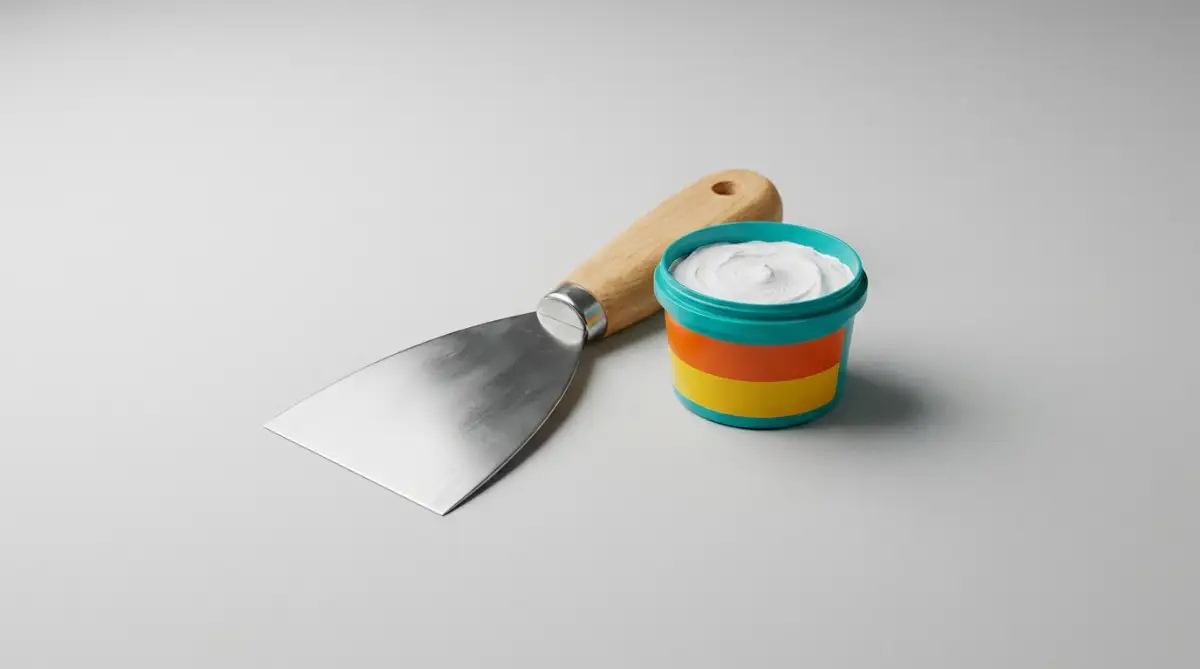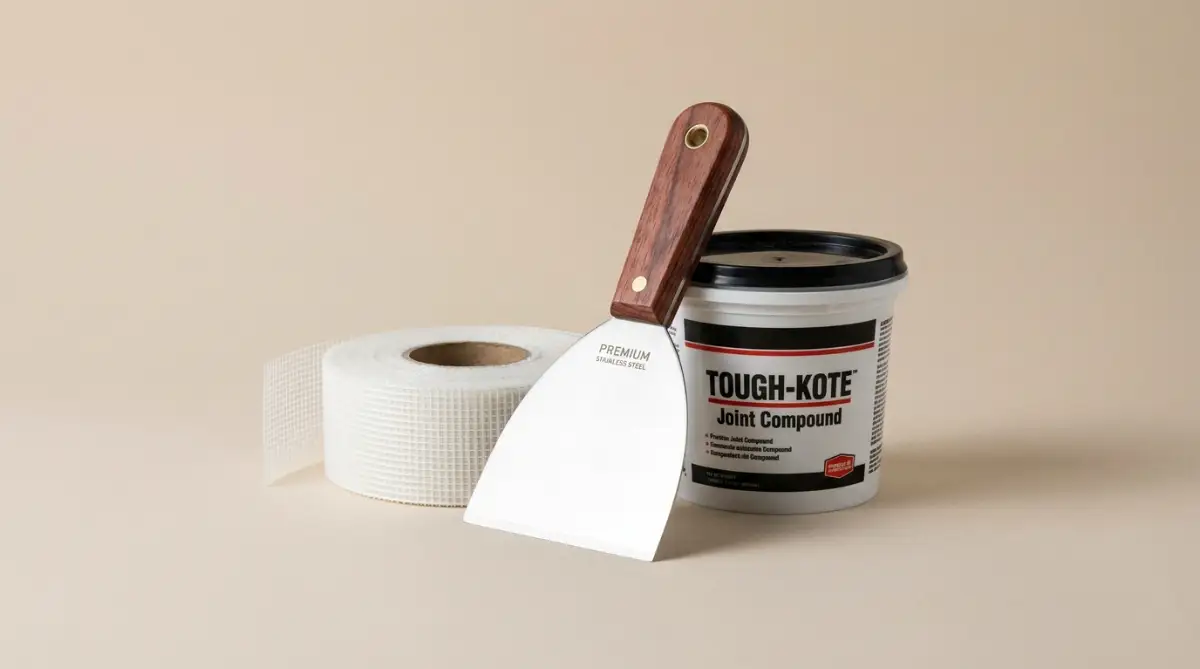
How to Fix a Hole in Drywall: Step-by-Step DIY Repair Guide (Invisible Finish)
We have all been there. You are carrying a heavy laundry basket or sliding a couch across the room, you lose your grip for half a second, and bam—your wall now has a giant, jagged crater staring right back at you.
That exact thing happened to me last spring. I was rushing to move a solid wood dresser into our spare bedroom, tripped over the rug, and the sharp corner punched a massive hole straight through the Sheetrock. For three weeks straight, every single time I walked down the hall, my eyes zoomed right in on that ugly hole. It drove me crazy! I actually dragged a giant potted snake plant across the room just to hide it, but every time I watered that plant, I felt annoyed knowing the dent was still hiding back there.
You might feel tempted to just hire a handyman, but paying 250.00 USD for a quick patch job hurts your wallet. Don't worry—I am going to walk you through the exact, step-by-step process I used to make my wall completely smooth and flat again. By the time we finish, nobody will ever guess there was a hole there in the first place!
📌 Quick Project Snapshot: Drywall Repair at a Glance
- Project Skill Level: Beginner to Intermediate (No professional experience needed)
- Active Working Time: 45 to 60 minutes (Plus drying time between coats)
- Total Material Cost: 20.00 to 45.00 USD (Saves you over 200.00 USD compared to hiring a contractor)
- The Golden Rule: Always feather out 2 to 3 paper-thin coats of joint compound instead of putting on one thick glob.
- The Secret to Invisible Finish: Never skip high-build drywall primer before painting, or the patch will show as a dull spot under room light.
Why Traditional DIY Quick Fixes Often Fall Short
Many homeowners try to solve this issue quickly, but they often end up with terrible results. This usually happens because of bad advice found online or rushing through the process.
Here are the main reasons why DIY wall repairs often fail:
- Using the wrong materials: People often buy cheap, lightweight spackle for large holes, which shrinks and cracks over time.
- Skipping the cleaning step: Applying patch kits over loose plaster and dust prevents the adhesive from sticking properly.
- Over-applying joint compound: Putting on a single, thick layer of mud instead of multiple thin coats leads to sagging and uneven surfaces.
- Skipping the primer: Painting directly over raw drywall mud causes the patch to absorb paint differently, leaving a dull spot.
- Using the wrong sandpaper grit: Using sandpaper that is too rough tears the paper face of the drywall, making the damage worse.
Step 1: Gathering the Right Tools and Preparing Your Workspace
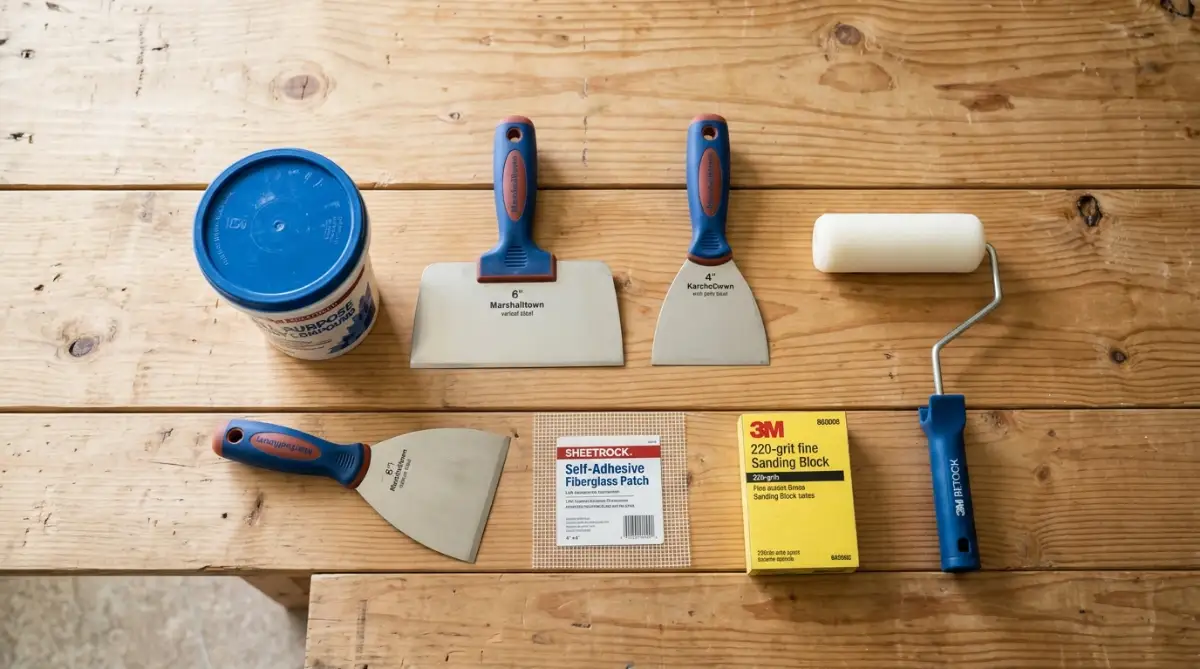
Before we pick up any tools, let me save you from the biggest mistake I made when I first started DIY repairs: using the wrong stuff. I used to think I could patch a golf-ball-sized dent with lightweight spackle and an old kitchen butter knife. That repair cracked and fell out within a month! Lightweight spackle is fine for tiny picture-nail pinholes, but for real holes, you need proper all-purpose joint compound. Also, take ten seconds to vacuum the dust and scrape away crumbly gypsum around the rim. If your wall edges are dusty, your patch tape will peel right off later down the road.
Essential Tools & Materials Checklist
Before we get our hands dirty, let's make sure you have everything ready. You don't need expensive gear—here is exactly what you need to pick up from your local hardware store:
 Preparing the Hole for Repair
Think of this step like preparing a tooth for a filling. If you leave loose debris inside the hole, the patch will eventually fall out.
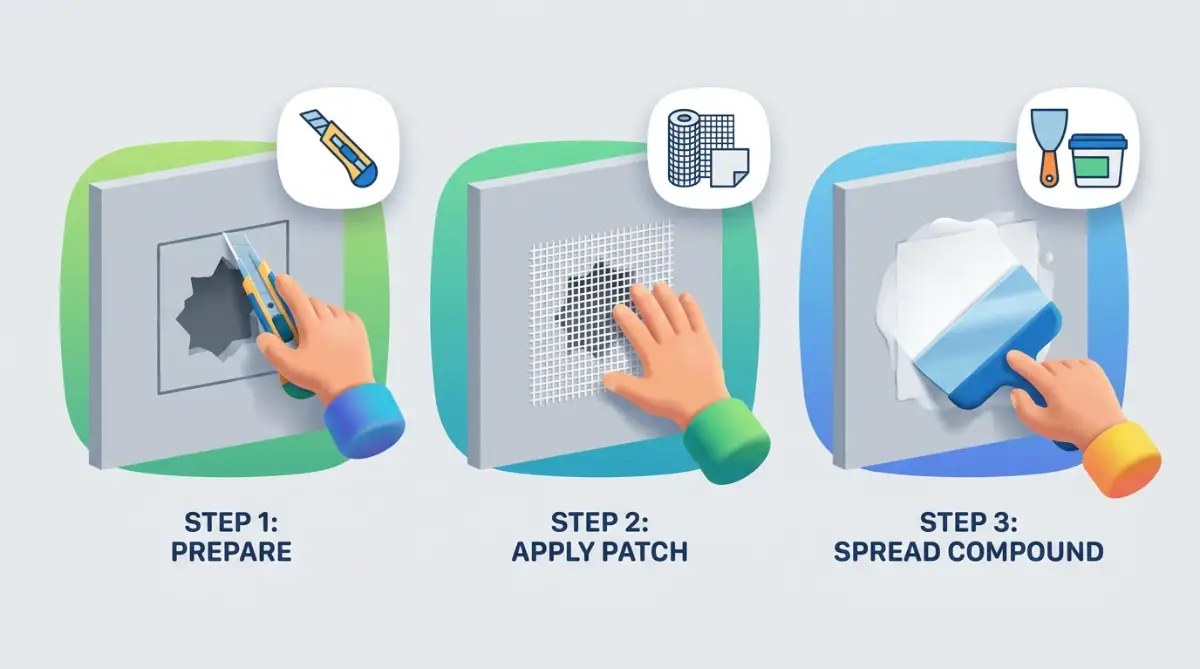
First, take your utility knife and gently cut away any loose paper or crumbling plaster around the edges of the hole. You want to create clean, solid edges for your patch to cling to.
Next, use a dry cloth or a vacuum brush to clean away all the dust from the area. If there is dust on the wall, your joint compound and tape will not stick properly.
Step 2: Applying the Patch and the Base Layer
Now that your wall is clean and ready, it is time to cover the hole. The method you choose depends heavily on the size of the hole you are dealing with.
For Small Holes (Under 2 Inches)
If your hole is small, like one left by a doorknob or a large drywall anchor, a self-adhesive mesh patch is your best option. These patches are made of strong fiberglass mesh with a sticky backing that clings directly to the wall.
Place the patch directly over the center of the hole. Press it down firmly with your fingers, making sure it lies completely flat against the wall.
There should be no bubbles or loose edges sticking up. If the mesh is too large, you can easily trim it down with utility scissors.
For Medium to Large Holes (Over 2 Inches)
When a hole exceeds 2 inches, a mesh sticker alone will flex and crack if someone leans against it. We need solid backing support:
- Square off the hole: Use your utility knife or a drywall jab saw to trim the jagged hole into a clean rectangle or square.
- Install a wood backer: Take a small scrap piece of wood (like a 1x2 pine board or plywood strip) that is about 4 inches longer than the hole. Slip the wood inside the cavity, hold it centered behind the opening with your hand, and drive drywall screws through the existing wall above and below the hole directly into the wood backer.
- Fit the drywall plug: Cut a fresh piece of matching drywall sheet to fit snugly into the squared hole. Screw this new plug directly into the centered wood backing until the screw heads sit slightly below the drywall surface.
- Apply mesh tape: Place self-adhesive fiberglass mesh tape over all four perimeter seams where the new patch meets your wall. This structural seam tape prevents stress cracks from developing as your house settles.
(Note: For a classic structural repair overview, the veteran contractors at This Old House drywall repair guide also recommend using solid timber backing for any hole wider than a couple of inches.)
📊 Comparing Repair Methods by Hole Size
Step 3: Mastering the Art of Spreading Joint Compound
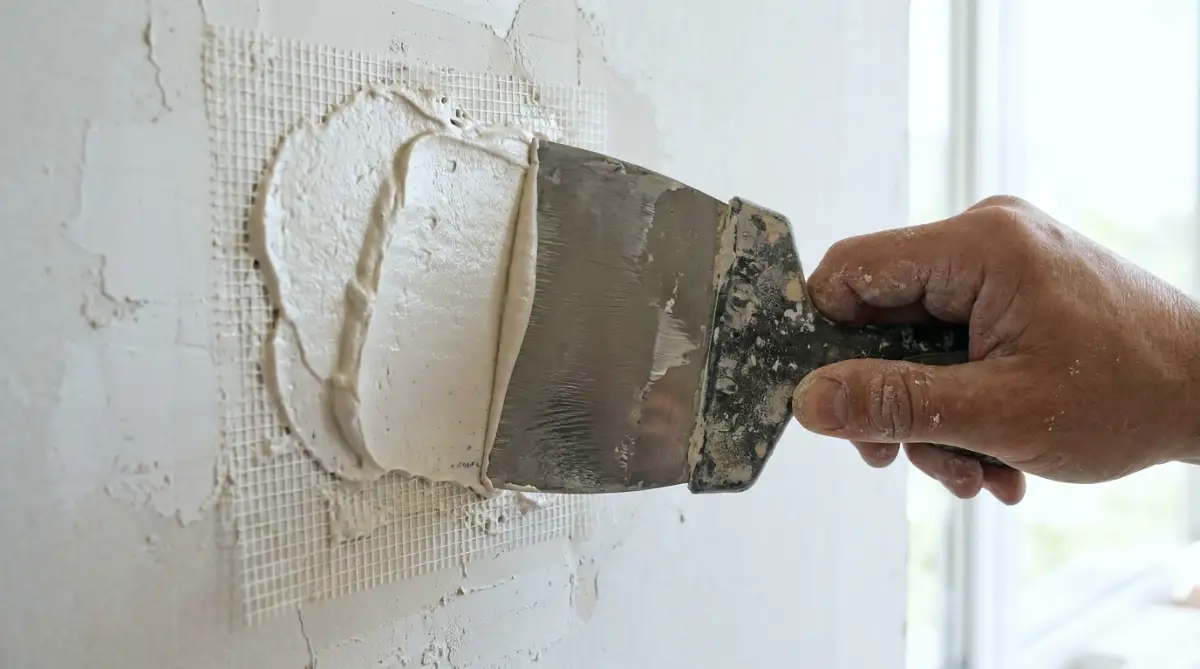
Spreading drywall mud can feel scary if you have never held a taping knife, but here is a simple trick: hold your 4-inch knife at roughly a 30-degree angle and pull smoothly in one direction. Do not panic if the first coat looks a bit rough or if you can still see the mesh outline. Your first coat is just meant to fill the void and lock the patch in place. When you move to the second coat with your wider 6-inch knife, apply slightly firmer pressure on the outer edge of the blade. This blends the wet compound flat into your surrounding wall so thin that you can't feel a ridge when running your bare hand across it.
Visual Demonstration: Want to watch a professional master-patcher handle joint compound and feathering in real-time? Check out this in-depth, 30-minute masterclass by Home RenoVision DIY: 3 Ways to Fix ANY Sized Drywall Hole before spreading your first coat. Watching the hand angle and pressure in action will give you total confidence!
The First Coat of Mud
Scoop a small amount of joint compound onto the edge of your putty knife. Hold the knife at a 30-degree angle against the wall, just above the patch.
In one smooth motion, pull the knife down over the patch, pressing firmly enough to force the mud through the mesh. The goal is to fill the hole and cover the mesh patch completely.
Do not worry about making it look perfect on your very first try. The first coat is meant to build strength, while the later coats will create the smooth surface.
The Secret Technique: Feathering the Edges
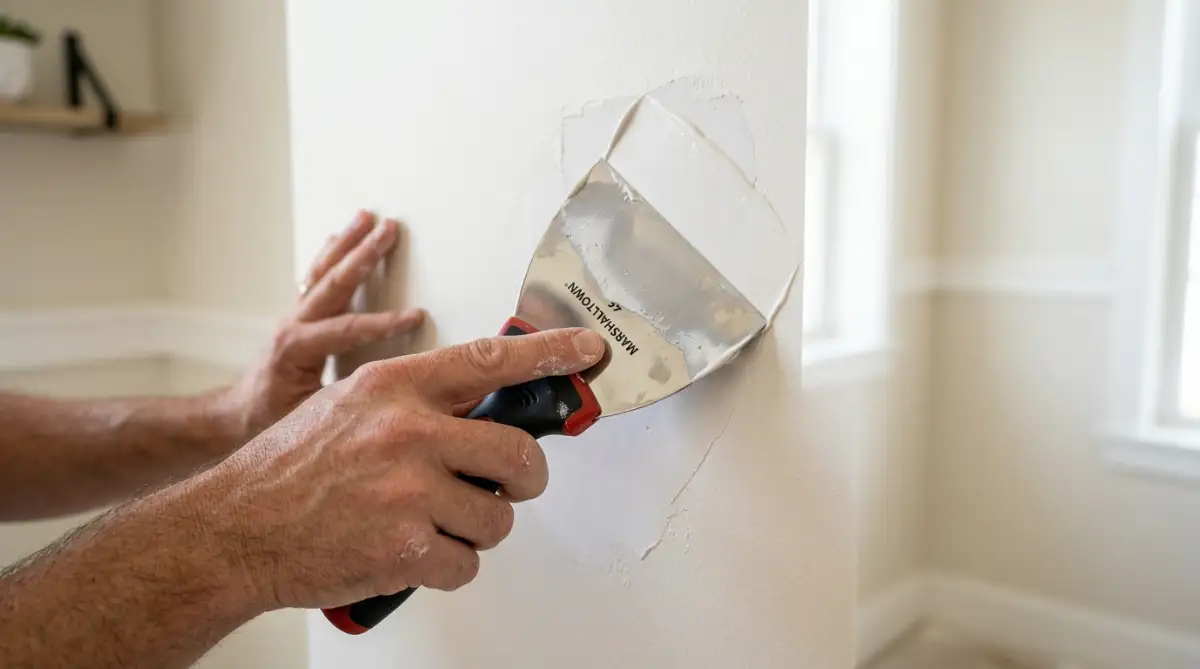
Feathering is the single most important technique for making a patch look invisible. It means gradually thinning out the joint compound as you move away from the center of the patch.
To do this, place your putty knife flat against the edge of the wet mud. Tilt the knife slightly so that more pressure is applied to the outer edge than the inner edge.
Gently pull the knife outward, blending the wet mud into the dry, undamaged wall. This creates a slope so gradual that the human eye cannot detect where the repair starts or ends.
Let this first coat dry completely, which usually takes about 4 to 12 hours depending on your room's humidity. You will know it is dry when the dark grey compound turns into a bright, solid white.
Handling the Second Thin Coat
Once the first coat is completely dry, you might notice small ridges or bubbles on the surface. Take your putty knife and gently scrape off any high spots or dried bumps.
Do not sand yet, as this creates a massive cloud of fine dust that gets everywhere. Simply scraping with the blade is enough to prep the surface for the next step.
Now, apply a second, much thinner coat of joint compound. This time, extend the mud about two to three inches past the edges of your first coat.
Feather this second coat even wider than the first one. This step fills in any tiny air pockets or shrinkage dips that happened as the first coat dried.
Let this second coat dry completely overnight. When you wake up, you will have a solid, flat patch that is ready for the final, most satisfying steps of the repair process.
Here is a mistake I made during my first repair: I tried to rush things and put on one thick layer of drywall mud instead of thin coats. It took forever to dry and ended up cracking, so I had to scrape it all off and start over. Now I always feather two or three paper-thin coats—it saves time and gives a smooth, invisible finish every single time.
Step 4: Mastering the Sanding Phase Without Creating a Mess
Many homeowners dread this step because of the fine white dust that spreads everywhere. However, sanding is the secret to a professional-looking repair.
The Dry Sanding Method
For most repairs, a fine 220-grit sanding block is your best tool. Hold the block flat against the wall with your hand, applying only light pressure.
Move the block in gentle, circular motions over the edges of the patch. You are not trying to remove the compound you just applied; you only want to blend the edges.
Keep your movements light and steady. If you press too hard, you will sand right through the compound and expose the mesh tape beneath.
The Dust-Free Wet Sanding Alternative
If you suffer from allergies or want to avoid a dusty cleanup, you can use the wet sanding method. For this, you will need a large, clean drywall sponge.
Dampen the sponge with clean water, making sure to squeeze out all the excess liquid. The sponge should be damp, not dripping wet.
Use the smooth side of the sponge to rub the edges of the patch in circles. The moisture will gently dissolve and smooth out the high spots without releasing dust into the air.
(Safety Tip: According to safety guidelines by the CDC NIOSH drywall dust control study, wet sponging or wearing an N95 dust mask is the best way to protect your lungs from airborne joint compound particles.)
Step 5: Matching the Wall Texture and Priming for Paint
Most residential walls are not perfectly smooth. They often have a subtle texture that looks like the skin of an orange, which builders call orange peel texture.
If you paint directly over a smooth patch on a textured wall, the patch will stand out like a shiny band-aid. We need to recreate that texture before we open the paint can.
Creating the Perfect Texture Match
For light textures, you can purchase a simple texture spray can from your local hardware store. Before spraying your wall, practice on a scrap piece of cardboard to adjust the nozzle.
Hold the spray can about 12 to 18 inches away from the wall. Apply the texture in short, light bursts to build up the pattern slowly.
If your wall has a knockdown texture, wait about ten minutes after spraying for the spots to become semi-dry. Then, gently drag a wide putty knife flat across the wet spots to flatten the tops of the texture bumps.
Why Drywall Primer is Non-Negotiable
I learned this the hard way during my hallway repair. I thought primer was just an extra step paint companies push to make more money, so I brushed wall paint straight onto the dry patch. The next morning, whenever the ceiling light turned on, that spot looked like a dull, chalky square! Fresh drywall compound drinks paint fast, sucking out the moisture and leaving a weird, patchy sheen known as 'flashing.' Putting on one quick coat of PVA drywall primer seals the porous mud completely, so your topcoat rolls on smooth with an even, matching sheen.
Apply one thin, even coat of high-quality drywall primer over the entire patched area. This seals the porous mud and ensures your topcoat of paint sticks evenly.
(Trade Insight: The field experts over at Family Handyman's drywall tips emphasize that sealing your mud with primer is the single biggest factor in stopping ugly paint flashing.)
Step 6: Blending the Paint Color and Sheen
Finding the exact paint to match your wall can sometimes feel like a guessing game. Even if you have the original paint can, the paint on your wall has likely faded over time from sunlight and dust.
Tips for Finding the Right Paint Color
- Take a small chip to the store: Use a utility knife to peel a small one-inch square of paint from a hidden area near the baseboard and take it to a paint retailer for a computer color match.
- Identify the paint sheen: Look at your wall from an angle to see if it is flat, eggshell, satin, or semi-gloss.
- Mix the paint thoroughly: Old paint cans sitting in your garage will settle, so stir them for at least two minutes before using.
The Roller Feathering Technique
To make the paint blend in, do not use a heavy brush stroke right over the patch. Instead, use a small, low-nap paint roller.
Dip the roller into your paint and roll most of the excess paint off onto the tray. You want the roller to be relatively dry as you approach the edges of your patch.
Start painting in the center of the patch and work your way outward. As you reach the outer edges, reduce the pressure on your roller so the paint layers become thinner.
This simple technique is called feathering, and it prevents hard paint lines from forming. Once the first coat dries, apply a second thin coat using the same technique.
(Pro Tip: If you want a deeper walkthrough specifically on wall painting blends, check out our companion guide on steps to patch a hole in drywall and paint over it seamlessly.)
Protecting Your Walls From Future Accidental Damage
Once your wall is beautiful and smooth again, you will want to keep it that way. You can take a few simple steps to prevent another hole from appearing in the same spot.
Install Spring-Loaded Door Stops
If a door handle caused the original hole, the best solution is to install a door stop. A simple spring metal door stop screwed into the baseboard costs very little and takes two minutes to install [1].
This prevents the door from ever swinging back far enough to touch the drywall. If you cannot attach a stop to the baseboard, you can buy a rubber bumper that sticks directly over the repaired spot on your wall.
Choose Washable Paint Finishes for High-Traffic Areas
If you have kids or pets, your walls are bound to take a beating. When repainting entire rooms, consider using satin or eggshell paint finishes.
These sheens are much easier to clean and wipe down than flat paints. They resist scuffs and stains, meaning you will not have to sand and paint your walls as often.
🧠 Drywall Repair: Common Myths vs. Job-Site Facts
- Myth: You can patch drywall holes fast by stuffing newspaper or paper towels inside the wall cavity.
- Fact: Paper materials absorb ambient moisture, sag over time, and can attract mold behind the wall. Always use solid wood backers or fiberglass mesh patches for structural stability.
- Myth: Paint with "Built-in Primer" is enough to seal raw drywall mud.
- Fact: 2-in-1 paint works on previously painted surfaces, but fresh drywall mud is far too porous. A dedicated PVA primer prevents dull flashing spots every single time.
- Myth: Sanding with rough 80-grit sandpaper gets the job done faster.
- Fact: Heavy-grit sandpaper shreds the outer drywall paper into fuzzy patches that show right through your paint. Stick to a fine 220-grit sanding sponge with gentle, circular hand motions.
5 Big Mistakes to Avoid When Patching Your Wall
Even with the best instructions, it is easy to make mistakes if you try to rush. Knowing what not to do is just as important as knowing the right steps.
Avoiding these five common mistakes will save you time, money, and frustration.
1. Relying on Cheap Lightweight Spackle for Deep Holes
Many quick-fix wall kits contain lightweight spackle that feels like whipped cream. While this is great for filling tiny nail holes, it should never be used for deep drywall holes.
This lightweight material lacks the structural strength needed to support a larger repair. Over time, changes in room humidity will cause the spackle to shrink, crack, and eventually fall out of the wall.
Always use real joint compound or setting-type compound for actual holes. It dries much harder and bonds securely to the surrounding drywall edges.
2. Completely Skipping the Priming Step
Many people think primer is just a marketing trick to make you buy more paint. This is a costly mistake that will ruin your entire repair job.
Without primer, a phenomenon called paint flashing occurs. The repaired area will look like a dull, flat spot on your wall when light hits it, even if you used the exact same paint color.
A single coat of primer seals the patch and ensures the final paint sheen matches the rest of the wall. It is the only way to get a truly invisible repair.
3. Sanding Too Aggressively with Rough Sandpaper
When you want to finish a project quickly, it is tempting to grab heavy-grit sandpaper to knock down the bumps. However, rough sandpaper will quickly tear the paper backing of your drywall.
Once that paper face is shredded, it becomes fuzzy and rough. No amount of paint will ever make that fuzzy paper look smooth again.
Always stick to fine-grit sandpaper (220-grit) for your finishing steps. Patience during the sanding phase is what separates amateur work from a professional finish.
4. Applying Heavy, Thick Layers of Joint Compound
It is natural to want to fill the entire hole in one single step. However, applying a thick, heavy layer of wet mud will lead to major problems.
Thick mud takes days to dry completely, and as it dries, it will sag and crack. It is much better to apply two or three paper-thin coats of joint compound instead of one thick one.
Thin coats dry quickly and are much easier to sand smooth. This approach actually saves you hours of sanding and waiting time.
5. Trying to Paint Over Dusty or Dirty Walls
If you paint over the fine white dust left behind by sanding, your paint will not stick to the wall. Instead, it will stick to the dust layer.
As the paint dries and shrinks, it will begin to bubble, peel, and flake off the wall in large sheets. You will then have to scrape off the paint and start the entire repair process over again.
Always take a damp microfiber cloth or a sponge and wipe down the repaired area before opening your paint can. A clean surface is essential for a lasting bond.
Quick Troubleshooting: Common Mistakes vs. Pro Solutions
Taking Charge of Your Home Repairs with Confidence
Fixing a hole in your drywall might seem intimidating at first, but it is a highly rewarding skill to learn. By taking your time and following these steps, you can save yourself hundreds of dollars in repair bills.
🛠️ More Essential DIY Home Repair Guides You Might Like
Once you have mastered fixing drywall, tackle other easy, money-saving weekend repairs around your home:
- Plumbing Quick Fixes: Stop wasting water and annoying toilet noises with our 15-minute running toilet fix anyone can do (or see our alternative guide on how to fix a running toilet in under fifteen minutes without a plumber).
- Kitchen & Drain Solutions: Clear stubborn blockages naturally using the pantry trick that clears a clogged sink without chemicals or learn how to clear a clogged kitchen sink drain using natural ingredients.
- HVAC Maintenance: Prevent indoor water damage by discovering why your central air conditioner is leaking water and how to fix it.
- Energy Efficiency: Thinking about long-term savings? Here is the easy way to find how many solar panels your home needs.
❓ Frequently Asked Questions
1. How long does drywall mud take to dry between coats?
Under normal room temperatures (around 70°F or 21°C), a thin coat of all-purpose joint compound takes between 4 and 8 hours to dry completely. When the mud is wet, it looks dark grey; as it cures, it turns bright, chalky white. Always wait until the surface is 100% white before applying your next layer.
2. Can I use spackle instead of joint compound for a 3-inch hole?
No, spackle should only be used for small nail holes or tiny pin dents. For any opening over half an inch, use all-purpose joint compound with mesh tape. Spackle shrinks, lacks bonding strength, and will easily crack or cave in when pressed.
3. What is the cleanest way to sand drywall without making a huge mess?
Try the wet sanding technique using a damp drywall sponge. Squeeze out excess water, then lightly rub the perimeter of the patch in circular motions. The damp sponge dissolves high spots and blends the edges smooth without kicking white dust clouds into your air.
4. How do I match an orange peel wall texture at home?
Pick up an aerosol can of water-based drywall texture at your local hardware shop. Test your spray pattern on a piece of scrap cardboard first to dial in the nozzle pressure. Then, spray light bursts onto your wall from 12 to 18 inches away before priming.
5. How much money do I save by repairing drywall myself?
Hiring a contractor or handyman typically costs anywhere from 150.00 USD to 350.00 USD due to labor and travel time across multiple coats. Doing the repair yourself costs roughly 20.00 to 40.00 USD for supplies, and you get to keep all the tools for future fixes.
Disclaimer:
For Educational and Informational Purposes Only
The content in this article is provided for educational and informational purposes only and does not constitute professional contracting, construction, or structural engineering advice.
Not Professional Contracting Advice
While drywall repair can often be completed as a DIY project, home construction types, regional building codes, and safety requirements vary. The methods, tools, and material suggestions discussed are general guidelines and may not be suitable or safe for every home.
Utility Hazards Behind Drywall
Before cutting, drilling, scraping, or inserting any screws or tools into a wall, you must verify that there are no active electrical wires, plumbing pipes, or gas lines directly behind the drywall. Piercing or damaging a utility line can cause immediate and severe hazards, including electrical shock, structural fires, or extensive water damage. Always use a reliable stud finder with electrical wire detection, and shut off relevant breakers or valves if there is any uncertainty.
Health and Safety Precautions
Drywall sanding produces extremely fine dust that can irritate the eyes, skin, and respiratory system. Always wear appropriate personal protective equipment (PPE), including an approved dust mask or respirator (N95 or higher), safety goggles, and work gloves. Ensure the workspace is well-ventilated to minimize the inhalation of airborne particles.
Limitation of Liability
The author and publisher assume no responsibility or liability for any property damage, utility line damage, personal injury, mold exposure, landlord disputes, or financial losses resulting from the use or application of the steps, tools, or suggestions described in this article. All repairs are undertaken strictly at your own risk.