
The Heavy Reality of Getting Mortgage-Ready
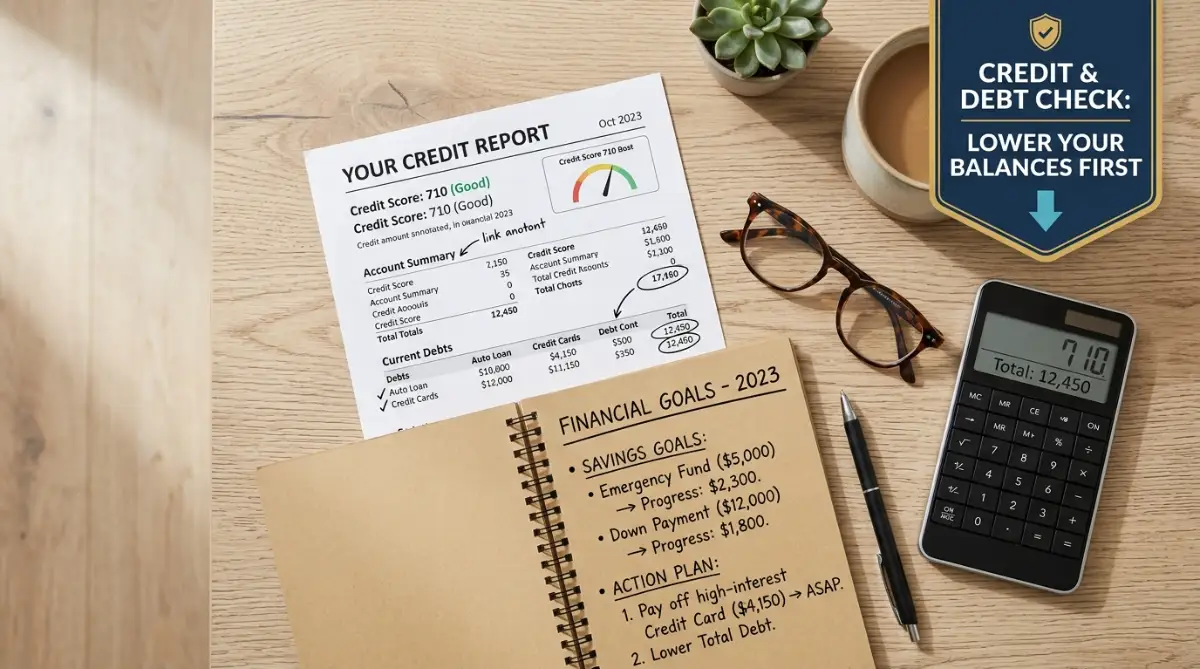
I still remember the freezing Saturday morning I sat on my living room floor with six months of bank statements spread around me. My coffee went completely cold as I stared at the red numbers. I thought I was doing great financially because my paycheck was solid. But when I actually added up my three maxed-out store cards, my random food delivery charges, and my split savings accounts, my stomach sank.
I wanted to buy my first home in six months, but looking at that paper mess, I felt like a total fraud. I was terrified that a loan officer would take one look at my accounts, laugh, and stamp a giant "REJECTED" across my application.
That painful wake-up call forced me to completely reset how I handled my money. I stopped guessing, built a real step-by-step game plan, and cleaned up my financial profile from top to bottom. Six months later, I walked out of the bank with a prime pre-approval letter and the lowest rate on the block. If you feel nervous about your bank accounts today, take a deep breath. You do not need perfect wealth to buy a house, but you do need an honest, clean paper trail. Let us fix your numbers together step-by-step so the bank actually fights to give you a loan.
⚡ Quick Takeaways: Getting Mortgage-Ready Fast
Why Mortgage Underwriters Look at Your Money Differently
Mortgage lenders do not view your money the same way you do. You might look at your income and think you can easily afford a monthly house payment.
Think of a mortgage underwriter as a professional detective who gets paid to find reasons why you might miss a payment. They do not care how confident you feel about your career. They only look at hard facts: your payment habits over the last 24 months, your debt load, and the exact paper trail of your savings. If your bank statements look chaotic or full of mystery deposits, they see danger and will either hike your interest rate or decline the application completely.
Step 1: Run a Full Audit on Your Credit Profile
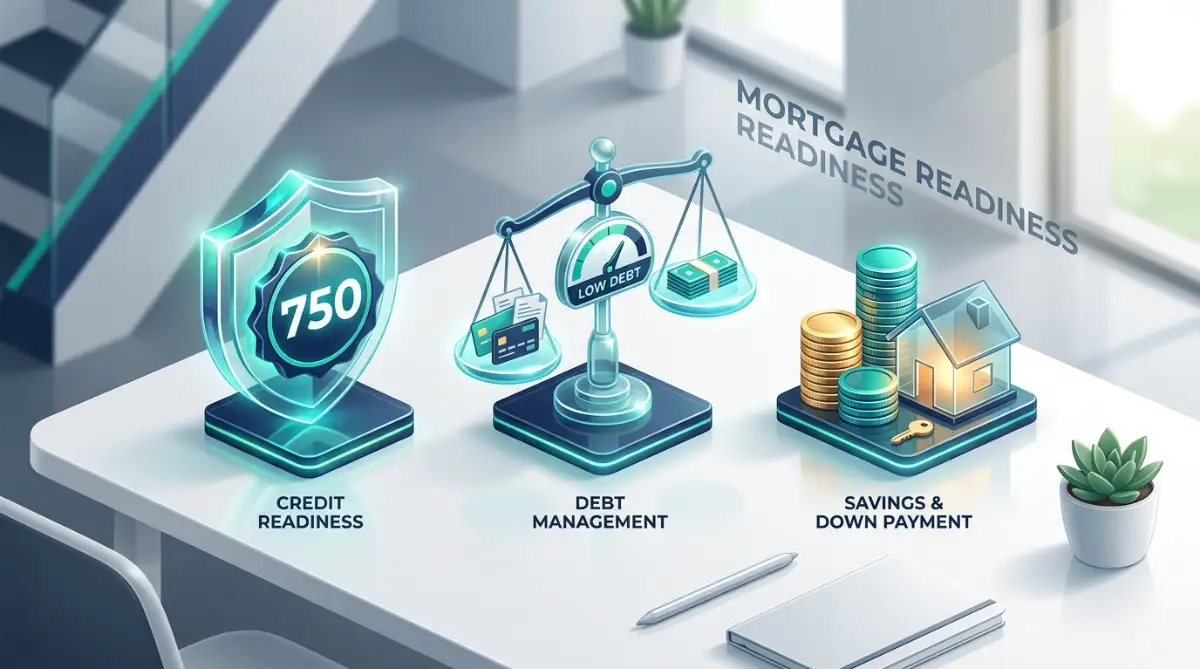
Your credit profile is the single most powerful factor in deciding your loan terms. A higher score translates to thousands of dollars saved over the life of your loan.
Your first move is pulling your real credit files directly from Equifax, Experian, and TransUnion. Please do not trust free credit monitoring apps here because they use basic consumer scoring models, whereas mortgage lenders look at strict FICO versions built just for home loans. Go through each report line by line. If you spot an old paid collection listed as active, or a late mark on a bill you paid on time, dispute it right away so the bureaus can wipe it clean before you apply.
Practical Steps to Raise Your Credit Score Fast
- Keep your credit card utilization below 10% on every single card rather than just on your total limit.
- Pay off your balances twice a month to prevent high mid-cycle balances from being reported to the credit bureaus.
- Never close your oldest credit cards, because closing them reduces your average credit history length.
- Put a complete pause on applying for new retail cards, auto loans, or personal lines of credit.
Watch this practical breakdown to understand how credit scoring models evaluate your mortgage file:
To help you visualize exactly how underwriters assess your files behind the scenes, I strongly recommend watching this deep-dive walkthrough by licensed US mortgage originator Kyle Seagraves. In his detailed 54-minute masterclass, The Ultimate First Time Home Buyer Guide, you will learn step-by-step how to audit your own credit profile, negotiate closing costs, and steer clear of fatal mortgage application errors before speaking with a lender.
Step 2: Calculate and Tame Your Debt-to-Income (DTI) Ratio
Your Debt-to-Income (DTI) ratio tells the lender how much of your monthly gross income is already promised to existing debts. Lenders calculate two specific numbers: your front-end ratio and your back-end ratio.
The front-end ratio measures your expected housing payment against your monthly gross income. The back-end ratio includes your housing payment plus all recurring monthly debts, like student loans, car payments, and minimum credit card dues.
Most conventional loan programs prefer a total back-end DTI ratio of 36% or lower, though some programs allow up to 43%. If your monthly debt payments eat up half of your paycheck, lenders will view you as a high-risk borrower.
To improve this ratio, focus on eliminating small debts with high monthly minimum payments first. Paying off a small personal loan of USD 1,200 that requires a USD 150 monthly payment helps your DTI far more than putting that same money toward a large student loan with a tiny payment.
Keep in mind that loan limits and property affordability change significantly depending on where you decide to buy. If you want to see where housing prices and long-term values are most attractive, take a look at our practical guide to the best cities for real estate investment in the US before finalizing your target purchase budget.
Step 3: Build a True Multi-Layered Cash Reserve
A lot of buyers save up USD 10,000 for a down payment and think they are ready to go home shopping. Then reality hits them like a brick when closing day arrives. You still have to pay for property tax escrows, homeowners insurance, lender processing fees, and professional home inspections out of pocket. On a USD 300,000 home purchase, those closing fees alone usually cost between USD 6,000 and USD 15,000 on top of your down payment.
Lenders also want to see that you will not have an empty bank account the moment you get the keys. They call this requirement "post-closing reserves."
Having three to six months worth of full housing payments sitting safely in your savings account makes your application look strong. It proves that you can handle a sudden medical bill or home repair without falling behind on your mortgage, while your initial down payment immediately starts building your home equity from day one.
My Personal Realization:
When I was getting ready for my loan, I moved money between four different bank accounts right before applying, thinking I was organizing my funds. My loan officer had to ask me for 40 pages of deposit receipts and written explanations to track where every dollar came from. I learned the hard way that you must park your cash in one place and let it sit quietly for at least two to three months before applying.
💡 Real Case Study: How Sarah Raised Her Score 42 Points in 3 Weeks
The Situation: Sarah had a 698 FICO score and carried a USD 4,200 balance on a credit card with a USD 5,000 limit (84% utilization), which pushed her mortgage rate quote to 7.15%.
The Strategy: Instead of paying down small bits across all accounts, she used USD 3,800 from her tax refund to drop that single card balance down to USD 400 (8% utilization) three days before her statement closing date. Her loan officer then submitted an official rapid rescore.
The Outcome: Her credit score jumped to 740 within 5 business days, qualifying her for a prime conventional rate of 6.35% and saving her over USD 180 every single month on her mortgage payment.
Step 4: Organize and "Season" Your Financial Paperwork
Underwriters require a clean, uninterrupted paper trail for every asset and income source you claim. They will look at your last two months of complete bank statements to verify where your down payment came from.
If they see large, unexplained cash deposits that do not match your normal payroll, they will question them. Lenders are legally required to verify that your funds are not from unauthorized personal loans or unverified sources.
To keep things smooth, make sure all gift funds from family members are accompanied by an official gift letter stating the money does not need to be repaid. Deposit all funds well in advance so they become "seasoned" in your accounts.
Keep your pay stubs, W-2 forms, and tax returns saved in a dedicated digital folder. Being able to supply these documents within hours of a request will speed up your loan approval significantly.
Step 5: Protect Your Income and Job Stability
Lenders value consistency above almost everything else. They want to see at least a two-year steady work history in the same industry or line of work.
Switching from a salaried position to a 100% commission-based role right before applying can disrupt your mortgage plans. Commission and bonus income usually require a full two-year track record before an underwriter can count it toward your qualifying income.
Common Pre-Mortgage Myths vs. Financial Realities
There is an enormous amount of bad advice floating around regarding how to get ready for a home loan. Believing these myths can cause you to delay your purchase unnecessarily or make costly mistakes with your savings.
Understanding the actual rules helps you build an efficient plan that fits your personal timeline. You do not need a perfect financial record to buy a home, but you do need an honest, clean, and organized record.
Step 6: Create an Actionable 6-Month Mortgage Timeline
Preparing your finances works best when you break the tasks down into a clear, monthly routine. Trying to fix everything in two weeks will only leave you stressed and exhausted.
Use this step-by-step timeline to keep your progress on track as you approach your target application date.

Month 6 to Month 4: The Clean-Up Phase
Begin by auditing your credit profile and paying down revolving credit card balances. Stop making any large luxury purchases and redirect that cash straight into your high-yield savings account.
Check your budget and cut back on recurring subscriptions or non-essential spending. This not only builds up your liquid savings faster but also trains you to live comfortably on a tighter housing budget.
Month 3 to Month 1: The Lockdown Phase
During this window, freeze your credit activity completely. Do not buy new furniture on credit, do not finance a new car, and do not co-sign a loan for anyone else.
Collect all of your pay stubs, bank statements, and tax forms into a clean digital folder. Reach out to a reputable mortgage broker or loan officer to start the formal pre-approval review.
Summary Checklist Before Submitting Your Application
Before you hand your financial life over to an underwriter, run through this quick checklist to ensure your file is clean:
- Credit reports pulled from all three bureaus with all errors disputed.
- Credit card balances paid down below 10% of their individual limits.
- No new credit inquiries or opened loan accounts in the last six months.
- Down payment, closing costs, and emergency reserves parked safely in one account.
- Last two years of W-2 forms, tax returns, and recent pay stubs gathered.
- All gift funds verified with an official gift letter and clean transfer records.
- Job position, pay structure, and employment history verified and stable.
Preparing your finances ahead of time changes the entire home buying journey from a stressful gamble into a predictable victory. When your credit is clean, your debts are low, and your savings are organized, lenders will compete for your business. Take these steps today, stay patient with the process, and step confidently into your new home.
Advanced Tactics to Maximize Your Mortgage Borrowing Power
When you pay off a large revolving credit card balance right before applying for a loan, your credit score might take up to 30 to 45 days to reflect that change organically. But here is an insider shortcut: your loan officer can request a rapid rescore by submitting your zero-balance payment receipts directly to the credit bureaus, updating your official score in just three to five business days.
If you want to understand how credit scoring models function and how consumer reporting protects you during loan applications, review the official consumer guidance provided by the Consumer Financial Protection Bureau (CFPB).
Another clever tactic I often share with first-time buyers is managing your credit card statement closing dates instead of simply paying on the due date. Card issuers report your balance to the credit bureaus on the date your billing statement closes, not on your payment due date. If you pay your balance down to zero three days before the statement period closes, the bureau registers a 0% credit utilization rate, which can give your FICO score an immediate boost of 20 to 40 points.
Maximizing Gift Funds and Asset Transfers
If a family member offers to help you with your down payment, you must handle the transfer with extreme care. Lenders require a clear, uninterrupted paper trail showing the exact source of that gift money.
The donor must sign a formal gift letter explicitly stating that the money is an absolute gift with zero expectation of repayment. The Federal Housing Finance Agency (FHFA) oversees conventional mortgage guidelines through Fannie Mae and Freddie Mac to ensure all third-party gift transactions meet strict federal lending standards.
Never accept a down payment gift in physical cash or transfer it between unverified accounts without documentation. To keep your file completely clean, follow this precise transfer protocol:
If you own investments like stocks or mutual funds and plan to liquidate them for your down payment, sell them early. Market drops right before closing can leave you short on the cash you need at the settlement table.
Liquidating your assets sixty days in advance allows the cash to settle safely into your primary checking account. This keeps your bank statements clean and protects your purchase funds from sudden market swings. (Note: If you are selling an existing investment property rather than personal stock to fund your purchase, review our simple guide to 1031 exchanges to understand tax deferral options).

Deadly Financial Blunders That Wreck Mortgage Approvals
Many borrowers celebrate too early when they receive an initial pre-approval letter from a lender. A pre-approval is simply an initial estimate based on unverified information or an early credit pull.
The real test happens during underwriting, right before closing day. Making major financial moves during this window can lead to an immediate denial of your loan.
If you discover an old collection account or an inaccurate mark on your credit report, avoid filing a dispute right in the middle of active underwriting. Resolving credit disputes temporarily recalculates your score and can stall your approval process. If you need to clean up genuine errors on your report, do it at least six months before applying. To understand your legal rights regarding credit repair and disputing inaccurate data, check out the consumer guides published by the Federal Trade Commission (FTC).
Another critical mistake is co-signing on a loan or credit card for a friend or relative. When you co-sign, you become legally responsible for one hundred percent of that debt.
Underwriters must count that monthly payment against your personal debt limits unless you can prove the primary borrower made all on-time payments for twelve consecutive months from their own bank account. Avoid co-signing for anyone when you plan to buy a home within the next year.
Before hunting for homes, it helps to understand market values and neighborhood dynamics. If you are buying with an eye toward future cash flow, explore our step-by-step rental property guide to discover how location choices and tenant demand impact your long-term returns.
Frequently Asked Questions About Mortgage Readiness
1. How far in advance should I start preparing my finances for a mortgage?
You should start at least six months before applying. This gives you plenty of time to dispute credit report mistakes, lower your card balances, and let your down payment money sit quietly in your bank account so underwriters can easily verify it.
2. What is the single biggest mistake buyers make before closing?
The biggest mistake is financing new purchases—like buying furniture, leasing a car, or opening a department store card. These moves create brand-new debt obligations that raise your debt-to-income ratio and can cause the bank to cancel your loan approval right before closing day.
3. Can I use cash gifts from my parents for my down payment?
Yes, but you cannot simply deposit physical cash into your account. Your parents must sign an official gift letter stating the money does not need to be paid back, and you must provide a clear bank paper trail showing the money coming directly from their account into escrow.
4. Will checking my own credit score hurt my rating before I apply?
No. Checking your own score counts as a soft inquiry and never hurts your rating. Only hard inquiries triggered when you submit formal applications for loans or credit cards can cause a temporary dip in your score.
5. How much money should I keep in savings after paying the down payment?
Most lenders love to see at least three to six months worth of full housing payments (principal, interest, taxes, and insurance) left in your savings account after all closing costs are paid. This safety buffer shows the bank you can handle unexpected expenses without missing payments.
Your Path to Confident Homeownership
Getting your finances ready for a mortgage is not an overnight task, but it is one of the most rewarding financial workouts you will ever complete. By building your savings, managing your debt, and keeping your credit clean, you take away the stress of the underwriting process.
Lenders love working with prepared borrowers who understand their own numbers. When your financial foundation is solid, you can negotiate better interest rates, lower fees, and favorable loan terms.
Start by checking your credit report this week, paying down small balances, and setting up an organized savings plan. Taking action on these simple steps today will turn your dream of owning a home into a reality.
I know how scary it feels to put your finances under a microscope, because I felt that exact same anxiety when I bought my first home. The moment you hold the keys to your front door, every single dollar you saved and every debt you paid off will feel completely worth it. Take that first step today, trust your plan, and look forward to the day you step into your new home.
Disclaimer:
The information provided in this article is for educational, informational, and personal planning purposes only and does not constitute formal financial, legal, tax, or mortgage lending advice. Mortgage lending guidelines, minimum credit score requirements, down payment rules, and debt-to-income thresholds vary widely by lender, loan program, and geographic location. Always consult with a licensed mortgage loan originator, certified financial planner (CFP), or qualified tax professional before making significant financial commitments or entering into real estate contracts.