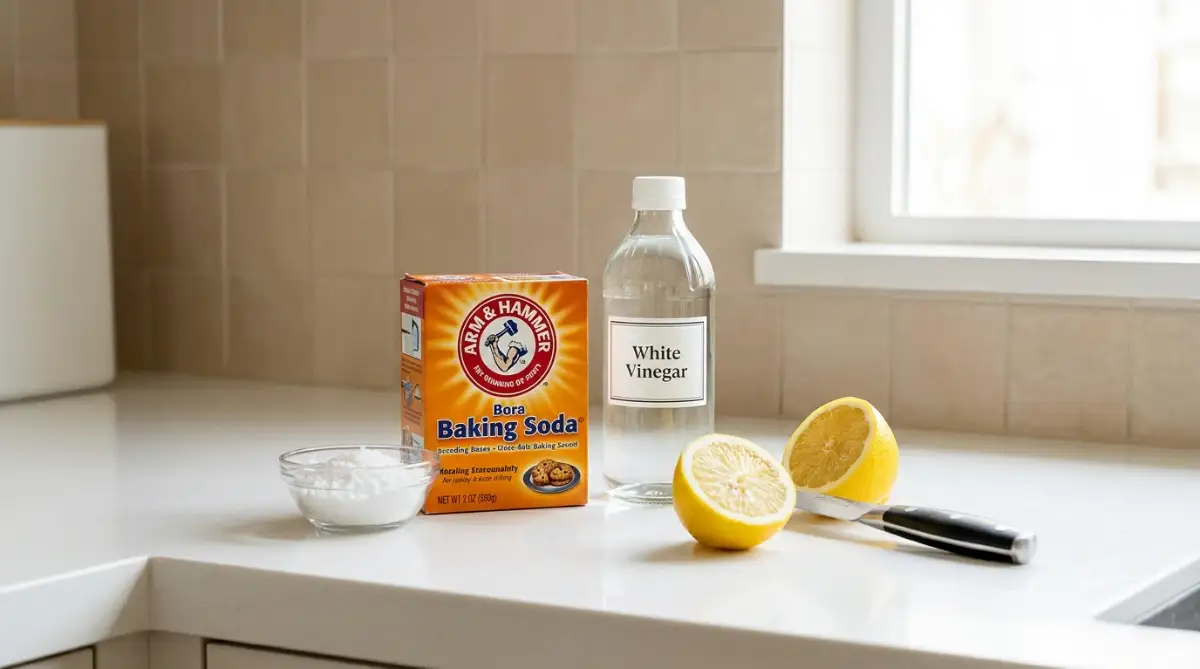
The Messy Reality of a Blocked Kitchen Sink

It always seems to happen at the worst possible moment. You are finishing a beautiful family dinner, and you turn on the faucet to wash the dishes.

Instead of draining away, the soapy, greasy water starts rising higher and higher in the sink bowl [2]. Floating food scraps, oil slicks, and gray water form an ugly pool right in the middle of your kitchen.

Within minutes, a sour, musty smell begins to fill your entire cooking space. Your kitchen instantly feels dirty, disorganized, and completely out of service.

You find yourself staring at a swamp of dirty water, feeling completely helpless. The thought of leaving it overnight makes you feel sick, but you do not know how to fix it without calling a plumber.

The Pitfalls of Bad Advice and Chemical Quick Fixes

When people search for solutions, they often get bad advice that makes the problem much worse. Rushing to resolve the issue leads many to make choices they regret later.

Here is why common quick-fix methods often fail and cause more damage:

  • Relying on liquid chemical cleaners: These harsh products generate extreme heat inside your pipes that can melt PVC joints and crack old metal plumbing [3].
  • Ignoring the chemical fumes: Acidic drain openers release toxic fumes into your kitchen, which can irritate your eyes, skin, and lungs.
  • Poking randomly with wire hangers: Shoving sharp wire down the drain can puncture delicate plastic pipes, leading to hidden leaks behind your cabinets.
  • Using cold water to flush grease: Running cold water over grease actually causes it to solidify faster, creating a hard block deeper in your plumbing system.
  • Pouring commercial products down a garbage disposal: Harsh chemical cleaners can destroy the delicate rubber seals and metal blades of your disposal unit [3].

How a Clogged Drain Ruins Your Daily Peace of Mind

A blocked sink is not just a plumbing issue; it is a major source of stress that disrupts your entire household.

  • Loss of control over your home: You cannot cook, wash vegetables, or clean up after meals, which forces you to rely on expensive takeout food.
  • The anxiety of high repair bills: The fear of paying hundreds of dollars for an emergency plumber can keep you awake at night.
  • Embarrassment from bad smells: The rotten food odor rising from the standing water makes you feel embarrassed to invite guests into your home.
  • Frustration from wasted time: Trying multiple methods that do not work wastes your time and leaves you with a bigger mess than before.

Fortunately, you do not need to spend a fortune or pour toxic chemicals down your drain to solve this issue. You can clear the blockage yourself using simple, safe ingredients that are probably already sitting in your kitchen pantry right now.
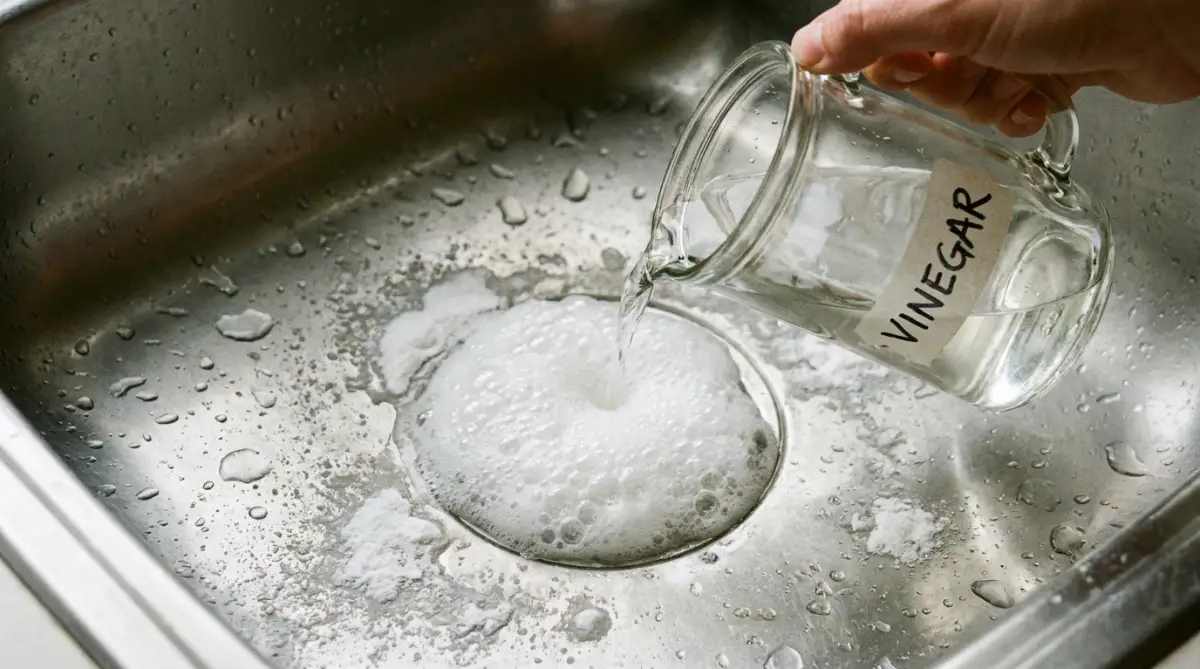
Step 1: Melting the Grease with the Boiling Water Flush

Before you try any physical tools or chemical reactions, you must target the most common cause of kitchen clogs: solidified cooking grease. Every time you rinse a pan, small amounts of fat and oil enter your drain.

The Science of Grease Accumulation

Think of grease inside your pipes like cold butter left on a kitchen counter. When it is warm, it flows easily as a liquid.

However, as soon as it hits the cold metal or plastic of your under-sink pipes, it quickly cools down and hardens. This solid fat acts like glue, trapping food particles, coffee grounds, and soap scum that pass by.

Over several months, this sticky mixture grows thicker until the water can no longer pass through.

How to Execute the Hot Water Flush

To melt this hardened fat, we need to raise the temperature inside the pipe as much as possible.

First, use a small cup or sponge to remove as much standing water from the sink as you can. If you pour hot water into a sink full of cold water, the hot water will cool down before it ever reaches the clog.

Next, fill a large metal kettle or a big pot with water and bring it to a rolling boil.

Carefully carry the boiling water to the sink. Pour it slowly and directly down the drain opening in two or three separate splashes.

If you have plastic PVC pipes under your sink, boiling water can sometimes soften the glued joints. In this case, use hot tap water or let the boiling water cool down for a few minutes before pouring it.

Let the hot water sit in the drain for about five minutes to melt the grease. If the water slowly begins to drain, you have successfully softened the main block.
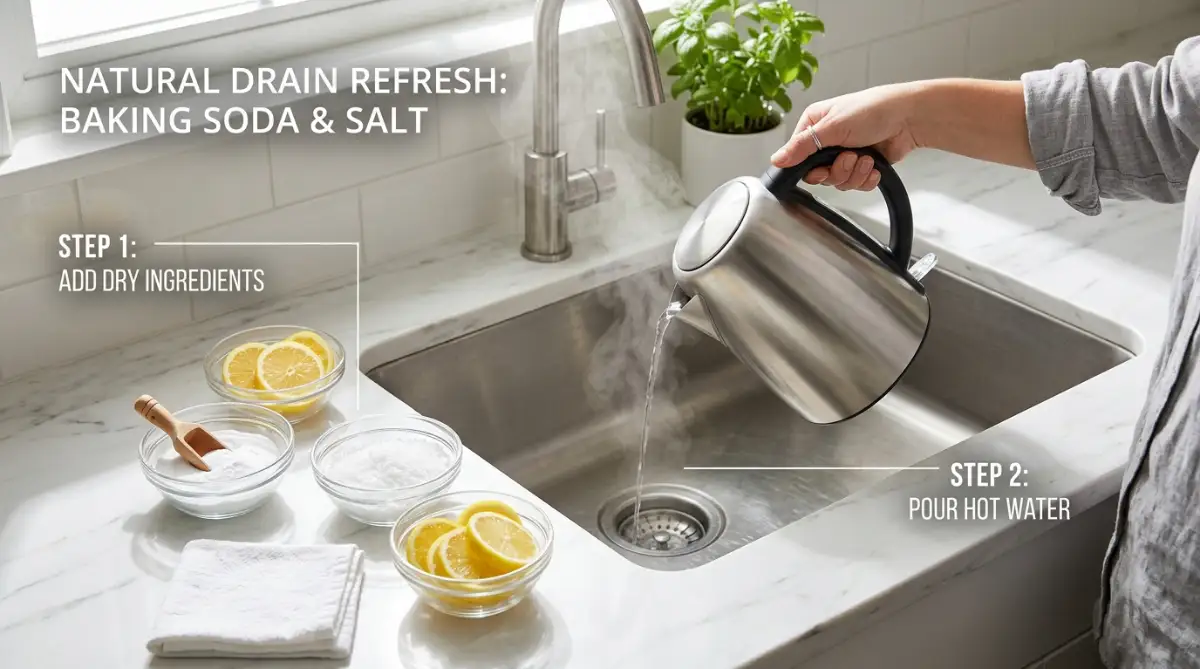
Step 2: The Volcano Reaction (Baking Soda and White Vinegar)

If the hot water flush does not clear the block completely, it is time to use a natural chemical reaction. This method uses two everyday pantry staples: sodium bicarbonate (baking soda) and acetic acid (white vinegar).

The Chemistry of the Fizzing Action

When you mix alkaline baking soda with acidic vinegar, they undergo a rapid chemical reaction [4]. This reaction produces sodium acetate, water, and carbon dioxide gas [4].

The carbon dioxide gas forms thousands of tiny, energetic bubbles. This intense bubbling action acts like a microscopic scrubbing brush inside your pipes. It physically shears the loosened grease and sticky buildup away from the inner walls of your plumbing.

Step-by-Step Application Guide

  • Pour the baking soda: Measure exactly one cup of dry baking soda and pour it directly down the dry drain. Use a butter knife or a spoon to push the powder through the drain strainer if needed.
  • Add the vinegar: Pour one cup of plain white vinegar down the drain immediately after the baking soda.
  • Seal the drain: Cover the drain opening quickly with a sink stopper or a clean cloth to trap the fizzing bubbles inside the pipe.
  • Let it work: Allow the mixture to fizz and work its magic inside the pipe for at least fifteen minutes.

While the mixture sits, you will likely hear a soft sizzling or bubbling sound coming from inside the wall. This is a great sign because it means the reaction is actively breaking down the clog.

After fifteen minutes, flush the drain with another kettle of hot water to wash away the loosened debris.

Step 3: Boosting the Power with Coarse Salt and Lemon

Sometimes, a clog is extra stubborn because it contains mineral deposits from hard water or fibrous vegetable peels. To tackle these tough blocks, we can add physical abrasives and natural fruit acids to our cleaning mix.

Why Coarse Salt Works

Coarse salt, like kosher salt or rock salt, acts as a natural scrubbing agent. The rough crystals do not dissolve instantly in vinegar, allowing them to scrape against the sticky pipe walls.

When combined with the fizzing action of baking soda, the salt helps physically grind away the blockage.

The Power of Lemon Juice

If you want to add a fresh scent while breaking down grease, use lemon juice alongside your vinegar. Lemon juice contains citric acid, which is excellent at cutting through sticky grease and mineral deposits.

To apply this step, mix half a cup of coarse salt with half a cup of baking soda. Pour this dry mixture directly down the drain.

Next, heat one cup of white vinegar mixed with half a cup of fresh lemon juice until it is hot but not boiling.

Pour the hot liquid down the drain over the salt and baking soda. The reaction will be incredibly active, and the fresh lemon smell will quickly replace any foul drain odors.

Seal the drain and let it sit for twenty minutes. Finish by flushing the pipes with a large pot of hot water.

By combining the heat of boiling water, the mechanical scrub of salt, and the chemical fizz of vinegar, you can clear most kitchen clogs easily. These three steps are completely safe for your health, gentle on your plumbing, and very cheap to perform.

Advanced Cleaning Methods to Defeat Stubborn Kitchen Clogs

Sometimes a simple pour of hot water is not enough to break up years of sticky kitchen buildup. When you are dealing with a deeply set blockage, you need to use more advanced home methods.

These expert-level techniques are completely safe for your household pipes and do not rely on toxic commercial ingredients. They will help you clear the blockages that standard cleaning methods leave behind.

Step 4: Clearing the Under-Sink P-Trap by Hand

If the natural bubbling mixtures do not fully clear the drain, the blockage is likely sitting inside the U-shaped pipe under your sink. This specific bend in the pipe is called the P-trap.

The P-trap acts like a water barrier that keeps smelly sewer gases from entering your kitchen. However, because of its sharp curve, it is also the most common place for heavy food debris and thick grease to get stuck.

How to Safely Remove and Clean Your P-Trap

Before you start, place a large plastic bucket directly under the U-shaped pipe to catch any dirty standing water. Use your hands or a pair of slip-joint pliers to turn the plastic slip nuts on both ends of the U-bend counter-clockwise.

Slowly pull the pipe segment straight down and empty the trapped dirty water and gunk into your bucket.

Look inside the removed pipe segment and use an old bottle brush or a wire coat hanger to push out any greasy blockages. Wash the pipe in an adjacent sink or bucket using warm water and natural dish soap.

Slide the clean pipe back into place, ensuring the rubber seals are sitting flat inside the connections. Tighten the slip nuts firmly with your hands, run a gentle stream of warm water, and check for any tiny leaks.

Step 5: Utilizing Active Dry Yeast for Slow Organic Blocks

Active dry yeast is not just for baking bread; it is also a fantastic natural tool for clearing slow drains. This method works incredibly well if your sink is slowly draining due to starchy food particles like rice, pasta, or potato skins.

How Yeast Targets Food Waste

Yeast is a living organism that feeds on starches and sugars. When you pour it into your drain, it immediately begins to consume the organic food debris stuck to the pipe walls.

This biological action shrinks the size of the organic waste, allowing the remaining grease to wash away naturally.

Preparing the Yeast Mix

Dissolve one standard packet of active dry yeast in a cup of warm water, making sure the water is not too hot. If the water burns your skin, it is too hot and will kill the active yeast cells.

Add one teaspoon of white sugar to the warm water to feed the yeast and get it bubbling. Pour this active mixture directly down your slow kitchen drain and let it sit undisturbed overnight.

During the night, the yeast will work quietly to digest the organic starches inside your pipe system. First thing the next morning, flush the drain with a large pot of hot water to clear out the digested waste.

Step 6: Creating Vinegar and Citrus Ice Cubes for Garbage Disposals

If you have a garbage disposal unit attached to your kitchen sink, it can easily trap grease on its grinding blades. Over time, this grease hardens, causing the unit to run slowly and release bad odors.

The Thermal Shock Technique

To clean the disposal blades without using hands or chemicals, you can use the power of cold temperatures. Extreme cold causes soft grease to harden rapidly, making it brittle and easy to break apart.

By combining vinegar with citrus oils, you can create a powerful cleaning cube that cleans the blades while sharpening them.

How to Prepare and Use the Cubes

Fill an empty ice cube tray halfway with white vinegar and drop a small slice of lemon or orange peel into each section. Fill the rest of the tray with clean water and place it in your freezer until the cubes are completely solid.

Turn on your kitchen cold water tap and drop three or four of these citrus vinegar cubes down into the garbage disposal. Turn on the disposal switch and let the unit grind the ice cubes completely.

The hard ice will scrape the sticky grease off the blades, while the vinegar and citrus oils sanitize the entire chamber.

Maintaining Your Kitchen Plumbing System for the Long Term

Clearing a clog is satisfying, but preventing one from forming in the first place is even better. By practicing a few simple daily habits, you can keep your kitchen plumbing running smoothly for years to years.

Use a Cheap Mesh Sink Strainer

The absolute best tool for drain protection is a simple stainless steel mesh sink strainer. Place this strainer over your drain opening at all times to catch tiny food scraps, seeds, and hair.

Empty the captured scraps into your compost bin or trash can after every meal prep session. This single habit prevents up to ninety percent of physical blockages from ever entering your pipes.

Establish the Weekly Hot Water Flush Routine

Make it a habit to flush your kitchen sink with hot water once a week, even if the sink is draining fine. Simply fill your kettle with water, bring it to a boil, and pour it slowly down the drain.

This simple routine melts away any thin layers of cooking grease before they have a chance to cool down, harden, and build up into a serious blockage.

Dangerous Pitfalls that Can Ruin Your Home Plumbing

When you are trying to clear a stubborn kitchen clog, it is very easy to make mistakes out of frustration. Rushing the process or using the wrong methods can cause expensive damage to your household pipes.

To protect your home and your wallet, make sure to avoid these five common plumbing errors.

1. Mixing Different Household Cleaning Products

One of the most dangerous mistakes you can make is mixing different cleaning agents inside your drain. For example, some people pour vinegar down a drain that already has commercial bleach or ammonia in it.

This mixture creates a chemical reaction that immediately releases highly toxic chlorine or chloramine gas into your kitchen [5]. These gases can cause severe breathing issues, burn your throat, and damage your eyes.

Always stick to one natural cleaning method at a time. If you have recently used a commercial product, flush the drain with plenty of plain water before trying a natural solution.

2. Pouring Hot Cooking Fats Directly Down the Sink

It is very tempting to pour the liquid grease from your frying pan directly down the drain, thinking that hot tap water will wash it away. However, water cools down incredibly fast once it enters the cold pipes deep underground.

As the grease cools, it clings to the pipe walls and forms rock-hard barriers known as fatbergs. These blockages can travel deep into your home's main sewer line, where they are incredibly difficult and expensive to clear.

Always pour hot cooking grease into an empty tin can or jar, let it cool and solidify, and throw it in the trash bin.

3. Shoving Sharp Metal Hangers or Tools into the Drain

If a drain is running slowly, you might feel tempted to grab a metal wire hanger and push it down the pipe to hook the clog. This is highly risky, especially if you have plastic PVC plumbing under your sink.

The sharp end of a metal wire can easily scrape, gouge, or completely puncture the thin walls of your plastic pipes.

This creates hidden leaks behind your drywall or cabinet base, which can lead to wood rot and black mold growth. If you need to use a physical tool, always use a professional, flexible plastic drain snake designed for plumbing.

4. Plunging with Extreme and Uncontrolled Force

A plunger is a great tool for clearing soft blockages, but using it with too much force can cause serious issues. Many kitchen sinks share plumbing lines with nearby appliances like dishwashers.

If you plunge with extreme force, the intense water pressure can blow out the rubber hose connections under your sink. It can also cause the glued joints of plastic PVC pipes to crack and separate.

Always use gentle, steady pressure when plunging a sink. The goal is to slowly wiggle the clog back and forth until it loosens, not to blast it through the pipe with force.

5. Relying Exclusively on Heavy Chemical Powders

Some homeowners buy heavy, powdered chemical cleaners like caustic soda and pour them down the drain in large amounts. If these dry powders do not clear the clog, they can settle inside the pipe and harden into a rock-like solid.

Once these chemicals turn solid inside your plumbing, no amount of hot water or vinegar will dissolve them. The only way to fix this issue is to cut out the damaged section of the pipe and replace it entirely.

Stick to liquid natural ingredients like vinegar, lemon juice, and hot water, which will never solidify inside your plumbing.

Step into a Cleaner and Greener Home Today

Taking care of your home does not have to involve expensive repair bills or toxic chemicals that harm your family. By using simple natural ingredients like baking soda, vinegar, and hot water, you can keep your kitchen running smoothly.

Learning how to clear your own drains is an incredibly empowering experience. You will no longer feel anxious when you see water rising in the sink, because you have the knowledge to fix it yourself.

These natural cleaning methods are safe for your pipes, friendly for your budget, and highly effective. Grab some baking soda and white vinegar from your pantry today, and give your kitchen drains the natural clean they deserve.