How to Patch a Hole in Drywall and Paint Over It So No One Notices
I still remember the sinking feeling in my stomach when our moving dolly slipped and punched a fist-sized dent right into the hallway drywall. For five months, I pretended not to see it every single day. Whenever guests walked in, I found myself standing awkwardly in front of the wall just to block their view. I kept putting off the repair because I thought I needed an expensive handyman or fancy construction skills to fix it.
The truth is, fixing a drywall hole is surprisingly straightforward once you know the step-by-step flow. You do not need any builder background or a garage full of power tools. With a small putty knife, a tub of compound, and a bit of patience between drying times, you can make that damaged spot disappear completely. Let me walk you through the exact process I use so your wall looks smooth, seamless, and brand-new.
Quick Project Summary & Golden Rules
- Time & Effort: 30 minutes of hands-on work (plus compound drying time).
- Golden Rule #1: Never slap on one thick coat of mud. Two to three paper-thin layers prevent cracking and shrinkage every time.
- Golden Rule #2: Always apply a dedicated primer over your patch before painting to stop patchy, dull spots from showing up under room lights.
- Pro Secret: Feather the compound at least 3 to 4 inches past the damaged spot to turn a sharp patch into a flat ramp that fools the eye.
What You'll Need Before You Start
Before touching the wall, gather these basics:
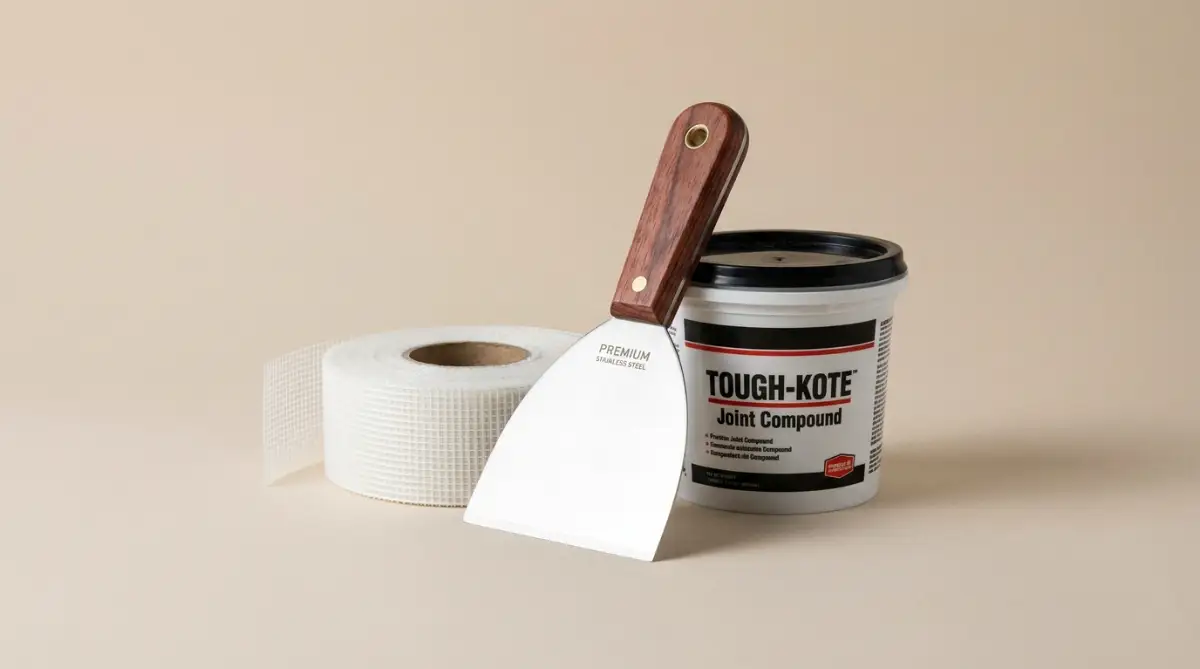
- Spackle or lightweight joint compound (spackle works great for small holes; joint compound is better for anything bigger than a golf ball)
- A putty knife (a 3-inch and a 6-inch one if you have both)
- Fine-grit sandpaper (220 grit is ideal)
- A damp cloth
- Primer
- Matching paint
- A self-adhesive mesh patch (only needed for holes larger than about 2 inches)
You don't need fancy tools here. Most of this is available at any hardware store for under a few dollars total. If you are dealing with deeper wall cracks or larger structural damage, you can also check out our simple step-by-step guide on how to patch drywall like a professional.
Drywall Patch Repair Decision Matrix (DIY vs Professional Cost)
Want to see these exact patching techniques in action before you grab your putty knife? Watch this quick step-by-step video to see how simple it really is to make any hole disappear!
Step 1: Clean Up the Hole Before You Fill Anything
This step gets skipped constantly, and it's the reason a lot of patch jobs fail.
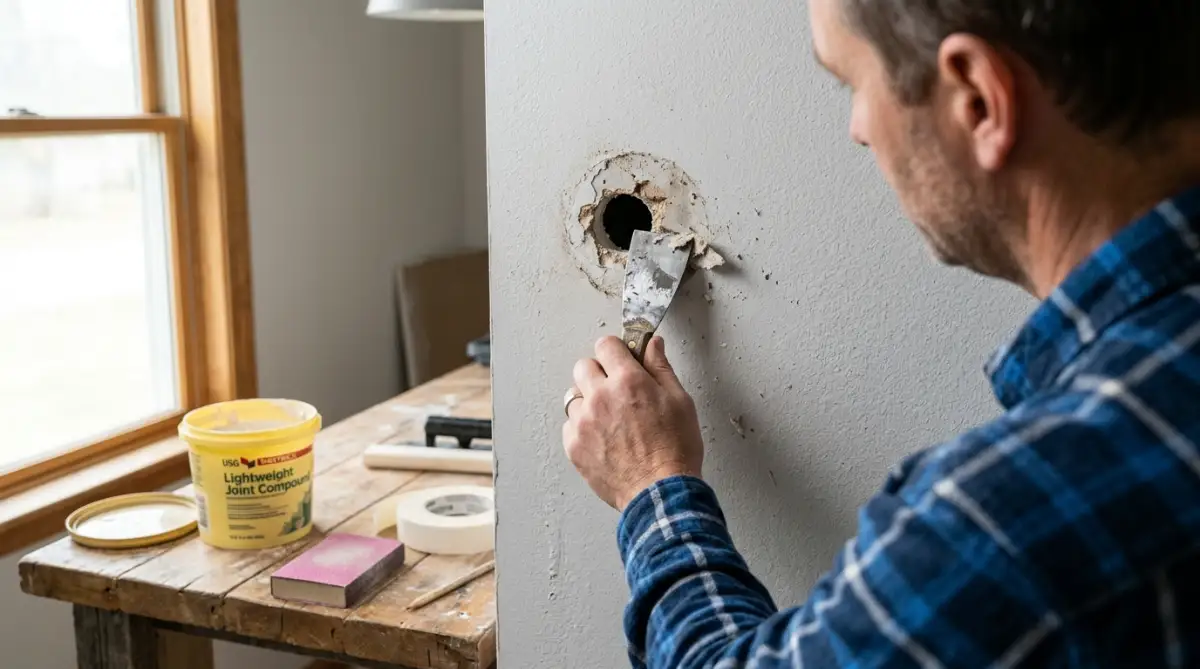
Brush away loose drywall dust and any crumbling edges. If there are jagged bits sticking out, gently push them in or trim them with a utility knife.
For small nail holes, this takes ten seconds. For bigger holes, you want a clean, stable edge before you add any filler. Think of it like cleaning a cut before putting on a bandage — the filler will hold better if it has a solid surface to grip.
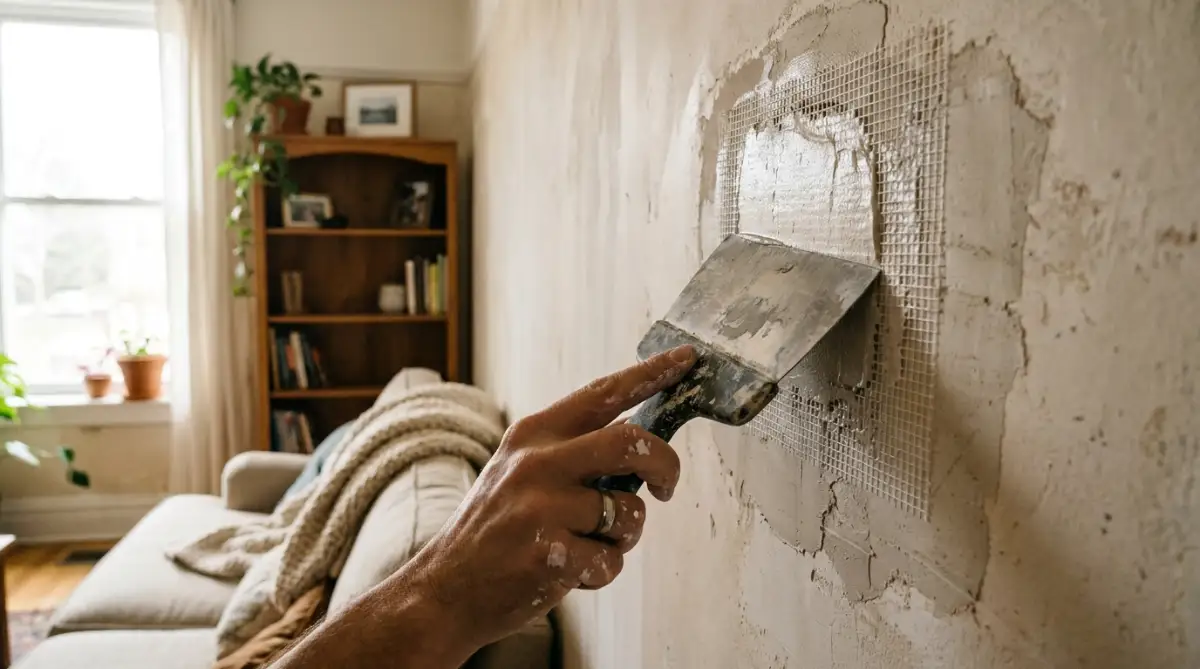
For holes larger than two inches, place a self-adhesive mesh patch over the gap first. This gives the compound something to bond to instead of just hanging in open air.
Step 2: Apply the Compound in Thin Layers
My biggest mistake during my first repair was trying to finish everything in one heavy coat to save time. It ended up cracking as it dried, and I had to scrape the whole mess off. Taking a little extra time to build up two super thin layers made all the difference in getting a completely flat finish.
Here's where most people go wrong: they pile on too much filler at once.
Use your putty knife to apply a thin layer of spackle or joint compound over the hole. Press it in firmly, then drag the knife across the surface at an angle to smooth it out.
Let it dry completely. This usually takes a few hours depending on humidity and how thick the layer is.
Once it's dry, check the surface. If you can still see a slight dip, that's normal. Apply a second thin coat, slightly wider than the first, feathering the edges out so there's no hard line where old wall meets new compound.
Step 3: Sand It Down Until It's Invisible by Touch
Once the final layer is fully dry, grab your sandpaper.
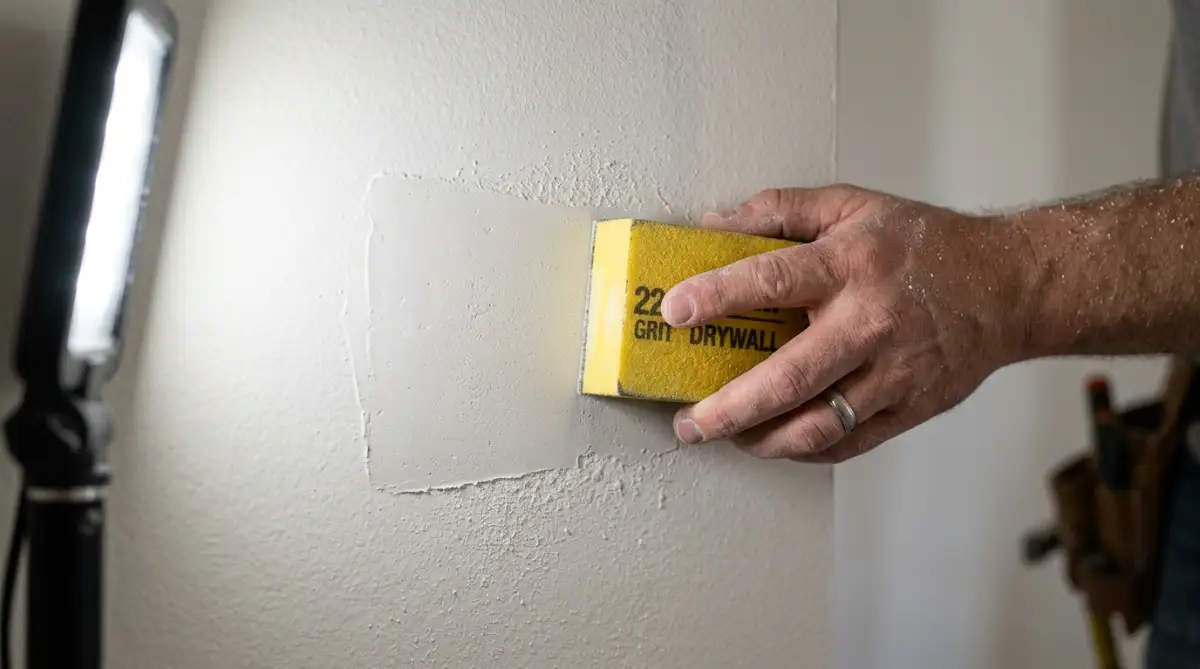
Sand in gentle, circular motions until the patch is flush with the rest of the wall. Run your hand over it with your eyes closed — if you can feel a bump or dip, keep sanding.
This step matters more than people expect. Paint doesn't hide texture. It actually makes uneven texture more visible, especially under lamp light or sunlight hitting the wall at an angle.
Wipe the area down with a slightly damp cloth afterward to remove dust before you prime. When rinsing your putty knives and muddy cloths, avoid washing heavy joint compound clumps down your pipes to prevent clogs. If your kitchen drain ever starts draining slowly, use this pantry trick that clears a clogged sink without chemicals to keep things flowing freely. Sanding creates very fine gypsum dust that can easily irritate your lungs. I always wear a snug N95 dust mask while sanding, following standard CDC respirator safety recommendations to keep the workspace safe and clean.
Why Primer Is the Step You Shouldn't Skip
A lot of people jump straight from sanding to painting. Don't do this.
Here is a quick story: the first time I patched a wall, I skipped primer and put paint straight onto dry compound. Two days later, a chalky, flat gray patch stood out clearly every time the hallway light turned on. Drywall mud acts like a thirsty sponge; it sucks in moisture and ruins your paint sheen. Brushing on one thin coat of drywall primer seals the patch so your final wall color blends in naturally without flashing.
Painting Over the Patch So It Blends In
Painting over the patch is where you make the repair truly disappear. Always grab a small 4-inch mini foam roller instead of a standard paintbrush. Brushes leave obvious stroke lines, while a roller creates the exact orange-peel texture found on your surrounding wall. Roll the center of the patch first, then lightly fade your roller strokes outward toward the dry edges. If you do not have leftover paint, peel a tiny quarter-sized sample of dry paint from the wall and take it to your local paint shop for an exact machine match.
A Few Things That Make This Repair Last
- Avoid hanging anything heavy on the patched spot for at least a week
- Keep the area dry while the compound cures
- If the wall has texture (like an orange-peel or popcorn finish), ask your hardware store about texture spray to match it before painting
You've Got This
This repair looks intimidating before you start and surprisingly simple once you're halfway through. The real secret isn't skill. It's patience between coats and not rushing the drying time.
Once that wall is patched, sanded, and painted, you'll walk past it and genuinely have to think hard to remember where the hole used to be. That's the goal, and it's completely within reach with a Saturday afternoon and a few dollars in supplies.
Make the Patch Disappear Forever: Pro-Level Finishing Tricks
You already know how to fill, sand, and paint a hole. Now let's talk about the tricks that separate an "okay" patch from one that's genuinely invisible.
Trick 1: Feather Twice as Wide as You Think You Need To
Most people feather the edge of their joint compound about an inch past the hole. That's not enough.
Go wider. Feather your compound out three to four inches past the edge of the damage on all sides.
Here's the logic behind this. A thick patch with sharp edges catches light differently than the wall around it, even after paint. A wide, gradual feather blends the thickness change so slowly that your eye can't detect where it starts.
Picture running your fingers across a ramp versus a step. A ramp feels smooth. A step feels obvious. You want a ramp, not a step.
Trick 2: Check Your Wall Under a Work Light, Not Just Daylight
Daylight is forgiving. It's soft and comes from everywhere, so small imperfections hide easily.
A cheap work light or even your phone's flashlight held sideways against the wall is brutal. It throws hard shadows across every bump and dip.
Do this before you paint, not after. Hold a light at a low angle next to your dried, sanded patch. If you see shadows or ridges, grab the sandpaper again.
This single habit catches more flaws than anything else on this list. Painters call this "raking light," and it's the same trick used to spot flaws on car bodies before a paint job.
Trick 3: Match Sheen, Not Just Color
This one trips up almost everyone. You can nail the exact paint color and still end up with a visible patch.
Why? Sheen. Flat, eggshell, satin, and semi-gloss all reflect light differently. If you are not sure which finish is on your wall, you can check this official Sherwin-Williams paint sheen guide to easily identify your exact finish level before buying touch-up paint.
If your wall is eggshell and you accidentally grab a satin can, the patch will catch light differently than the wall around it, even with an identical color match. From across the room, it'll look like a faint shadow that never quite goes away.
Check your paint can label or ask the store to scan the sheen along with the color if you're getting a fresh match.
Keeping Your Wall Looking Fresh for the Long Run
A good patch job isn't just about today. It's about making sure you don't have to redo this in six months.
- Touch up nail holes immediately instead of letting them collect, since several small holes are harder to blend than one
- Keep a labeled sample of your wall paint in a small jar so you always have a match ready
- Avoid hanging picture frames in the exact same spot repeatedly, since this weakens the same patch of drywall over time
- Wipe walls gently rather than scrubbing hard around patched areas, since fresh compound can be slightly more porous for the first few weeks
Think of this the same way you'd think about a scar healing. The area is a little more sensitive at first, but it strengthens and blends in completely with normal care over time.
Room airflow makes a massive difference in your repair speed. If you are patching drywall in a humid bathroom or a chilly basement, drying times can double from two hours to six hours. (Note: If your wall damage was caused by sudden condensation or ceiling moisture drips, learn why your central air conditioner is leaking water and how to fix it before closing up the drywall). Trapping damp compound under fresh paint leads to ugly bubbles down the road. I always set up a small tabletop box fan blowing gently on the wall to speed up drying without cracking the compound.
Five Mistakes That Wreck an Otherwise Good Patch Job
Even careful people fall into these traps. Here's what to watch for.
Mistake 1: Applying One Thick Layer Instead of Several Thin Ones
This is the most common mistake by far. A thick blob of compound looks like it'll save time, but it almost always cracks as it dries.
The fix: thin layers, fully dried between coats, every time.
Mistake 2: Skipping the Primer Step
We covered this in Part 1, but it's worth repeating here as a warning. Skipping primer is the single biggest reason patches show up as a dull or shiny spot after painting.
Five minutes of primer saves you from repainting the whole wall later.
Mistake 3: Painting Before the Compound Is Fully Dry
Compound can look dry on the surface while still holding moisture underneath, especially in thicker spots.
Painting over a patch that isn't fully cured traps that moisture, which can lead to bubbling, peeling, or a slightly soft spot that shows up days later.
If you're not sure, wait an extra few hours. It's better to wait than redo the whole job.
Mistake 4: Using a Brush Instead of a Roller for the Final Coat
Brush strokes leave a different texture pattern than rolled paint. Even with a perfect color and sheen match, brush marks over a patch will catch light differently than the rolled texture on the rest of the wall.
Keep a small foam roller on hand specifically for patch touch-ups.
Mistake 5: Ignoring the Surrounding Texture
If your wall has any texture (orange peel, light stipple, or knockdown), a perfectly smooth patch will stand out no matter how good the paint match is.
Smooth and textured surfaces reflect light completely differently. This is one of the most overlooked reasons a "perfect" patch still looks off from a few feet away.
Common Drywall Patching Myths vs Wall Repair Facts
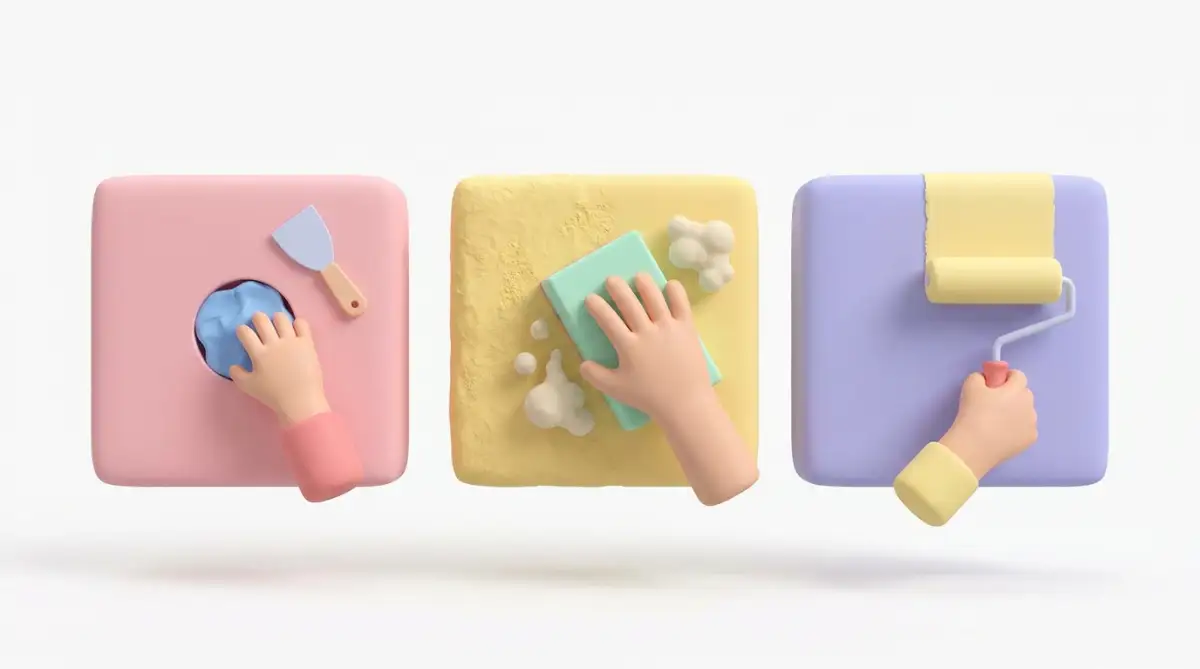
- Myth: "Applying one thick layer of spackle saves you time."
- Fact: Thick mud shrinks as water evaporates, leaving deep spiderweb cracks in the center. Applying two thin coats dries faster and stays dead flat.
- Myth: "Any white wall paint will blend into your white drywall patch."
- Fact: Paint comes in different sheens (Flat, Eggshell, Satin, Semi-Gloss). If your wall has an eggshell finish and you use flat white paint, light will bounce unevenly, exposing your repair.
- Myth: "Spackle and joint compound are the exact same product."
- Fact: Spackle dries fast and resists shrinking for tiny nail holes, but joint compound (mud) is stronger and feathers out smoothly over medium to large holes without flaking off.
Frequently Asked Questions About Drywall Hole Repair
Can I use toothpaste to fill a small nail hole in drywall?
No, you should never use toothpaste for wall repairs. While it may look white initially, toothpaste contains moisture and oils that will crack, rot, turn yellow, and flake off once painted over. A small tub of real spackle costs under 6 USD and delivers a permanent fix.
How long should I wait before sanding joint compound?
Wait at least 2 to 4 hours for standard lightweight spackle, and 12 to 24 hours for traditional all-purpose joint compound. The repair must feel bone-dry and hard across the entire patch. If your sandpaper clogs with wet white paste, stop sanding immediately and let the wall dry longer.
Do I need a mesh patch for a doorknob hole?
Yes, any wall opening larger than 1.5 inches needs backer support like a self-adhesive mesh patch or a drywall backer board. If you apply compound over an open hole without reinforcement, the compound will sag, crack, or punch through the next time someone leans against the wall.
Why does my dry patch look like a dull spot after painting?
This happens when you skip primer before putting on your finish paint. Dry compound soaks up the binder and gloss in your paint coat, creating a dull effect called "flashing." Rolling on one quick coat of drywall primer stops the mud from sucking in your paint sheen.
How do I match wall texture after making a patch?
If your room has an orange-peel or knockdown texture, buy a water-based aerosol texture spray can. Test your spray pattern on a piece of scrap cardboard first, spray a light burst over the patch, let it dry for 30 minutes, and then roll your matching paint over top.
You Already Have What It Takes to Fix This Right
Here's the truth: this isn't really about drywall. It's about trusting that a slow, careful process beats a fast, sloppy one.
You don't need to be a professional contractor to get a professional result. Just like mastering a 15-minute running toilet fix without a plumber, fixing your own walls comes down to following the right steps in the right order. You just need to follow the order of steps, give each layer time to dry, and check your work under a harsh light before calling it done.
The next time you walk into that room and your eyes go straight to where the hole used to be — and find nothing there — that's the moment this whole guide was for.
Grab your putty knife this weekend. That wall has waited long enough.
Recommended DIY Home Maintenance Guides:
- Thinking of upgrading your home energy? Here is the easy way to find how many solar panels your home needs.
- Kitchen plumbing backup? Check out how to clear a clogged kitchen sink drain using natural ingredients.
- Bathroom issues? Learn how to fix a running toilet in under fifteen minutes without a plumber.
Disclaimer:
General Information and Educational Use Only
The information provided in this article is for general educational and informational purposes only. It is not intended to serve as professional contracting, engineering, or home improvement advice. While the steps outlined are common practices for minor cosmetic repairs, individual home conditions vary, and these steps may not apply to every situation.
Safety Precautions and Hazards
- Hidden Utilities: Before cutting, sanding, or driving tools into any wall, ensure there are no electrical wires, plumbing pipes, gas lines, or structural supports behind the drywall. Damaging utility lines can lead to severe injury, electrocution, fire, or water damage.
- Hazardous Materials: Homes constructed prior to 1978 may contain lead-based paint or compound with asbestos. Sanding or scraping these surfaces can release harmful dust. If your house is of this age, review the official EPA lead safety guidelines or test your walls before disturbing the drywall.
- Personal Protective Equipment (PPE): Sanding drywall compound produces fine dust that can irritate the eyes, nose, throat, and lungs. Always wear appropriate personal protective equipment, including a dust mask or respirator (such as an N95 mask) and safety glasses, and work in a well-ventilated area.
Material and Tool Safety
Always read and strictly follow the manufacturer's safety instructions, warnings, and drying times for all tools and chemicals used, including joint compounds, spackle, primers, paints, and aerosol texture sprays.
Limitation of Liability
By attempting this repair, you assume all risk and responsibility for any personal injury, property damage, or financial loss that may occur. The author and publisher of this article are not liable for any direct or indirect damages resulting from the use or misuse of this information. If you are unsure of your ability to complete this repair safely and effectively, please consult a licensed professional contractor.