
Mistakes to Avoid When Replacing a Faulty Light Switch Yourself
We have all been there. You walk into a room, flick the wall toggle, and nothing happens—except for an unsettling little "bzzzt" sound behind the plastic plate. My first reaction years ago was simple: "It is just two little screws and a plastic box. How hard could it be?" Armed with an old screwdriver from the junk drawer, I opened the wall without shutting off the main panel because the light was already dead anyway. A second later, a bright blue pop threw a spark right across my fingers.
I dropped the screwdriver, my heart pounding in my throat, and realized just how fast an ordinary Saturday project can go south.
Fixing or swapping a light switch is one of the very first electrical jobs homeowners try on their own. On paper, it looks like a ten-minute fix. But inside that little metal box, live power is sitting millimeters away from your knuckles. The real trouble starts when online tips tell you to just "hook the black wire here and you are done" without telling you about back-fed circuits, phantom voltage, or brittle thirty-year-old insulation.
I wrote this guide to walk you through the exact missteps I made and see people make every day. You do not need to be a master electrician to swap out a broken switch, but you do need to know where the hidden dangers sit so you can walk away with lights that work and zero trips to the urgent care clinic.
⚡ 60-Second DIY Safety Briefing
- Zero Power Means At The Panel: Never rely on the wall switch being turned off. Always switch off the breaker at the service panel and double-check with a non-contact tester.
- Photograph Every Screw: Before you pull a single conductor loose, snap a clear photo on your phone. Wire colors in older houses do not always match modern color codes.
- Match Amps and Gauge: Standard household fixtures run on 15-Amp lines (14-gauge wire), while heavy bathroom or kitchen lines use 20-Amp setups (12-gauge wire). Never put an undersized switch on a heavy line.
- Know Your Exit Point: If you open the box and spot scorched insulation, crumbly aluminum wiring, or more than three cable bundles tangled together, cap everything and call an expert.
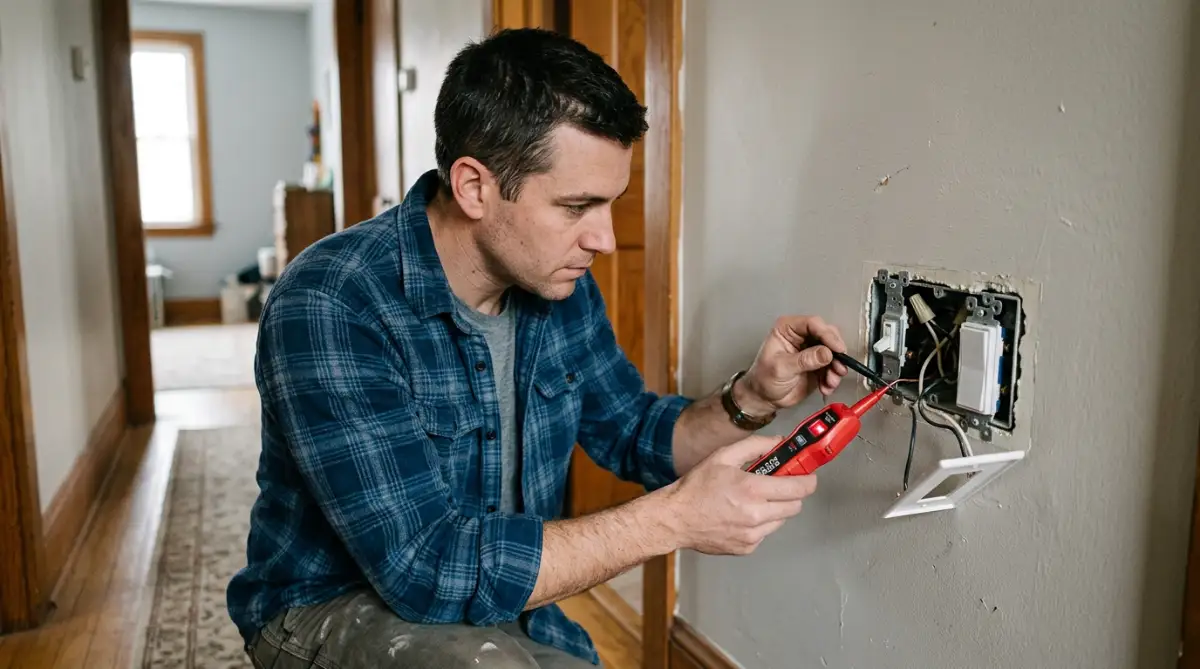
What a Safe Approach Looks Like Before You Begin
Before any switch work, a few non-negotiable basics apply:
- Always turn off the power at the breaker panel, not just the switch itself
- Use a non-contact voltage tester to confirm the wires are dead before touching anything
- Take a photo of the existing wiring before disconnecting anything, in case you need to reference it later
- Know your limits, and treat anything beyond a simple cosmetic swap as a job for a licensed electrician
If your project is limited to swapping a worn-out switch plate cover after confirming the power is off, that's a low-risk task most people can handle. Anything involving rewiring, multiple switches controlling one fixture, or a breaker that won't stop tripping calls for a professional.
Assuming the Switch Being "Off" Means There's No Power
This is the single most dangerous misunderstanding in this entire topic.
Leaving the breaker on because "the switch is in the down position" is hands-down the easiest way to give yourself a nasty jolt. Think of a switch like an open garden hose nozzle. Turning the nozzle off stops the water from spraying out, but high water pressure is still sitting right behind the valve ready to shoot. In your wall, full line current is still sitting on the hot wire feeding that box. If your metal tool brushes the brass screw while you unscrew the faceplate, you complete the circuit through your arm. Always kill the breaker switch at your central breaker box, period.
Not Testing for Power Before Touching Any Wire
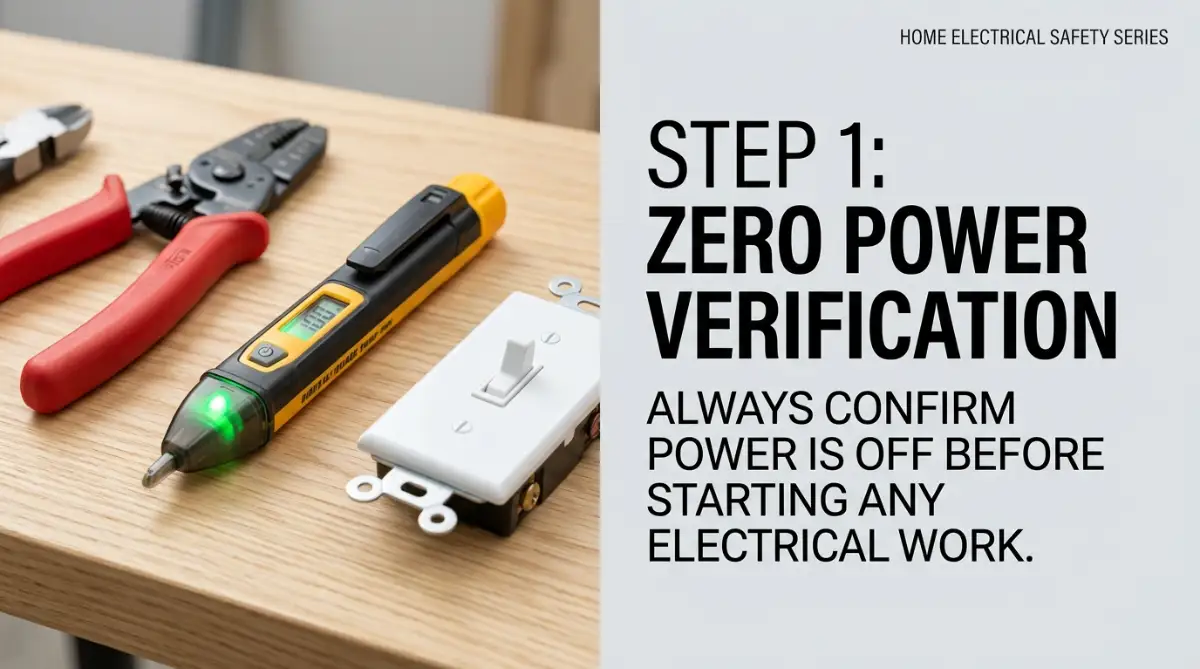
Even after flipping the breaker, always verify with a non-contact voltage tester before touching exposed wires.
Breaker panels aren't always labeled correctly. A previous owner or a rushed renovation can leave circuits mismatched, meaning the breaker you flipped might not control the switch you're working on at all.
A tester takes ten seconds and removes all guesswork. Skipping it because "the breaker's already off" is one of the most common and most dangerous shortcuts people take.
Here is a mistake I learned the hard way—never trust a circuit label written on your breaker box. I once flipped what I thought was the right breaker, only to find the switch box was still live because a past owner wired two rooms together. Buying a simple $10 non-contact voltage tester saved me from another scary accident!
🔍 Electrical DIY: Myth vs. Real-World Fact
- Myth: "White wires are always safe neutral wires that cannot give you a shock."
- Fact: In standard switch loops wired before current building codes, electricians often used the white wire as an ungrounded hot lead running power down to the switch. If someone forgot to mark that wire with black tape, touching it will deliver a full 120-volt hit. Treat every single conductor as live until your tester proves otherwise.
- Myth: "Using the push-in holes on the back of the switch (backstabbing) is just as solid as wrapping around side screws."
- Fact: Push-in wire slots rely on tiny spring tension clips that loosen over time as current warms and cools the wire. Loose connections cause arching, flickering lights, and wall fires. Always bend your wire into a tight clockwise "J-hook" and secure it firmly under the side screw terminals.
Misreading the Difference Between a Simple Swap and a Complex One
Not every faulty switch is the same kind of job.
A single switch controlling one fixture, with a worn-out or cracked physical switch, is often a manageable cosmetic-level task once power is confirmed off. A three-way switch setup, a switch tied into smart home wiring, or a switch connected to multiple fixtures involves far more complexity.
Misjudging which category your switch falls into is how a quick fix turns into a half-finished project with wires exposed and no clear way to safely put it back together. When in doubt about the wiring type you're looking at, that uncertainty itself is the signal to call an electrician rather than guess your way through it.