How to Clear a Clogged Kitchen Sink Drain Using Natural Ingredients

You're standing over the sink, watching water pool around your feet instead of draining away.

It's slow at first. Then one day it just stops moving altogether, and you're left staring at a sink full of greasy dishwater with nowhere for it to go.

This is one of the most common kitchen problems out there, and the good news is you probably don't need to call a plumber or buy a bottle of harsh chemicals to fix it.

Why a Slow Kitchen Drain Throws Off Your Whole Routine

A clogged sink doesn't just sit there quietly. It changes how you cook, clean, and move through your day.

  • Dishes pile up because you can't rinse them properly
  • Cooking feels stressful when you're avoiding the sink entirely
  • The smell of stuck food and standing water lingers in the kitchen
  • You start dreading meal prep because you know the cleanup will be a mess

A lot of people reach for the nearest bottle of chemical drain cleaner the moment this happens. It seems like the fastest fix, but it often isn't the safest one.

Harsh chemical cleaners can damage older pipes over time. They also release strong fumes, which isn't great in a small kitchen with the windows closed. Worse, they sometimes don't even clear the clog fully, leaving you with a costly bottle and the same slow drain a week later.

There's a real frustration that builds here too. You try something, it doesn't work, and now you're second-guessing whether the problem is bigger than you thought. Maybe you start wondering if this means a full pipe replacement or an expensive plumber visit.

  • Most clogs are simpler than people assume
  • Grease, soap residue, and food particles build up slowly over weeks
  • This buildup narrows the pipe gradually, which is why the slowdown often feels sudden even though it wasn't
  • A natural approach often works just as well as chemicals, without the fumes or pipe damage

Beyond the practical mess, there's a quieter frustration too. A kitchen that doesn't function the way it should chips away at how relaxed you feel while cooking. You start avoiding certain tasks, like washing a big pot, because you know the water won't drain properly.

  • It can make you feel like your home maintenance skills aren't good enough, even though clogs happen to everyone
  • It adds a small but real layer of stress to an already busy day
  • It can make hosting guests or cooking bigger meals feel like a risk instead of something enjoyable

Here's the part that matters most: this is fixable, and it's fixable today, with stuff you probably already have in your kitchen. You don't need to feel stuck with a slow drain for weeks while you figure out a long-term plan.

Most kitchen clogs come from a buildup of grease, soap scum, coffee grounds, and small food bits that stick to the inside of your pipe walls. Over time, this buildup narrows the space water can pass through, similar to how a straw gets harder to drink from once it's partly blocked.

The natural method below works because it combines a physical reaction with gentle heat and pressure. Baking soda and vinegar create a fizzing chemical reaction that helps loosen grease and grime. Hot water then helps carry that loosened buildup down and out of the pipe.

This isn't a guess or an old wives' tale. It's basic chemistry, and it's been used in households for generations because it actually works on the kind of buildup most kitchen sinks deal with.

What You'll Need From Your Kitchen

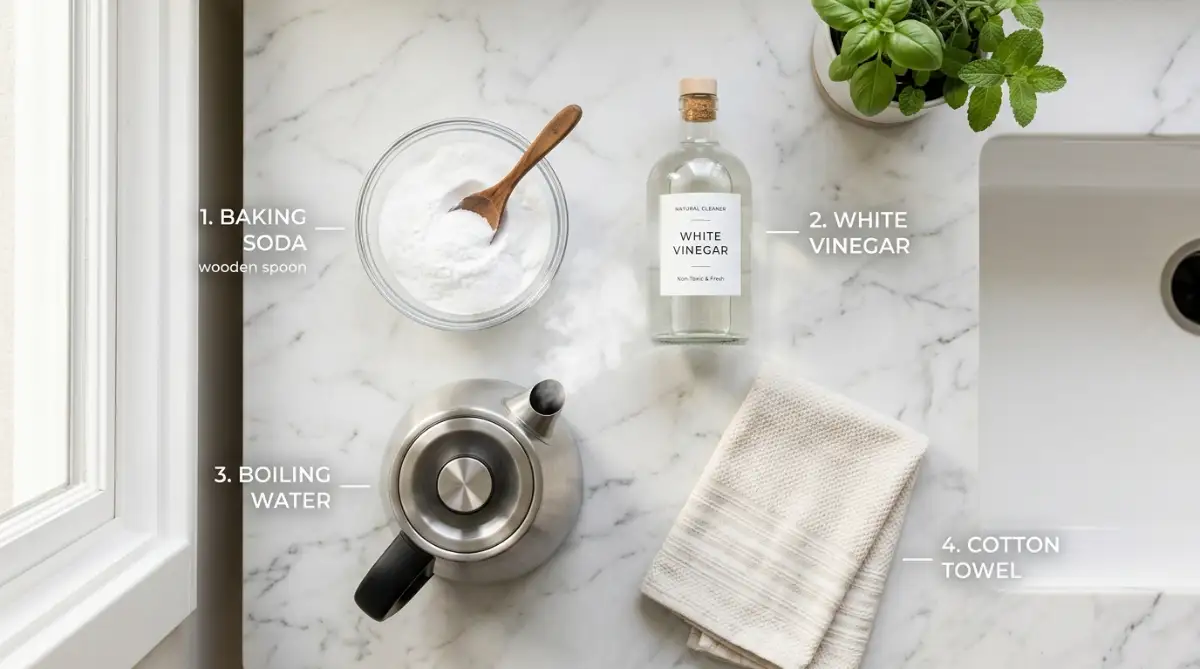
You likely already have everything required for this fix:

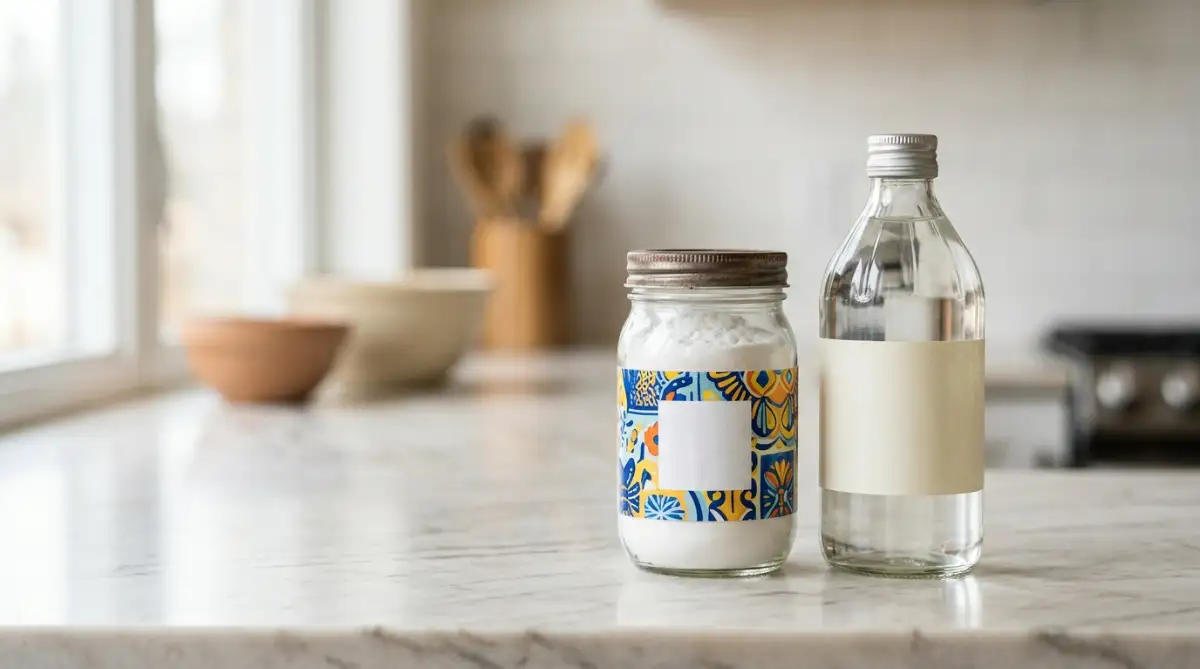
  • Baking soda (about half a cup)
  • White vinegar (about one cup)
  • Boiling water (a full kettle or pot)
  • A plug or cloth to cover the drain temporarily
  • A pair of rubber gloves (optional, but helpful if there's standing water)

No specialty tools. No trip to the store. Just things sitting in your pantry right now.
Step 1: Clear Standing Water and Remove Visible Debris

Before adding anything to the drain, you need to deal with whatever water is already sitting there.

If your sink has standing water, scoop or bail out as much as you can using a cup or small bowl. This isn't about removing every drop, just enough so the drain opening is visible.

Once the water level is down, check the drain opening for any visible debris, like food scraps or a wad of stuck material. Pull out anything you can reach by hand or with tongs.

Think of this step like clearing leaves off a storm drain before the rain starts. You're giving the rest of the process a clean starting point instead of working through extra gunk.

Step 2: Pour Boiling Water Down the Drain First

This step alone sometimes fixes minor clogs on its own.

Boil a full kettle of water and pour it slowly and directly down the drain. The heat helps soften grease that's hardened along the pipe walls.

Wait about thirty seconds to a minute after pouring before moving to the next step. This gives the hot water time to start working on the buildup.

A quick real-life example: if your clog is mostly cooking grease from last night's dinner, this step alone can melt enough of it to get water moving again, even before you add baking soda or vinegar.

Step 3: Add Baking Soda, Then Vinegar, and Let the Fizz Work

This is the core of the natural method, and it's where the real chemistry happens.

Pour half a cup of baking soda directly into the drain. Let it settle for a minute so it sits inside the pipe rather than just rinsing through.

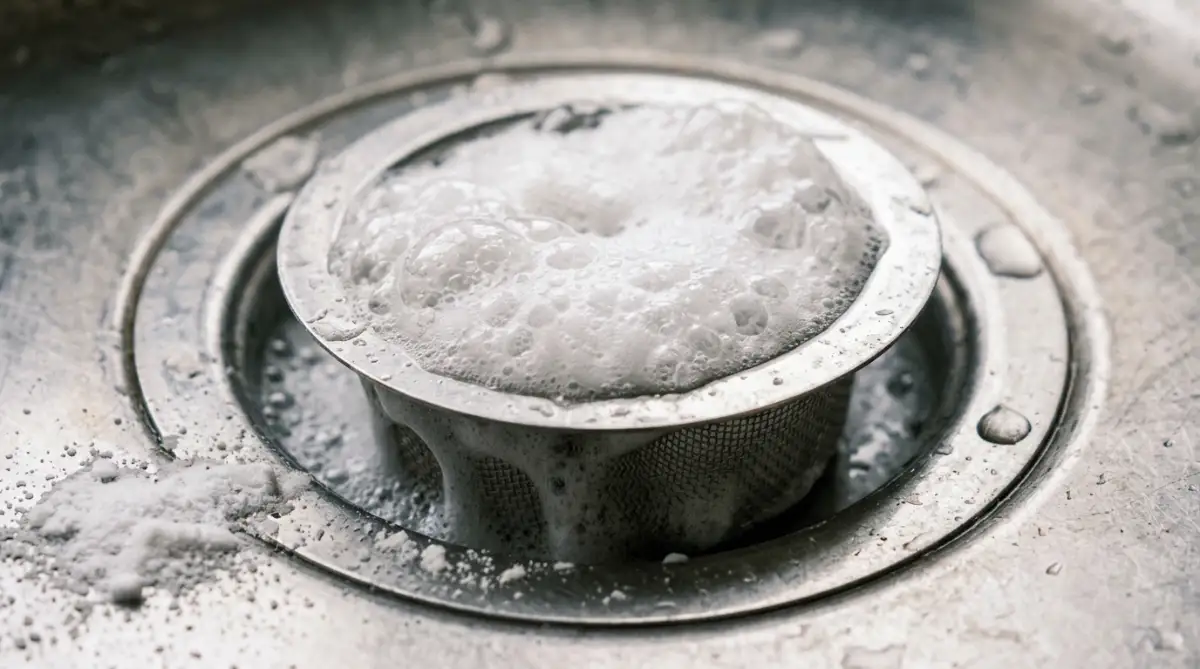
Slowly pour one cup of white vinegar over the baking soda. You'll immediately notice fizzing and bubbling, which is completely normal and exactly what you want.

Cover the drain with a plug or cloth while the fizzing happens. This traps the reaction inside the pipe instead of letting it escape upward, which pushes more of the cleaning power against the clog itself.

Let it sit for ten to fifteen minutes. During this time, the fizzing reaction works on breaking down grease, soap residue, and small organic buildup clinging to the pipe walls.

After waiting, flush the drain again with another round of boiling water. This rinses the loosened debris down and out, finishing the job the fizzing started.

A simple way to think about why this works: baking soda is a mild base, and vinegar is a mild acid. When they combine, they react and release carbon dioxide gas, which is what creates the bubbling. That bubbling action physically agitates grime stuck to pipe walls, helping it lift away instead of just sitting there.

If your drain is moving freely after this, you're done for now. If it's still slow, that's a sign the clog might be a bit further down the pipe than this method alone can reach, which we'll cover in the next part of this guide.

When the Fizz Isn't Enough: Tackling a Deeper Clog

Sometimes baking soda and vinegar do their job perfectly on the first try. Other times, your sink is still draining slowly even after the fizzing and the hot water rinse.

That doesn't mean you need chemicals. It usually means the clog has built up further down the pipe, or it's a tougher mix of grease and food than a single round can clear.

Trick 1: Repeat the Process, But Add a Waiting Period Overnight

One round of baking soda and vinegar handles light buildup. Stubborn clogs often need a longer soak.

Repeat the same steps from Part 1, but instead of waiting fifteen minutes, let the mixture sit for a few hours, or even overnight.

The longer contact time gives the reaction more chance to break down grease that's hardened over weeks or months. Think of this the way a stain soaks out of fabric better with time than with a quick rinse.

In the morning, flush the drain with a full kettle of boiling water. Run the hot tap for thirty seconds afterward to clear any final loosened residue.

Trick 2: Use a Plunger to Add Physical Pressure

Chemistry handles grease and grime well. But sometimes a clog is more physical, like a wad of food debris or a buildup that's just sitting in a bend in the pipe.

A sink plunger (a smaller cup-style one, different from a toilet plunger) can push that blockage loose.

Here's how to do it right:

  • Fill the sink with a few inches of water first, enough to cover the plunger cup
  • Block the overflow drain or second sink basin with a wet cloth so your pressure doesn't just escape sideways
  • Plunge firmly up and down for thirty seconds without breaking the seal
  • Check if water starts draining faster

This works because trapped pressure has to go somewhere. When you seal the area around the clog, your plunging motion pushes water forcefully against the blockage instead of just splashing around it.

Trick 3: Try a Bent Wire Hanger for Visible Debris

If you can see or feel something stuck right at the drain opening, a straightened wire hanger with a small hook bent at the end can pull it out directly.

Gently push the hook past the clog, twist slightly, and pull back out. You're not trying to shove things further down. You're fishing debris back toward you.

This works especially well for kitchen sinks because food particles, small bits of packaging, or produce stickers often catch right at the top of the drain, not deep in the pipe.

How to Keep Your Drain Running Smoothly After This

Clearing the clog once is great. Not having to do this again next month is even better.

A few small habits make a big difference over time:

  • Run hot water down the drain for thirty seconds after washing greasy dishes, which keeps grease from settling and hardening along the pipe walls
  • Use a sink strainer to catch food scraps before they ever reach the drain
  • Avoid pouring used cooking oil down the sink, even in small amounts, since oil cools and solidifies inside the pipe
  • Do a baking soda and vinegar flush once a month as routine maintenance, even when your sink seems fine

Think of this like brushing your teeth instead of waiting for a cavity. A small, regular habit prevents a much bigger and more frustrating problem later.

One more thing that helps long term: pay attention to how fast your sink drains on a normal day. If you notice it slowing down gradually over a week or two, that's your early warning sign. Catching a partial clog early is far easier than waiting until it's a full stoppage.

Five Mistakes That Make a Clogged Drain Worse

Even well-meaning fixes can backfire if you're not careful. Here's what trips people up most.

Mistake 1: Pouring Grease Down the Drain "Just This Once"

Grease feels harmless when it's hot and liquid. It hardens fast once it hits cooler pipes, sticking to the walls and catching other debris as it flows past.

This is the number one cause of repeat clogs in kitchen sinks.

Mistake 2: Mixing Chemical Cleaners With the Vinegar Method

If you've already poured a chemical drain cleaner down the sink, do not follow it with baking soda and vinegar. Mixing certain chemical cleaners with vinegar can create harmful fumes.

Always flush thoroughly with plain water first, and give it time, before trying a natural method afterward.

Mistake 3: Using Boiling Water With PVC Pipes Without Caution

Boiling water works great for most kitchen pipes. But if your plumbing is older PVC, extremely hot water poured directly and repeatedly can soften the pipe joints over time.

Hot tap water is usually fine. Save full rolling-boil water for occasional deeper treatments, not daily use.

Mistake 4: Ignoring a Slow Drain Until It Fully Stops

A slow drain is a warning sign, not background noise to ignore. Waiting until the sink stops completely usually means the clog has grown bigger and harder to clear.

Treating a slow drain early, even with a quick baking soda flush, often prevents a full stoppage later.

Mistake 5: Forcing a Plunger Without Sealing the Overflow

Plunging without blocking the overflow opening wastes most of your pressure, since it just escapes through the other opening instead of pushing against the clog.

This is why some people feel like plunging "doesn't work," when really the setup wasn't sealed properly.

A Clear Drain Is Closer Than You Think

Here's the thing about a clogged sink: it feels like a bigger problem than it actually is.

Most of the time, you're not dealing with a plumbing emergency. You're dealing with a slow buildup of everyday grease and food residue, and that responds well to simple, natural methods.

You don't need a cabinet full of chemical cleaners to keep your kitchen running smoothly. A box of baking soda, a bottle of vinegar, and a kettle of hot water cover most of what your sink will ever throw at you.

Try the method tonight, even if your sink seems to be draining okay. A little prevention now means one less stressful mess to deal with later.