The $14,000 Coffee Shop Handshake That Almost Broke Me
A few years back, I sat in a noisy cafe with a close buddy, sketched some ideas on a paper napkin, and shook hands on a $14,000 retail remodel project. No contract. No written scope. Just two friends trusting a smile.
Sixty days later, I was drowning in unpaid lumber bills, working 14-hour days, and getting ghosted on payments because my friend "remembered our budget differently." I didn't just lose money—I lost a 10-year friendship and spent months staring at my ceiling at 3 AM wondering how I would cover rent.
That painful mess taught me a hard truth: honest people do not sign contracts because they distrust each other; they sign contracts so they never have to fight about what they agreed on. Whether you are hiring a plumber, renting a spare room, or doing freelance work, let us walk through the simple ground rules that will protect your wallet and your sanity.
📌 Quick Takeaways: What You Need to Know in 30 Seconds
• A valid contract requires 4 simple things: a clear offer, direct acceptance, an exchange of real value (consideration), and legal capacity.
• Verbal deals can be legally valid, but they are nearly impossible to prove in court without written backup.
• The "3-Day Rule" is a myth: most signed contracts bind you instantly unless a specific consumer protection law applies.
• Always add a mutual notice-and-cure window (15–30 days) so small hiccups don't turn into immediate lawsuits.

What Makes an Agreement Legally Enforceable?
A contract is simply an exchange of promises that the court system recognizes and enforces. It transforms an informal understanding into a formal legal obligation that protects both sides.
Not every promise you make in daily life qualifies as a legally binding deal. To hold weight in court, your agreement must satisfy specific legal pillars that prove both parties intended to create real obligations.
1. The Clear Offer
Every agreement begins when one party proposes clear, definite terms to another party. An offer cannot be a vague idea or an offhand comment made during casual banter.
For example, stating that you might sell your car someday is not an offer. Telling someone you will sell your specific sedan for five thousand dollars next Monday is a clear legal offer.
The person making the offer sets the ground rules, while the other person gets the chance to respond.
2. Unequivocal Acceptance
Once an offer exists, the other person must accept it without changing the core terms. In legal studies, this concept is often called the mirror image rule.
If the person replies by saying they want to pay less money, they have rejected your initial offer. Their response creates a new counteroffer that you must now choose to accept or decline.
Acceptance can happen through written words, spoken agreement, or specific actions like delivering goods.

3. Mutual Consideration (Value Exchange)
For any deal to hold weight, both sides must give something up. In legal terms, we call this "consideration," but you can simply think of it as a two-way street of value. If your uncle promises to give you his old truck for free, that is a generous gift, not an enforceable deal. If he changes his mind tomorrow, you cannot take him to small claims court. But the second you hand him $50 or agree to mow his lawn for two months in exchange for that truck, you have created a legally binding value exchange.
4. Legal Capacity of the Parties
A contract loses its power if either party lacks the legal ability to understand what they are signing. The legal system protects specific groups from being taken advantage of by unfair agreements.
Minors, individuals with severe cognitive impairments, and people under heavy intoxication generally lack full legal capacity.
When an agreement involves someone without legal capacity, the contract often becomes voidable at their request.
5. Genuine Mutual Assent
Both parties must freely agree to the exact same terms without tricks, threats, or manipulation. In legal discussions, this mutual alignment is often called a "meeting of the minds."
If someone forces you to sign paperwork under physical threats, the agreement is invalid due to duress.
Similarly, if a seller deliberately lies about a massive hidden defect, the deal can be overturned due to fraudulent misrepresentation.
Written Deals vs. Verbal Promises: The Risky Reality
I hear this all the time: "We didn't sign anything, so it doesn't count, right?" That is a risky assumption. In most places, spoken promises are fully binding agreements. The real catch isn't legality—it is proof. When things go sour, a judge has to sit there and guess who is telling the truth between two conflicting stories. That is why I made it an unbroken rule: after every single business phone call or quick meeting, I shoot over a two-minute email saying, "Hey, just to confirm what we talked about today..." That tiny email creates an undeniable date-stamped paper trail.
Certain types of agreements must always be written down to hold any legal power at all. This historic legal standard is known as the Statute of Frauds.
Under the Statute of Frauds, the following agreements generally require a signed written document:
- Contracts involving the sale or transfer of real estate property.
- Agreements that cannot reasonably be finished within one single year.
- Promises to pay off another individual's personal financial debts.
- Sales of physical goods exceeding specific value thresholds under commercial codes.
- Marriage agreements, including prenuptial financial settlements.
(Putting family and property deals in writing is also a big part of estate planning; learning practical ways to protect your wealth and reduce probate court costs keeps your assets safe from future legal fights.)
Prefer Watching Over Reading? Here Is a Quick Walkthrough
If you are a visual learner like me, seeing how real contracts work in everyday life makes everything click much faster.
In this 16-minute breakdown below, you will see real-life examples of how simple promises turn into legally binding deals—and how everyday folks protect themselves from costly mistakes:
Different Types of Contracts You Encounter Daily
We enter into contracts constantly, often without even realizing it. Knowing the structure of your agreement helps you understand your immediate legal rights and duties.
Express Contracts
An express contract occurs when all terms, duties, and timelines are clearly spoken or written down. When you sign a formal residential lease for an apartment, you form an express contract.
Both sides know their exact rent amounts, due dates, and maintenance responsibilities right from day one.
Implied-in-Fact Contracts
These agreements form naturally through everyday human behavior rather than written words.
When you sit down at a neighborhood diner and order a hot breakfast, you rarely discuss payment terms beforehand. Yet, your conduct creates an implied promise to pay the bill once you finish eating.
Unilateral vs. Bilateral Contracts
Most everyday transactions are bilateral, meaning two people exchange mutual promises. You promise to pay a fee, and a mechanic promises to repair your vehicle brakes.
A unilateral contract involves a promise made by only one party, which becomes binding only when someone completes a specific task. A classic example is a public flyer offering a cash reward for finding a lost family dog.
When a Contract Fails: Understanding Breach and Remedies
When one party breaks an agreement without a valid legal excuse, a breach of contract occurs. The law does not send people to prison for ordinary contract breaches, but it does provide monetary solutions.
The primary goal of contract law is to place the injured person in the financial position they would have enjoyed if everyone kept their word.
Common Legal Remedies for Breach
Real Cost & Timeline Breakdown: Handshake vs. Written Contracts
Here is a look at what actually happens behind the scenes when a $5,000 project runs into a dispute:
1. Compensatory Damages
This is the most common remedy awarded by civil courts. It covers the direct financial loss caused by the broken promise so you can hire someone else to finish the job.
2. Consequential Damages
These payments cover indirect losses that both parties knew might happen if a breach occurred. For instance, if a supplier delivers equipment late, knowing your factory will sit idle, they may owe for lost operating income.
3. Specific Performance
In rare cases involving unique items like rare art or real estate, cash payments are not enough. A judge may order specific performance, forcing the breaching party to hand over the exact unique property promised.
4. Rescission and Restitution
Sometimes the fairest solution is simply to cancel the entire transaction completely. Rescission wipes the slate clean, returning all exchanged funds and property back to their original owners.
Contract Status: Key Differences You Must Know
People often mix up legal terms like void, voidable, and unenforceable. Understanding the differences helps you determine if a problem document can still hurt you.
A void contract is completely dead on arrival because its very subject matter violates public policy or criminal law. The court will simply refuse to hear arguments regarding an illegal gambling debt or an unlawful transaction.
A voidable contract, on the other hand, remains active until the protected party steps forward to void it. If an elderly person is misled into signing over property deeds, that person or their guardian can petition to cancel the deal.
Top 5 Contract Myths That Trip People Up
Many expensive legal battles start because of widespread misconceptions about how everyday agreements operate. Let us clear up the most dangerous myths so you can make informed choices.
💡 Quick Myth vs. Fact Reality Check
❌ Myth: "I can just text 'Deal' and it doesn't count as a legal signature."
✔️ Fact: Courts regularly rule that simple text messages, email confirmations, and even thumbs-up emoji reactions can show mutual agreement under modern commerce rules.
❌ Myth: "If a contract doesn't have fancy legal terms, a judge will throw it out."
✔️ Fact: Judges prefer plain English. A simple paragraph written on plain paper that clearly states names, money, and deadlines is far stronger than a messy template copied off the web.
❌ Myth: "I can back out within 3 business days if I get cold feet."
✔️ Fact: Cooling-off rules apply almost exclusively to direct door-to-door sales and certain home refinancing loans. Most standard deals take effect the second you sign.
Myth 1: You Always Have Three Days to Cancel Any Contract
Many people believe they have an automatic three-day cooling-off window for every agreement they sign. In reality, cooling-off rules apply only to specific consumer transactions, like door-to-door sales. Once you sign most standard contracts, you are bound immediately.
Myth 2: Without Money Changing Hands, No Deal Exists
While consideration is mandatory, it does not have to involve cash payments. Giving up a legal right, trading physical items, or performing physical labor all qualify as valid consideration under the law.
Myth 3: Tiny Fine Print Is Never Enforceable
Courts generally hold adults responsible for everything written on a page they sign, even if the text appears in tiny font. Unless a clause is shockingly unfair or hidden deceptively, judges expect you to read before signing.
Myth 4: Modifying a Deal Later Is Always Simple
If you agree to change terms after signing, that modification often requires new consideration to be valid. Simply agreeing to pay extra money for the same original work is frequently unenforceable in court.
Myth 5: Electronic Signatures Are Not Real Signatures
Typing your name, clicking an "I Agree" button, or using digital signing tools holds the exact same legal weight as wet ink on parchment. Modern commerce laws treat verified electronic records as fully binding instruments.
A 7-Point Safety Checklist Before You Sign Anything
Taking five minutes to review documents carefully can save you thousands of dollars and months of headache down the road. Keep this simple checklist handy whenever someone places paperwork in front of you.
1. Identify the Exact Parties
Make sure the document lists legal names rather than informal nicknames. If you deal with a business, verify whether you are dealing with an individual or an official corporate entity.
2. Define All Deliverables Clearly
Write down exact specifications, colors, quantities, and milestones. Never leave room for interpretation when it comes to what quality of work you expect to receive.
3. Pinpoint Payment Rules
Look closely at payment dates, grace periods, accepted payment methods, and late fee percentages. Knowing these terms helps you avoid unexpected financial charges later on.
4. Understand Termination Rights
Check how either side can walk away from the deal if things go wrong. A good contract clearly states how much written notice is required to end the relationship safely.
5. Check for Dispute Resolution Clauses
Many standard agreements require private arbitration instead of a public jury trial if a disagreement happens. Understand whether you are giving up your right to go to court before you sign.
6. Fill or Cross Out Blank Lines
Never put your signature on a page that contains empty blank lines. Dishonest individuals can fill in those blanks with unfavorable terms after you leave the room.
7. Keep Your Own Complete Copies
Always obtain a fully executed copy signed by all parties for your personal files. Store digital scans and physical copies in a secure, organized place for future reference.
Moving Forward with Confidence
Understanding how agreements work takes away the fear and intimidation of dealing with legal paperwork. When you know the basics of offers, acceptance, and consideration, you gain the confidence to negotiate fair terms.
You no longer have to rely on blind luck or awkward handshake assumptions to protect your hard work and assets. Treat every agreement as an opportunity to set clear boundaries and build strong, honest working relationships.
Take your time with every document, ask questions whenever something sounds confusing, and protect your peace of mind before putting pen to paper.
Master-Level Strategies for Drafting and Negotiating Bulletproof Agreements
Locking Down Risk with Indemnification Clauses
An indemnification clause serves as your financial shield if the other party's mistakes cause third-party lawsuits. It states that if one person causes a legal mess, they must pay for the resulting damages and attorney bills.
For example, if you hire a freelance designer who secretly uses stolen artwork, the original artist might sue you for copyright infringement.
When preparing contracts for creative assets or brand assets, understanding how to register a trademark with a simple beginner guide through the United States Patent and Trademark Office (USPTO) helps ensure that every piece of your brand is properly registered and defended. A well-crafted indemnity clause forces the designer to cover all your court expenses and settlement costs in that scenario.
Setting Hard Caps on Financial Liability
A limitation of liability clause puts a firm ceiling on how much money one party can recover from the other in a dispute. Many corporate vendors will state that their total liability cannot exceed the total amount paid under the contract during the previous six months (e.g., capped at 10,000 USD).
This clause prevents an unexpected operational hiccup from turning into a company-ending financial catastrophe. Always make sure this liability cap applies mutually to both sides.
Preparing for the Unthinkable with Force Majeure
Think of a force majeure clause as an "Act of God" emergency exit. It protects you when freak disasters—like a severe hurricane, an earthquake, or an unexpected government trade embargo—make it physically impossible to finish your work. Just remember: regular business troubles, like a supplier raising their prices by 20% or a shipping truck running late, do not give you a free pass to walk away from your commitments.
Protecting Agreement Integrity: Severability and Integration
An integration clause (or merger clause) confirms that the written text represents the complete and final deal. This legal rule invokes the principles of the parol evidence rule documented by the Legal Information Institute at Cornell, preventing either party from bringing up old verbal conversations to contradict written terms.
Creating Multi-Tiered Dispute Resolution Frameworks
Do not wait for a serious disagreement to figure out how you will resolve conflicts. High-level negotiators build a step-by-step roadmap for resolving disagreements before anyone hires expensive trial attorneys.
A reliable multi-tiered dispute framework usually follows this sequential path:
- Good-Faith Negotiation: Both parties must meet in person or by phone within ten days to discuss the problem directly.
- Non-Binding Mediation: If talks stall, an impartial mediator helps facilitate a compromise without forcing a binding ruling.
- Binding Arbitration or Litigation: If mediation fails, the matter moves to a private arbitrator or a designated civil court.
Many small business owners draft these dispute procedures early on when deciding how to structure their legal operations. If you are launching a new enterprise, learning how to legally form a business without a lawyer will help you set up foundational agreements that keep operating disputes manageable.
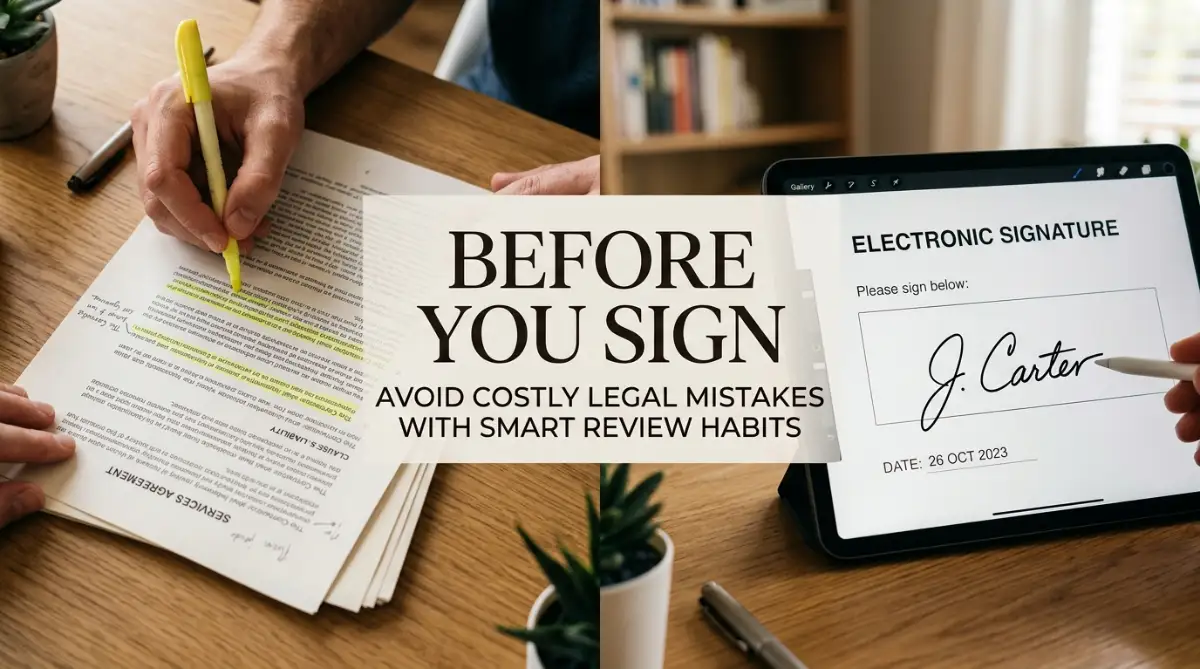
Costly Contract Traps That Cause Heavy Losses
The Silent Danger of Automatic Renewal Clauses
Often called "evergreen clauses," auto-renewals automatically extend a service subscription or commercial agreement for another term unless you cancel within a tiny window. Consumer protection guidelines from the Federal Trade Commission (FTC) emphasize keeping exact calendar reminders for renewal dates so you do not get locked into paying for another full year unexpectedly.
Ambiguous Deliverables vs. Safe Objective Language
Always replace subjective language with measurable, concrete numbers:
One-Sided Attorney Fee Clauses
Under standard civil litigation rules, each party typically pays their own legal fees. Make sure your contracts include a Mutual Fee-Shifting Clause (where the prevailing party recovers reasonable attorney costs), ensuring that neither side can use the threat of litigation to intimidate the other.
Action Plan for Reviewing Any Deal Starting Today
Reviewing an agreement does not require hours of complex analysis if you follow a clean, repeatable system. Use this practical review flow every time a new document crosses your desk.
Stage 1: The Initial Macro Scan
Start by checking the names of the signing entities to make sure they match registered public records. Look closely at all attachments, exhibits, and price sheets mentioned in the body of the agreement.
If an attachment is missing from the packet, do not sign until you receive and review that page.
Stage 2: The Timeline and Financial Trace
Follow the money trail from the start of the deal to the finish line. Verify when deposits become due, whether payments depend on specific approval milestones, and what penalties apply if payments are late.
Check whether you have a reasonable window of time to review completed deliverables before payment becomes mandatory.
Stage 3: The Risk and Exit Assessment
Examine the termination rules to ensure you have a way to leave if the other party fails to perform. Look for a notice and cure period, which requires one party to give written warning and a set number of days to fix an issue before terminating the deal.
Ensure that the governing law and venue are set to your local state or county so you do not have to travel across the country to defend your rights. Helpful guidance on state and local court systems can be found through public educational resources provided by the American Bar Association Public Education Division.
Frequently Asked Questions About Everyday Contracts
1. Can a casual text message or email hold up as a legal contract?
Yes. If your text exchange clearly outlines what is being offered, the exact price, and both people clearly agree, it can easily serve as proof of a binding contract. Always save screenshots and back up your email threads so you have proof if an issue pops up later.
2. What should I do if the other party breaches our deal?
First, stop all work immediately to avoid deeper losses. Send a polite, written "Notice of Default" via email stating exactly what part of the deal was broken and give them a reasonable window (usually 14 to 30 days) to fix it. If they ignore you, collect your paper trail and consult a local advisor. If you schedule a legal consultation, knowing what to expect when meeting a lawyer for the first time will help you prepare the right evidence and ask the right questions.
3. Is an online digital signature as valid as pen and paper?
Absolutely. Under federal and state laws (like the E-SIGN Act and UETA), electronic signatures created through tools like DocuSign, Adobe Sign, or secure email approvals carry the exact same legal weight as traditional wet ink signatures.
4. What happens if I sign a contract with blank spaces?
Signing a document with blank fields is an open invitation for trouble. An unethical party can easily write in extra fees, higher interest rates, or harsh terms after you leave. Always draw a neat line through any empty spaces or write "N/A" before you add your signature.
5. Do I need an expensive attorney every time I hire a contractor or start a freelance job?
No. For everyday projects, a simple, clear agreement written in plain English that outlines exact tasks, payment dates, and exit rules is more than enough. You only need specialized legal counsel for high-stakes business deals, complex commercial leases, or intellectual property transfers. If you do reach a point where outside counsel is required, review our guide on how to pick the best attorney and avoid costly mistakes before spending big retainer fees.
Building Lasting Legal Peace of Mind
My journey through messy handshake deals taught me that clear written agreements are the foundation of professional respect and peace of mind. Taking control of your agreements puts you in the driver seat of your business and personal affairs.
I want you to treat every new agreement not as a barrier, but as a protective tool that sets both sides up for success.
Legal Disclaimer
The information provided in this article is for educational and informational purposes only and does not constitute formal legal advice. Contract laws vary significantly across different states, countries, and local jurisdictions. You should always consult with a qualified, licensed attorney in your area to receive customized advice regarding your specific legal agreements, disputes, or business documents.