
The Day My Living Room Floor Broke Me
Three years ago, I sat on my living room rug at 2:00 AM, bawling my eyes out. Around me were twenty-four crumpled folders, old receipts from five years back, and a tax form I didn't even understand. My marriage had just ended, and my brain felt like wet cement. I picked up a bank statement, and my hands shook so hard I dropped it. I kept thinking, "If I miss just one single piece of paper, am I going to lose my savings or end up in court trouble?"
That sheer panic is something nobody warns you about when a relationship ends. The emotional heartbreak is brutal on its own, but the mountain of legal paperwork feels like a concrete block crushing your chest. You lose sleep wondering what forms the judge actually wants, where to find old car titles, and how to keep things from turning into an ugly brawl.
That night, after splashing cold water on my face, I made a deal with myself: no more panic, just one single folder per day. I grabbed an ordinary notebook, drew five simple columns, and tackled the easiest bill first. Within a week, the giant mess turned into five clean stacks. The fear completely melted away. Taking charge of those papers gave me my sanity back.
If you are staring at your own messy table right now, take a slow breath. You do not need an expensive law degree or endless energy to sort this out. You just need a step-by-step game plan, and I am going to walk you through the exact system that saved my peace of mind.
📌 Quick Action Summary: What You Need to Know First
- The Big 5 System: Split every document into five clear groups: Identity, Income, Assets, Debts, and Court Forms.
- No Blind Signatures: Never sign your court papers at your kitchen table if they need a notary stamp—wait until you are in front of an authorized official.
- Total Transparency: Disclose every penny, side job, and credit card balance; hiding anything can destroy your case instantly.
- Physical Plus Digital: Keep one sturdy accordion folder for paper copies and save clear PDF scans in a protected cloud folder.

Laying the Groundwork for a Smooth Process
Court clerks and family judges do not have time to dig through messy grocery bags filled with bent gas receipts. When you hand them a clean, organized binder, their job gets ten times easier, and your case moves twice as fast. Think of your paperwork like turning in an important work project. When everything sits in a logical order with clear tabs, nobody has to guess your numbers. Let us look at how you can set up a simple filing system in just one afternoon.
Sorting Your Core Identity and Marriage Facts
Before anyone can help you divide assets or finalize a separation, the court needs to know exactly who you are. This might sound incredibly basic, but missing identification is one of the most common reasons paperwork gets rejected.
You need to gather all the primary documents that prove your identity and the legal existence of your marriage. Start by finding your original marriage certificate, or at least a legally certified copy from the local records office.
If you have lost it, do not panic at all. You can easily request a new copy from the exact county or city office where you originally got married.
Next, make sure you have clear, colored photocopies of your driver's license, passport, or any other government-issued ID. Put these copies into a brand new folder labeled clearly with a bright marker.
If you have children together, you must also collect their original birth certificates and social security information. The court always prioritizes the identity and well-being of any children involved in the process, which is just as important as protecting your family with legal power of attorney.
Having all these core identity documents in one secure place sets a highly organized tone for everything else that follows. You are basically proving to the court that you are a responsible, prepared individual who respects their time.
Tracking Down the Money Trail Safely
Money is usually the most sensitive topic when a relationship ends. To make a simple agreement work, both sides must be completely open and honest about what they earn.
This means you need to collect concrete proof of your income for the past few months, and sometimes the past few years. Start by gathering your most recent pay stubs from your employer.
Most courts like to see at least three to six months of steady income history to understand your current financial reality. If you run your own business or do freelance work, you will need to provide profit and loss statements instead of standard pay stubs.
Pro Tip: I once thought keeping my business receipts in a giant digital folder was enough, but I quickly learned that printing a clear, simple summary sheet saved me hours of explaining to my lawyer. Always create a simple cover page that totals up the numbers so no one has to do the math for you.
Next, you need to pull your tax returns for the last three to five years. Tax returns are incredibly powerful documents because they give a complete snapshot of your financial history.
If you filed jointly with your partner, both of you have an equal legal right to access those exact same returns. You can usually download them directly from your accountant's portal or the government tax website if you have lost your physical copies.
Do not forget to include any documents showing side income, like rental property profits, stock dividends, or even part-time gig economy money. Being totally transparent about your income protects you from future legal arguments and builds massive trust.
💡 Recommended Legal Guides for Business Owners & Freelancers:
- 📖 Can You Legally Form a Business Without a Lawyer? A Practical Guide
- 📖 Trademark vs Patent vs Copyright: How to Secure Your Business Assets
- 📖 How to Register a Trademark: A Simple Legal Guide for Beginners
Mapping Out What You Own Together
Once your income is clearly documented, you must outline everything you and your partner own. This is often called the asset discovery phase, and it requires careful attention to detail.
You need to pull the most recent statements for every single bank account you share, as well as accounts kept only in your name. Go back at least six months to show a clear pattern of how money flows in and out of the accounts.
If you own a house together, you need the official deed to the property and the most recent mortgage statement showing your current balance. Do exactly the same thing for any vehicles you own, gathering the car titles and current loan statements.
Retirement accounts are often the largest assets people own, so do not leave them out of your folder. Print out the latest statements from your pension, 401(k), or personal investment portfolios.
Here is a simple, easy-to-read table showing exactly how you can categorize your shared and individual assets without getting confused.
Creating a simple table like this on a blank sheet of paper helps you see the big picture instantly. You will stop feeling overwhelmed when you realize your entire financial life can fit neatly into five simple categories.
Essential Asset & Debt Documentation Checklist
Facing the Reality of Shared Debts
Just as you must divide what you own, you also have to figure out how to handle what you owe. Debt is a huge factor in legal separations, and hiding it will only cause massive headaches down the road.
You need to collect the latest statements for every single credit card attached to your name or your partner's name. It does not matter who actually spent the money; if the card is joint, the legal system views it as a shared responsibility.
Print out the exact balances, the minimum monthly payments, and the current interest rates for each card. Next, gather any personal loan agreements, student loan statements, or medical bills that are currently unpaid.
It is incredibly helpful to pull a fresh copy of your credit report from the three major reporting bureaus. This report acts as a safety net, ensuring you have not accidentally forgotten about an old store credit card or a forgotten medical debt.
When you clearly list all your debts, you can work together to figure out a fair way to pay them off or split them up. Honesty in this step prevents nasty surprises from ruining your credit score after the papers are signed.
🔍 Paperwork Myths vs. Legal Facts
- ❌ Myth: "If an account or credit card is only in my partner's name, I don't need to list it on my forms."
- ✔️ Fact: Every single debt and asset created during the relationship must be listed, regardless of whose name is printed on the card.
- ❌ Myth: "Hiding a small cash savings account is safe if the money came from my own personal paycheck."
- ✔️ Fact: Hiding assets during disclosure is considered perjury. If a judge finds hidden cash, they can award 100% of that money to your former spouse as a direct penalty.
- ❌ Myth: "I can sign my separation agreements at home as long as I mail them immediately."
- ✔️ Fact: If a document has a notary acknowledgment section, signing it at home makes the entire filing invalid.
Organizing Everything for Easy Access
Now that you have gathered hundreds of sheets of paper, you need a smart way to store them. Throwing them into a single plastic bag is a guaranteed way to lose your mind later.
Buy a sturdy, high-quality accordion folder with multiple separate pockets. Label each pocket clearly with bold letters: Identifications, Income, Assets, Debts, and Court Forms.
Every time you get a new document, hole-punch it or slide it directly into the correct category immediately. Do not leave papers sitting on your kitchen counter waiting to be filed tomorrow, because tomorrow quickly turns into next month.
I highly recommend creating a digital backup of every single piece of paper in your physical folder. Use your smartphone to scan the documents, saving them as clear PDF files.
Create a matching folder structure on your computer or in a secure cloud storage account. This means if you ever accidentally spill coffee on your physical folder, your entire legal case remains totally safe in the cloud.
Having both a physical and digital system makes it incredibly easy to share files instantly if a clerk or attorney asks for them.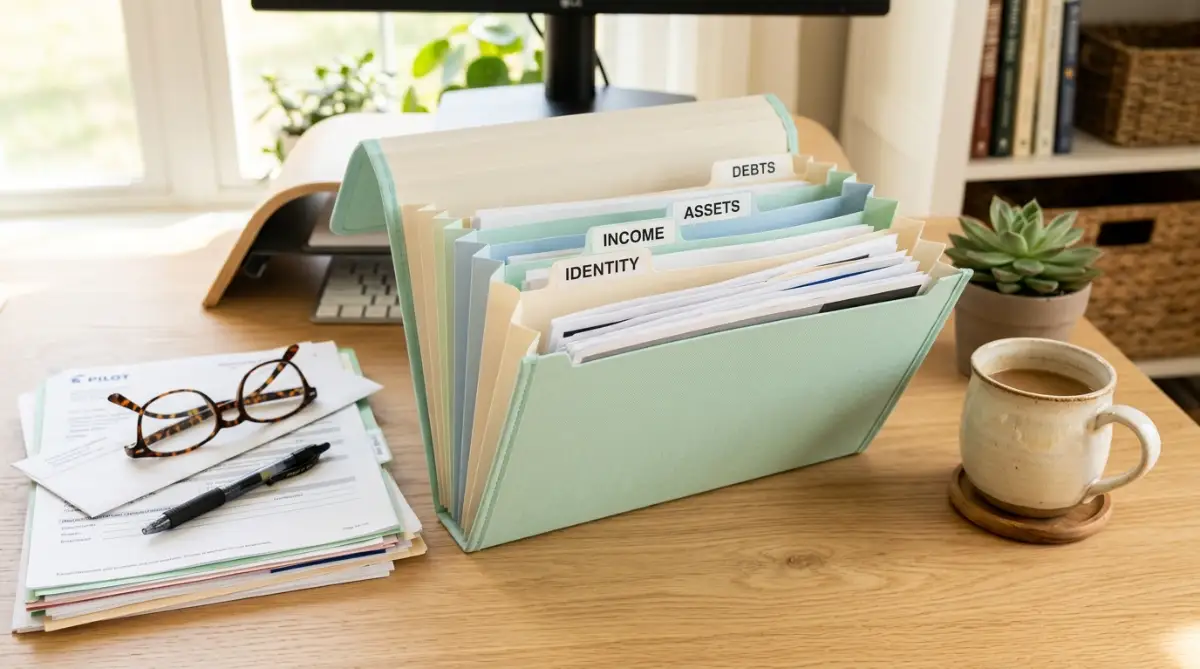
Getting the Timing Right for the Court
Every county courthouse has its own quirky rules. I learned this the hard way when a clerk rejected my entire 40-page packet simply because I signed in blue ballpoint ink instead of black. Always read the instructions on your state forms as if you are baking a cake for the first time. If a form asks for a notary seal, leave the signature box totally blank until you are standing directly in front of the notary at your bank or post office. That five-minute wait saves you weeks of frustrating delays.
Watch This Expert Breakdown on Document Prep
Sometimes hearing an expert explain the process makes everything click into place instantly. Check out this incredibly helpful video that walks you through common paperwork mistakes and how to easily avoid them.
Keeping Your Emotions Out of the Paperwork
It is completely normal to feel a sudden wave of sadness or anger when reviewing old bank statements or your original marriage license. These papers represent a life you built, and seeing it reduced to math and legal terms can hurt deeply.
When you feel those emotions rising up, simply step away from the desk. Go take a walk, drink a glass of cold water, or call a good friend to vent.
Do not try to force yourself to organize papers while you are actively crying or feeling highly stressed. Treat this task exactly like a part-time job that you only do for one hour a day.
When your hour is up, close the folder, put the pen down, and go back to living your normal life. Keeping strict boundaries around your paperwork time stops the process from completely taking over your mental health.
Remember, the goal is not to win an argument through these papers; the goal is simply to find a peaceful, clear resolution. The more logically you handle the documents, the faster you get to start the next beautiful phase of your life.
Why Honesty is Your Strongest Shield
There is often a huge temptation to hide a small savings account or forget to mention a valuable piece of jewelry. People sometimes think keeping a little secret will protect their future.
This is the single biggest mistake you can possibly make during this entire process. If the court discovers that you intentionally hid money or assets, you will lose all your credibility instantly.
A judge can easily punish you by giving the hidden asset entirely to your partner, or even charging you with perjury. Total honesty acts as a powerful shield that protects you from future legal attacks.
Even if you are embarrassed by credit card debt or a bad investment, put it clearly on the paper. Transparency speeds up the legal process faster than any expensive lawyer ever could.
When both people put all their cards on the table, it becomes incredibly easy to divide things fairly and walk away. You want to leave the courtroom with your head held high, knowing you did everything perfectly by the book.
Double-Checking Your Final Packet
Before you ever drive to the courthouse, you must perform a final, rigorous review of your legal packet. Sit down in a quiet room with a cup of tea and your printed checklist.
Go through every single page one by one, checking for missing dates, missing signatures, or blank boxes. If a question on a form does not apply to your situation, write "N/A" (Not Applicable) instead of leaving it completely blank.
Courts hate blank spaces because they do not know if you skipped it by accident or on purpose. Make at least three complete copy sets of your entire finalized packet.
One set is for the court clerk, one set goes directly to your former partner, and the final set stays securely in your own files. Keep your personal copies in a safe place for at least seven years after the process is completely finished.
Sometimes questions arise years later regarding taxes or retirement accounts, and having your original packet will save you massive headaches. Being completely prepared gives you a wonderful sense of quiet confidence as you finally hand the papers over to the clerk.
Insider Strategies to Protect Your Future
You have already built a solid foundation by gathering your most basic paperwork. Now, we need to take things a step further to make sure you are completely protected.
Creating Your Master Summary Sheet
Imagine a judge or a clerk looking at your thick folder of bank statements and tax returns. They do not want to spend two hours reading every single line of your credit card bills.
This is exactly where a "Master Summary Sheet" becomes your secret weapon. It is simply a one-page document that acts as an easy map for your entire file.
You just list your total monthly income, your total shared debts, and the total value of your shared assets. When you put this single sheet at the very front of your folder, you instantly look incredibly prepared and respectful of the court's time.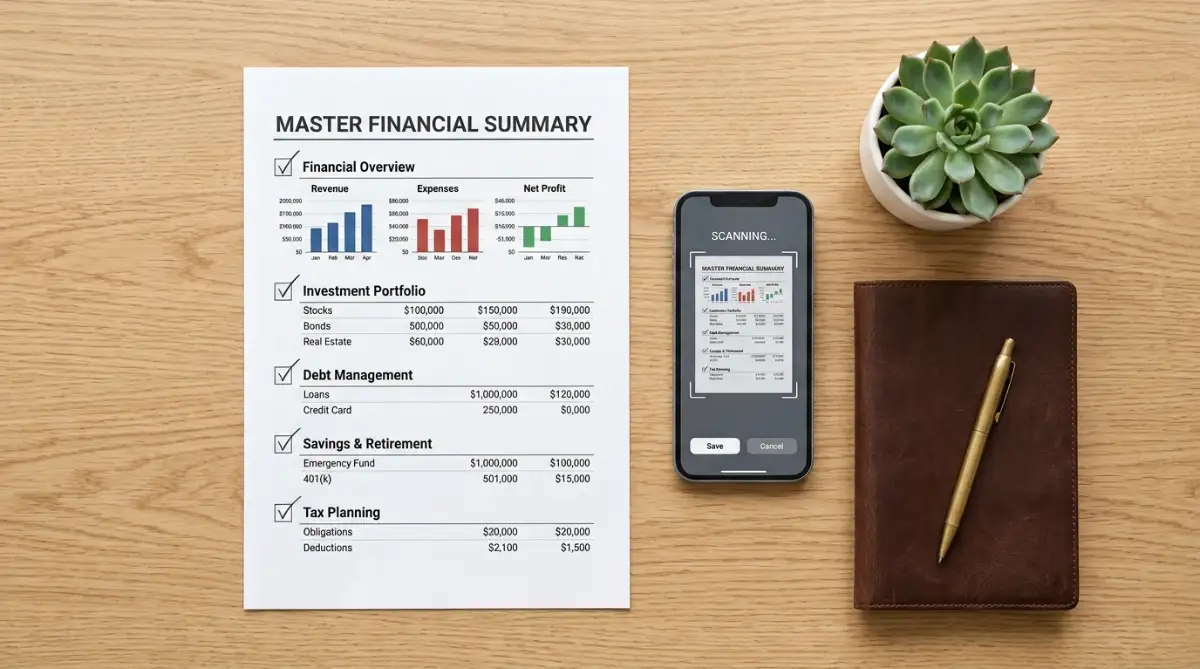
Securing Your Digital Footprint
While physical papers are highly important, your digital life needs just as much protection during this season. Sharing an email account or a computer password with your former partner can lead to huge privacy disasters.
Before you start saving digital copies of your tax returns, create a brand new, completely private email address. Use this fresh email strictly for communicating with court clerks, mediators, or legal professionals.
You also need to update the passwords on your personal banking apps and online storage drives immediately. Taking steps for keeping your personal information secure prevents any accidental snooping or unauthorized access to your private legal strategy.
🛡️ Recommended Guides: Digital Privacy & Evidence Protection:
- 📖 Stop Digital Theft: Easy Ways to Secure Your Online Intellectual Property
- 📖 How to Protect Your Rights with Proper Accident Documentation
Managing the Uncooperative Partner
What happens if your ex refuses to share their tax forms or bank statements? Do not waste your energy arguing in long text threads. You can simply file a standard court paper called a "Request for Production of Documents." This gives them a strict, court-ordered deadline to deliver the records. If they keep stalling, the judge can issue financial fines against them. Let the legal rules do the heavy lifting while you stay calm.
Setting Up a Safe Mailing Address
Legal documents often come in the mail when you least expect them. If you are still living in the same house as your former partner, getting private legal mail can feel incredibly awkward.
You do not want a sensitive letter about your bank accounts sitting openly on the kitchen counter. I highly suggest renting a small, private Post Office box just for this specific season of your life.
It gives you total control over when and how you read your legal updates. You can check the box on your own time, completely away from any tense energy at home.
The Long-Term Document Retention Plan
Once your separation is totally finalized, you might feel a huge urge to burn every single paper in a giant bonfire. Please hold back from doing that, because you will actually need some of these papers for years to come.
Certain financial issues, like taxes and retirement distributions, often pop up long after the judge hits the gavel. You need a simple, reliable system for storing these finalized records safely in your closet or filing cabinet.
Here is a highly practical breakdown of exactly how long you should keep different types of legal records to stay safe.
Keeping these documents safe might seem annoying right now. However, having them instantly available will save you from spending thousands of dollars if a dispute ever arises later.
📌 Related Reading: Protecting Property & Cutting Court Costs:
- 📖 Protect Your Wealth: Best Ways to Reduce Probate Court Costs
- 📖 Simple Ways to Resolve Rental Arguments Outside of Court
- 📖 How to Read a Commercial Lease Agreement Without a Lawyer

The Hidden Traps That Destroy Peaceful Agreements
Even the smartest people can make massive mistakes when their emotions are running extremely high. Anger, sadness, and fear often push us to make rushed decisions that we deeply regret later.
The legal system is incredibly unforgiving when it comes to messy paperwork and broken rules. If you fall into these common traps, a simple, uncontested process can quickly turn into a highly expensive nightmare.
Let us walk through the most dangerous pitfalls you must avoid at all costs. Knowing these traps ahead of time acts like a bright warning sign on a dark road.
The Danger of the Shoebox Method
I have seen so many people walk into a legal office carrying a literal shoebox stuffed with crumpled receipts and torn envelopes. They dump the messy pile on a desk and expect someone else to magically sort it out.
This approach is highly destructive for two very distinct reasons. First, if you hire an expert to help you, they will charge you hundreds of dollars an hour just to organize your mess.
Second, missing a single important paper inside that chaotic box can completely stall your case for months. You must take personal responsibility for your files and use proper folders, or the court will simply reject your application.
Letting Social Media Ruin Your Case
When you are going through a tough transition, you might feel an overwhelming urge to vent on Facebook or Instagram. You might want to post angry quotes or complain about your former partner's financial habits to your friends.
This is arguably the most dangerous mistake you can make while your paperwork is still pending. Judges and opposing attorneys absolutely love checking social media to find evidence that contradicts your legal claims.
If you claim on paper that you are struggling financially, but you post pictures of a brand new luxury vacation, your credibility is instantly destroyed. It is always best to stay completely silent online until your final legal decree is signed and safely in your hands.
Playing Hide and Seek with Assets
Sometimes people get scared about their financial future and decide to secretly transfer money to a family member. They might try to hide a small retirement account or pretend a valuable piece of jewelry completely disappeared.
This is a terrible idea because the legal discovery process is designed specifically to uncover hidden money. Forensic accountants can easily trace bank transfers, and judges aggressively punish anyone caught lying on their financial disclosures.
Understanding the strict rules regarding property division helps you realize that honesty is truly your best defense. If you get caught hiding even a small amount of money, the judge might award that entire asset to your former partner as a penalty.
Ignoring the Fine Print on Notary Rules
It is incredibly frustrating to wait in line at the courthouse for an hour, only to be turned away because of a tiny mistake. One of the most common reasons clerks reject paperwork is an invalid signature.
Many legal forms clearly state that they must be signed in the physical presence of a certified notary public. If you sign the paper at home while sitting on your couch, that document is considered completely legally void.
Always read the signature instructions twice before you ever pick up a pen. Getting a simple stamp at your local bank takes five minutes, but re-doing your entire court packet can take weeks.
Allowing Anger to Dictate the Terms
When you are hurting, you might want to fight over every little item just to prove a point. People will literally spend thousands of dollars in legal fees arguing over who gets to keep a heavily used living room sofa.
Using the legal system to punish your former partner is a massive waste of your own time and money. The court does not care about your emotional arguments; they only care about math and facts.
You must treat this entire document preparation phase like a pure business transaction. Let the small things go, focus on the major assets, and protect your long-term peace above everything else.
Frequently Asked Questions About Separation Paperwork
1. What happens if I cannot find my original marriage certificate?
You do not have to put your entire case on hold. Contact the county clerk or vital records office in the city or county where you were married and request a certified copy. Most local offices can process this online or by mail within a few business days for a small administrative fee of 15 to 30 USD.
2. How many years of tax returns will the court usually ask for?
Most courts ask for the last three full years of federal and state tax filings, along with all matching W-2 and 1099 forms. If you or your spouse own a business or work freelance, the court will often ask for five years of tax returns to see a steady income trend.
3. Can I use digital scans instead of physical paper forms?
While most court clerks accept clean, printed copies of digital scans, you must maintain original pen-and-ink signatures on notary-required documents. It is always wise to keep clear PDF copies on an encrypted flash drive while carrying two physical paper sets directly to the court clerk.
4. What should I do if my former spouse lies on their financial disclosure?
If you notice missing accounts or incorrect salary figures on your ex's forms, bring your own proof (such as past joint tax returns or shared statements) to your lawyer or mediator. You can request a formal discovery process or ask the judge to issue a subpoena directly to the bank.
5. How long do I need to keep these files after the case is finished?
Keep all finalized court orders and property titles permanently. Keep your supporting financial records, tax documents, and child support receipts for at least seven full years after your final judgment in case of a future tax audit or custody review.
My Personal Message to You
I know exactly how heavy your chest feels right now, because I have walked this exact same confusing path. I remember staring at those blank legal forms, terrified that one wrong checkmark would ruin my future. But I want to remind you that you are so much stronger than a stack of complicated papers. My biggest breakthrough came when I simply decided to tackle just one small document a day instead of looking at the whole scary mountain. You absolutely have the power to organize this mess, protect your peace, and step into a beautiful new chapter. Take a deep breath, grab your favorite pen, and know that your brightest days are still ahead of you.
Disclaimer:
The information provided in this article is for educational and informational purposes only and does not constitute formal legal advice. Laws regarding legal separation and property division vary significantly by location. Always consult with a licensed and qualified attorney in your specific jurisdiction before making any final legal decisions or signing official court documents.