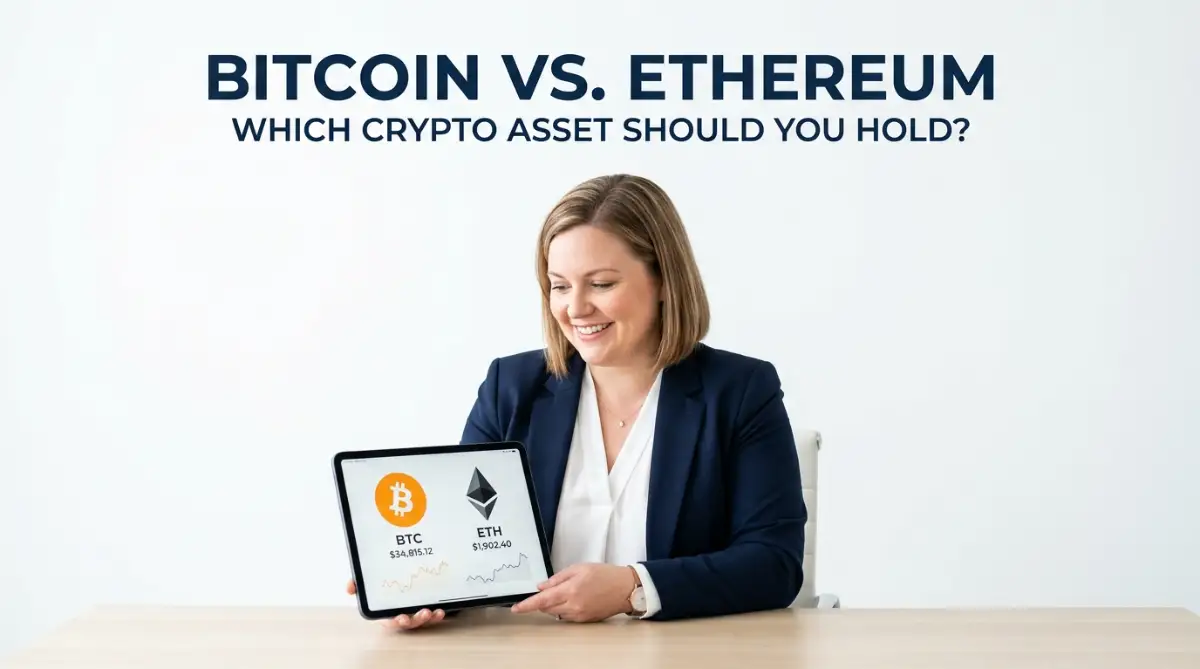
The Crypto Confusion: How Choosing the Wrong Asset Causes Costly Mistakes
Everyday folks hear stories of overnight crypto millionaires. They feel a sudden urge to invest their hard-earned savings into digital coins.
However, once they open an exchange account, they are faced with a confusing wall of charts, numbers, and strange terms. They want to protect their money and build wealth, but they worry about choosing the wrong asset.
Should they buy Bitcoin or Ethereum? The fear of losing everything to a sudden market crash keeps them awake at night.
This mental struggle is incredibly exhausting for ordinary people who just want a safer financial future. They want to make a smart choice, but the constant noise makes it almost impossible to focus.
Why Beginners Fail to Find Clear Investment Answers
- Many beginners buy coins based on hype from social media influencers who do not understand the underlying technology.
- People often treat crypto like a lottery ticket instead of analyzing the actual utility of each asset.
- Investors fail to see the fundamental difference between a store of value and a smart contract network.
- Sellers of bad advice make people believe that both assets behave in the identical manner during market drops.
- The lack of simple, clear educational resources leaves buyers guessing which coin to hold.
- Many people jump into complex trading systems without first building a solid base of core knowledge.
- This confusion leads to buying at the highest price and selling out of fear at the lowest price.
How Portfolio Uncertainty Affects Your Peace of Mind
- Constantly checking price apps on your phone every ten minutes creates high levels of daily anxiety.
- Watching your portfolio balance jump up and down makes you lose confidence in your financial decisions.
- The stress of uncertainty can damage your relationships with family members who worry about your savings.
- You might feel foolish for not understanding the technical terms and code updates discussed online.
- This constant worry takes away the joy of building a better future and makes you feel trapped in a financial maze.
- Many people feel paralyzed by the fear of making a mistake, which prevents them from taking any positive steps.
- We believe you deserve a clear, stress-free path to understanding your choices without all the confusing jargon.
The Real Cost of Following the Crowd
Let us look at a common example that shows this deep struggle. Imagine an investor named David.
He saved some extra cash from his regular job and wanted to put it into cryptocurrency. He kept reading news articles about both Bitcoin and Ethereum.
One article claimed Bitcoin was the only safe digital asset. Another article argued that Ethereum would soon overtake all other networks.
David felt completely pulled in two different directions. He ended up split-buying both coins at random times without a real plan.
When the market went down, he panicked and sold his assets at a loss. David's experience is shared by millions of people worldwide.
The crypto space is full of complex noise, loud voices, and conflicting theories. This chaos makes it hard for a normal person to make a logical choice.
You should not have to gamble your money on guesswork. Both Bitcoin and Ethereum have distinct purposes, strengths, and weaknesses.
Understanding these basic elements is the key to holding assets with real confidence. By learning how these digital assets work, you can design a plan that matches your own risk tolerance.
Let us clear away the confusing details and look at the real facts.

A Clear Framework for Crypto Assets: Analyzing Bitcoin and Ethereum Simply
To build a reliable cryptocurrency strategy, you must first understand the primary purpose of each coin. We can break this down into clear, simple steps.
Step One: Evaluating Bitcoin as Digital Gold
To understand Bitcoin, we must look at it as a digital version of physical gold. Bitcoin was created to be a secure, decentralized form of digital money.
Its main goal is to store your wealth safely outside of the traditional banking system. It does not try to build complex software; it simply focuses on being hard, unchangeable money.
The Power of a Capped Supply
The most important feature of Bitcoin is its absolute scarcity. There will only ever be 21 million Bitcoins in existence.
No government, bank, or programmer can ever print more. This fixed supply is programmed directly into the system's code.
Let us look at an analogy to understand why this matters. Think of Bitcoin like rare artwork or beachside land.
As more people want to own it, the price rises because the supply can never increase. This makes Bitcoin highly attractive to people who want to protect their savings from inflation.
The Security of Proof of Work
Bitcoin uses a system called Proof of Work to secure its transaction history. Specialized computers around the world solve difficult math puzzles to verify transactions.
This process requires a massive amount of physical electricity. This connection to real-world energy makes the network incredibly difficult to attack or alter.
Once a transaction is written onto the Bitcoin blockchain, it is locked forever. You do not need to trust a bank or a government to verify your balance.
The mathematical security of the network handles everything automatically. This simplicity and strength are the main reasons why people choose to hold Bitcoin for the long term.

Step Two: Understanding Ethereum as a Global Utility Computer
While Bitcoin acts as digital money, Ethereum is designed to be a giant, global software platform. It is not just a ledger of balances; it is a giant computer that runs applications.
These applications are called decentralized applications, or dApps. They run exactly as programmed without any risk of censorship or downtime.
The Magic of Smart Contracts
The key feature of Ethereum is its ability to run smart contracts. These are digital agreements that execute themselves automatically when certain conditions are met.
You do not need an expensive middleman, like a lawyer or a bank, to enforce the contract.
Let us use a simple analogy to see how this works. Think of a smart contract like a digital vending machine.
You put in the correct coin, and the machine automatically drops your drink. There is no human worker inside the machine making decisions.
Ethereum uses millions of these digital vending machines to run everything from financial services to digital art ownership.
The Transition to Proof of Stake
Ethereum uses a different security system called Proof of Stake to run its network. Instead of using power-hungry computers to solve math puzzles, Ethereum relies on validators who lock up their own coins.
This process requires ninety-nine percent less electricity than Bitcoin's system.
This makes Ethereum much more friendly to the environment. It also allows the network to process transactions faster and adapt to new software updates easily.
The main asset of the network is called Ether, which is used to pay for the computing power required to run these smart contracts.
Step Three: Comparing Token Economics and Security Models
Now that we understand the basic purposes, let us look at the economic models of both assets. This comparison will help you see how each coin behaves over time.
Fixed Supply vs. Dynamic Issuance
As we discussed, Bitcoin has a hard limit of 21 million coins. This makes its economic policy incredibly predictable and simple.
Ethereum, on the other hand, does not have a hard cap on its total supply. Instead, its supply changes based on how active the network is.
When the Ethereum network is very busy, a portion of the transaction fees is permanently destroyed. This process can actually make the total supply of Ether shrink over time.
This dynamic model can create a supply squeeze, raising the value of each remaining coin when usage is high.
Transaction Speeds and Fees
Because Bitcoin focuses on maximum security, its transaction speeds are relatively slow. It can take around ten minutes or more for a transaction to be fully confirmed.
Ethereum is generally faster, processing transactions in about twelve to fifteen seconds.
However, because Ethereum is so popular for running applications, its transaction fees can become very expensive during busy times. These fees are paid in Ether and can rise to high levels when many people are using the network at once.
Understanding these costs is important if you plan to use your assets actively rather than just holding them.
Core Security Trade-Offs
Both networks offer incredible security, but they make different design trade-offs. Bitcoin is designed to be slow, simple, and incredibly difficult to change.
This conservative design protects its status as a reliable store of value.
Ethereum is designed to be flexible, complex, and constantly improving. While this allows developers to build incredible new software, it also introduces more technical risks.
A bug in a complex smart contract can lead to lost funds, whereas Bitcoin's simple ledger has fewer places where things can go wrong.
A Simple Decision Matrix for Your Portfolio
Choosing between these two assets depends entirely on your personal financial goals. Let us look at a simple way to decide which coin fits your style.
The Case for Holding Bitcoin
You should focus on Bitcoin if you want a simple, highly secure asset that behaves like gold. It is best for investors who want to put their savings away and ignore the daily noise of the market.
Bitcoin is widely considered to be the safest cryptocurrency because of its long history and simple design.
It is also the coin that traditional financial institutions and public companies trust the most. If you prefer low technical complexity and maximum scarcity, Bitcoin is the natural choice.
The Case for Holding Ethereum
You should focus on Ethereum if you want to invest in the growth of decentralized technology. It is best for investors who believe that smart contracts, digital finance, and Web3 applications will shape the future.
When you buy Ether, you are buying a share of the fuel that powers this global digital computer. If you are comfortable with more technical updates and want to participate in active software ecosystems, Ethereum is the ideal choice.
The Balanced Approach
Many experienced investors choose not to pick just one asset. Instead, they hold a mix of both coins in their portfolio.
For example, you might keep sixty percent of your crypto savings in Bitcoin for safety and forty percent in Ethereum for growth.
This balanced approach allows you to benefit from Bitcoin's stability while still capturing the upside of Ethereum's software innovations.
It reduces your overall risk and helps you stay calm during market shifts.Let us look at how you can manage these assets safely over the long term.
Many people start their journey by simply buying a small amount of digital assets on a mobile app. However, keeping those assets safe and growing them over time requires a more advanced plan. We want to show you how experienced holders manage their digital money to avoid stress.
One of the most powerful strategies used by smart investors is called dollar-cost averaging in the digital asset space. This plan helps you avoid the anxiety of trying to guess when the price will go up or down. Instead, you buy a set amount of your chosen coin on a regular schedule.
This method removes raw emotion from your financial moves and ensures you build your holdings steadily. Over time, you end up buying more coins when the price is low and fewer coins when the price is high. It is a proven way to keep your peace of mind while participating in highly active markets.
To make the best choices, we must study how understanding cryptocurrency market structures can protect your hard-earned wealth. Knowing the difference between how Bitcoin and Ethereum behave during market cycles is an essential skill. Let us examine the advanced steps you can take today to protect your digital assets.
Another key strategy is learning how to secure your private keys away from online hackers. Many beginners do not realize that leaving their coins on an exchange is highly risky. Taking full custody of your digital assets is the only way to ensure you actually own them.
Let us look at the practical details of these advanced steps so you can apply them to your own portfolio. These simple tips will help you manage your investments like a professional.
Step Four: Automated Dollar-Cost Averaging
Let us look at a real scenario with an investor named Sarah. She wanted to buy both Bitcoin and Ethereum, but she was terrified of market crashes. Every time the price dropped, she felt sick to her stomach.
We advised Sarah to set up an automated purchase of twenty-five dollars every week. She split this amount between her two chosen assets without looking at the daily charts. Within six months, she noticed her average cost was much lower than if she had bought all at once.
This simple technique is highly effective because it takes away the desire to time the market. No one can predict the exact bottom or top of a market cycle. By setting a fixed schedule, you let time and compound growth do the heavy lifting for you.
Step Five: Moving Your Coins to Offline Storage
Once your digital wallet grows to a significant value, you must think about advanced security. Keeping your assets on a web-based exchange means you are trusting a third party with your wealth. If the exchange suffers a hack or shuts down, your money could disappear instantly.
To prevent this nightmare, you should purchase a physical hardware wallet. These devices are small, secure pieces of hardware that store your private keys completely offline. They protect your assets from online malware, phishing scams, and computer hackers.
Think of an offline wallet like a personal vault in your own home. When you want to send coins, you must physically press buttons on the device to approve the transaction. This simple step adds an unbeatable layer of security to your investment journey.
Step Six: The Smart Rebalancing Method
Rebalancing is an advanced technique that helps you maintain your target risk levels. Imagine you decide to keep a simple portfolio of fifty percent Bitcoin and fifty percent Ethereum. Over a few months, Ethereum might grow much faster, pushing your balance to seventy percent of your total wealth.
This shift means your portfolio is now much more volatile than you originally planned. To fix this, you can sell a small portion of your Ethereum and use the cash to buy more Bitcoin. This action brings your portfolio back to your safe fifty-fifty split.
This process forces you to sell an asset when it is performing well and buy more of an asset when it is cheaper. It is a highly disciplined way to lock in profits automatically. Experienced investors use this method once or twice a year to keep their risk in check.
How to Maintain Your Digital Assets Safely in the Long Run
Holding volatile assets for many years requires a very strong personal financial foundation. You should never invest money that you might need for sudden emergencies next month. Before you put even a single dollar into crypto, make sure your daily finances are completely stable.
For instance, you must know how to build an emergency fund from scratch when money is already tight before starting your crypto journey. Having this cash buffer ensures you will never have to sell your coins during a market crash just to pay for an unexpected bill. This simple backup fund protects both your daily life and your long-term investments.
Additionally, we must balance our high-risk digital assets with safe, predictable savings options. While crypto offers exciting growth potential, it also comes with massive daily price swings. To keep your overall wealth safe, you should learn how to earn 10x more how high yield savings accounts beat traditional banks for your cash reserves.
By combining safe bank accounts with small, smart crypto holdings, you build a balanced financial life. This dual strategy gives you the exciting upside of new technology without risking your daily survival. Now, let us look at the common traps that can destroy your progress if you are not careful.

The Five Critical Pitfalls That Can Destroy Your Digital Savings
While the benefits of investing are huge, the rules are highly technical. A single small error can cause you to lose access to your funds or face massive losses. Let us examine the major mistakes that investors make and how you can avoid them.
Mistake One: Leaving Your Whole Balance on Web Exchanges
We cannot repeat this warning too many times. Many beginners buy their coins on a popular exchange and leave them there for years. They assume that because the app is famous, their money is completely safe.
However, web exchanges are the primary targets for organized online criminals. If an exchange experiences a security breach, your personal account could be drained in seconds. Always transfer your long-term holdings to a secure personal wallet where you control the access keys.
Mistake Two: Investing Cash Needed for Daily Living Bills
One of the fastest ways to lose money in crypto is investing cash that you need for rent, groceries, or car payments. When you do this, you place immense mental pressure on yourself. If the market drops twenty percent the next day, you will panic because you need that money to live.
This panic forces you to sell your assets at a massive loss just to cover your immediate bills. To avoid this trap, you must have a clear understanding of your household cash flow. Knowing how to track daily spending and finally stop the money leaks will help you find true surplus cash that you can safely invest.
Only invest money that you are fully prepared to lock away for several years. This patient approach allows you to ignore short-term price drops and wait for the market to recover. It is the single best way to protect both your wallet and your mental peace.
Mistake Three: Falling for the Day Trading Trap
Many people look at crypto charts and think they can make quick profits by buying and selling every day. They see a coin rise ten percent and assume they can easily predict the next movement. This belief is a dangerous illusion that often leads to total financial ruin.
Professional day trading requires years of deep study, expensive software, and massive emotional discipline. Even with those tools, the vast majority of day traders end up losing money to market makers and transaction fees. For normal investors, a simple buy-and-hold strategy is far more profitable and much less stressful.
Instead of staring at charts all day, focus on your regular career and let your long-term assets grow slowly. This hands-off approach is actually how the most successful investors build their lasting wealth. Trying to outsmart the market almost always ends in disappointment.
Mistake Four: Chasing Unknown Projects and Internet Hype
It is incredibly easy to get distracted by flashy new digital coins that promise ten-thousand-percent returns overnight. These projects are often promoted by social media personalities who are paid to hype them up. Beginners often dump their savings into these unknown coins, hoping to get rich in a single week.
Unfortunately, almost all of these hyped projects turn out to be scams or poorly designed systems that crash to zero. When you chase these cheap coins, you are gambling your future on empty promises. You should stick to established networks like Bitcoin and Ethereum that have proven security and real-world utility.
This mistake is very similar to the common mistakes to avoid when saving money for your first home down payment because rushing into decisions without research always results in lost funds. Take your time, do your homework, and protect your capital by investing only in high-quality assets.
Mistake Five: Forgetting to Secure Your Recovery Phrases
When you use a personal digital wallet, the app will give you a list of twelve or twenty-four random words. This list is your recovery seed phrase, and it is the master key to your entire wealth. If your phone breaks or your computer dies, you must use this phrase to recover your coins.
Many people make the terrible mistake of taking a screenshot of this phrase or saving it in an email. If a hacker accesses your email or cloud storage, they can steal your recovery phrase and drain your wallet. Other people write it on a scrap of paper and accidentally throw it in the trash.
You must treat your recovery phrase with absolute care. Write it down on a piece of paper or stamp it onto a metal plate, and store it in a secure, fireproof location. Never share these words with anyone, including people claiming to be customer support agents.
Your Pathway to Smart Digital Asset Ownership
In the end, your choice between Bitcoin and Ethereum does not have to be an all-or-nothing battle. We must remember that these two assets are built to solve completely different problems. Bitcoin acts as a secure, unchangeable storage locker for your long-term savings.
Ethereum acts as an active software engine that powers the next generation of online agreements and digital tools. By holding both, you are investing in two distinct pillars of the new digital economy. One protects your purchasing power, while the other gives you exposure to technological growth.
This combined approach is how smart modern savers protect themselves from economic instability. It allows you to build a sturdy financial wall while still keeping a window open for exciting opportunities. You do not need to choose a single winner when you can benefit from the strengths of both.
Taking Your First Safe Steps Today
We encourage you to start your journey slowly and focus entirely on learning rather than quick profits. You can begin by setting up a small weekly purchase of whichever asset fits your personal goals. Do not worry about the daily price swings or the chaotic predictions found on social media.
Focus on building a secure system by purchasing a reliable hardware wallet and learning how to protect your recovery keys. Talk to licensed financial advisors who understand your personal situation and risk tolerance. By taking these small, deliberate steps, you remove the stress and replace it with real confidence.
Remember that financial freedom is built through consistent, disciplined habits over many years. You have the power to take control of your financial destiny and protect your savings from inflation. Start slow, stay safe, and let your digital asset plan grow steadily as you build your future.
Disclaimer:
The information provided in this article is for educational and informational purposes only. It does not constitute financial, investment, or legal advice. Cryptocurrency investments are highly volatile and carry a high risk of capital loss. Always perform your own research and consult with a certified financial advisor before making any investment decisions.