

Why Fair Credit Makes Loan Shopping So Confusing
You check your credit score and it lands somewhere in the middle. Not bad enough to feel hopeless. Not good enough to feel safe.
A few years ago, I checked my credit score after an unexpected car breakdown, and seeing a 610 felt like a total slap in the face. I was stuck in that annoying middle spot where I wasn't getting outright rejected, but nobody was giving me a decent rate either. I felt lost and overwhelmed by all the online ads promising instant fixes, only to get hit with hard credit dings that made things worse. That frustrating experience taught me that having fair credit isn't a dead end—it just means you need a smarter strategy.
This is the strange spot millions of people sit in every day. Fair credit usually means a score somewhere between 580 and 669, and it puts you in a weird gray zone.
You don't get the best rates. You don't get instantly rejected either. You just get... stuck.
Maybe you need a loan to cover a car repair. Maybe a medical bill landed on your desk out of nowhere. Maybe you just want to consolidate a few credit cards into one simple payment.
Whatever the reason, you start searching online, and within minutes you're drowning in options that all promise the "best rates" and "instant approval."
The Real Problem Isn't a Lack of Lenders
The problem is that almost nobody explains things in plain language.
Here's why so many fair credit borrowers end up making the wrong move:
- They apply to too many lenders at once. Each hard inquiry can ding your score a little more, making your fair credit slip toward poor credit.
- They trust the first "guaranteed approval" ad they see. Real lenders never guarantee approval before checking your credit and income.
- They skip reading the fine print on fees. Origination fees, prepayment penalties, and balloon payments can quietly double the real cost of a loan.
- They compare interest rates only, not the full picture. A lower rate with a high origination fee can cost more than a slightly higher rate with no fees at all.
- They don't know their actual score before applying. Walking in blind means you have no idea which lenders will even say yes.
None of this is your fault. Loan websites are built to convert visitors, not to educate them. Most of them want you to click "Apply Now" before you've even understood what you're applying for.
The Quiet Toll This Takes on You
This isn't just a money problem. It's a confidence problem too.
When you keep getting denied, or keep seeing rates that feel unfair, something starts to shift inside you:
- You start avoiding your bank app because checking it feels stressful.
- You assume every lender will say no, so you stop trying altogether.
- You feel embarrassed talking about money with friends or family.
- You start believing something is "wrong" with you, when really the system is just confusing.
- Sleep gets harder because your brain keeps replaying the bills you owe.
Take Sarah, a nurse in Ohio. Her credit score sat at 615 after a rough year of medical bills from her own surgery. She applied to four lenders in one week, hoping one would say yes. Three rejected her, and her score dropped another 12 points from the inquiries alone. By the time she found a lender that worked with fair credit borrowers, she felt too discouraged to even fill out the form.
That story is common. Fair credit isn't rare. It's one of the most common credit ranges in the entire country, sitting right in the middle of the pack.
So if you're reading this with a score in that 580 to 669 range, you're not behind. You're not broken. You're simply in a category that requires a smarter approach, not a desperate one.
The good news is that fair credit personal loans exist, and plenty of lenders are built specifically for this range. You don't need a perfect score to get approved. You need the right information and a clear plan, which is exactly what we're about to walk through together.
Your Step-by-Step Plan to Get Approved With Fair Credit
Getting approved isn't about luck. It's about doing a few specific things in the right order.
Let's break this down into simple, doable steps you can start today.
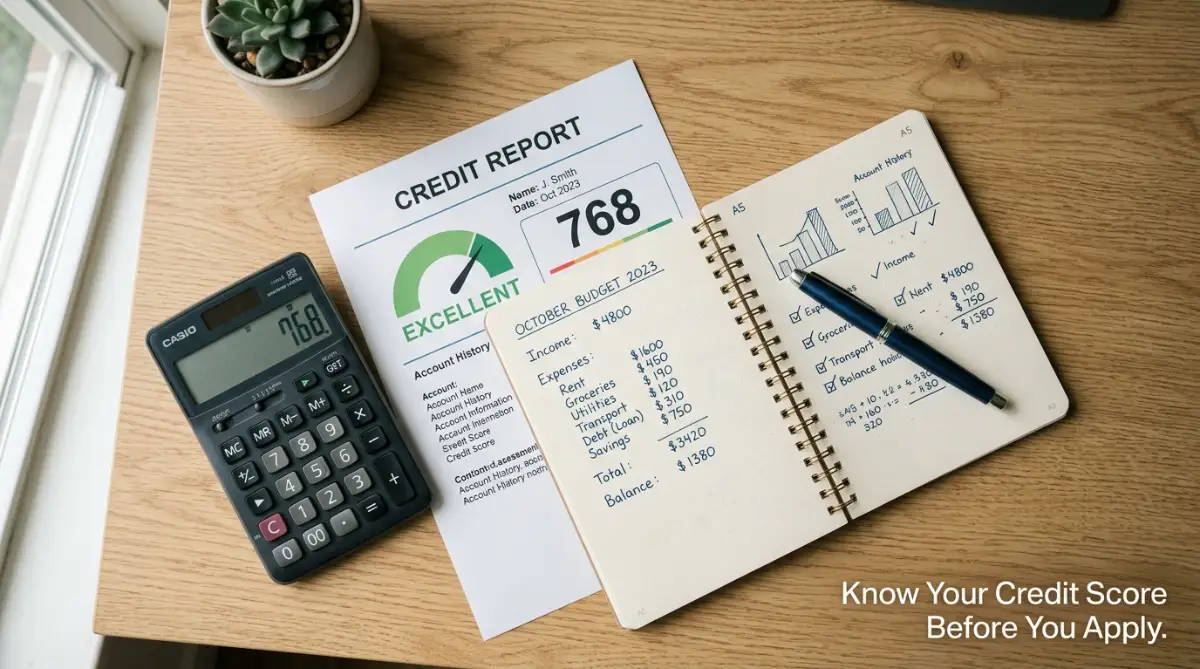
Step One: Find Out Exactly Where Your Credit Stands
Before you apply anywhere, pull your actual credit report. Not a guess. Not an old number you remember from two years ago.
You can request a free report from each of the three major bureaus once every twelve months through the official government-authorized site. Many banking apps also show a soft-pull score for free, updated monthly.
Here's what to actually look at, not just the number itself:
- Your payment history. This carries the heaviest weight in your score, so even one late payment matters.
- Your credit utilization. This is how much of your available credit you're using. Staying under 30% helps a lot.
- The age of your accounts. Older accounts in good standing boost your score over time.
- Any errors on the report. Mistakes happen more often than people think, and disputing errors on your credit report can raise your score within weeks.
Think of this step like checking the weather before a road trip. You wouldn't drive blind into a storm, so don't apply for a loan blind either.
Step Two: Shop Smart Instead of Shopping Wide
Want to see how to compare loan offers and secure the best rates without hurting your credit score? Check out this helpful video guide before you read the rest of the steps below!
Here is a quick pro tip from my own painful mistake: never hit "Apply Now" without using a soft-pull prequalification tool first. I once submitted three real applications in a single afternoon, and the hard credit inquiries knocked my score down almost 15 points in seconds. Once I switched to prequalification checks, I could safely compare real rates without hurting my credit score at all.
Once you know your score, narrow your search to lenders who actually work with fair credit.
Many credit unions, online lenders, and community banks specialize in this exact range. Big national banks often reserve their best terms for borrowers with excellent credit, so they're not always your best option here.
A few practical moves that protect your score while you compare:
- Use prequalification tools. Most reputable lenders let you check your likely rate with a soft pull, which does not hurt your score.
- Compare the full cost, not just the rate. Look at the APR, which bundles in fees, so you're comparing apples to apples.
- Check the loan term length. A longer term lowers your monthly payment but raises the total interest you pay over time.
- Read reviews from real borrowers, not just the lender's own homepage testimonials.
- Apply within a short window, usually 14 to 45 days, if you do submit a few formal applications. Credit scoring models often treat these as a single inquiry for rate shopping.
This is similar to comparing flights before booking one. You wouldn't buy the first ticket you see without checking two or three other options first.
Step Three: Strengthen Your Application Before You Hit Submit
Here's a step most people skip entirely, and it can make a real difference in both approval odds and the rate you're offered.
Lenders don't just look at your score. They also weigh your income, your existing debt load, and sometimes your employment history.
A few things you can do right now to present a stronger application:
- Pay down a credit card balance, even a small one, before applying. This can lower your utilization and bump your score within a single billing cycle.
- Add a co-signer if you have one available. A co-signer with strong credit can unlock better rates, though it does make them responsible if you miss payments.
- Gather your documents in advance. Pay stubs, bank statements, and proof of address speed up approval and reduce back-and-forth delays.
- Be honest about your debt-to-income ratio. Lenders generally want this under 40%, so paying off a small balance before applying can genuinely help. Working from a real budget makes this number much easier to track and improve.
- Avoid opening any new credit lines right before you apply. New accounts temporarily lower your average account age and can ding your score.
Picture this step like prepping for a job interview. You wouldn't walk in without your resume ready, and a loan application deserves that same level of preparation.
Myths That Trip Up Fair Credit Borrowers
A lot of bad decisions come from believing things that simply aren't true. Let's clear up a few common myths.
Myth: "Fair credit means automatic rejection." This isn't accurate at all. Plenty of lenders build their entire business around the fair credit range, because it represents such a large slice of borrowers.
Myth: "Checking my own score will hurt it." Checking your own report is a soft inquiry, and it never lowers your score. Only hard inquiries from formal loan applications carry any weight.
Myth: "A cosigner ruins my chances if I don't need one." Adding a cosigner is optional, not required. It simply gives you a backup path if your own application doesn't qualify for the rate you want.
Myth: "All personal loans work the same way." Terms vary widely between lenders. Some charge origination fees, some don't. Some allow early payoff with no penalty, others charge for it. Reading the loan agreement matters more than chasing the lowest advertised rate.
Myth: "My score is permanent." Scores shift month to month based on your behavior. A borrower who pays down debt and avoids new credit inquiries can often move from fair to good credit within six months to a year.
Why This Approach Actually Works
Each of these three steps builds on the last one. Knowing your score tells you where you stand. Smart shopping puts you in front of lenders who actually say yes to people like you. Strengthening your application gives those lenders a reason to offer you a better rate.
This isn't about gaming the system. It's about presenting an accurate, complete picture of your finances instead of a rushed, incomplete one.
Borrowers with fair credit get approved for personal loans every single day across the US. The difference between a smooth approval and a frustrating rejection usually comes down to preparation, not luck.
Think back to Sarah from earlier. After her rough start, she stopped applying blindly. She pulled her real credit report, found two credit unions that s