
The Raw Truth About Crash Aftermath: How I Built My Evidence Wall
Three years ago, a distracted driver ran a red light and smashed straight into my driver-side door. I still remember the terrifying screech of metal and the white dust from the airbag filling my lungs. My hands shook so hard I could not even dial emergency services. My shoulder was throbbing with pain, but my biggest mistake was standing on the curb thinking the insurance companies would handle everything fairly on their own.
Boy, was I wrong. Within forty-eight hours, the other driver flipped his story, claiming I cut him off. Because I failed to take wide-angle photos or grab the phone numbers of people waiting at the bus stop, I spent the next fourteen months fighting an exhausting uphill battle for every single penny of my medical coverage.
I wrote this practical guide so you never have to go through the painful mess I endured. When an unexpected wreck turns your life upside down, knowing exactly what to record, what to photograph, and what to keep quiet will literally save your financial future. Let my costly mistake be your ultimate shortcut to safety and peace of mind.
⚡ Quick Action Checklist (What to Do Right Now)
- Document Everything Instantly: Take wide, medium, and close-up photos of vehicle damage, road skid marks, and your visible scrapes before anything gets moved.
- Grab Eyewitness Details Personally: Never wait for the police to collect witness info; ask for their full name, phone number, and a 30-second voice note on your phone.
- Follow Doctor Orders Without Gaps: Missing a single physical therapy session gives insurance adjusters an excuse to slash your settlement amount.
- Keep Your Mouth and Social Media Shut: Refuse recorded calls with the other driver's insurance and never post injury updates on Facebook or Instagram.

Taking Control: A Practical Blueprint for Gathering Proof
When you are hurt, your first priority is always getting medical help. However, once you are safe, treating the scene like a puzzle is incredibly important. Every small detail you capture can make a massive difference in your future recovery process.
Let us explore some highly effective, logical steps you can take to protect yourself. These practical actions will build a strong wall of protection around your rights.
The Silent Witnesses: Capturing Scene Photos Properly
Your smartphone camera is your absolute best defense. Metal can be repaired and road debris gets swept away within hours, but clear pictures freeze time forever. Start by backing up twenty paces to capture the whole intersection, street signs, traffic lights, and weather conditions. Then, step closer to snap tight shots of license plates, paint transfer, shattered glass, and skid marks. If you have visible cuts, bruises, or seatbelt burns, photograph them right away. Be sure to keep location tags turned on in your phone settings so every single file has an unchangeable timestamp and GPS stamp attached.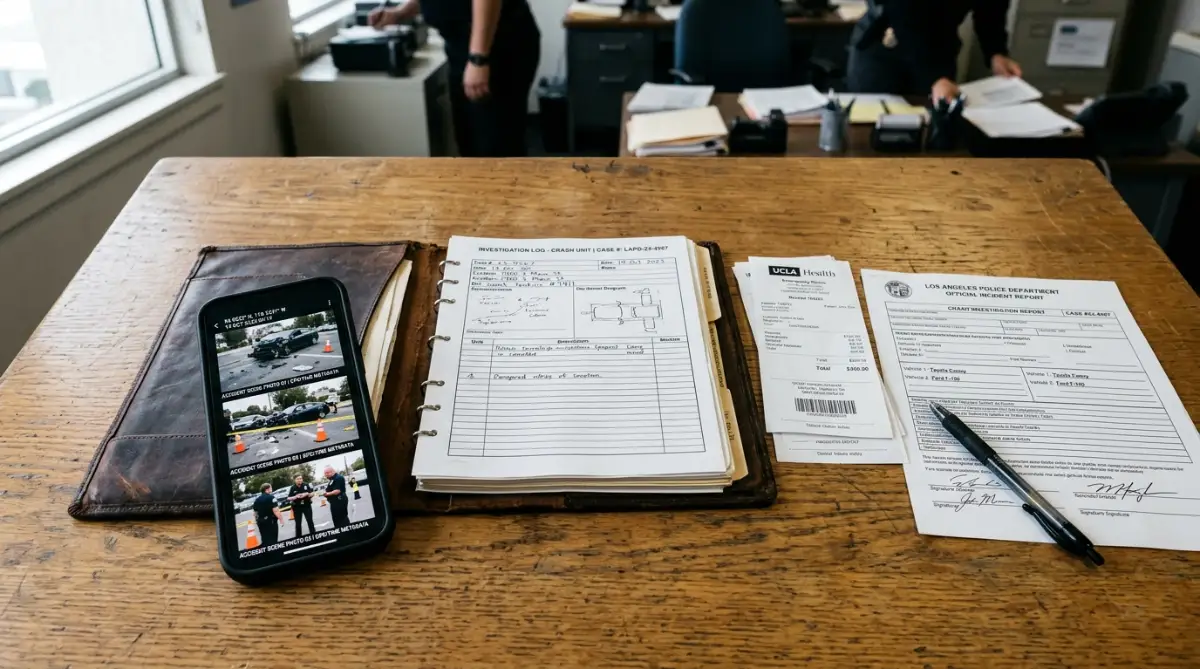
Watch the Full Step-by-Step Breakdown: What To Do After a Car Accident Guide (by Licensed US Attorney)
The Power of Immediate Words: Securing Witness Statements
Bystanders walk away fast. The moment you know you are physically safe, walk over to anyone standing nearby. Politely say, "I am really shaken up. Did you see what happened?" If they say yes, ask for their first and last name and phone number right away. If they feel comfortable, ask if you can record a 20-second audio clip of them explaining what they saw. In my own collision, a nice gentleman in a red jacket saw the other car run the red light, but I assumed the police officer would interview him. The officer never did, that man walked away, and my strongest piece of support vanished into thin air.
Organizing the Paper Trail: Police and Incident Reports
Whenever something goes wrong, creating an official paper trail is highly recommended. If you are on the road, calling the local authorities ensures an objective third party assesses the situation. Officers are trained to look at the facts and document them in an official format.
If your incident happens in a store or a private building, demand an official incident report from the manager. Make sure you read it carefully before signing anything, and always ask for a physical copy. Store managers might try to rush this process, but you need to take your time.
These official reports serve as the foundation of your entire claim. They establish the exact date, time, and basic facts before anyone tries to change the story. Keep these documents in a safe, dry place at home.
Tracking the Invisible: Maintaining a Daily Recovery Journal
Not all evidence is visible to the naked eye. The physical pain, emotional distress, and daily inconveniences you suffer are very real, but hard to prove. This is where a daily recovery journal becomes your secret weapon.
Start writing down how you feel every single morning and evening. Note your pain levels on a scale of one to ten. Describe the things you cannot do anymore, like picking up your child or carrying groceries.
This written record transforms your invisible suffering into concrete facts. When an insurance adjuster tries to say you recovered quickly, your journal tells the real story. It shows the true, unvarnished reality of your daily struggles.
🔍 Accident Evidence: 3 Big Myths Busted
❌ MYTH: "The police report is all the proof I need to win."
✔ FACT: Police officers rarely see the crash happen. Their report is considered hearsay in many civil injury cases. You still need your own photos, witness statements, and continuous medical logs.
❌ MYTH: "I should wait until my pain goes away before seeing a doctor."
✔ FACT: If you wait more than 72 hours to see a physician, insurance adjusters will argue that you were not really hurt or that an unrelated activity caused your pain.
❌ MYTH: "Posting my recovery on social media helps show my struggle."
✔ FACT: Insurance investigators actively scan your Instagram and Facebook. A single picture of you smiling at dinner will be used to argue you are completely healed and exaggerated your claim.
Understanding the Financial Impact of Evidence
Proper documentation directly affects the financial outcome of your situation. Without clear proof, you might end up paying out of your own pocket for someone else's mistake. A simple chart can help you understand how much money is at risk.
As you can see, the cost of being unprepared is incredibly steep. Gathering evidence is not just about being right; it is about protecting your bank account. A little bit of effort today saves you massive headaches tomorrow.
The Medical Foundation: Consistency in Treatment
Your physical health should always be your main focus. Going to the doctor immediately after an incident establishes a clear medical baseline. It shows exactly what injuries were caused by the specific event.
You must follow your doctor's orders perfectly without missing any appointments. Skipping physical therapy sessions sends a message that you are not actually hurting. Keep a dedicated folder for all your prescriptions, visit summaries, and discharge papers.
This consistent medical history leaves no room for doubt. It proves that you took your recovery seriously and did everything possible to heal. Insurance companies respect detailed, unbroken chains of medical care.
Digital Footprints: Preserving Electronic Evidence
We live in a world where everything is tracked digitally. This can work to your advantage if you know where to look. For example, if your incident happened near a business, they likely have security cameras.
You must act quickly to request this footage before it gets deleted. Many security systems overwrite old footage every few days to save space. Send a polite, written request to the business owner asking them to preserve the video.
Smartwatches and fitness trackers also provide excellent digital evidence. If your heart rate spiked during the event, or if your daily step count drastically dropped afterward, that is valid proof. Download this data and keep it safe alongside your other records.
Organizing Your Master File
Once you start gathering all this information, it can quickly become messy. You need a system to keep everything perfectly organized. Create a master binder with clear dividers for different categories.
Have one section for medical bills, one for official reports, and another for your printed photographs. You should also create a digital backup on a secure cloud storage service. Having both physical and digital copies ensures you will never lose your hard work.
Being highly organized shows anyone reviewing your file that you mean business. It projects confidence and makes it extremely difficult for anyone to dismiss your claims. You are essentially building a bulletproof shield out of paper and pixels. Having your master file organized this way makes meeting a lawyer for the first time smooth, productive, and stress-free.
Dealing with the Aftermath at Work
Your injuries will likely force you to miss some days at your job. This lost income is a major part of your overall struggle, and it needs proper documentation. Speak to your human resources department immediately to explain the situation.
Ask them for official statements showing exactly how many days you missed. Request documentation of your regular pay rate and any bonuses you lost out on. If you had to use your paid vacation days to recover, get that in writing too.
You should never have to sacrifice your hard-earned benefits because of an unexpected event. Clear letters from your employer will easily prove the exact financial hit you took. This makes recovering your lost wages a straightforward mathematical process.
Clothing and Physical Objects: Do Not Throw Anything Away
When you get home from a stressful event, your first instinct is to wash your clothes or throw away damaged items. Stop right there. The clothes you were wearing are physical evidence of the forces involved in the incident.
If your shirt was torn or your pants were stained, place them in a clean plastic bag. Do not wash them, do not repair them, and do not wear them again. Keep them in a safe closet away from direct sunlight.
The same rule applies to damaged property like a cracked bicycle helmet or a shattered watch. These physical objects tell a silent, undeniable story about the impact you experienced. They are tangible pieces of truth that nobody can argue against.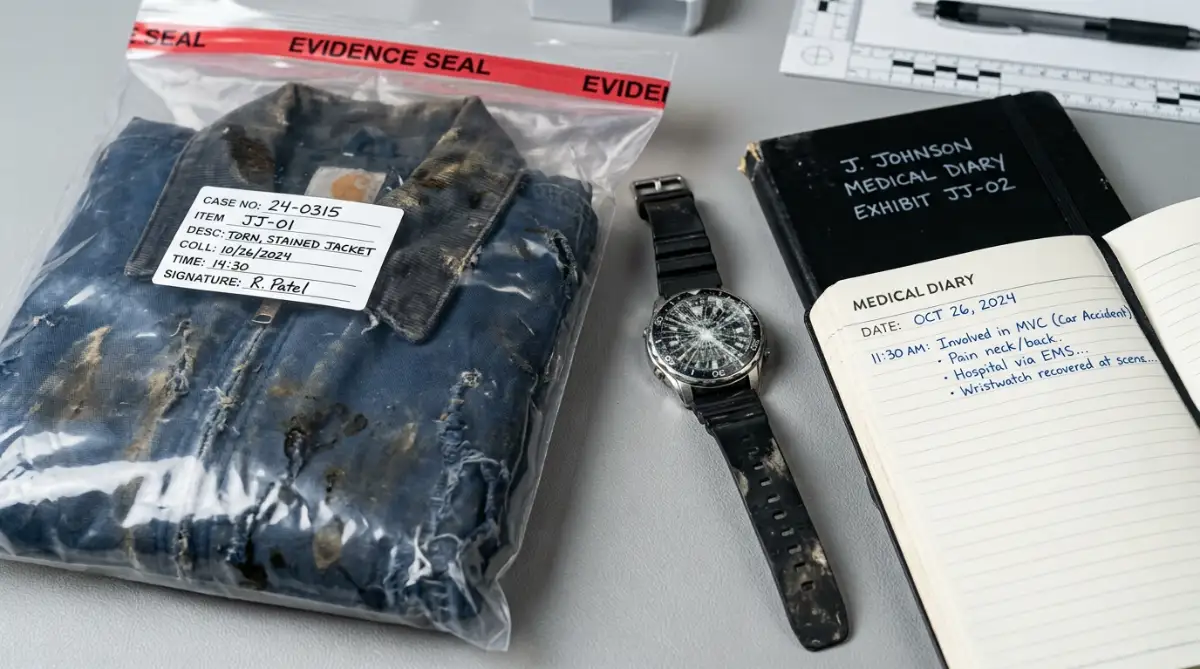
Communication Records: Keeping Track of Every Conversation
You will spend a lot of time talking on the phone in the weeks following an incident. You will speak with mechanics, doctors, and insurance representatives. Every single one of these conversations needs to be tracked.
Keep a small notebook near your phone dedicated purely to this task. Write down the date, time, the name of the person you spoke with, and a summary of what was said. If an adjuster promises to send a check or a doctor recommends a specific test, write it down immediately.
This level of detail prevents people from going back on their promises. If someone claims they never said something, you can refer to your exact notes. It puts you in a position of complete authority over your own situation.
Handling Early Settlement Offers
Insurance companies often try to end things quickly by offering a fast, low amount of money. They do this before you fully understand the extent of your injuries. Never accept the very first offer without careful consideration.
You need time to see how your body heals and what your final medical bills look like. Accepting early money usually means you sign away your rights to any future help. You might end up needing surgery months later, and you will be completely on your own.
Use the evidence you have meticulously gathered to calmly reject lowball offers. Show them your organized master file, your daily journal, and your solid medical history. When they see how prepared you are, they will realize they cannot take advantage of you. If the insurance adjuster still refuses to offer a fair payout, knowing how to pick the best attorney and avoid costly mistakes will give you the legal muscle you need.
The Emotional Toll and Psychological Proof
Physical injuries are easy to see, but the mental trauma is deeply hidden. Many people develop intense anxiety about driving or walking near the place where they were hurt. This emotional damage is just as valid as a broken bone.
If you seek help from a therapist or counselor, make sure to keep those records as well. Their professional notes will prove that the incident negatively affected your mental well-being. Do not feel ashamed about asking for mental health support during this tough time.
Documenting your psychological journey adds a deeply human element to your overall file. It reminds everyone involved that you are a real person whose life was drastically changed. This comprehensive approach ensures you are treating your whole self, not just your visible wounds.
Gathering Proof of Reduced Quality of Life
Sometimes an injury stops you from doing the things you love most. If you used to play tennis every weekend and now you cannot even hold a racket, that is a huge loss. You need to gather evidence of your life before the event to show the contrast.
Find old photographs or videos of you participating in your favorite hobbies. Ask your friends or family members to write short letters explaining how your lifestyle has changed. These personal testimonies carry a lot of emotional weight.
Showing a clear "before and after" picture of your life makes the impact undeniable. It proves that you lost more than just a few days of work. You lost precious moments of joy, and that deserves to be fully recognized and documented.
Next-Level Strategies for a Bulletproof Defense
Gathering the basic facts right after an event is just the beginning of your journey. To truly protect yourself over the long haul, you must start thinking like a seasoned professional. The other side will actively look for tiny holes in your story weeks or months down the line. You need to build a wall of evidence that gets stronger as time goes on, not weaker.
One of the smartest things you can do is lock down the metadata of your digital files. When you take a picture on your smartphone, it automatically saves hidden details like the exact time and GPS location. Never send these original photos through social media apps or basic text messages. Those platforms usually strip away the original data to make the file size smaller.
Instead, transfer the original image files directly to a secure cloud drive or a physical hard drive. If an insurance adjuster ever doubts exactly when or where a photo was taken, this original data proves your story perfectly. It removes all guesswork and forces them to accept the hard facts.
You should also request a complete copy of the 911 call transcript if authorities were involved. Listening to the raw, unedited audio of people calling for help provides a terrifying but honest perspective of the event. These recordings often capture background noises, spontaneous admissions of fault, or the immediate chaos of the scene. Accessing public records and official incident transcripts requires a simple written request to your local dispatcher's office.
Dealing with Independent Medical Exams
Eventually, the opposing insurance company might force you to see their own doctor. They call this an Independent Medical Exam, but the doctor is usually paid by the insurance company. Their main goal is often to find a reason to minimize your reported injuries. You need to walk into this appointment fully prepared and extremely cautious.
Bring a trusted friend or family member to sit in the room with you during the exam. Have them quietly take notes on exactly how long the doctor spends examining you. If the doctor only looks at your shoulder for three minutes, your friend's notes will prove it was a rushed, incomplete exam.
Never guess or exaggerate your symptoms during these specific appointments. Stick to the absolute, plain facts of your current condition. If a certain movement does not hurt that day, be honest about it. Trying to make things look worse than they are will instantly destroy your credibility.

Dangerous Traps That Destroy Honest Cases
You can do almost everything right and still ruin your chances by falling into a few common traps. The period following an unexpected physical setback is incredibly emotional and confusing. It is extremely easy to make a tiny mistake that costs you dearly in the end. Let us look closely at the massive pitfalls you must avoid at all costs.
The Social Media Illusion
We are naturally wired to share our painful experiences with friends and family online. You might post a smiling picture from your hospital bed just to show everyone you survived. This single, innocent picture can completely derail your entire recovery effort. The opposing side is definitely monitoring your social profiles looking for anything they can use.
If you claim a severe back injury, but they find a picture of you smiling at a birthday party, they will attack your honesty. They do not care that you were hiding massive physical pain just to be there for your child. They will simply present the photo as proof that you are faking your injuries.
What you must do instead:
- Make all your profiles completely private immediately.
- Stop posting any updates, even positive ones, about your daily life.
- Ask your friends and family members not to tag you in their own photos.
- Never discuss the details of your medical treatments on any public forum.
The Recorded Statement Trap
Expect a call from the other party's insurance adjuster within forty-eight hours. They will sound warm, friendly, and deeply concerned about your health. Do not fall for this act. They will ask simple questions like, "How are you feeling this morning?" If you instinctively reply, "I'm doing okay, thanks," they will literally write down that you admitted to being uninjured. They will also push for a recorded phone statement. You have zero legal duty to give a recorded interview to the opposing insurer. Simply tell them: "I am focusing on my medical care right now. Please send all questions to me in writing."
Ignoring the Minor Pains
Adrenaline masks physical pain for several days following a highly stressful shock. You might feel a slight stiffness in your neck and completely ignore it, thinking you just slept wrong. A week later, that stiffness turns into a severe spine issue that requires heavy medical intervention.
Because you did not report the neck pain on day one, the insurance company will aggressively deny that part of your claim. They will argue you probably hurt your neck doing something else over the weekend. This is why you must report absolutely every single ache and pain to your doctor, no matter how small it seems.
Creating a complete, honest medical record from the very first visit is your strongest shield. It ties every single physical issue directly back to the original incident. It completely stops the other side from making up false stories about how you got hurt.
Signing Blank Medical Authorizations
Eventually, the insurance company will ask you to sign a medical release form. They will claim they just need to see the bills related to this specific event. In reality, these forms are often broadly written to give them access to your entire medical history.
If you sign it without reading, they will dig through your records from ten years ago. If they find that you complained about a sore back in high school, they will blame your current pain on that old issue. They will do anything to avoid paying for the damage they actually caused today.
Only provide the exact, specific medical records that relate directly to the recent incident. Better yet, gather the required documents yourself and send them directly. Never give an opposing company a blank check to dig through your private, lifelong medical history. Before signing any settlement release form, understanding basic contract law to protect your rights ensures you never accidentally waive your future claims.
Frequently Asked Questions About Accident Documentation
1. What should I do if the other driver refuses to share their insurance info?
Stay calm and do not get into an argument. Immediately call the police and tell the dispatcher that the other party is refusing to exchange credentials. While waiting inside your vehicle, discretely take clear photos of their license plate, vehicle make, model, and the driver.
2. How long do I have to see a doctor after an accident?
You should visit an emergency room, urgent care clinic, or your primary care physician within 24 to 72 hours. Even if adrenaline is masking your discomfort, getting an official medical exam on day one links your physical condition directly to the crash timestamp.
3. Can I use dashcam footage as official proof?
Yes, unedited dashcam video is one of the strongest forms of proof available. Make sure to eject the memory card immediately after the collision and copy the raw file to a computer and cloud drive so it does not get recorded over.
4. Should I sign a medical release form sent by the other insurer?
Never sign a blanket medical release. These forms allow opposing insurance adjusters to dig through years of your private medical history to claim your current pain was caused by an old pre-existing injury. Only supply specific records directly related to this crash.
5. What should I record in my daily pain journal?
Write a short entry every morning and evening. Rate your pain on a 1-to-10 scale, list all medications you took, and describe specific daily tasks you could not complete (like lifting your toddler, driving to work, or sleeping through the night).
Your Roadmap to Lasting Peace of Mind
Taking charge of your own situation is incredibly empowering when everything else feels completely out of control. By diligently gathering your proof, staying organized, and avoiding emotional traps, you are securing your own future. You are building an unbreakable shield of truth that protects you and your family from unfair financial burdens.
The smartest thing you can do right now is review everything you have collected so far. Make sure your digital files are backed up, your journal is updated, and your medical appointments are firmly on the calendar. Staying proactive keeps you three steps ahead of anyone trying to minimize your pain.
I know firsthand how exhausting it feels to fight for what is right when your body simply wants to rest. My own journey taught me that nobody else is going to step in and organize this mess for me. I had to wipe my tears, pick up my notebook, and start treating my evidence like my most valuable possession. You possess that exact same strength inside you right now. Take a deep breath, grab a pen, and start documenting your truth today because your future peace of mind depends on it.
📚 Explore More Essential Legal Guides
- Protect Your Wealth: Best Ways to Reduce Probate Court Costs
- Can You Legally Form a Business Without a Lawyer? A Practical Guide
- How to Register a Trademark: A Simple Legal Guide for Beginners
Disclaimer:
The information provided in this article is for educational and informational purposes only and does not constitute official legal or medical advice. Every situation is highly unique, and laws vary significantly by location. You should always consult with a qualified local professional or a certified medical provider to discuss the specific details of your situation.