How I Started Investing with Just 20 USD Left in My Pocket
A few years back, I found myself sitting on my living room rug late at night, staring at my bank account screen. After paying my landlord, clearing the electric bill, and buying basic groceries, I had exactly twenty-three USD left for the next two weeks.
Every finance influencer on social media made it sound like you needed five thousand USD just to talk to an advisor or buy a piece of a great business. I felt like the stock market was a private club reserved only for people who already had piles of cash. Because of that fear, I kept all my money in a standard checking account and watched inflation quietly eat away at my savings.
That mistake cost me years of missed growth.
If you work forty to fifty hours a week and feel like your bank balance barely moves, I understand your stress. The good news is that Wall Street rules have changed completely. You do not need thousands of dollars to build real wealth. Today, you can start owning shares in world-class companies with less than the price of a cup of coffee. Let me show you the simple, realistic steps I used to go from twenty-three USD to a growing portfolio.
⚡ Quick Summary: What You Need to Know
The Big Myth About Needing Thousands to Buy Shares
The idea that you need a huge pile of cash to enter the market is completely outdated.
Decades ago, you had to call a broker on the phone, pay heavy commissions, and purchase stocks in chunks of one hundred shares.
Those days are completely gone thanks to modern technology and modern account rules.
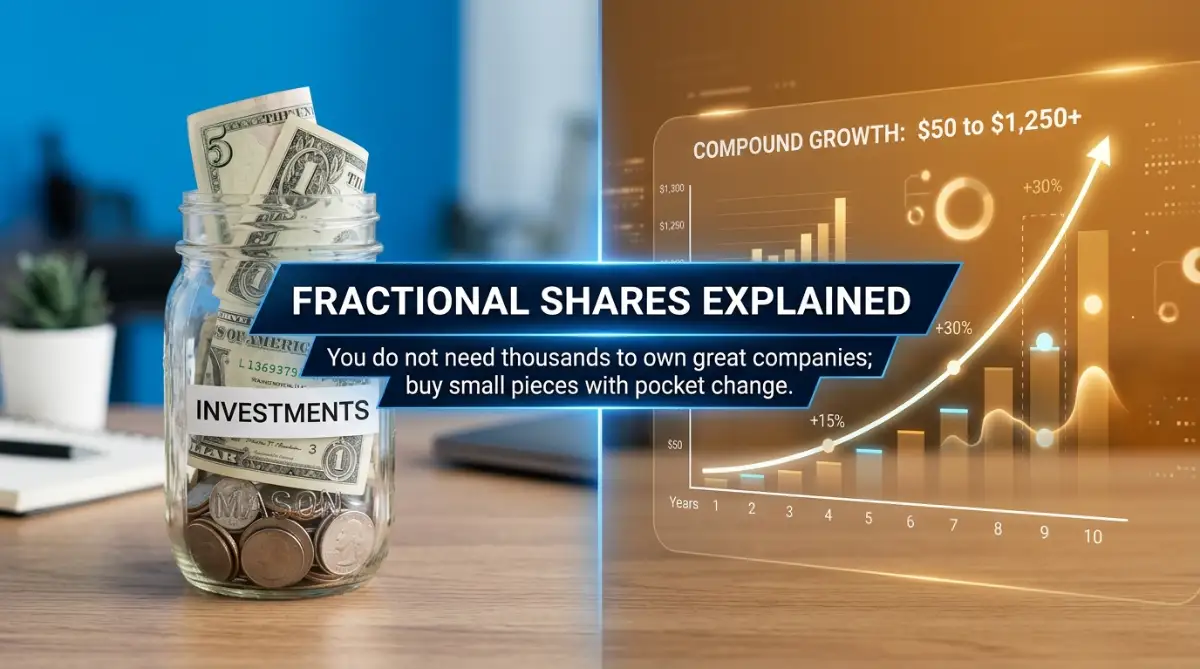
Today, financial platforms allow everyday people to buy tiny slivers of company shares called fractional shares.
If a single share of a major technology company costs three hundred USD, you do not need three hundred USD to buy in.
You can literally invest five USD and own a tiny piece of that exact same business.
You earn the exact same percentage returns as a billionaire holding thousands of whole shares.
When the company pays dividends or gains value, your five USD grows at the exact same rate.
This shift has leveled the playing field for anyone willing to start with modest amounts.
You no longer have to wait until you save a massive nest egg before putting your money to work.
Starting with small amounts actually gives you a major psychological advantage over big spenders.
When you invest ten USD, your risk is tiny, which keeps your emotions calm while you learn the mechanics of the market.
You can build solid habits without losing sleep over normal daily price swings.
Understanding What a Stock Actually Means
Before you put a single dollar into the market, you must understand what you are buying.
Think of buying a stock as buying a tiny piece of an actual storefront in your neighborhood. You are not buying a random lottery ticket or a lucky betting slip. You are becoming a legal part-owner of an operating business. When thousands of people line up every morning to buy shoes, phones, groceries, or subscriptions from that company, a tiny portion of those earnings belongs to you.
Think of it like buying a single brick in a massive shopping mall.
You do not own the entire building, but nobody can take your brick away from you.
As the mall attracts more shoppers and collects higher rents, the value of your single brick steadily climbs.
This simple mental shift changes everything about how you look at your daily spending.
Instead of just being a customer who buys products, you become an owner who benefits from sales.
The Secret Engine: How Small Amounts Snowball Over Time
Many people ask how a small deposit like ten or twenty USD a week can ever change a life.
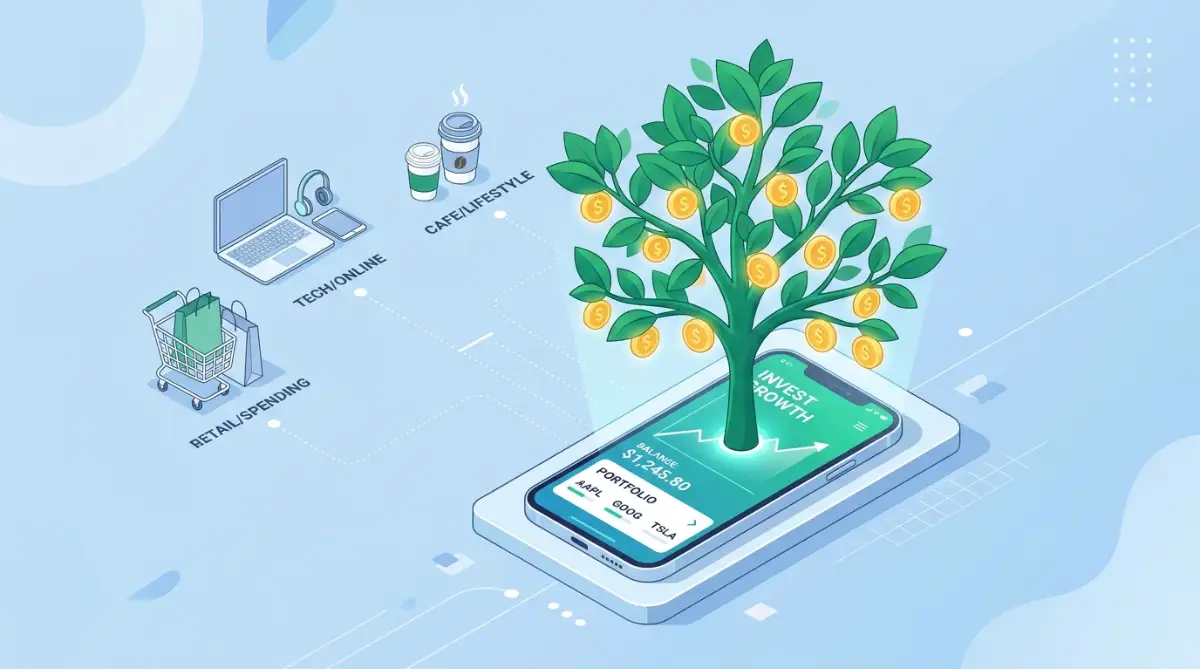
The secret lies in a mathematical process called compound growth.
Compound growth happens when your money earns returns, and then those returns earn their own returns.
In the beginning, the growth looks tiny and almost invisible on your screen.
A ten USD gain in your first few months might feel like nothing to celebrate.
However, as time passes, the growth curve turns sharply upward like a hockey stick.
Consider this practical comparison between simple savings and compound investing:
Look at the difference between the bank account column and the market return column.
The cash you put in is identical, but the compounding engine creates thousands of USD in extra value.
Time does the heavy lifting while you simply stick to your routine.
This is why starting early with small amounts beats waiting years to start with large amounts.
The years you spend waiting on the sidelines are years your money misses out on compounding.
The Core Asset Types for Low-Budget Beginners
When you have limited funds, you cannot afford to risk your capital on wild gambles.
You need stable, proven asset classes that spread your risk across hundreds of businesses at once.
Putting all your money into one single hot stock is like carrying all your eggs in a thin paper bag.
If that single company runs into trouble, your balance takes a severe hit.
Instead, beginners on a budget should focus on diversified investment baskets.
1. Broad Market Index Funds and ETFs
An Exchange Traded Fund (ETF) is a basket that holds hundreds or thousands of different stocks inside one package.
When you buy one tiny piece of an index ETF, you instantly own a slice of the largest companies in the nation.
If one company struggles, hundreds of other profitable companies help balance it out.
These funds have rock-bottom management fees, meaning more of your money stays invested.
They require zero daily maintenance or stressful stock picking from your end.
2. Fractional Blue-Chip Shares
Blue-chip stocks are shares of well-established, household-name companies with long track records of stability.
These businesses have survived recessions, market crashes, and shifting consumer trends over many decades.
Using modern fractional trading, you can pick two or three industry leaders you understand thoroughly.
This allows you to hold strong companies without needing hundreds of dollars per share.
3. Dividend Paying Assets
Some mature companies share a portion of their profits directly with shareholders through regular cash payouts called dividends.
When you receive a dividend, you can set your account to automatically buy more fractional shares.
This creates a self-feeding loop where your shares produce cash that buys more shares without you adding new money.
Over several years, this dividend snowball adds massive strength to your small starter portfolio.
If you are a visual learner like me, you will love this deep dive. I highly recommend watching this comprehensive, step-by-step masterclass by personal finance expert Humphrey Yang. He breaks down the entire process of setting up your starter portfolio, buying your first fractional share, and avoiding expensive beginner traps:
Watch the Masterclass Tutorial (15+ Mins):
The Dollar-Cost Averaging Method: Your Best Friend
Trying to guess the exact right day to buy stocks is a game even seasoned Wall Street pros lose. The smart fix is something called Dollar-Cost Averaging (DCA). All this means is picking a fixed amount of money—say, ten USD every Friday—and putting it to work no matter what the morning news says. When share prices fall, your ten USD buys a bigger slice of stock. When prices rise, it buys a smaller slice. Over time, your purchase price evens out, and you never have to lose sleep worrying about market swings.
Finding Your First Ten USD to Invest
The hardest part for most people is finding that first spare bill to start their journey.
When money feels tight, you might think you have zero room in your monthly budget.
However, micro-investing does not require radical lifestyle sacrifices or painful penny-pinching.
It only requires redirecting small leaks in your daily spending toward your asset column.
Take an honest look at your bank statement from the past thirty days.
You will likely find unused streaming subscriptions, forgotten app trials, or unnecessary delivery fees.
Canceling one unused service can instantly free up ten to fifteen USD every single month.
Redirecting that exact sum to your brokerage account turns wasted expense into permanent wealth-building power.
You will never miss that small sum in your daily life, but your future self will thank you deeply.
Setting Up Your Investment Account Safely
Getting started takes less than ten minutes on your phone or laptop.
First, select a regulated, commission-free platform that offers fractional share trading.
Make sure the platform has clear protection insurance through recognized regulatory authorities in your country.
Avoid apps that charge monthly maintenance fees, account inactivity penalties, or high withdrawal charges.
A good beginner platform should be completely free to maintain with zero hidden costs.
Once you download the app, you will need your standard government ID and tax identification number.
The platform will ask a few simple questions about your income and financial goals.
Select a Standard Individual Brokerage Account or a Retirement Account depending on your personal goal.
Link your standard checking account and set up a small initial transfer of just five or ten USD.
Seeing that first deposit arrive in your brokerage account breaks the mental barrier once and for all.
I made a major mistake when I started by checking my portfolio balance five times a day on my phone. Every time the market dipped by fifty cents, I felt stressed and tempted to sell my tiny holdings. I quickly realized that watching daily ticks is a trap that leads to emotional decisions. I deleted the app from my home screen, turned on automatic weekly transfers, and let time do the work without staring at the screen.
Common Traps Beginners with Little Money Must Avoid
When you have a small amount of money, the temptation to get rich quick is very strong.
You might see social media posts showing people turning one hundred USD into ten thousand USD overnight.
Chasing those wild promises is the fastest way to lose the small capital you worked hard to save.
Steering clear of common beginner traps ensures your money stays safe while it grows steadily.
Trap 1: Penny Stocks and Meme Hype
Penny stocks are shares of tiny, unproven companies that trade for less than five USD per share.
They are often manipulated by online promoters who push prices up and sell before the stock collapses.
Stick to solid, profitable, world-class companies and broad index funds rather than chasing unknown penny tickers.
Trap 2: Trading Instead of Investing
Trading means buying and selling within days or hours trying to catch quick price jumps.
Investing means buying quality assets and holding them for years to benefit from true business expansion.
Frequent trading triggers fees, causes short-term tax bills, and almost always leads to losses for beginners.
Be an investor who owns great things, not an anxious trader staring at charts.
Trap 3: Putting Rent Money into the Market
Never invest money that you will need to pay for essential living expenses in the next few months.
The stock market moves in waves, and short-term dips are completely normal and expected.
If an emergency hits during a market dip, you might be forced to sell your shares at a loss.
Always keep a small cash safety buffer in your standard bank account before you invest.
The Psychological Power of Owning Your First Asset
The greatest benefit of investing small amounts has nothing to do with immediate numbers.
The real transformation happens inside your mindset and daily financial identity.
The moment you buy your first fractional share, you stop being just a consumer and become an owner.
You walk into stores, look at products, and think about revenue, profit margins, and long-term business value.
This shift naturally changes how you manage the rest of your daily income.
You find yourself hesitating before spending on impulse items because you calculate how many shares that money could buy.
Saving five USD stops feeling like a chore and starts feeling like a thrilling score for your personal future.
Your confidence grows with every fractional share you add to your digital vault.
That steady momentum builds a powerful protective shield against financial hopelessness.
You realize that building wealth is not an exclusive club reserved for the lucky few.
It is a simple, repeatable process that anyone can start with the pocket change in their wallet right now.
Step-by-Step Action Plan to Start Today
Follow these exact steps to make your first small investment without feeling overwhelmed:
- Audit Your Subscriptions: Find one monthly service you do not use and cancel it immediately.
- Choose a Regulated Platform: Pick a trusted, commission-free platform offering fractional shares.
- Open Your Account: Complete the identity verification process in under ten minutes.
- Deposit Ten USD: Transfer a single small bill from your bank account to your new investment balance.
- Buy a Broad Index ETF: Search for a total stock market fund or large-cap index fund and buy your first fractional piece.
- Turn on Automation: Set up a recurring deposit of five to ten USD each week to build consistency.
- Leave It Alone: Close the application and let the power of long-term compounding do its job.
Smart Growth Tactics to Maximize Your Micro-Portfolio
Once you have your automated transfers running, you can use several smart habits to speed up your returns.
You do not need an economics degree to build a resilient portfolio with small deposits.
You only need a simple framework that keeps your money working hard behind the scenes every single day.
One of the most effective tools available to small investors is an automatic Dividend Reinvestment Plan (DRIP).
When a company or fund pays you a cash dividend, a DRIP immediately uses that cash to buy more fractional shares.
Even if your dividend payout is only fifty cents, the system reinvests every penny without charging you manual transaction fees.
Over several quarters, this automatic buying process adds extra slices of shares to your balance without requiring any extra money from your monthly budget.
Another great habit is setting up an annual contribution boost.
Whenever you get a small raise at work, receive a birthday gift, or finish paying off a small debt, increase your weekly deposit by just two or three USD.
Moving from ten USD a week to thirteen USD a week feels almost unnoticeable in your day-to-day spending.
Yet, that tiny increase adds over one hundred fifty USD of extra buying power to your account across twelve months.
Understanding Expense Ratios and Silent Account Fees
When you invest small sums, hidden management fees can quietly eat away a massive portion of your long-term profits.
Every fund has an expense ratio, which is the annual management percentage fee deducted directly from fund assets. If you want to see why passive options win long term, check out our breakdown on index funds vs mutual funds.
According to official investor education research from the U.S. Securities and Exchange Commission (SEC) Investor Bulletin on Fees, an ongoing fee of just one percent can drain tens of thousands of USD from your portfolio balance over a thirty-year journey. Here is exactly how fund fees silently eat into our hard-earned dollars:
Balancing Your Starter Portfolio on a Budget
As your account balance grows toward your first one thousand USD, you might wonder how many different assets you should hold.
Beginners often make the mistake of buying twenty different individual company stocks because they want variety.
Managing twenty different stocks with a small balance creates unnecessary clutter and makes performance tracking confusing.
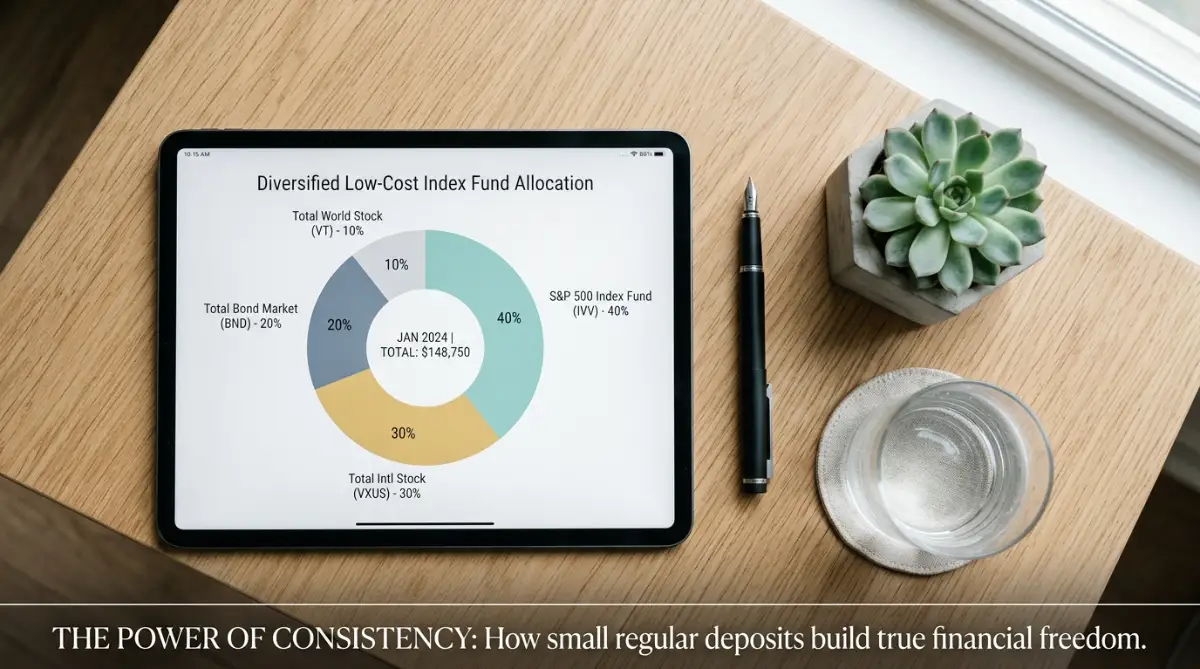
A balanced starter portfolio only needs two or three broad asset pillars to give you complete global coverage:
- Core Domestic Index Fund (60% to 70%): Covers hundreds of top domestic companies across tech, healthcare, and retail.
- International Total Market Fund (20% to 30%): Gives you ownership in top established companies based in Europe, Asia, and emerging markets.
- Cash or Short-Term Bond Reserve (10%): Keeps a tiny pool of dry powder ready for emergencies or future market dips.
While building your core base in broad stock index funds is the safest path, you might also be curious about digital assets. If you decide to allocate a tiny fraction of your savings to modern technology, start with our beginner guide to understanding crypto assets. From there, you can explore safely buying your first Bitcoin or study the fundamentals of building a multi-chain crypto portfolio with strict risk management.
Costly Traps That Drain Beginner Accounts
Starting with small amounts of money means every single dollar is precious to your journey.
Unfortunately, the financial world is packed with psychological traps designed to separate beginners from their savings.
Understanding these mental traps beforehand allows you to handle market dips with total calm and clarity.
When you first open your portfolio app and see your balance down by five or ten percent, your gut reaction is to hit the sell button and run away. I made this exact mistake on my second month of investing and locked in a permanent loss. Remember that market pullbacks are completely normal. When grocery stores put your favorite cereal on sale for twenty percent off, you do not throw your box in the trash; you buy extra. Treat market drops the exact same way—as a discount on great businesses.
Another major pitfall is yield chasing with high-risk dividend traps.
Some struggling companies advertise dividend yields of twelve to fifteen percent to attract unsuspecting retail buyers.
In most cases, an unusually high dividend yield is a warning sign that the company is in deep financial trouble.
When the company inevitably cuts its payout or goes under, share prices plunge, leaving you with heavy capital losses.
Always look for companies and funds that have a steady record of growing their payouts sustainably over many years.
The Problem with Overtrading and Daily Speculation
Many beginners treat their mobile investment app like a social media feed or a mobile video game.
They buy a stock on Monday, get impatient on Wednesday, and sell it on Friday to chase a trending ticker.
The investor protection team at the Financial Industry Regulatory Authority (FINRA) emphasizes that frequent short-term trading drastically increases risk and almost always leads to losses for everyday investors.
Every trade you make creates potential tax liabilities and pulls your attention away from long-term wealth building.
True investing is intentionally boring, steady, and patient, much like watching grass grow or watching paint dry.
If you want excitement, go to an amusement park; if you want wealth, stick to quiet consistency.
Emotional Attachment to Specific Brands
Another subtle trap is buying shares of a company simply because you enjoy using their consumer app or drinking their soda.
A great product does not automatically mean a great, undervalued stock.
A company might make a wonderful gadget but suffer from terrible management, massive debt, or shrinking profit margins.
Always separate your personal tastes as a consumer from your objective decisions as a long-term asset owner.
When in doubt, broad index funds protect you from having to evaluate complex corporate balance sheets on your own.
Building Your Long-Term Wealth Roadmap
Building lasting wealth does not require a massive sudden inheritance or a winning lottery ticket.
It requires a clear, unbreakable system that runs automatically regardless of what the broader economy is doing.
When you control your spending leaks and redirect modest amounts into solid assets, time becomes your greatest partner.
Think about your financial journey in clear milestone stages:
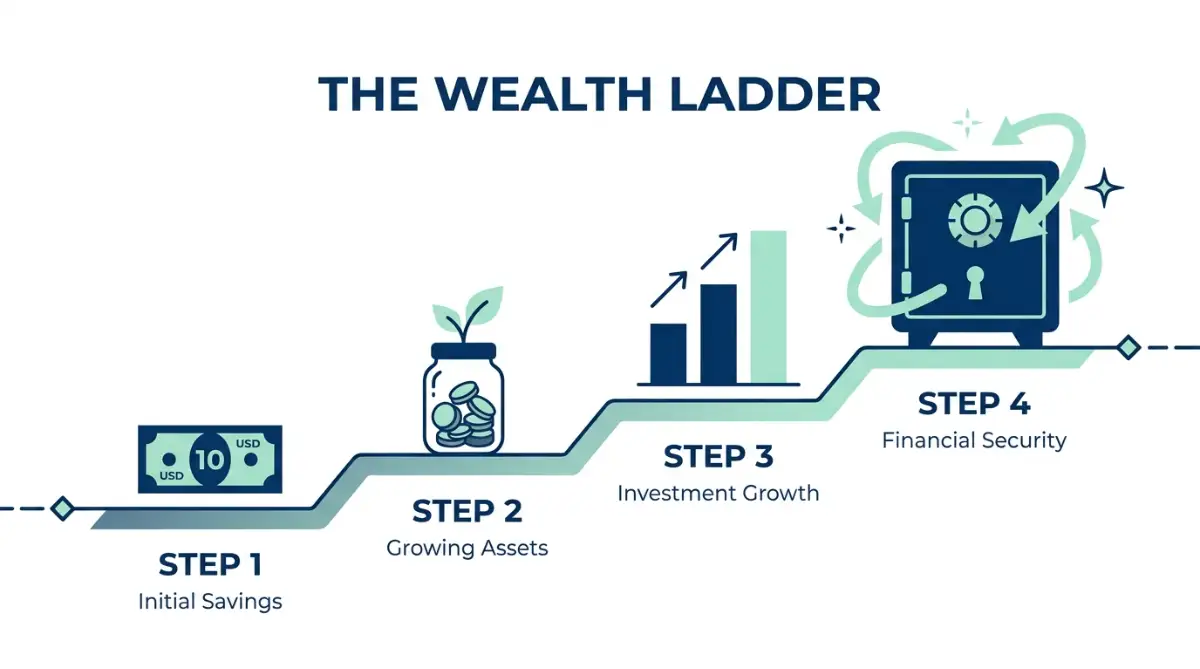 Reaching your first one hundred USD invested gives you proof that you are capable of building assets.
Hitting one thousand USD shows you how dividends start paying for tiny portions of your new shares.
By the time your portfolio crosses five thousand USD, the annual returns often begin to match or exceed several of your monthly deposits.
This is the exact moment where your money works harder for you than you work for your money.
For practical budgeting tools, educational resources from the Consumer Financial Protection Bureau (CFPB) can help you create a bulletproof safety cushion while you invest.
Maintaining low personal debt gives you the freedom to keep investing through every economic season.
I spent years believing that small amounts of money could not change my life, and that hesitation cost me valuable compounding time. The day I started putting just ten USD a week into a simple broad fund was the day my financial anxiety began to fade. Start with whatever small pocket change you have today, stick to your routine, and let consistency build the secure future you deserve.
Frequently Asked Questions About Starting with Little Money
How much money do I actually need to make my first stock purchase?
You can start with as little as 1 to 5 USD. Modern regulated brokerages support fractional share investing, which allows you to purchase a slice of any major index fund or blue-chip company based on your exact budget.
Will I lose all my money if the stock market drops tomorrow?
No, as long as you do not panic and sell. Market drops are temporary phases of the economic cycle. By investing in broad index funds instead of single risky stocks, your portfolio spreads risk across hundreds of healthy companies that recover over time.
Do I have to pay taxes on small gains from fractional shares?
You only owe capital gains taxes when you actually sell your shares for a profit. If your assets simply rise in value and you hold them inside your account, you pay zero capital gains tax until you decide to cash out.
What is the safest asset to buy with my first 10 USD?
A broad-market Exchange Traded Fund (ETF) that tracks a major index (such as the S&P 500 or a total market index) is generally the safest choice. It instantly spreads your 10 USD across hundreds of top companies.
How can I avoid paying fees on a small starter balance?
Choose a regulated mobile broker that charges zero commissions on stock and ETF trades and has zero account maintenance or monthly inactivity penalties. Always verify fund expense ratios stay below 0.10% per year.
Disclaimer:
The information provided in this article is strictly for educational and informational purposes only and does not constitute financial, investment, tax, or legal advice. Investing in the stock market and other financial assets involves risk, including the possible loss of principal capital. Past market performance is never a guarantee of future investment returns. Always conduct your own thorough research or consult with a certified independent financial advisor before making any investment decisions.