Why So Many Insurance Reviews Lead You in the Wrong Direction
Three years ago, my front bumper got crushed in an icy parking lot. I wasn't too worried at first because I had picked an auto insurer with a shiny 4.9-star rating on Google. But when I called to file the claim, reality hit hard. The customer service rep put me on hold for 45 minutes, sent an adjuster who took three weeks to show up, and ended up denying half the repair bill. I paid $1,200 out of my own pocket. That awful day taught me a huge lesson: glowing five-star stars online are often complete nonsense. In this guide, I will show you how to spot fake praise, find genuine customer stories, and pick an insurer that actually shows up when you need them.
⚡ Quick Takeaways (What You Need to Know in 30 Seconds)
- Star ratings lie: Most five-star reviews are written by people who just bought a policy, not people who actually filed a real claim.
- Look for the middle ground: 3-star reviews give the most realistic, honest breakdown of customer service and claims speed.
- Check official records: Always skip review blogs and search your state insurance department’s public database to see verified consumer complaints.
- Company replies matter: How an insurer responds to an angry complaint tells you far more about their service than a hundred canned compliments.
Why Trusting the Wrong Review Costs You More Than Time
Most of us get burned not because we are lazy, but because the review system is rigged against normal buyers. Here is how it happens: affiliate blogs get paid thousands in referral fees to rank bad companies as "#1 best overall." In fact, there are several hidden traps behind cheap insurance reviews that most sites don't tell you.
On top of that, marketing teams flood forums with quick one-sentence reviews like "Super easy sign-up!" But think about it—signing up and giving them your credit card is always easy. Getting them to pay you back after a tree falls on your roof? That is the real test, and typical review sites never talk about it.
How Bad Reviews Quietly Undermine Your Confidence
That last point deserves attention. Insurance protects your car, your home, or your health—and for higher liability limits, understanding the reasons why you might need umbrella insurance coverage is just as critical. Trusting a bad review to guide that decision does not just cost money.
It can leave you under protected exactly when you need coverage the most. According to the Federal Trade Commission's guidance on fake reviews, consumers are encouraged to check multiple independent sources before trusting any single review, because manipulated reviews are more common across industries than most people realize.
The good news is that reading a review the right way is a skill. Once you know what to look for, spotting a trustworthy review becomes almost automatic. Let's walk through exactly how to do it.
A Simple Framework for Reading Any Insurance Review
You do not need a background in insurance to evaluate a review well. You just need a repeatable checklist.
Below are three steps that work whether you are researching a car insurance company, a home insurance provider, or a health insurance plan.
Step 1: Check Who Wrote the Review and Why
Before you read a single word of the actual opinion, look at the source. If you want a quick starting point, always know what to check before you trust that insurance review. The "who" behind a review matters just as much as the "what."
Ask yourself these questions:
- Is this a personal blog, a licensed comparison site, or the insurance company's own page?
- Does the site disclose if it earns money when you click through to buy a policy?
- Is the reviewer a real customer, an industry expert, or an anonymous username with no history?
- Does the site show a "how we rate" or methodology page you can actually read?
Think of it like restaurant reviews. A stranger's one-line comment carries far less weight than a food critic who explains exactly what they ordered and why they liked or disliked it. The same logic applies here.
Reputable sources like Consumer Reports' insurance research publish their methodology openly, which is one of the clearest signs a review is built on real analysis rather than guesswork.
It also helps to notice how a site is funded. Some comparison sites earn a commission only when you buy through their link, which is a common and reasonable business model as long as it is clearly disclosed. The problem is not that a site makes money. The problem is when that fact is hidden from you. A trustworthy site will say so plainly, usually near the top or bottom of the page, instead of burying it in fine print you would need a magnifying glass to find.
Step 2: Look Past the Star Rating Into the Actual Details
Want to spot fake reviews in under FIVE minutes? Watch this short expert video to learn the top red flags of deceptive online ratings, then keep reading below for our simple step-by-step checklist!
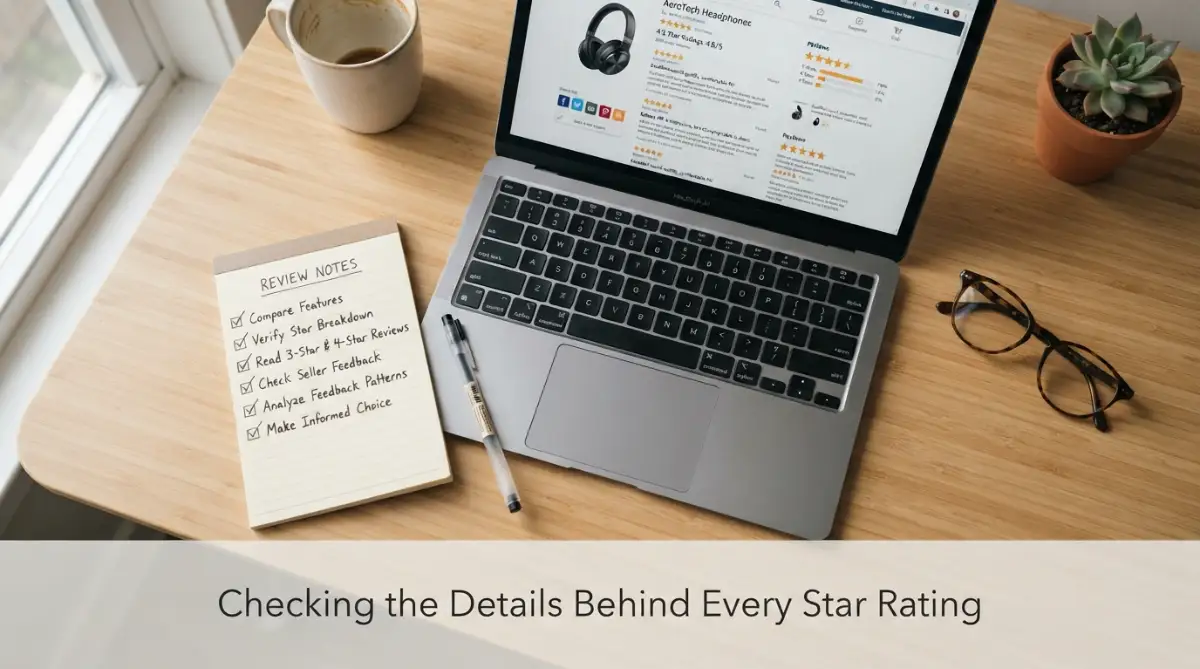
Here is a quick pro tip from my own experience: I always skip the overall star ratings and jump straight to the moderate three-star reviews first. These middle-of-the-road comments usually give you the most honest, balanced feedback about real claims without all the emotional exaggeration.
A star rating alone tells you almost nothing. The details behind the number are where the real answer lives.
Here is what to actually read for:
Specific mentions of claims handling speed, not just general "good service" comments
Details about how the company responded when something went wrong, not just when things went smoothly
Mentions of price changes over time, not just the first-year quote
Comparisons to at least one other named company (similar to our detailed State Farm vs. Geico comparison guide), which shows the reviewer did real research
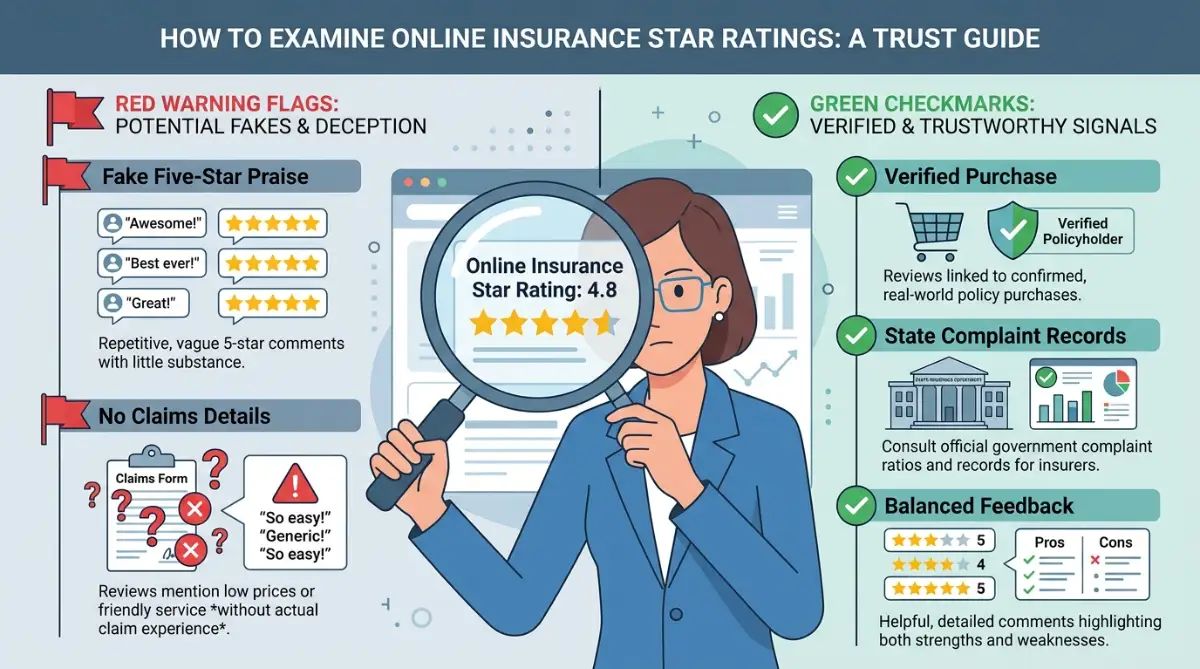
If you find a review with a five-star rating but zero specific details, treat it with caution. Genuine reviews almost always include a specific story, date, or situation. Vague praise is one of the easiest signs of a fake or paid review.
Picture two reviews sitting side by side. One says "Great company, five stars!" The other says "Filed a claim after a fender bender in March, got a callback within two hours, and the payout matched the repair estimate almost exactly." The second review gives you something real to judge. The first gives you nothing.
Watch for review clustering too. If a company shows a sudden burst of five-star reviews all posted within the same week, and then nothing before or after, that pattern often points to a coordinated review campaign rather than organic customer feedback. Genuine reviews tend to trickle in steadily over months and years, not arrive all at once.
Another detail worth checking is whether the reviewer mentions a specific policy type. A review about home insurance claims tells you very little about how the same company handles auto claims, since departments, adjusters, and processes can differ a lot inside one company. Match the review to the exact product you are actually shopping for.
🔍 Real vs. Fake Insurance Reviews: The Quick Cheat Sheet
Step 3: Cross-Check the Review Against Independent Sources
Never let one single review make your decision for you. Cross-checking is what separates careful shoppers from rushed ones.

Here is how to do it in under fifteen minutes:
- Search your state's insurance department website for official complaint records
- Check independent rating agencies that grade a company's financial strength
- Compare the review's claims against at least two other unrelated sources
- Look for patterns across many reviews instead of reacting to just one
Instead of trusting a random blogger, go straight to the official state insurance department database or check the National Association of Insurance Commissioners (NAIC) website. These groups track what is called a "Complaint Index." It shows you the exact number of formal, legal complaints filed against an insurer compared to their company size. An insurer cannot pay to delete a state complaint, and they cannot hide behind polite marketing buzzwords. It takes about five minutes, and it gives you raw, honest truth.
Step 4: Pay Attention to How a Company Responds to Criticism
Most people read the negative reviews and stop there. The smarter move is to read how the company responded to those negative reviews.
A defensive, generic, or missing response tells you one story. A specific, accountable, and helpful response tells you another story entirely.
Look for these signs of a company that takes reviews seriously:
- A direct reply that addresses the specific complaint, not a copy-pasted apology
- An offer to resolve the issue through a phone number or claims reference
- A follow-up comment from the original reviewer confirming the issue was fixed
- Consistency in how the company responds across many different complaints, not just the ones that look good publicly
Imagine two companies each get the same complaint about a slow claims response. One replies with a generic "We're sorry you feel that way" and nothing else. The other replies with specific next steps, a direct contact, and later gets a follow-up comment from the customer saying the issue was resolved. The second company's pattern tells you far more about real-world service than either company's five-star average ever could.
This step matters even more for health and home insurance shopping, where claims can involve much larger amounts of money and far more paperwork. Being prepared also helps you avoid costly homeowners' insurance claim mistakes that can drain your wallet.
A company that handles criticism well under pressure is usually the same company that handles your actual claim well too.
Bringing the Framework Together
Once you know who wrote the review, what specific details it includes, and how it holds up against independent records, a clear picture starts to form. You stop reacting to individual comments and start seeing real patterns.
A trustworthy review usually shares three things in common. It comes from a transparent source. It includes specific, checkable details. It matches what independent records show, not just what one person felt in the moment.
You do not need to read fifty reviews to make a good decision. You need three or four good ones, checked the right way, and cross-referenced against an official source. That is a realistic goal for anyone, no matter how busy your week is.
Take the next insurance review you read and run it through these three steps. You will likely notice within minutes whether it deserves your trust or not, and that alone will save you from a decision you might regret later.
This kind of careful reading is not about becoming suspicious of everyone. It is about respecting how much this decision actually matters. A car insurance policy or a home insurance plan can be the difference between a stressful month and a genuinely life-changing financial setback.
Most people were never taught how to read a review critically. School teaches you how to read a textbook, not how to spot a paid testimonial disguised as an honest opinion. That gap is exactly why so many smart, careful people still end up misled.
The framework in this guide is not complicated on purpose. It is meant to become second nature after just a few uses. Check the source. Read past the star rating. Cross-check with an independent record. Notice how the company handles criticism. Four simple habits, repeated consistently, protect you far better than reading a hundred random reviews ever could.
If you are also working through other financial decisions alongside insurance shopping, the same careful, source-checking mindset applies just as well to comparing loan offers, reading credit card terms, or evaluating any product review online. The skill transfers everywhere money is involved.
Start with the very next review you come across today. Run it through the checklist before you let it influence your decision even a little. That small habit, practiced consistently, is what separates confident insurance shoppers from everyone else still scrolling through confusing, contradictory advice.
Reading Between the Lines Like an Experienced Shopper
Once the basics feel natural, you can start noticing details that most people miss completely. These small habits are what separate a casual reader from someone who actually understands what a review is telling them.
The two techniques below take a little more attention. But they catch the reviews that pass every basic test and still turn out to be misleading. Think of this as the difference between reading a nutrition label to check for sugar content and actually understanding what that sugar does inside your body. Both are useful, but one goes a lot deeper.
Notice the Emotional Pattern, Not Just the Words
Every review carries an emotional tone underneath the actual sentences. Learning to read that tone is one of the most useful skills you can build.
A review written in the heat of frustration right after a bad experience often exaggerates details without meaning to. A review written calmly, days or weeks later, tends to be more balanced and specific.
Watch for these emotional signals:
- All-caps words or excessive exclamation points, which usually signal raw frustration rather than measured feedback
- Reviews that jump between unrelated complaints, suggesting a general bad mood rather than one specific issue
- Reviews that mention a specific dollar amount, date, or claim number, which usually signals a calmer, more factual account
- A total absence of any negative detail at all, which can be just as suspicious as an overly harsh one
None of these signals prove a review is fake on their own. They simply tell you how much weight to give that particular account relative to everything else you have read. A single emotional review is a data point, not a verdict.
Think about it like reading a text message from a friend who is upset. You can usually tell the difference between someone venting in the moment and someone calmly explaining what actually happened. Reviews work the same way, and the calmer, detail-heavy ones are almost always more useful to your decision, even when the venting ones feel more dramatic to read.
Compare Reviews Across Multiple Time Periods
Insurance companies change. Pricing changes. Customer service staffing changes. A review from several years ago may say nothing true about the company today.
Here is a simple way to check this:
- Sort reviews by date whenever the platform allows it
- Read a handful from the most recent few months, not just the top-rated ones
- Compare those recent reviews against older ones to see if the tone has shifted
- Pay close attention if you spot a sudden shift, since that often lines up with a leadership change, a merger, or a new claims system
If you are working on strengthening your overall financial habits while you shop for insurance, this same date-checking discipline applies well beyond reviews. The same logic that keeps you from trusting an outdated dashboard review works when you are building an emergency fund or making any other decision based on information that could easily be out of date.
Turning This Into a Long-Term Habit
The real value of this skill is not from using it once. It comes from using it every single time you shop for a policy, a renewal, or a new provider.
Set a simple personal rule for yourself going forward:
- Never trust a review without checking its date first
- Always read at least one negative review alongside the positive ones
- Always check the source's funding model before trusting a ranking
- Always look for a specific detail, not just a general feeling
This rule takes less than two minutes to apply once it becomes a habit. Over the years, it can be the difference between choosing a company that quietly changed for the worse and one that has stayed reliable the entire time.
Think about a driver named Marcus who picked his insurer eight years ago based on glowing reviews at the time. He never checked again. In that same period, the company was bought out twice, changed its claims processing system, and saw its customer service ratings drop noticeably. Marcus never noticed, because he treated his original research as a one-time task instead of an ongoing habit. A five-minute check every year or two would have caught the shift long before it became a problem.

The Costly Mistakes People Make When Reading Insurance Reviews
Even careful, well-meaning people fall into these traps. The good news is that every single one is easy to avoid once you know it exists.
Mistake 1: Trusting the First Result Google Shows You
Just because an insurance review site shows up at the top of Google does not mean it gives honest advice. Big financial corporations spend millions on high-powered SEO teams and advertising budgets to grab that number-one ranking. A flashy site with great graphics can easily push honest, smaller consumer advocates down to page two or three. When you search for insurance options, never pick the first link on auto-pilot. Scroll down, check community discussions, and compare multiple independent sources.
Mistake 2: Confusing a Company's Own Marketing Page With an Independent Review
Some shoppers land on an insurance company's own website and mistake customer testimonials there for independent reviews. Testimonials chosen by the company itself are almost never a fair sample.
Imagine a company picks its three best customer quotes out of thousands of interactions and displays them proudly on its homepage. That is not dishonest, but it is also not a review. Always separate a company's own marketing from independent, third-party feedback.
A simple way to tell the difference is checking the URL. If you are reading reviews on the insurance company's own domain, you are reading curated marketing content, even if it uses the word "review" somewhere on the page. Independent platforms, consumer advocacy groups, and government sites carry far more weight precisely because the company being reviewed has no control over what gets published.
Mistake 3: Ignoring the Sample Size Behind a Rating
A 5-star rating built from six reviews means far less than a 4.3-star rating built from six thousand reviews. Small sample sizes can swing wildly with just one or two extreme comments.
Always check how many total reviews sit behind any rating before deciding it means anything. A tiny sample size is a signal to keep researching, not to stop.
This is the same statistical principle used in scientific research. A small sample can produce results that look dramatic but do not hold up once more data comes in. Insurance reviews work exactly the same way. A company with six thousand reviews averaging 4.3 stars is giving you a far more reliable picture than a newer competitor showing a flashy 4.9 stars built on a dozen reviews from friends and early adopters.
Mistake 4: Letting One Bad Experience Overshadow Everything Else
One traumatic story about a denied claim can feel more convincing than fifty calm, positive reviews. Our brains naturally give more weight to dramatic stories than to quiet, steady patterns.
This does not mean you should ignore serious complaints. It means one loud story deserves context, not blind trust. Look for whether other reviewers report the same specific issue before assuming it reflects how the company treats every customer.
Picture a viral social media post describing a denied claim in dramatic detail. It gets thousands of shares within days. Meanwhile, that same company processes tens of thousands of claims that same month without incident, and none of those quiet successes ever get posted anywhere. Neither extreme tells the full story on its own. A careful reader looks for the pattern across many claims, not the loudest single voice.
Mistake 5: Never Checking Your State's Official Complaint Records
Most shoppers stop at online reviews and never check their state insurance department's public complaint index. This free, official resource is one of the most reliable sources available, and almost nobody uses it.
Skipping this step means making a decision without one of the most objective data sources you have access to. A five-minute search on your state insurance department's website can reveal patterns no online review ever will.
Avoiding these five mistakes protects more than just your research time. It protects the actual decision you eventually make, and the coverage your family will depend on if something goes wrong. If you are also trying to clean up other parts of your financial life at the same time, the same instinct to verify before trusting applies well when you are disputing errors on your credit report, since assumptions cost money there too.
💡 Common Myths About Insurance Reviews (Debunked)
- Myth 1: "A company with a 4.8-star average must have great claims service."
- Fact: Most people review their insurer right after signing up because the onboarding app asks them to. Very few of those reviewers have ever experienced an accident, storm damage, or major hospital visit.
- Myth 2: "Review websites are free, so their recommendations are unbiased."
- Fact: Comparison websites make money through "affiliate commissions" and lead-generation fees. When you click their links and buy a policy, the ranked insurer pays them a direct payout.
- Myth 3: "Every negative 1-star review means the insurer is a scam."
- Fact: Some people leave 1-star reviews out of anger because they did not understand their own deductible or coverage limits. Always look for recurring patterns across 10+ reviews rather than trusting one emotional post.
Frequently Asked Questions About Insurance Reviews
1. Where can I find 100% honest car and home insurance reviews?
The best starting point is your state’s department of insurance website. You can also look at non-profit consumer groups, community forums like Reddit (r/Insurance), and official AM Best financial ratings. These sources do not take paid affiliate commissions to change their rankings.
2. Why do most insurance review sites give the same 3 or 4 companies the top spot?
Huge insurance companies pay top referral fees to comparison blogs for every customer lead. Because of these affiliate deals, bloggers put the highest-paying companies at the very top of their "best of" lists, regardless of their actual claims service track record.
3. What is an insurance complaint ratio?
A complaint ratio is an official metric tracked by state regulators. It measures how many verified consumer complaints a company receives per 1,000 active policies. If a company has a ratio above 1.0, it means they get more customer complaints than the average industry standard.
4. Should I trust insurance reviews on Trustpilot or Google Maps?
Use them, but read them with a filter. On Google and Trustpilot, look specifically for 3-star and 4-star reviews. These middle reviews usually come from real customers who share both the good and the bad parts of their claims experience without wild emotional exaggeration.
5. How often should I re-check my insurance company's reputation?
Check your insurer's ratings once a year right before your policy renewal date. Insurance companies frequently update their claim-handling software, cut customer service staff, or change premium rates. A quick 10-minute check ensures you are still with a dependable provider, and renewal time is also the best moment to learn how to lower your car insurance premiums without cutting back on coverage.
You Already Have Everything You Need to Read Reviews Wisely
Here is the honest truth. There is no perfect review, and there never will be. There is only a careful process that gets you close enough to make a confident, informed choice.
You now know how to check who wrote a review and why. You know how to look past a star rating for real, checkable detail. You know how to cross-reference claims against official records, read emotional tone accurately, and avoid the five mistakes that trip up most shoppers.
That puts you ahead of almost everyone scrolling through review sites today.
Most people treat online reviews as instant truth. You now treat them as a starting point, one piece of a bigger picture that includes official records, dated evidence, and a calm, careful read of the actual details. That shift alone changes how confidently you shop for any policy going forward.
You do not need to master every single review technique today. Pick one habit from this guide, maybe checking the date on reviews or reading the negative ones first, and apply it the very next time you shop for insurance. That one small change is enough to start protecting you from the decisions so many other people regret later.
Insurance shopping will always involve some uncertainty. No review, rating, or checklist removes that completely. But the gap between a rushed decision and a well-researched one is enormous, and now you know exactly how to close that gap every single time you shop.
Taking control of your research might feel like extra work right now, but it puts you back in the driver's seat of your financial future. Try checking just one review using this framework today, and you will immediately see how easy it is to shop with absolute confidence!
Disclaimer:
This article is written for general informational purposes only and does not constitute financial, legal, or insurance advice. Review platforms, rating methods, and complaint records vary by state and by company. Please verify information directly with your state insurance department or a licensed insurance professional before making any coverage decisions.