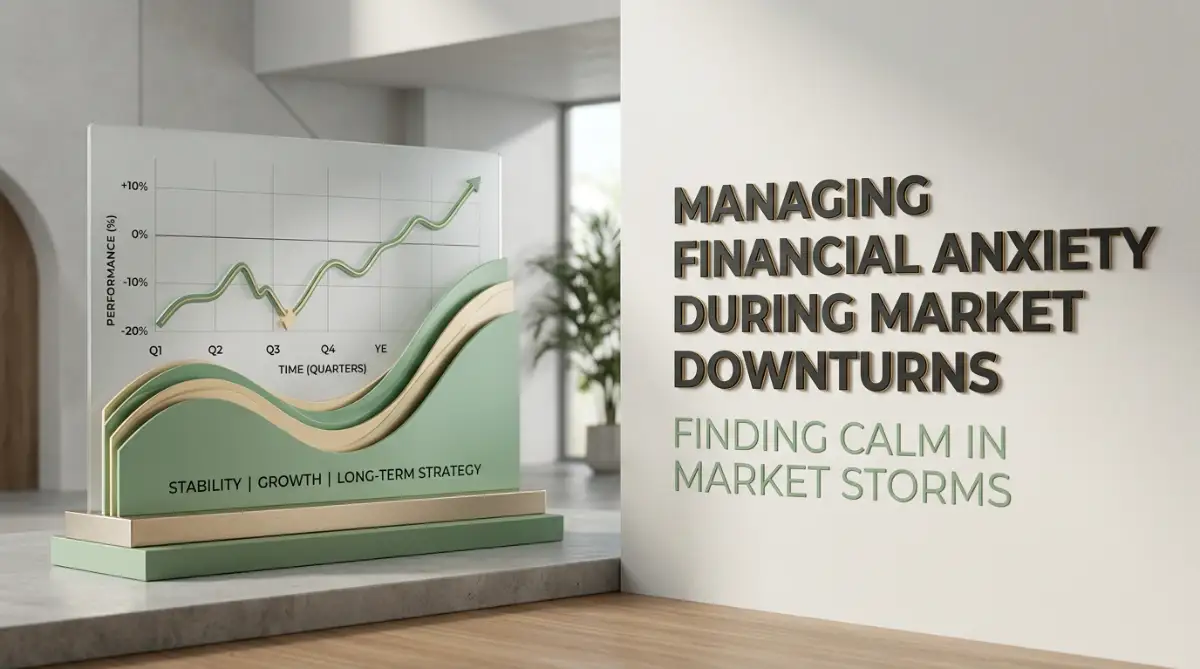
The Emotional Weight of Watching Portfolio Numbers Drop
A few years ago, I did something I promised myself I would never do. It was 2:00 AM on a Tuesday, and my screen was glowing red. Over the past four weeks, I watched roughly 18,000 USD of my hard-earned savings simply vanish into thin air. My hands were shaking, my stomach was tied in knots, and my heart hammered against my ribs like a trapped bird. I panicked. Without waiting for morning, I clicked "Sell All."
Guess what happened next? Within three weeks, the market bounced right back, and I stood on the sidelines having locked in my painful losses forever. That was the most expensive lesson of my life.
If you are reading this while watching your own account drop right now, take a deep breath. You are feeling that familiar knot of financial terror, and you are wondering if you should pull the plug before things get worse. I get it because I lived it. But watching numbers drop does not mean your financial future is dead. Let us talk openly about why our brains freak out during market dips, how I fixed my money mindset, and what simple steps you can take today to sleep peacefully at night without touching that sell button.
⚡ Quick Takeaways: Save Your Portfolio & Your Sanity
- Paper Losses Are Not Real Losses: Your wealth is not gone until you hit "sell" in a panic. Downturns are normal economic breathing cycles.
- Stop Checking Daily: Staring at stock charts every morning feeds adrenaline into your nervous system and forces emotional, costly mistakes.
- Cash Is Your Shield: Keeping 3 to 6 months of living expenses safely in cash stops you from ever being forced to sell depressed assets.
- Automate Everything: Removing yourself from the daily buy/sell loop is the easiest way to grow long-term wealth without sleepless nights.

Shifting Your Perspective on Market Volatility
Market drops often feel like emergencies, but they are actually predictable phases of long-term economic growth. When stock prices fall, our brains trigger a primitive survival response, treating a portfolio decline as an immediate physical threat. Recognizing this biological reaction helps you separate actual danger from normal market fluctuations. Prices go down just as often as they go up, and viewing these movements as standard weather patterns rather than disasters changes everything.
Consider how you react to a sudden rainstorm when you have an umbrella versus when you are caught completely unprepared. A market downturn is simply financial weather, and your original investment plan serves as your shelter. If your core strategy was sound when you started, a temporary drop in asset prices does not invalidate your entire plan. Remind yourself that owning quality assets means weathering temporary storms without abandoning ship halfway through the journey.
Another helpful mental shift involves focusing on what you can actually control instead of obsessing over ticker symbols. You cannot control macroeconomic forces, such as how interest rates affect your investments, or sudden global events that influence stock prices. However, you can control your savings rate, your spending habits, and your reaction to short-term noise. Shifting your focus inward to your personal habits restores a sense of agency and reduces feelings of helplessness.
Building Healthy Boundaries with Financial Media
The modern information ecosystem thrives on generating clicks through fear, urgency, and sensationalized headlines. During a market downturn, news outlets and social media feeds become flooded with alarming predictions of total economic collapse. Consuming this constant stream of negativity acts like fuel on the fire of your existing financial anxiety. Protecting your mental space requires active curation of the information you let into your daily life.
Start by learning how to spot bad stock and crypto advice on your feed, then unsubscribe from newsletters and unfollow social media accounts that rely on doom-laden commentary to capture attention. Replace those sources with educational books, timeless financial philosophies, or neutral economic data reports that offer historical perspective. You do not need real-time updates on every single market movement to manage your money successfully. In fact, checking your investments less frequently is one of the most effective ways to lower your stress levels instantly.
Designate specific times for dealing with your finances rather than letting them bleed into every waking hour. Give yourself a dedicated ten-minute window once a week to review your accounts if necessary, and close the tab immediately afterward. Fill the rest of your time with hobbies, physical exercise, and meaningful offline interactions that remind you life exists outside of brokerage balances. Distancing yourself from the daily noise gives your brain the quiet it needs to process stress logically.
Creating a Rule-Based Investment Plan to Remove Emotion
Emotions are the greatest enemy of successful long-term wealth building, especially when markets experience heavy turbulence. When you rely entirely on how you feel in the moment, you are bound to buy high out of excitement and sell low out of fear. The antidote to emotional decision-making is establishing clear, written rules before any market crisis hits, which is why having an investment exit plan keeps you grounded. Having an objective framework prevents you from improvising when stress levels peak.
Write down your investment guidelines clearly, detailing exactly what you will do when asset prices drop by a certain percentage. Your rules might state that you will continue your regular contributions automatically without changing your asset allocation regardless of market mood. When a downturn arrives, you no longer have to make a difficult decision because your past self already made it for you. This approach eliminates the mental gymnastics and second-guessing that cause so much exhaustion during volatile periods.
Automating your investments further removes human emotion from the daily equation. Learning how to set up automatic investments lets you schedule transfers directly from your primary bank account into your portfolio. This strategy ensures you buy assets consistently without needing the willpower to execute trades manually during scary market phases. This disciplined strategy relies on dollar-cost averaging for beginners, lowering your average purchase price during market drops. Automation turns a stressful chore into a seamless background habit that requires zero emotional bandwidth.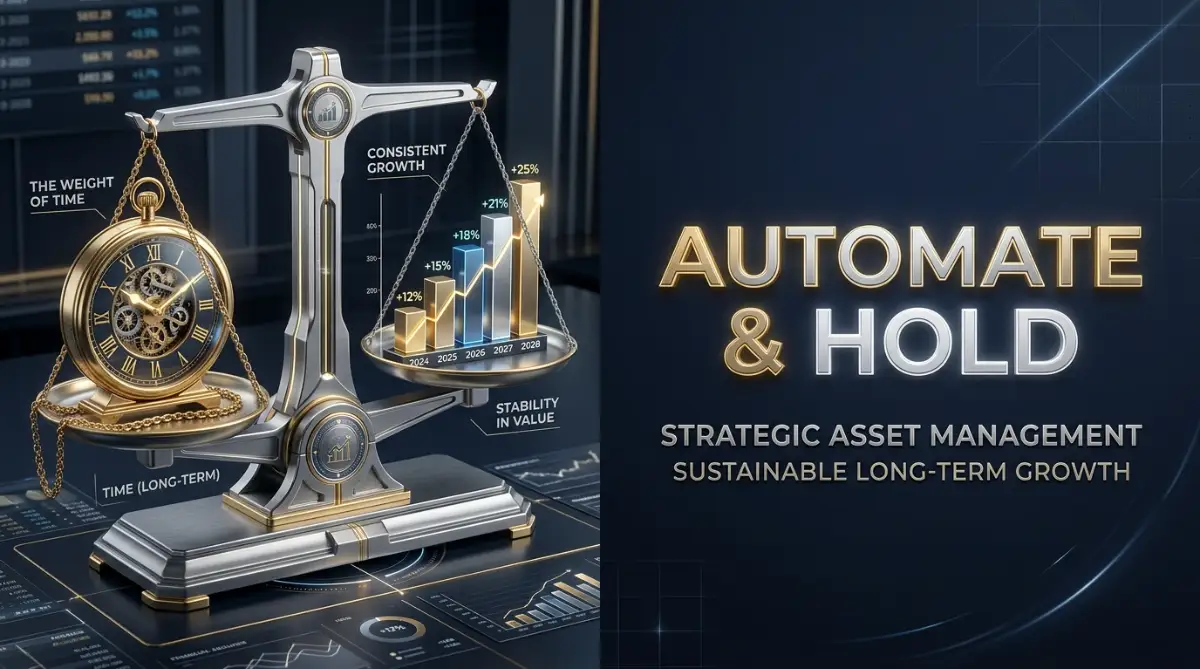
Recognizing the Power of Long-Term Historical Context
When you zoom in closely on a single day or week of market data, the downward trends look terrifying and permanent. However, zooming out to view multi-decade historical charts reveals a completely different and reassuring story. Every major market downturn in history has eventually been followed by recovery and new growth phases. Markets have historically demonstrated remarkable resilience through wars, recessions, and global crises.
Think of your investment journey as a long cross-country road trip rather than a short sprint around a local track. Encountering a steep hill or heavy traffic jam along the way slows you down temporarily, but it does not mean you will never reach your destination. Short-term drops look massive when you are right in the middle of them, but they often turn into tiny blips on a thirty-year chart. Remembering this historical perspective cushions the psychological blow of current market drops.
Practical Steps to Lower Immediate Stress
When financial anxiety peaks, you need immediate grounding techniques to bring your nervous system back to a state of calm. Deep breathing exercises, physical walks outdoors, and journaling your thoughts can quickly short-circuit a panic spiral. Writing down your fears on a piece of paper often strips them of their overwhelming power by making them concrete and manageable. Acknowledging that feeling anxious is a normal physical reaction helps you stop fighting your own emotions.
My own breakthrough came during a severe market correction when I decided to step completely away from my screens and go for a long walk without my phone. Feeling the fresh air and focusing on my physical surroundings reminded me that my self-worth and happiness are completely separate from stock prices. That small habit of unplugging during stressful moments transformed my relationship with market volatility entirely. You do not have to carry the weight of global economic fluctuations on your shoulders every single day.
For those eager to dive deeper into managing stress and understanding market psychology, watching expert discussions can provide valuable reassurance.
Watch this insightful breakdown on maintaining emotional balance and clarity during volatile market cycles to help ground your perspective:
Engaging with supportive communities of like-minded individuals who share a long-term mindset can also provide great comfort. Surround yourself with voices that promote patience, discipline, and calm financial habits rather than speculative hype or fear. Sharing your concerns with a trusted friend or partner can lift a massive weight off your chest and bring clarity back into focus. You do not have to walk through these challenging financial seasons alone in silence.
Reviewing and Strengthening Your Financial Foundation
A red screen is the ultimate wake-up call for your wallet. If a sudden 15% dip makes your chest ache so badly that you cannot sleep, you need to revisit how to define your personal risk tolerance before allocating more capital. There is zero shame in admitting that your risk ceiling is lower than you thought. You do not need to hold an ultra-aggressive stock bundle just because someone on the internet told you to. When things stabilize, take some chips off the table and move them into safer assets like short-term treasury bills or fixed-income funds. Building wealth is useless if it ruins your physical health in the process.
Having a solid emergency fund stored safely outside of the stock market provides unmatched psychological security during downturns. Knowing you have several months of essential living expenses tucked away in cash removes the terrifying pressure of needing to sell investments at a loss. Your emergency fund acts as a financial shock absorber, protecting your long-term portfolio from being raided during unexpected life events or market crashes. Building this safety net should always take priority over aggressive investing.
Focusing on your human capital—your skills, career growth, and earning potential—adds another layer of lasting security. No matter what stock prices do on any given day, your ability to learn, adapt, and generate income remains your most valuable asset. Investing time in yourself yields reliable returns that no market downturn can ever take away from you. Balancing your financial portfolio with personal growth creates a well-rounded foundation for lifelong peace of mind.
Embracing Simplicity for Lasting Peace of Mind
Managing financial anxiety during stock market downturns ultimately comes down to simplifying your approach to wealth and life. Complex investment strategies filled with constant adjustments breed constant worry and invite emotional mistakes. Choosing simple low-cost vehicles like index funds over traditional mutual funds lets you step off the emotional roller coaster and reclaim your peace of mind. Wealth building is a marathon that rewards consistency, patience, and emotional discipline above all else.
Let go of the pressure to optimize every single trade or predict exact market bottoms and tops. Accept that uncertainty is simply part of the deal when investing in the growth of global businesses and economies. By focusing on your personal habits, maintaining a solid emergency buffer, and limiting your exposure to financial noise, you protect your mental health. Stay steady, trust your well-crafted plan, and remember that brighter days always follow economic storms.
Advanced Strategies for Mental Resilience and Portfolio Mastery
Smart investors do not succeed because they possess giant math brains. They win simply because they control their temper when other people lose their heads. When prices crash, your gut screams at you to run away and hide. But experienced wealth builders look at the exact same situation through a completely different lens: they treat a crash like a Black Friday discount sale at their favorite clothing store. If your favorite sneakers suddenly went on sale for 40% off, you would not cry and throw your existing pairs in the trash. You would buy more pairs at a bargain price. That simple shift in thinking changes everything.
Another high-level secret used by seasoned wealth builders is establishing a personal "cooling-off period" rule for financial decisions. Whenever you feel an intense urge to log into your account and sell your holdings, you must force yourself to wait forty-eight hours before taking any action. During that waiting window, the initial rush of adrenaline fades away, allowing your rational mind to take back control. This simple structural pause saves many portfolios from impulsive destruction driven by temporary market fear.
You can also study psychological frameworks like those discussed in behavioral economics research published by institutions such as the American Psychological Association to understand how stress affects your financial choices. Recognizing your own cognitive biases, such as loss aversion, helps you see why a drop in portfolio value feels twice as painful as an equivalent gain feels joyful. When you understand the science behind your own panic, you gain the superpower of watching your emotions without acting on them.
Whenever I feel that crazy itch to trade my stocks out of panic, I force myself to step back and follow a set calendar rule. I balance my account only twice a year—say, every June and December. If stocks went down hard, that mathematical rule quietly pushes me to buy cheaper assets automatically. I do not have to guess if tomorrow will bring good or bad news. I just let the simple calendar date do the heavy lifting while I go outside, play with my kids, or catch up on chores. A plain schedule will always protect your money better than raw emotion.

Hidden Traps That Amplify Investment Stress
Many everyday investors unintentionally make their financial anxiety much worse by falling into predictable behavioral traps during a market correction. One of the most damaging traps is constantly consuming sensationalized financial news that frames every normal market pullback as the end of the financial world. When you surround yourself with voices screaming about total economic doom, your nervous system stays locked in a permanent fight-or-flight state. Cutting off this toxic input stream is essential if you want to keep your mental health intact.
Another common pitfall is checking your portfolio balances multiple times a day as if staring at the numbers will somehow force them to go up. Each time you see a lower number, your brain experiences a micro-dose of stress, accumulating into severe emotional fatigue by the end of the week. Treating your portfolio like a passive long-term asset rather than an interactive video game changes your daily stress levels overnight. You would never dig up a seed every single day to check if the roots are growing, and your investments deserve that same patient treatment.
Trying to time the market bottom is a fool's errand that drains your energy and almost always results in buying back in at higher prices. Nobody rings a bell at the exact lowest point of a downturn, and attempting to outsmart global economic forces creates immense mental pressure. Accepting that you cannot predict short-term movements frees you from the exhausting burden of trying to be a psychic investor. As outlined in guidance from regulatory resources like Investor.gov, sticking to a consistent, long-term strategy outperforms erratic market timing over the long run.
Finally, neglecting your physical health during a market downturn is a mistake that heavily sabotages your mental clarity and decision-making power. When you skip sleep, stop exercising, and fuel your body with junk food because you are worried about your stocks, your brain loses its resilience. A tired, malnourished body struggles to regulate emotions, making financial anxiety feel ten times heavier than it actually is. Treating your physical well-being as your primary wealth-building tool ensures you have the strength to weather any storm.
🧠 Real Truths About Market Drops: Myth vs. Fact
Frequently Asked Questions (FAQ)
Q1: Why does a dropping stock portfolio cause physical chest tightness and panic?
A: Your brain processes financial loss in the amygdala, the exact region responsible for basic physical survival threats. When you see your balance drop by 5,000 USD or 20,000 USD, your nervous system releases adrenaline and cortisol as if you were facing real physical danger. Reminding yourself that this is an automatic bodily alarm—not a financial emergency—helps you step back and make calm decisions.
Q2: How many times a month should I check my investment portfolio?
A: Checking your accounts once a month or even once a quarter is plenty for a long-term strategy. Watching daily micro-swings yields zero actionable information and merely spikes emotional stress. Less screen time keeps your mind peaceful and stops you from clicking sell during temporary market dips.
Q3: What should I do if a sudden market crash wipes out 25% of my portfolio value?
A: Do not click sell. First, verify that your short-term living costs are covered by cash in your bank account. Next, confirm that your investments are spread across broad, diversified index funds or rock-solid companies. If those two things are in order, leave the screen, continue your normal work routine, and let historical economic recovery run its course.
Q4: Is moving everything to cash a safe way to pause my anxiety?
A: Moving all your funds to cash feels like fast relief, but it creates a secondary, bigger trap: deciding when to jump back in. Most people who cash out stay on the sidelines too long, waiting for "good news," and end up buying back at much higher prices. That permanent loss damages your wealth far worse than the original crash.
Q5: What is the fastest physical step to stop panic during a trading day?
A: Turn off your phone screen completely and go outside for a 20-minute walk. Leaving the digital environment resets your fight-or-flight nervous system. Remind yourself that everyday businesses are still operating, people are still buying groceries, and short-term stock prices do not determine your personal worth as a human being.
Your Blueprint for Lasting Investment Serenity
Achieving peace of mind during stock market downturns is a skill that develops over time with deliberate practice and emotional awareness. By replacing impulsive reactions with structured rules, you transform market volatility from a source of dread into a manageable background event. Remember that true wealth is measured not just by the numbers in your account, but by your ability to sleep peacefully at night. Your financial plan should serve your life, rather than forcing your life to revolve around your financial account balances.
I used to lose countless nights of sleep worrying over every single downward tick in my investment portfolio, letting red numbers dictate my mood. Then I learned to step back, automate my contributions, and build a solid emergency buffer that shielded me from immediate panic. That shift changed everything, turning my financial life from a source of chronic stress into a quiet, reliable engine for the future. You have the power to make that exact same transformation in your own life starting today. Take a deep breath, close your trading apps, and trust the steady power of long-term patience.
📚 Recommended Guides to Strengthen Your Wealth Strategy
If you want to expand your financial knowledge across different asset classes, explore our step-by-step beginner guides below:
- How to Start Investing in the Stock Market with Little Money
- How to Invest in Real Estate Without Buying Physical Property
- Understanding Crypto Assets: A Simple Bitcoin and Ethereum Guide
- Safely Buying Your First Bitcoin: A Step-by-Step Walkthrough
- Building a Multi-Chain Crypto Portfolio for Long-Term Growth
- What Are Smart Contracts in Crypto? Complete Guide
- How Decentralized Finance Operates: Beginner Breakdown
- How to Track Your Crypto Trades and Stay Safe from Tax Penalties
Disclaimer:
The content provided in this article is for informational and educational purposes only and should not be construed as professional financial, legal, or tax advice. Always conduct your own research or consult with a qualified financial advisor before making any major investment decisions or changing your financial strategy.