The Silent Storm of Losing Everything Without a Plan
Three years ago, my family learned a painful truth that I will never forget. My uncle Dave was the rock of our entire family. He worked hard for forty years, built a cozy home, and always helped anyone in need. But he never signed a single sheet of paper stating who should get his assets. When he died suddenly from a heart attack, our grief turned into pure chaos within two weeks.
Without written instructions, the local probate court froze his bank accounts immediately. My cousins started arguing over his house and savings, pointing fingers across the kitchen table. The lawyers ended up taking over thirty percent of everything he owned just to settle the dispute in court. Family members who used to share Thanksgiving dinner stopped speaking to each other completely.
That painful mess taught me something big. Writing down your final wishes is not about your wealth or how much property you own. It is about protecting the people you love from emotional heartbreak and financial ruin when you are no longer around. If you do not make a clear choice today, a stranger in a courtroom will make it for you tomorrow.
Quick Summary: What You Need to Know in 30 Seconds
- Court Control vs Your Control: Dying without a plan leaves your money and home in the hands of state laws and a probate judge instead of your family.
- Guardianship Safety: Naming legal guardians prevents your young children from getting stuck in long custody battles or state foster care.
- Save Thousands of Dollars: A simple estate plan stops probate courts and attorneys from draining up to 10% or more of your family assets.
- Update Every 3 Years: Major life events like marriage, divorce, or having a baby mean your legal documents need a quick review and update.

How to Shield Your Family and Assets (The Ultimate Blueprint)
You might think you do not own enough to need an official document. That is a huge mistake that costs ordinary families thousands of dollars. Having a proper plan in place is not just about money.
It is about leaving clear instructions so your loved ones do not have to guess what you wanted. Let us look into exactly how you can set up a secure future and why every single step matters so much.
Protecting Your Loved Ones From Court Battles
If you die without clear legal papers, the government steps in and takes control of your money, house, and car through intestate laws. A judge who never met you will decide who gets your life savings. That means an estranged relative could walk away with your hard-earned cash while your spouse and kids struggle to buy groceries or cover the mortgage.
Having a solid legal paper stops this from happening. It acts as an unbreakable shield around your family. You get to name exactly who receives your hard-earned money and property.
More importantly, it stops family members from fighting over small sentimental items, like a grandmother's ring or an old photo album. When everything is clearly written down and legally backed, nobody can argue with it.
What Actually Happens: With and Without a Plan
Sometimes seeing the facts side-by-side makes the picture much clearer. Let us look at a simple comparison of what your family faces.
This table shows just how much control you lose when you do not write things down. You are essentially handing over your family's future to a stranger in a courtroom. By taking an hour to write down your wishes, you save your family months of tears and frustration.
Choosing the Right Guardian for Your Children
If you have young kids, this is the single most important reason to take action today. What happens to your children if both parents are suddenly gone? It is a terrifying thought, but ignoring it will not make it go away.
If you do not have your choices written down, the state will step in to place your children. They might choose a relative who means well but lives completely differently than you do. Worse, your children could end up in the foster care system while families fight for custody.
By having an official plan, you name the exact person who will raise your kids. You can pick someone who shares your values, your beliefs, and your parenting style. You can also name a backup guardian just in case your first choice cannot do it.
This gives you an incredible sense of peace. You can go to sleep at night knowing your kids will always be safe, no matter what happens to you.
The Financial Drain of Legal Fees and Taxes
Many people avoid getting their affairs in order because they think lawyers cost too much money. But the upfront cost of setting up your papers is tiny compared to what happens if you skip it. Probate courts are incredibly expensive, and learning smart ways to reduce probate court costs can save your family thousands in estate processing fees.
If your family has to hire lawyers to fight for their inheritance, those fees can easily reach 10,000 USD or more. That is money that should have gone toward your children's education or your spouse's retirement.
Watch This Quick Explanation on Avoiding Estate Drain
If you want to understand exactly how much money gets lost in court fees, this short video breaks it down perfectly.
On top of court fees, a good plan can actually help your family legally avoid certain taxes. When you set things up correctly, you can move your assets in a way that protects them from heavy government taxation.
This means your family gets to keep the maximum amount of what you worked so hard to build. It is not just about giving them money, it is about giving them a secure foundation for their own lives.
Picking an Honest and Capable Executor
Your executor is the person who will actually carry out the instructions in your document. They will close your bank accounts, pay off your final debts, and hand out your property. This is a massive responsibility, and you need to choose this person very carefully.
Do not just pick your oldest child because it feels like the traditional thing to do. If your oldest child is terrible with money or gets stressed easily, they are the wrong choice.
You need someone who is highly organized, honest, and good at dealing with paperwork. Sometimes, a trusted friend or even a professional makes a much better executor than a grieving family member.
I made a huge mistake when I first thought about my own plan. I assumed my brother would want to handle my affairs because we are close. But when I actually asked him, he admitted the idea terrified him and he would rather not do it.
Always talk to the person you want to choose before you write their name down. Make sure they are comfortable with the job and completely understand what you expect from them. You can even leave them a step-by-step letter explaining where to find your important passwords and keys.
Myth vs Reality: Breaking Down Common Misunderstandings
There are so many false rumors out there about getting your final wishes in order. These myths stop perfectly good people from protecting their families. Let us clear up some of the most common misunderstandings right now.
Myth 1: Only millionaires and rich business owners need these documents.
Reality: If you have a bank account, a car, or children, you absolutely need one. Even small estates can cause massive legal fights.
Myth 2: If I am married, everything automatically goes to my spouse anyway.
Reality: Not always. Depending on where you live, your assets might be split between your spouse and your parents or kids. This can leave your spouse struggling to pay the mortgage on their own.
Myth 3: Once I write it down, I can never change it.
Reality: You can change your instructions as many times as you want while you are alive. In fact, you should update it every few years.
Myth 4: Writing this document means I am planning to die soon.
Reality: It is just an insurance policy. You buy car insurance hoping you never crash, and you write this hoping you live a long, happy life.
Why Updating Your Document is So Important
Life changes all the time, and your official papers need to change right along with it. A plan you made ten years ago might be completely useless today. Think about all the big things that have happened in your life recently.
Did you buy a new house, get married, or have a new baby? Did you get a divorce, or did someone named in your papers pass away? Every single one of these major life events requires an update to your files.
If you leave an old ex-spouse in your documents, they could legally take your money instead of your current partner. This happens more often than you might think, and the courts cannot always fix it.
Set a reminder on your phone to review your papers every three to five years. Take ten minutes to read through your choices and make sure they still match what you want today. It is a tiny habit that provides massive protection for your family's future.
Dealing With Digital Assets and Online Accounts
We live our lives online now, but very few people think about what happens to their digital footprint. You likely have online bank accounts, social media profiles, and digital photo storage. If you do not leave instructions for these, they could be lost forever.
Some platforms will completely delete an account after a certain period of inactivity. This means your family could lose thousands of precious family photos stored in the cloud.
You need to include a specific section in your papers for your digital life. Name a digital executor who is tech-savvy enough to handle online accounts.
Write down a master list of your important usernames and where to find your password manager. Store this list in a highly secure place, like a physical safe, and tell your digital executor how to get it.
This simple step ensures your family can close down your social media gracefully. It also stops hackers from stealing your identity from inactive accounts after you are gone.
Recommended Guides on Digital & Asset Protection:
- Stop Digital Theft: Easy Ways to Secure Your Online Assets
- Trademark vs. Patent vs. Copyright: How to Secure Property Rights
- How to Register a Trademark: A Beginner's Step-by-Step Guide
The Danger of DIY Kits and Hand-Written Notes
You might be tempted to just write your wishes on a piece of notebook paper and sign it. Or maybe you want to download a cheap, five-dollar template from the internet. Please be incredibly careful with these shortcuts.
While a hand-written note is technically accepted in a few rare places, it is easily challenged in court. An angry relative can simply claim that you were not in your right mind when you wrote it. They can say someone forced you to write it, and the court will have to investigate.
Cheap internet templates often miss very important state-specific rules. If you miss one required signature or forget a specific legal phrase, the entire document can be thrown out by a judge.
It is always better to know how to pick the best attorney to review your estate paperwork and avoid costly legal errors. Even if you draft it yourself to save money, pay a pro for one hour of their time to review it. That small investment ensures your document is actually bulletproof when your family needs it most.
Setting Up a Trust Instead of Just a Basic Will
Sometimes, simply writing down who gets what is not enough for your specific situation. If you have a blended family, a special needs child, or a lot of assets, you might need something stronger. This is where setting up a trust becomes highly effective.
A living trust lets you place your home, bank accounts, and property into a safe legal bucket while you are still alive. You keep complete control over everything today. When you pass away, ownership moves to your family right away without going near a public probate court. You can also set simple rules, like giving your kids their inheritance only after they turn twenty-five or finish trade school, protecting them from bad financial choices.
What to Do With Sentimental Items
Money and houses are easy to divide on paper, but sentimental items are where the real family fights happen. A basic coffee mug might mean nothing to a judge, but it might hold massive emotional value for your kids.
People attach deep memories to old tools, jewelry, paintings, and even recipe books. If two siblings both want the same guitar that their father used to play, things can get very bitter very fast.
The best way to handle this is to attach a personal property memorandum to your main document. This is simply a separate, signed list where you write down specific items and exactly who gets them.
You can say, "My daughter Sarah gets the silver necklace, and my son John gets the antique clock." Because it is a separate list, you can update it anytime without having to rewrite your entire main document.
It is also incredibly helpful to talk to your kids now and just ask them what they actually want. You might be surprised to find out they do not care about the expensive china, but they deeply want your old gardening tools.
Securing Your Pets' Future
Pets are family members too, but the law considers them to be basic property, just like a couch or a television. If you do not leave clear instructions, your beloved dog or cat could end up in a crowded animal shelter.
You need to officially name a caretaker for your pets in your documents. Pick someone who loves animals and actually has the space and time to take care of them properly.
Do not forget that taking care of a pet costs a lot of money over time for food and vet bills. It is a very smart idea to leave a small chunk of money specifically designated for your pet's care.
This ensures your new chosen caretaker does not take on a heavy financial burden when they take in your animal. It guarantees your furry best friend will live out their days in a warm, loving home.
Leaving a Letter of Last Instructions
Your main legal document is highly formal and strict, but sometimes your family just needs comforting guidance. Writing a personal "Letter of Last Instructions" is an amazing gift to leave behind.
This is not a legally binding paper, but rather a warm, personal letter from you to your family. You can use it to explain why you made certain decisions in your official documents.
If you gave more money to one child because they have higher medical bills, explain that lovingly in the letter. This stops the other children from feeling hurt or thinking you loved them less.
You can also use this letter to write down your final wishes for your funeral or memorial service. Tell them if you want a big party with upbeat music, or a quiet, private gathering. This takes a massive amount of pressure off your grieving family, as they do not have to guess what you would have wanted.
Taking the time to put your affairs in order is the most unselfish thing you will ever do in your life. It is not a task about ending life, it is about protecting the life of everyone you cherish. Start gathering your information today, talk to a professional, and secure your family's future once and for all.
Beyond the Basics: Pro-Level Strategies for Total Security
Once you understand the basic idea of protecting your family, it is time to look at the bigger picture. Creating the official paper is a great first step, but how do you make sure everything actually works perfectly when the time comes? You need a solid strategy that goes beyond just signing your name on a dotted line.
Organize a Complete Legacy Binder
Having a legally binding document is amazing, but your family also needs to know about your daily life. If something happens to you, they will have to figure out how to pay your electricity bill and cancel your subscriptions. You can make this incredibly easy for them by creating a master legacy binder.
This binder should hold copies of your official papers, bank account numbers, and the contact information for your trusted advisors. You should also include instructions on how to access your digital life, like your email and password managers. Keep this binder in a fireproof box and tell your chosen executor exactly where the key is hidden.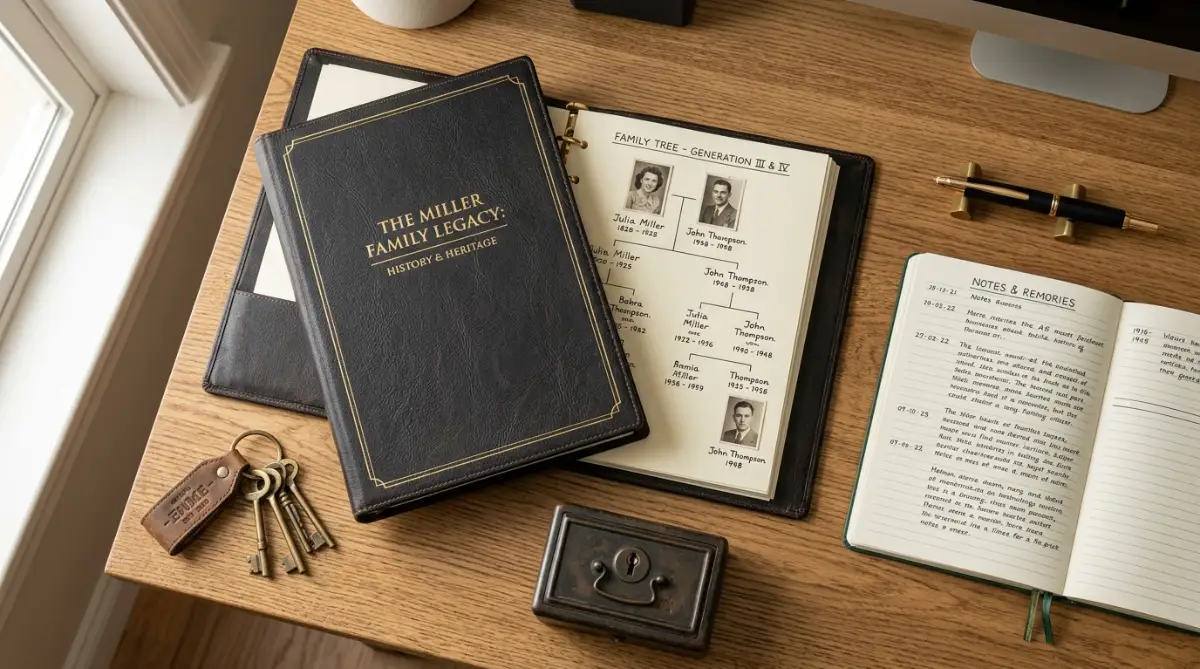
Have the Uncomfortable Family Meeting
Nobody really likes talking about getting older or passing away at the dinner table. But hiding your plans from your family is a recipe for absolute disaster down the road. If you make surprising decisions in your paperwork, your family needs to hear it directly from you first.
Imagine leaving your family business to your youngest daughter because she has the right skills, but your oldest son expected to take over. If you never explain this choice while you are alive, your son might resent his sister forever. Sit your family down, pour some coffee, and gently explain your thought process behind your legal choices.
Recommended Reading for Business Owners & Families:
- How to Protect Your Small Business From Hidden Legal Disasters
- Understanding Contract Law: Protecting Your Agreements & Rights
- Can You Form a Business Without a Lawyer? A Practical Guide
Align Your Beneficiary Designations
Here is a massive secret that many average folks do not know about at all. If you have a life insurance policy or a retirement account, you likely named a beneficiary when you opened it. Those direct beneficiary forms will always override your main legal papers.
If your official document says your new spouse gets everything, but your old life insurance policy still names your ex-spouse, your ex will get that money. You must make sure every single financial account you own matches the instructions in your current legal plan. Taking the time to properly update financial account beneficiaries ensures your money goes exactly where you want it to go.
Real Case Example: The 250,000 USD Beneficiary Mistake
- The Situation: Mark wrote a will leaving his entire estate to his wife of ten years, Sarah. However, he forgot to update the beneficiary form on his old 401(k) retirement account that he set up fifteen years earlier.
- The Problem: The old retirement account still listed his ex-wife, Brenda, as the sole beneficiary.
- The Legal Outcome: When Mark passed away, the bank gave all 250,000 USD directly to Brenda. The court could not help Sarah because beneficiary designations on retirement accounts override any written will.
- The Lesson: Always review and update your bank, insurance, and retirement account beneficiaries directly with each financial institution whenever major life events happen.
Plan for Medical Emergencies, Not Just Passing Away
What happens if you are in a severe accident and you cannot speak for yourself? Your official property document only activates after you pass away, so it does not help you while you are in a hospital bed. You need separate protective papers called a durable power of attorney and a healthcare directive.
These extra papers allow someone you completely trust to pay your mortgage and make medical choices if you are unconscious. Without them, your spouse or kids might have to beg a judge for the right to access your bank account just to buy groceries. Building a complete safety net means planning for life's unexpected emergencies as well as the end of life.
Consider a Backup for Everything
Life is totally unpredictable, and your first choices might not be available when your family needs them most. The person you named to raise your children might move to another country or face their own health issues. The friend you asked to handle your final debts might simply refuse the job when the time actually comes.
You should always name at least two backup options for your executors and your children's guardians. This simple backup plan stops the court from stepping in if your primary choice falls through. It guarantees that the control stays completely within your trusted circle.
The Financial Impact of Being Proactive
Let us look at a realistic breakdown of how proactive planning saves your family from financial ruin. When you compare the upfront costs to the massive losses of poor planning, the choice becomes obvious.
This chart clearly proves that trying to save a few hundred dollars today will cost your family a fortune later. Do not leave your loved ones with a heavy financial burden just because you did not want to deal with a little bit of paperwork.

The Most Dangerous Traps People Fall Into
Setting up your final wishes is deeply personal, and sadly, it is very easy to make critical errors if you are not careful. Even smart, well-meaning people fall into traps that end up causing massive headaches for their families. Let us look at the most dangerous mistakes you absolutely must avoid.
The Hidden Safe Trap
You finally got your paperwork perfectly written, signed, and legally witnessed. To keep it safe, you lock it inside a hidden floor safe in your basement and never tell a single soul about it. This is one of the most common and heartbreaking mistakes people make.
If your family cannot find the original, signed paper, the local court will just assume you never wrote one at all. They will treat your estate exactly as if you died without any instructions, completely ignoring all your hard work. You must tell your trusted executor exactly where the original document is stored and how to get access to it.
Using Extremely Vague Language
When you are writing down who gets your belongings, you cannot afford to be casual or vague. Writing something like, "I leave my money to my favorite people" is a guaranteed way to start a massive family war. The law requires exact names, clear relationships, and very specific descriptions of your property.
Writing something casual like "I leave my truck to my nephew" when you have three nephews guarantees a fight. The court will freeze the title, and your family might spend thousands hiring attorneys over a used pickup. Always use exact legal names, dates of birth, and clear descriptions so there is zero room for guesswork.
Naming Co-Executors Who Cannot Agree
Sometimes parents do not want to hurt their children's feelings, so they name both of their kids to manage their final affairs together. They think this is fair, but they accidentally create a massive legal roadblock. If your two kids already argue over small things, forcing them to agree on heavy financial matters is a terrible idea.
If one child wants to sell your house quickly for cash, and the other wants to rent it out, the entire estate freezes. They will have to go to a judge to settle the argument, draining the family savings in the process. It is always better to name one highly organized person as the primary manager, and the other as a backup.
Forgetting About Your Debts
Many people love giving away their money on paper, but they completely forget that their bills do not magically disappear. When you pass away, your outstanding credit card balances, personal loans, and mortgages still have to be handled. Your chosen executor has to pay off these debts using your money before anyone in your family gets a single dime.
If you promise your daughter exactly fifty thousand dollars, but you owe sixty thousand dollars to the bank, she will get nothing. You need to be realistic about your current financial situation when you make promises. Keep a clear list of your ongoing debts so your family knows exactly what to expect.
Relying Entirely on Cheap Internet Forms
We all love a good bargain, but cheaping out on your family's legal protection is incredibly risky. Downloading a random template from a generic website might save you money today, but it often misses highly specific state rules. Every single location has its own strict laws regarding how a document must be signed and witnessed.
If your state requires three independent witnesses and your cheap form only asked for two, the entire document is invalid. It is thrown in the trash, and your family is left with nothing but confusion. Always double-check your paperwork against the specific state and local government legal resources to guarantee it holds up in a real courtroom.
Failing to Update After Major Life Events
Your life is constantly changing, and your legal paperwork needs to reflect your current reality. One of the biggest tragedies happens when someone forgets to update their papers after going through a simple divorce process. Imagine passing away and realizing your ex-spouse legally gets the house, while your current partner is left homeless.
The same rule applies when a new baby is born into the family. If you wrote your instructions before your youngest child was born and never updated it, that child might be legally excluded from their inheritance. Make it a strict habit to review your documents every time you experience a major life shift.
Frequently Asked Questions
1. What is the difference between a will and a living trust?
A will explains who gets your property after you die and must go through probate court before anything is handed out. A living trust holds your assets while you are alive and passes them to your loved ones immediately upon death without any court delays or public records.
2. How much does a basic estate plan cost in the United States?
A simple will drafted by an attorney typically costs between 400 USD and 1,000 USD. A complete trust package usually ranges from 1,200 USD to 3,000 USD depending on the complexity of your property and family situation.
3. Can I write my own will without hiring a lawyer?
You can create your own will using legal software or state-approved templates, but you must strictly follow your state rules for witnessing and notarization. Having a licensed estate attorney review your draft ensures you do not miss state-specific legal requirements.
4. What happens to my bank accounts if I die without a will?
If you have not named a payable-on-death (POD) beneficiary, your bank will freeze the accounts until the probate court appoints an administrator to settle your final debts and distribute the remaining funds.
5. How often should I review and update my estate planning documents?
You should review your documents every 3 to 5 years, or immediately after major life changes such as getting married, going through a divorce, buying real estate, or having a child.
Related Legal & Property Protection Guides:
- How to Read a Commercial Lease Agreement on Your Own
- Simple Ways to Resolve Rental Arguments Outside of Court
- How to Protect Your Legal Rights With Proper Accident Documentation
Your Roadmap to Absolute Peace of Mind
Taking control of your family's future is one of the most empowering things you can ever do. You are not just organizing paperwork; you are building a strong, unbreakable wall around the people you love. By making these decisions now, you are giving your family the incredible gift of a smooth, stress-free transition.
Nobody wants their legacy to be a messy court battle that tears siblings apart. When you write down your wishes clearly, you eliminate all the painful guessing games. You get to rest easy knowing that your hard work will directly benefit the people who matter most to you.
Do not wait for a major health scare to start thinking about these things. The best time to build your safety net is right now, while you are healthy, calm, and thinking clearly. Start by making a list of what you own, and check our guide on meeting a lawyer for the first time so you know exactly what to bring.
My Personal Realization
When I finally signed my own paperwork, the feeling of relief was absolutely incredible. I used to lay awake at night worrying about what would happen to my little kids if something bad happened to me. Sitting down and making those tough choices felt scary at first, but it quickly turned into a sense of deep pride. I knew I had officially taken responsibility for my family's future, no matter what surprises life throws my way. I strongly encourage you to take this step today, because the peace of mind you will feel is worth its weight in gold.
Disclaimer:
The information provided in this blog post is for general educational and informational purposes only and does not constitute official legal or financial advice. Laws regarding estate planning vary significantly by location. Always consult with a qualified, licensed attorney or professional financial planner in your area before making any final legal decisions regarding your assets or family planning.